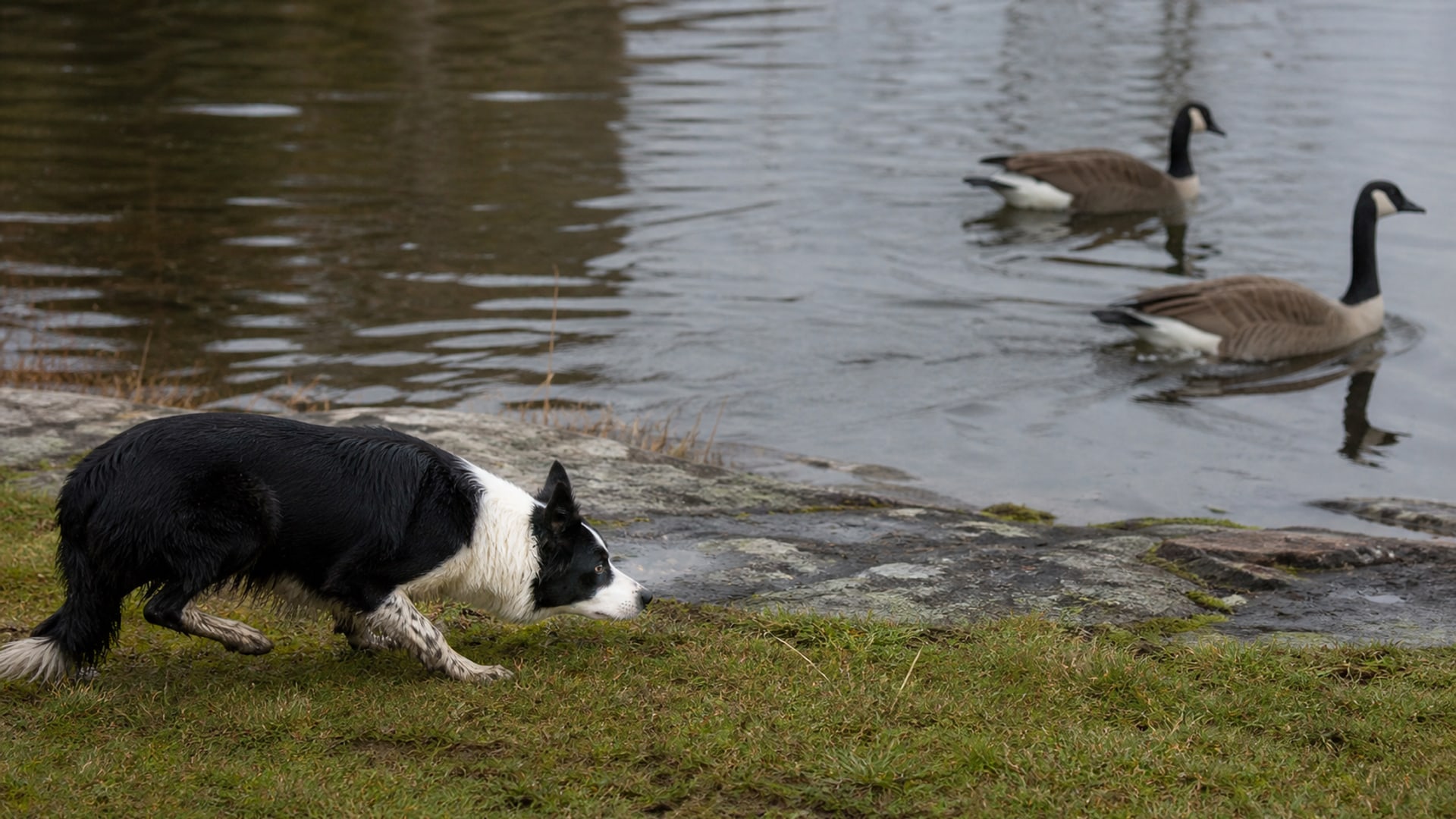
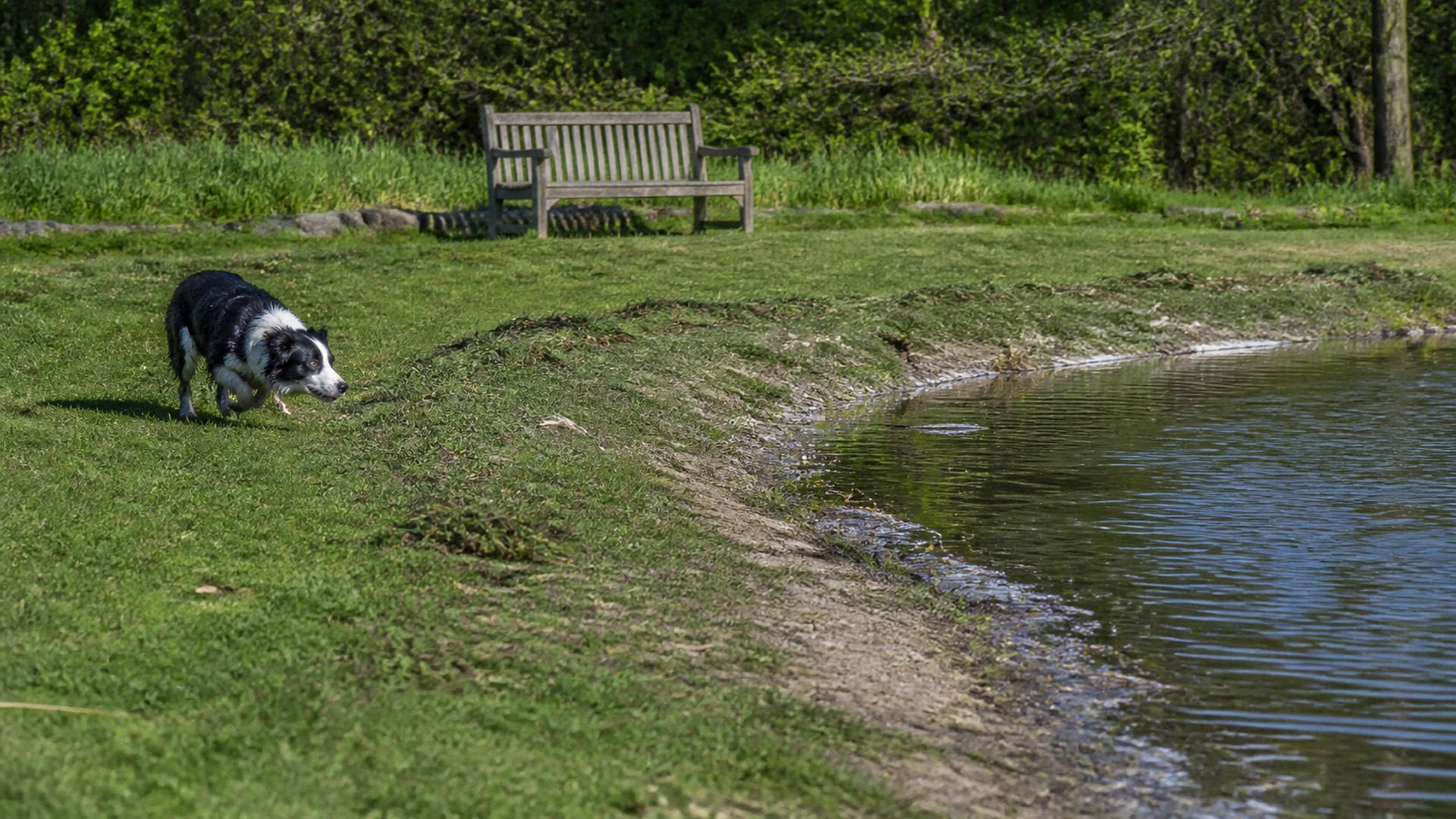
Because your property is giving them four things at once, and none of them are accidental.
Connecticut DEEP describes Canada geese as drawn to open grassy areas near water, and its nuisance guidance is more specific than that: geese need room to land and take off, and they are uncomfortable feeding where their view of a predator is poor. Short mown turf beside open water supplies food, a walking route, a clear line of sight and a runway. Cornell's goose guidance adds that urban geese prefer lawn grass and open visibility, and usually nest within about 150 feet of water.
DEEP also links the rise in resident geese directly to the ponds, lakeside lawns, golf courses and athletic fields built since the 1950s, and says the birds now nest statewide with the highest populations in Fairfield, Hartford and New Haven counties. New York DEC counts more than 200,000 resident Canada geese statewide against a long-term goal at or below 85,000. So the pattern on your site is a regional one rather than bad luck.
The other half of the answer is that the birds are protected. Canada geese are covered by the Migratory Bird Treaty Act, 16 U.S.C. 703, which rules out most of what a frustrated property owner is tempted to try first, and makes the practical question how to change the flock's mind rather than how to remove it.
It is worth being precise about what that means for you, because it is the difference between two very different jobs. The site is not neutral ground the birds happen to visit. It is good habitat, they know it, and they will keep choosing it until something about that calculation changes. Nothing about a flock's behavior here is random, which is also the reason it responds to a program at all.