

A walk with the superintendent
The pond and its banks, the sections carrying the worst fouling, the paths visitors actually use, and the areas that are off limits: recent interments, settling ground, historic sections and anything under repair.
Grounds that have to stay dignified, visitors who may be at their worst moment, and monuments and turf that cannot be damaged getting to the birds. Tri-State Geese Patrol works cemeteries across Connecticut, Massachusetts and New York. Call (203) 856-4889.
Who we work with
Superintendents, trustees, municipal cemetery offices
Work stops for
Any service, procession or graveside gathering
On foot
No vehicles across turf or between markers
Approval
Often trustees or an executive committee, not one person
For exactly the reasons the grounds are cared for. Wide open mown lawn, few obstructions, long sightlines, quiet for most of the day, and on many sites a pond. That is close to an ideal description of what a Canada goose is looking for, and unlike a park or a playing field there is rarely anything happening loudly enough to move them along.
Two named Massachusetts examples show the pattern. Greenlawn Cemetery in Salem has Sargent Pond, and the city's 2022 master plan records that Canada geese frequent it, describing the cemetery as a wildlife corridor connecting to the adjoining St Mary's Cemetery and Kernwood Country Club. Forest Hills Cemetery in Boston has a pond described as carrying Canada geese and mallards. In New York, the New York City Bird Alliance reports that the ponds at Resurrection Cemetery on Staten Island draw large numbers of Canada geese in migration and winter.
Those are documented presence records rather than management case studies, and we are citing them as what they are. What they establish is that this is a recognized condition on cemetery ground in the region, not an unusual complaint from one superintendent.
A cemetery is an active site with visitors who are grieving, and no schedule survives contact with an interment. Verona Cemetery's published bylaws describe grounds open daily from dawn to dusk, require the superintendent to meet and escort funeral processions, and authorize removing anyone acting disrespectfully or damaging monuments or landscaping. That is the operating environment written down by a cemetery itself.
So the working rules on our side are not negotiable and we would rather state them before anyone asks. Work stops for any service, procession or graveside gathering, without being told. We need a same-day hold list and a phone contact who can pause us mid-visit. We work on foot rather than driving across turf or between markers, and we do not cross a fresh grave, a settling plot or new sod.
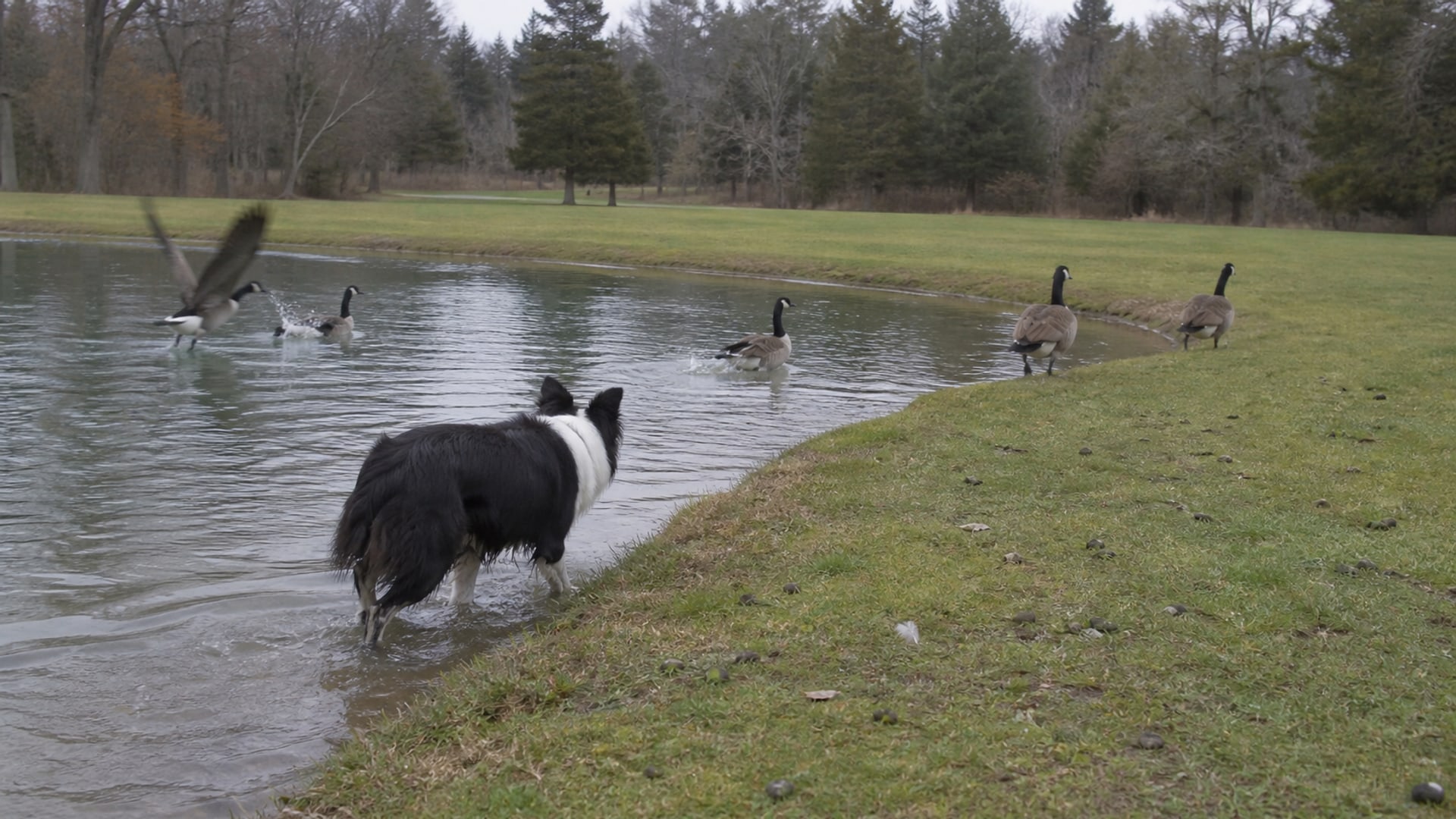
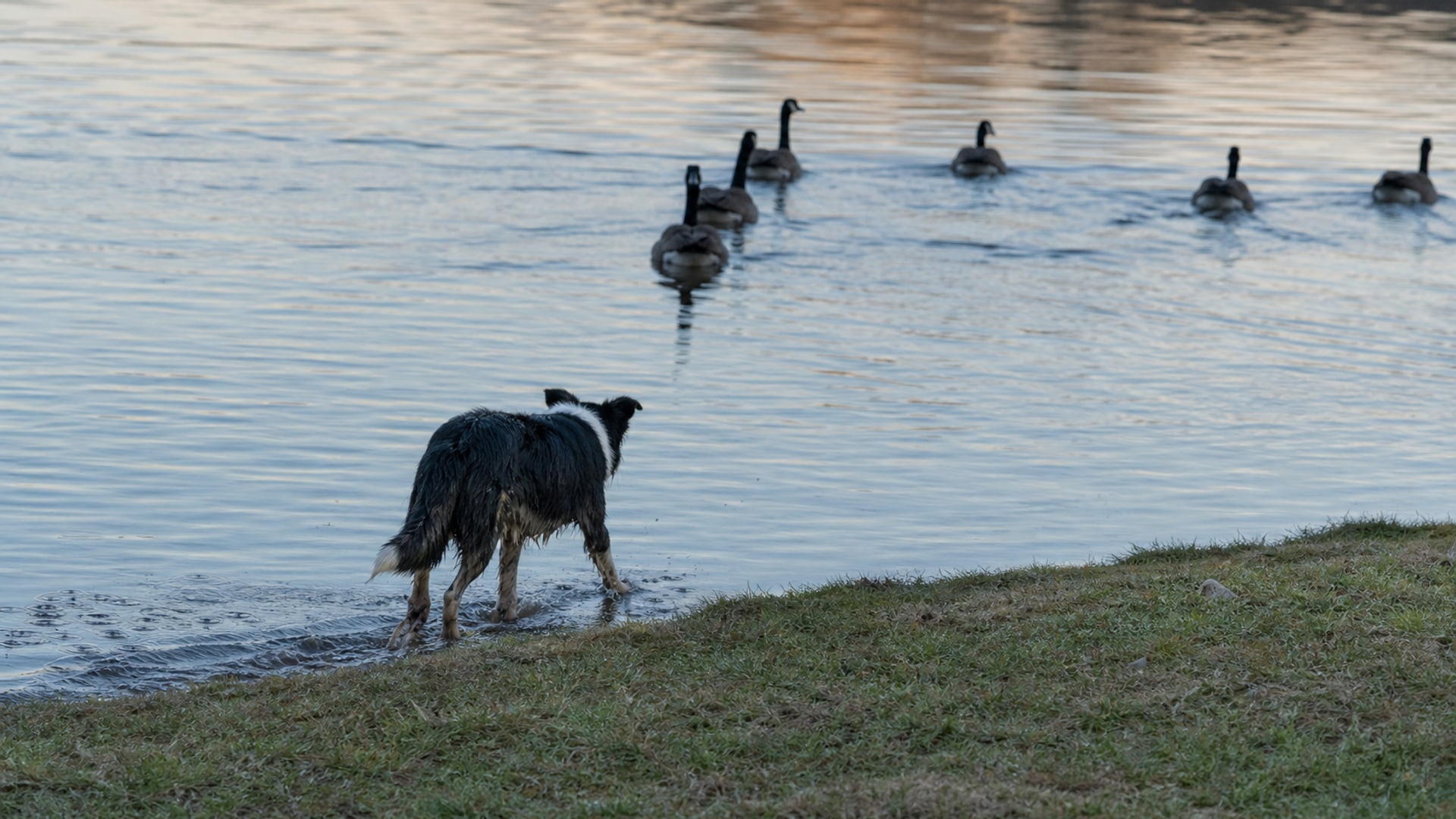
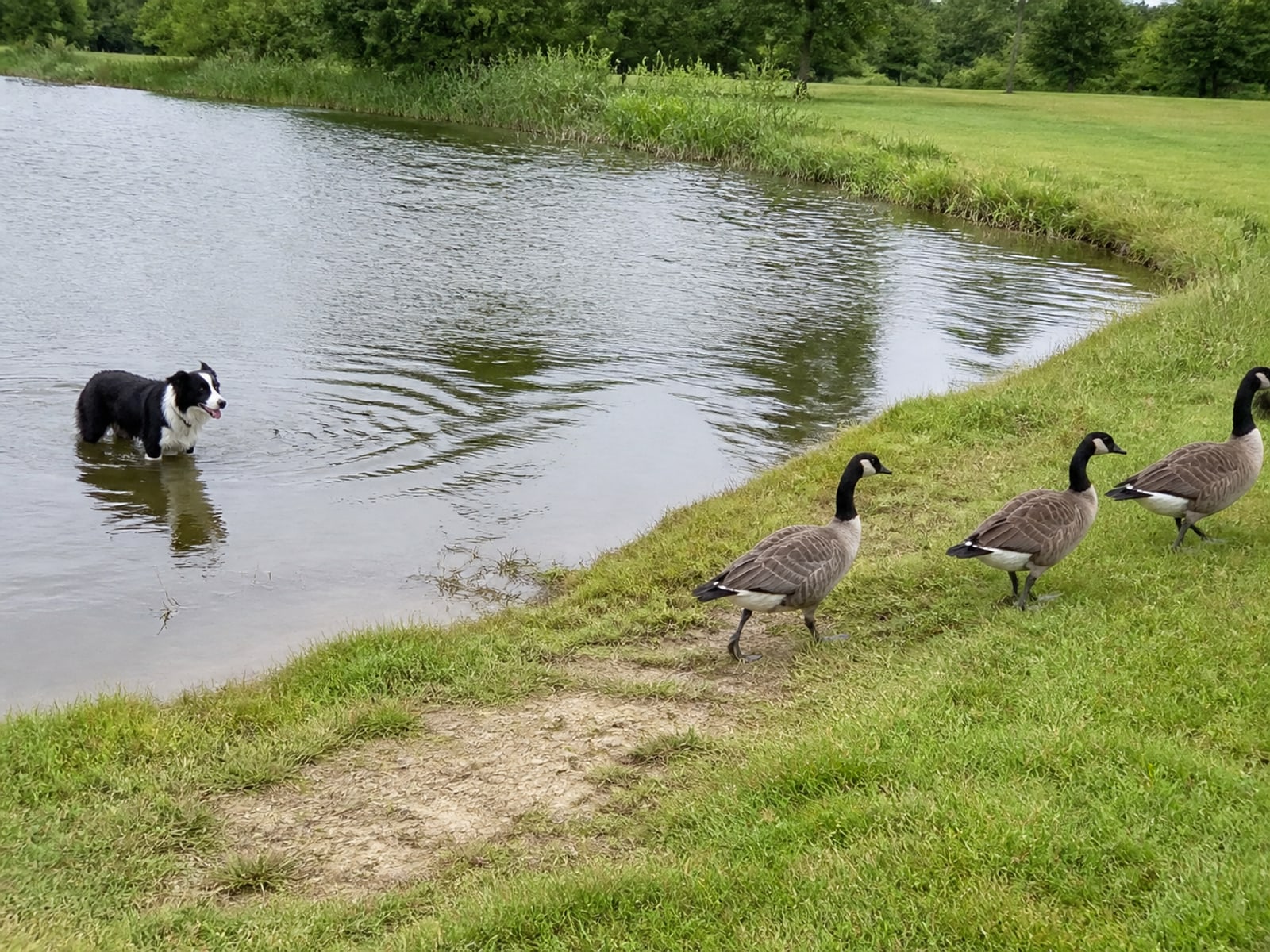
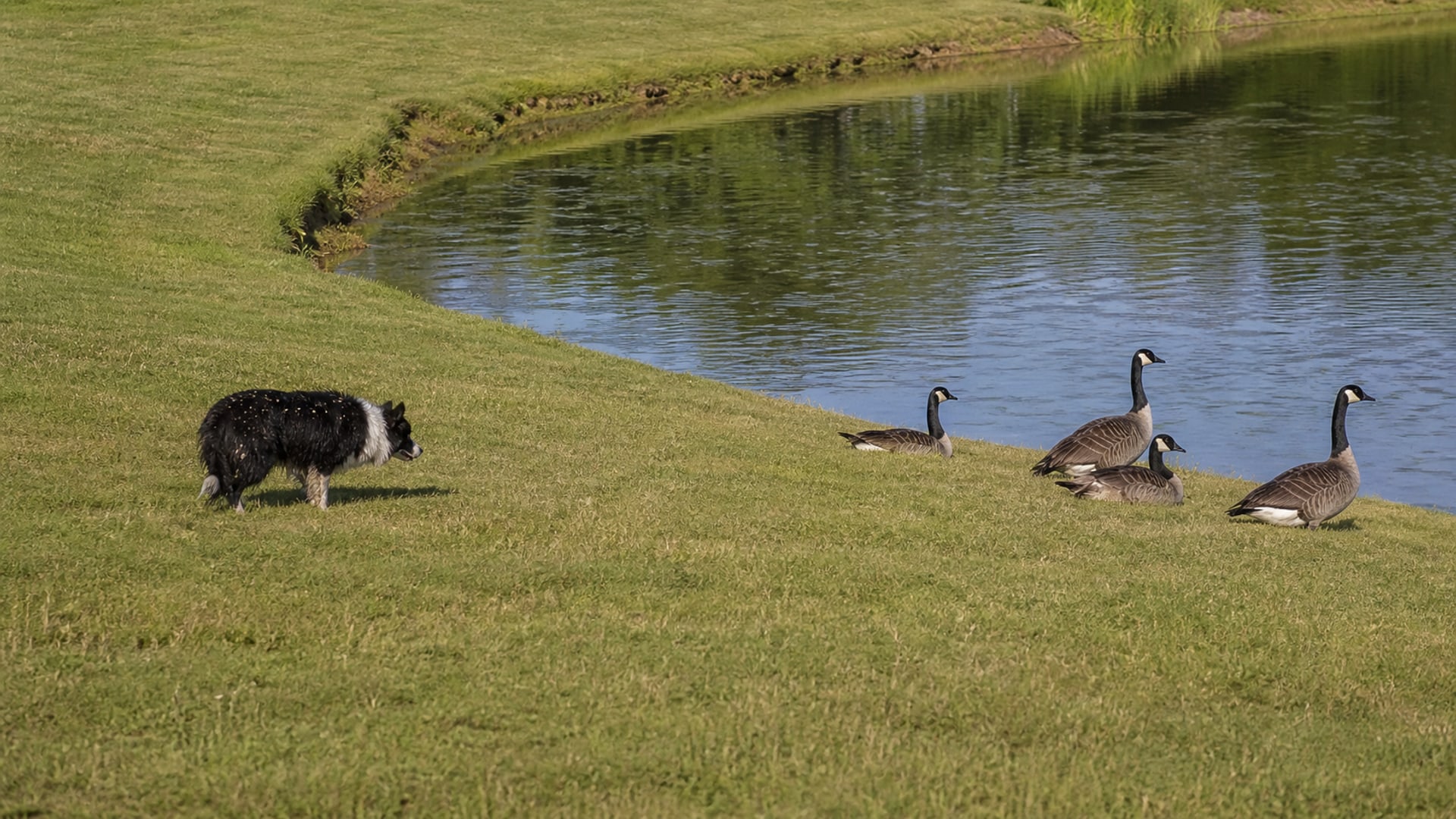
The dog is worth a word here too, because it is the first thing a trustee pictures. A working Border Collie moves birds by posture and position rather than by noise. It is a quiet operation by nature, which is the main reason dogs suit this ground where noise-based deterrents plainly do not.
A superintendent's job here is broader than a groundskeeper's anywhere else. A published Connecticut cemetery superintendent role covers grave preparation, turf maintenance, foundations for headstones, excavation, sodding, grading, monument resetting, mowing, shrubbery, tree work and snow removal, under an executive committee. Every one of those is an asset a careless contractor can damage.
That matters for goose work in a specific way. The two things a resident flock does to this ground are foul the walking surfaces between graves, where visitors kneel and stand, and graze turf down to the point where it thins and has to be repaired. Repairing turf between monuments is slow, careful work, and it is done by the same small team already handling interments.
It also shapes what belongs on a proposal here. Habitat change at the water edge is often the right long-term answer on a site with a pond, but on cemetery ground it runs into monuments, plot boundaries, historic burial areas and possibly wetlands review. We screen for that before suggesting anything physical rather than after.
Deliberately unobtrusive, and built around the service schedule rather than around ours.
The pond and its banks, the sections carrying the worst fouling, the paths visitors actually use, and the areas that are off limits: recent interments, settling ground, historic sections and anything under repair.
Early in the day suits most cemeteries, before visitors arrive and usually before the first service. We want to know how a late addition to the day reaches us, because it will happen.
A handler and dog move the birds off the lawn and the water. No bird is caught, touched or harmed, nothing is applied to any surface, and there is nothing to clean up afterwards.
Dates, sections covered, what the crew saw. Trustees approving a recurring cost at an annual meeting should be able to read what it bought.
Ownership decides, and it varies more here than in any other segment we work. Connecticut law allows a burial ground to be owned and managed by a municipality, an ecclesiastical society or a cemetery association, and a Connecticut cemetery association has a board of directors or trustees and must hold an annual meeting. So the same conversation can end at a superintendent, an executive committee, a church body, or a town purchasing office depending on who holds the deed.
One published New York association's bylaws make the split explicit: the superintendent keeps order on the grounds and escorts processions, while the trustees choose the groundskeeping company and approve its cost at the annual meeting. If that is your structure, the practical consequence is timing. A recurring seasonal service usually needs to reach the meeting where the maintenance budget is set, not arrive as a mid-season request.
Connecticut cemetery associations also operate under nonprofit rules, including limits on conflicts of interest and a requirement to accept annual financial statements. We mention it only because it shapes how a proposal should arrive: written, comparable and unhurried, so a trustee can put it in front of the board without difficulty.
This is the smallest segment we serve and the published record on it is genuinely thin. Rather than dress that up, here is what is missing.
There is no documented case in Connecticut, Massachusetts or New York that both names a cemetery and reports an official Canada goose management outcome, other than through a competitor's marketing. We are not going to imply one exists.
No recurring local price range or procurement award for cemetery goose work could be found. Pricing follows a walk of your grounds, and any figure quoted before that is invented.
No cemetery-specific droppings, turf-loss or maintenance-cost statistics exist in the published record. Your own turf repair hours are a better number than anything we could cite.
There is no published standard cemetery work-hour rule, funeral blackout window or vendor insurance requirement. Yours are set by your own rules and bylaws, so tell us and we will work to them.
We stop and withdraw, without waiting to be asked. If you would rather we simply do not attend on days with interments scheduled, that is a normal arrangement and we will work to it.
It should not. The work is quiet by design, it happens early where possible, and the dog is under handler control throughout and does not approach visitors.
Yes. We work on foot on cemetery ground. That is slower on a large site and we price it that way rather than taking a vehicle across the lawn.
Not for non-injurious herding with dogs. New York's guidance on cemetery approvals is aimed at significant projects or alterations of cemetery property, and a routine abatement visit is not that. Physical habitat work at a pond edge is a different question and we screen it first.
Possibly, and cautiously. A vegetated buffer at the water and grass edge is the standard answer, but on cemetery ground it meets plot boundaries, monuments, historic sections and possibly wetlands review. We would look at it and tell you honestly whether it is worth pursuing.
Ask us and we will tell you straight. If the flock is small, seasonal, and your real problem is two weeks of mess in spring, a season-long program may be more than you need, and that is a fine outcome for a first call.
Call Tri-State Geese Patrol on (203) 856-4889 and tell us which sections are affected, whether there is water on the grounds, and how your service schedule runs. If we are not the right answer for a cemetery your size, you will hear it on the first call.
Call Tri-State Geese Patrol on (203) 856-4889 and we will talk through the site, the flock and what a program would look like.