Tri-State Geese Patrol

Goose Control in Farmington, CT

Humane Canada goose abatement for Farmington properties, using trained Border Collies that move birds without touching them. Farmington is one of the few towns that names its own goose site in a public report.

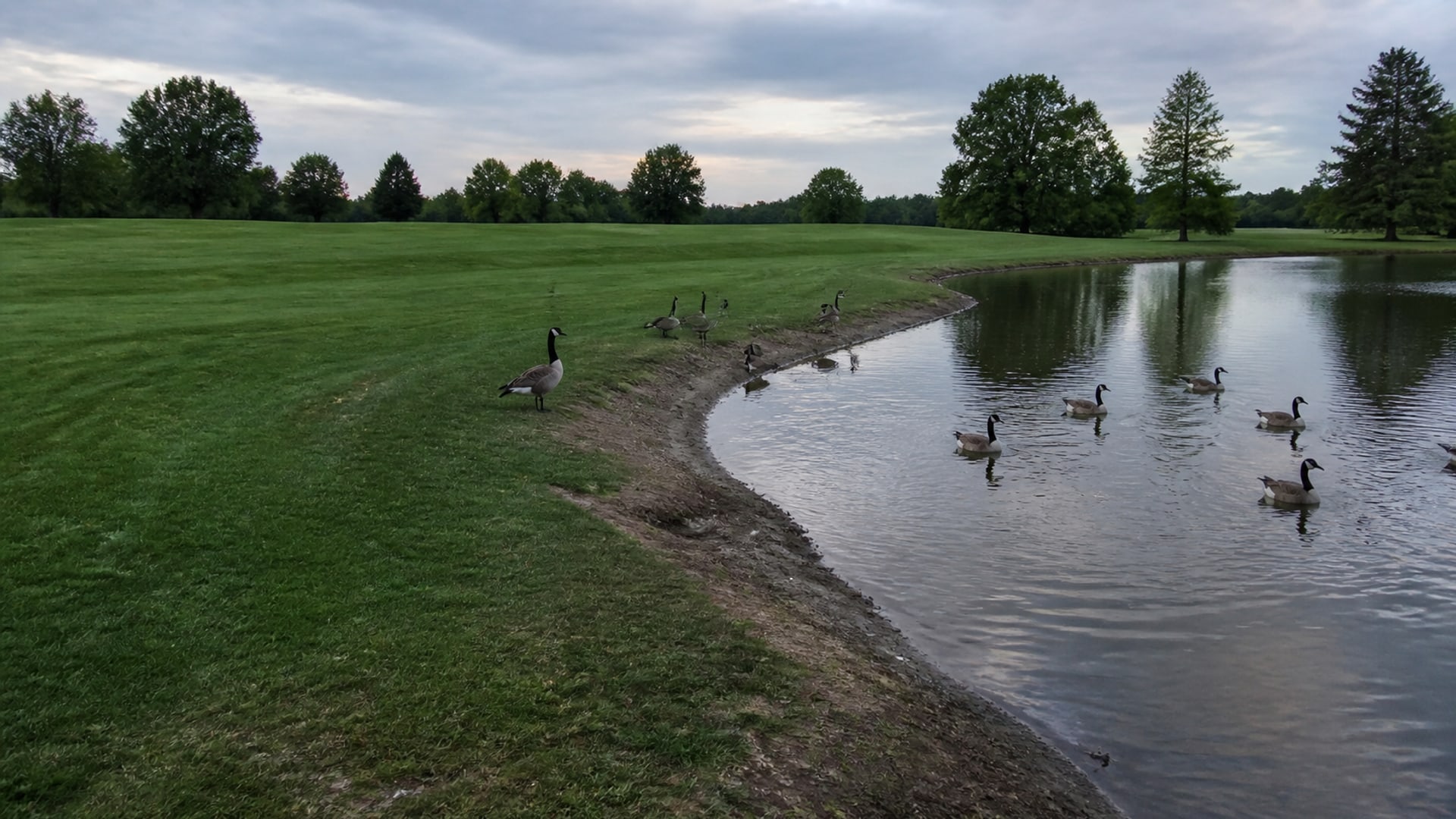
Open mown grass beside water of the kind Canada geese settle on in Farmington, CT

At a glance

Town

Farmington, Connecticut, including Unionville

Method

Non-lethal herding by trained Border Collies, no contact with any bird

Permit needed to move geese this way

None, provided no bird is harmed

Local rule worth knowing

Farmington code prohibits intentionally feeding wildlife, with a fine per offense

Farmington names its own goose site in a public report

Most towns leave you guessing about whether geese are a real local issue. Farmington does not, and the record is recent.

The town's 2024 stormwater annual report states that Canada geese are known to gather at Westwoods Golf Course and that noise-making devices are used to disperse them. It adds that there is no known issue of residents feeding the geese there, and it gives the next action as continued use of those devices.

That short passage does more work than it looks. It establishes a named Farmington property, an identified goose congregation, a method currently in use, and the town's own view that feeding is not what is driving it. For anyone in this town wondering whether the problem is real here or borrowed from a brochure, that is your answer, published by the town's engineering division inside its stormwater permit program.

It also raises the operational question worth asking at any site like it. Connecticut DEEP is explicit that geese become accustomed to visual and noise deterrents used on their own, and that birds return once whatever moved them is gone. Devices that stay in the same place, on the same pattern, stop meaning anything after a while. Devices that move, vary, and are paired with something the birds cannot habituate to are a different proposition.

That is the gap a dog fills. A goose does not learn its way past a predator, because the response is instinctive, and a schedule it cannot anticipate cannot be waited out. The honest framing is not that the town chose wrongly; it is that a device and a dog do different jobs, and the state's own guidance says the device alone tends to fade.

Where does lawn meet water in Farmington?

Farmington has more golf and more river frontage than most towns its size, and a set of names that sound like ponds without being them.

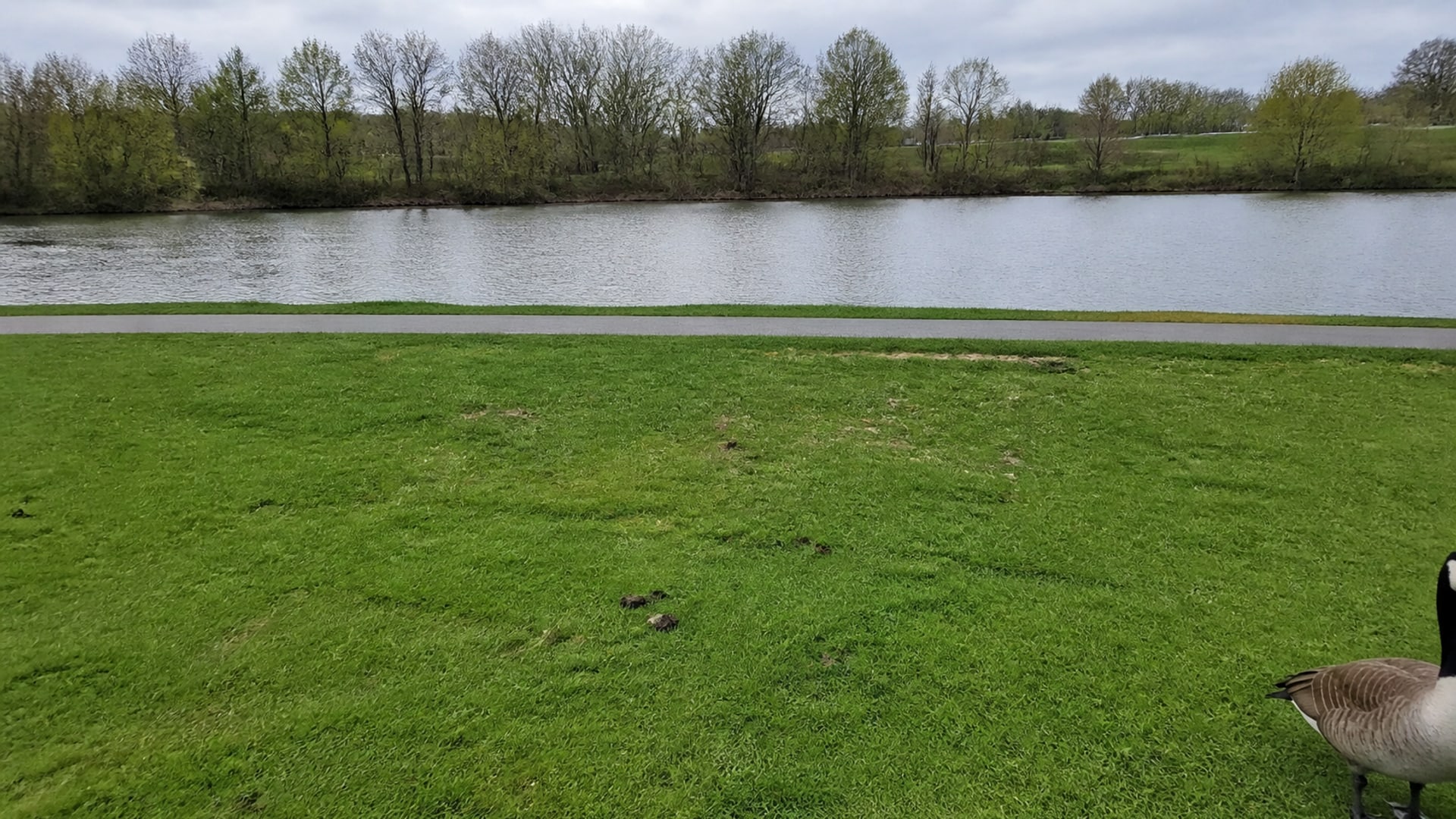
Canada goose droppings and grazed turf on maintained ground in Farmington, CT

Westwoods, and the town's other golf

Westwoods Golf Course at 14 Westwoods Drive is Farmington's municipal 18 hole course, town owned and open to the public, and the site the town's own report names. There is a lot more golf here too: Tunxis Country Club is public with 45 holes, its White course running alongside the Farmington River with island greens and its Green course carrying several water features, while the private Country Club of Farmington sits on about 105 acres with the river affecting holes 10 and 11 and a pond crossed at 17. Fairway turf beside water is the goose problem in its purest form, and this town has a lot of it.

Tunxis Mead and the river parks

Tunxis Mead is the clearest municipal turf-and-water match, described in a current town solicitation as more than 140 acres along the Farmington River with athletic fields, courts, a playground, picnic space, a skate park and open space, with Recreation and Public Works both involved. Farmington High School teams use it, which puts school athletics beside the river even where the school buildings are not. River Glen Park and Yodkins-Morin Memorial Park are further river access points, though the record does not quantify mown turf at either.

Batterson Park Pond, which is not simply Farmington's

The pond sits on the Farmington and New Britain line near I-84. Town wetlands records describe the park at about 266 acres with a 155 acre pond and 88 percent of the park in Farmington, while DEEP's 2026 fishing rules list the pond at 140 acres. Those are different official figures and we are not going to quietly average them. The park reopened in 2026 as a regional passive park with pond access, trails and a splash pad, managed for public use by Riverfront Recapture, and it has no athletic fields, so it is a different case from Tunxis Mead.

Campus water that is actually documented

UConn Health at 263 Farmington Avenue is the largest institutional campus, and its own shuttle route carries a stop named for a pond, which is about as independent a confirmation as you get. The campus at 9 Farm Springs Road has a documented stormwater basin, with town wetlands minutes recording basin restoration, invasive Phragmites removal, planting and three years of monitoring. Elsewhere, names mislead: Pond View Corporate Center at 74 Batterson Park Road is a 34 acre corporate park whose name proves nothing about a functioning pond, and we found no documented pond at the other big Farm Springs Road or Carrier Place addresses.

Farmington's feeding ordinance is real, and broader than you expect

Most towns in this region have no feeding rule at all, only guidance. Farmington has an actual ordinance, and it is written wider than waterfowl.

Code section 78-7(A) prohibits intentionally feeding wildlife, and it defines feeding broadly: furnishing or making available food or other substances likely to be consumed by wildlife, including giving, placing, exposing, depositing, distributing or scattering edible material or attractants with intent to feed, attract or entice. Wild birds fall inside the code's definition of wildlife.

It goes further than that. Section 78-7(B) prohibits bird feeders from April 1 through November 30 unless the food is not attractive to bears, giving Nyjer or thistle as the examples, and section 78-8 allows conventional feeders from December 1 through March 31 with Nyjer or thistle permitted year round, subject to placement and maintenance rules. Valid state permits and licensed rehabilitation are exceptions. Each offense, and each day, can carry a hundred dollar fine.

For a property here that is genuinely useful. Feeding is the single thing most likely to hold a flock in place against everything else you are doing, and in Farmington you are not relying on persuasion. There is a rule with a number attached to it.

One qualification from the town's own record, so nobody overstates the case. The stormwater report says resident feeding was not a known issue at Westwoods. So on that site at least, the town's read is that feeding is not the driver, which points the work back toward the ground and the birds' use of it rather than toward a sign.

What are the rules about working dogs on Farmington town land?

There is a defined route here, and it is not off-leash access.

Code section 148-3(M) requires a person with a dog on open space, school grounds or town property to keep it on a restricted leash no longer than six feet, unless participating in a town-sponsored program. Section 78-2 separately prohibits dogs from roaming at large and requires control and waste cleanup. No exemption for a working dog, a herding dog or a commercial service appears anywhere we can find.

That town-sponsored program language is the only municipal pathway the code actually states, which means a Border Collie patrol on town ground should never be proposed as ordinary off-leash work. It needs written coordination that sets out the authorized arrangement, the operating area, the hours, how the dog stays under handler control and how it interacts with other park users.

There is a second provision that applies even more directly, and most vendors will not mention it. Section 148-3 requires Town Manager or designee authorization for conduct that alters wildlife or vegetation, or applies chemicals, on town property. Moving geese off a town field alters how wildlife uses that ground. So even though no state wildlife permit is needed for non-injurious hazing, Farmington's own code points at property-owner authorization for exactly this kind of activity.

We would rather set that out plainly at the quoting stage than have a program stopped in week three. On private ground, a course, an association, a corporate campus, the owner decides and the path is much shorter.

Who owns the water, and who owns the land under it?

Farmington has no single townwide water authority, and that catches people out more here than almost anywhere else in our area.

The town's own utility page lists Connecticut Water Company, the Metropolitan District, Valley Water Systems and New Britain Water as local utilities, with the Farmington Valley Health District regulating private wells and septic systems. Four utilities and a health district, in one town.

There is watershed land on top of that. The town plan identifies roughly 1,100 acres in Farmington draining toward the Metropolitan District reservoir system, with parcels along Route 4 owned by the City of Hartford, the State and the MDC. Reservoir rules on that land restrict activities including pets in designated areas, which is directly relevant to a dog-based program and applies to MDC property rather than to every pond in town.

Then there are the private lake communities. The Lake Garda Improvement Association manages a community straddling Farmington and Burlington and has owned the lakebed, beaches and dam since 1998. The Woodridge Association serves about 160 eligible properties around Woodridge Lake and Wood Pond on the West Hartford line, with a private beach. Those are private waters with their own boards, not town amenities.

The practical rule is simple and it is worth stating because getting it wrong wastes weeks. Town approval does not substitute for permission from Connecticut Water, the MDC, Hartford, New Britain Water, a private association or the State. Whoever owns the ground has to agree, and in Farmington that is a real question rather than a formality.

For anything physical near water, the wetlands process applies as it does everywhere: a lawn is not a floodplain, and work near a regulated area is a filing rather than a favor. The Farmington River floodplain along Meadow Road and Town Farm Road floods often enough that the distinction is not academic.


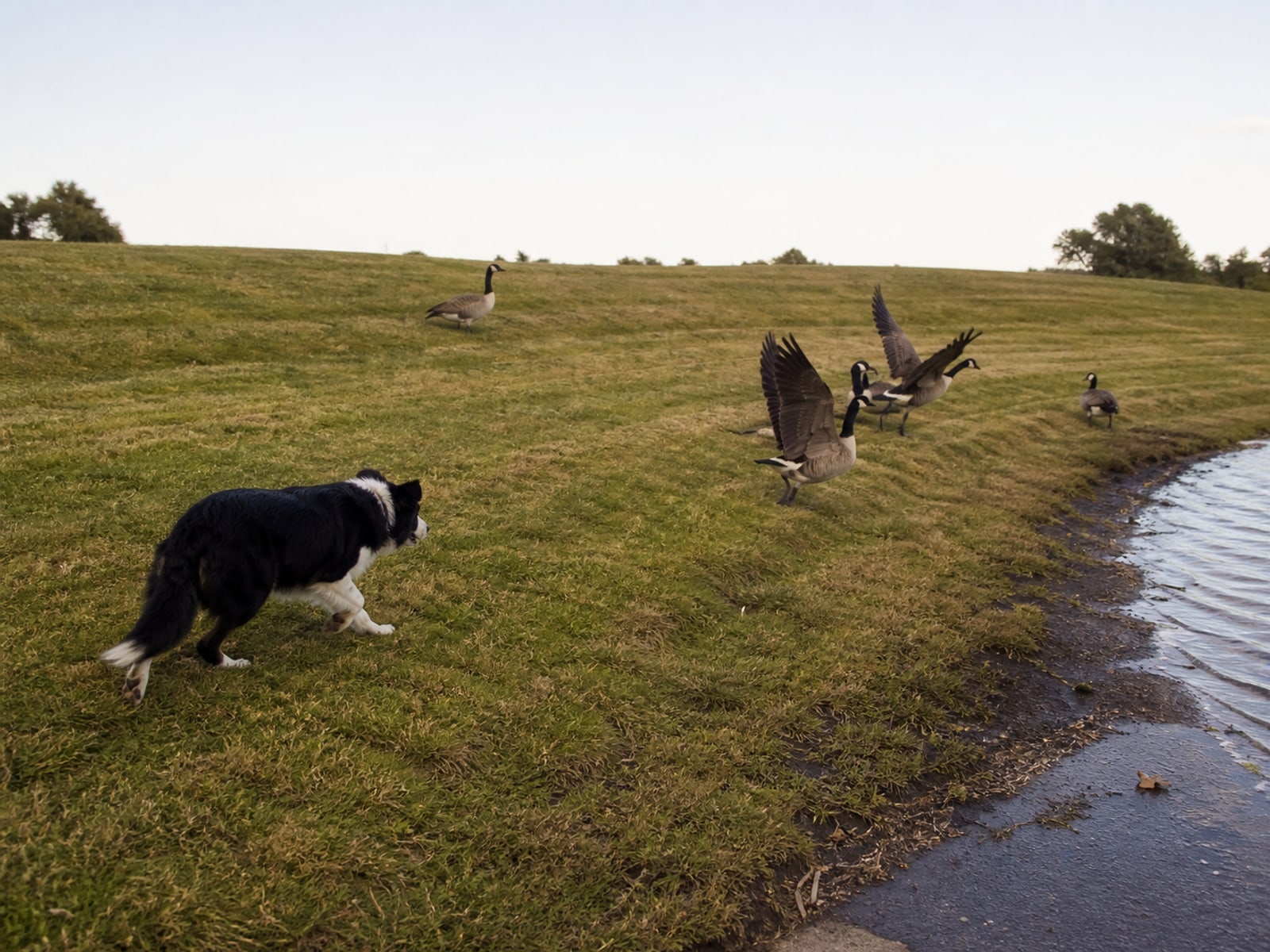
A Border Collie working a flock of Canada geese off maintained ground in Farmington, CT

What happens after you call about a Farmington property?

The fieldwork is the same on a fairway, a school field or a hospital campus. The front end in Farmington is mostly about ownership and authorization.

  1. 01

    We ask what you are seeing, and what is already deployed

    How many birds, on which surfaces, at what times, how close the water is, and what is already out there. In this town that last question is unusually likely to have an answer, and knowing what the flock has already learned to ignore changes what is worth doing.

  2. 02

    We establish who owns the ground and the water

    Town, school, state, a water utility, a private association, or a private campus. With four utilities, MDC watershed land and two private lake associations in one town, this is not a formality here.

  3. 03

    We walk the ground and map the way up from the water

    Geese travel between water and turf on foot, so the useful map is where they come up, which grass they graze, where they loaf, and which of that you control.

  4. 04

    We settle authorization before scheduling

    On town land that means written coordination under the town-sponsored program route, and it means recognizing that section 148-3 points at Town Manager or designee authorization for activity that alters how wildlife uses the property.

  5. 05

    The dogs work at times the flock cannot anticipate

    A handler works the ground with a trained Border Collie in a stalking posture. A goose responds to that as it would to a predator, by leaving, with no contact and no capture. The visits then repeat unpredictably, which is exactly the property a fixed device cannot have.

  6. 06

    We say what should change about the ground, and we measure

    Where mowing stops, whether an unmown strip or a barrier can sit between water and turf, and whether anything is drawing birds in. Then counts, locations, complaints and the gap between a visit and the birds returning. In a town that reports annually on this, a written record is worth having.

What we handle, and who handles the rest

We do not apply turf repellents. They are registered pesticides, applying one to commercial turf in Connecticut is licensed work, and we hold no such certification. Note that Farmington's own code also requires Town Manager or designee authorization for applying chemicals on town property, so on municipal ground there are two gates rather than one.

We do not addle eggs or work on nests. That is regulated activity, the landowner registers with the US Fish and Wildlife Service before anything happens, Connecticut accepts that federal registration and adds a further requirement where a commercial control firm is involved, and the authorization belongs to the landowner rather than to a contractor.

and inventing one would be exactly the sort of thing this page exists to avoid.

This is a maintained program rather than a one-time fix. The state's guidance and the town's own experience with devices both point the same way: this is maintenance, run properly, not a repair.

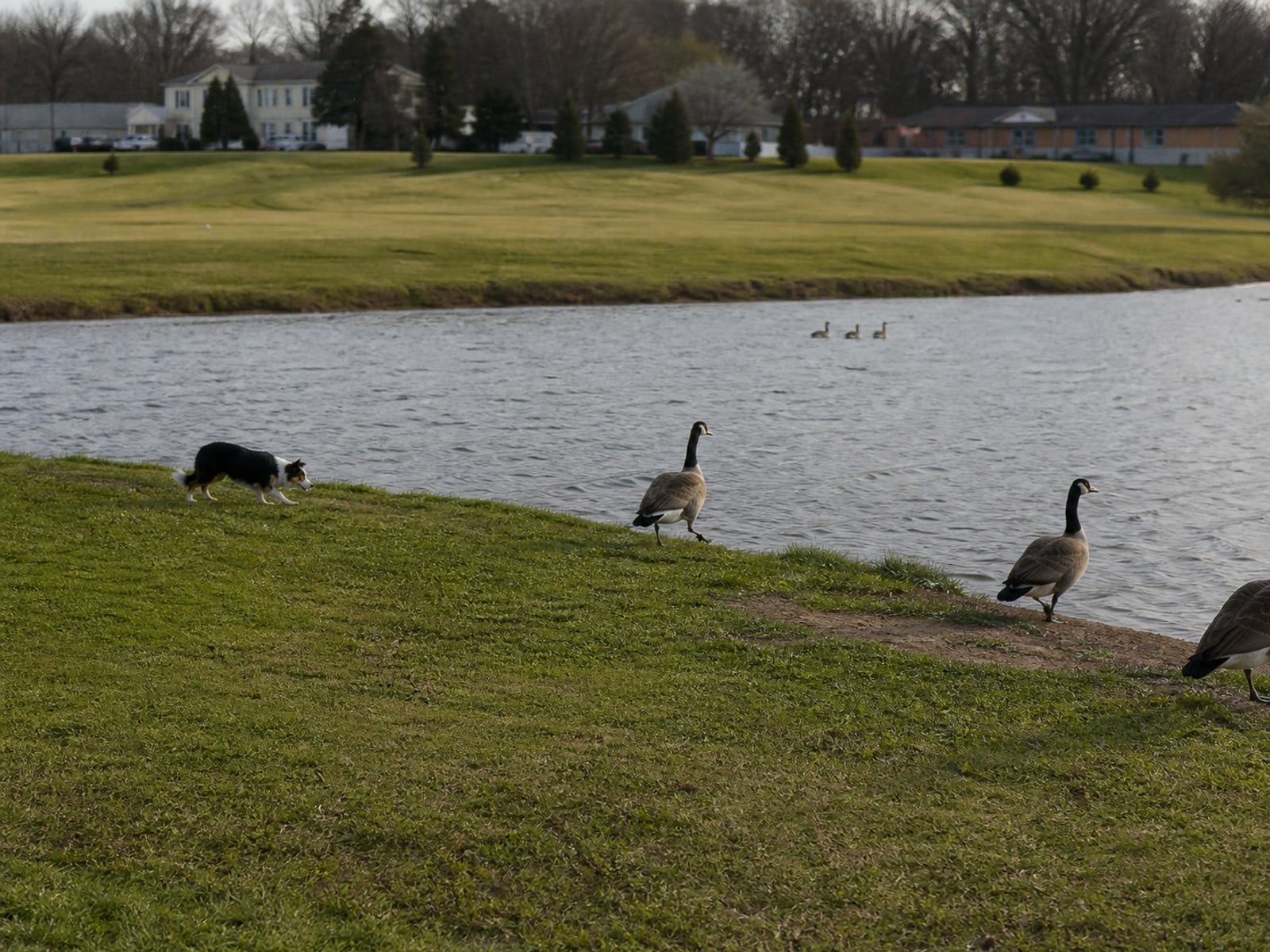
Maintained ground in Farmington, CT holding clear of Canada geese after repeat visits

Farmington goose control questions

Is there a documented goose problem in Farmington?

Yes, and the town published it. The 2024 stormwater annual report says Canada geese are known to gather at Westwoods Golf Course, that noise-making devices are used to disperse them, that resident feeding is not a known issue there, and that continued use of the devices is the next action.

The town already uses noise devices. Why add anything?

Because of what the state says about how that ends. Connecticut DEEP warns that geese habituate to deterrents used on their own and return once whatever moved them is gone. Devices that are varied and paired with active work hold up better than devices left in place, and a predator response is the one thing birds do not learn their way past.

Is feeding geese actually against the rules here?

Yes. Farmington code section 78-7(A) prohibits intentionally feeding wildlife, defined broadly and including wild birds, with seasonal restrictions on bird feeders in sections 78-7(B) and 78-8 and a hundred dollar fine available per offense and per day. That is stronger than the guidance most neighboring towns rely on.

Can a trained dog work on Farmington town land?

Only through the route the code actually names. Section 148-3(M) requires a leash no longer than six feet on open space, school grounds and town property unless participating in a town-sponsored program, and there is no working-dog exemption. Section 148-3 also points at Town Manager or designee authorization for activity that alters wildlife on town property.

How much does goose control cost in Farmington?

It is quoted per site, on ground worked, bird numbers, water edge, visit frequency and what the surface is used for. There is no credible published range for this region, and any figure offered before somebody has walked your property is a guess.

We are near Robertson Field. Does that matter?

It is worth raising. Robertson Field is a public-use airport just southwest of town, and current FAA airport data carry a remark warning of deer and birds on and near it. Farmington also has two FAA-listed private heliports. None of that makes a goose program on your property an airport wildlife-control contract, and we would not present it as one, but airfield-adjacent ground deserves the operator's input.

Our pond belongs to a lake association. Is that different?

Yes, in who decides. The Lake Garda and Woodridge associations own or control their own water and shoreline, so the board is the decision maker rather than the town. It usually makes the path shorter, not longer, once the right people are in the conversation.

Local detail

Canada geese in Farmington, Hartford County

Farmington is a Hartford County town of roughly 26,700 residents with about nine linear miles of the Farmington River running through it, and it is one of the few towns in the region that names its own goose site in a public report. The 2024 stormwater annual report says Canada geese are known to gather at Westwoods Golf Course and that noise-making devices are used to disperse them.

There is an unusual amount of golf and river frontage for one town: the municipal course at Westwoods, 45 holes at Tunxis Country Club with the river alongside, a private club where the river affects two holes, and more than 140 acres of athletic and open ground at Tunxis Mead. Farmington also has a real feeding ordinance, section 78-7(A), which prohibits intentionally feeding wildlife and includes wild birds in the definition.

Neighborhoods we cover in Farmington

Parts of Farmington where we work. Each one opens in Google Maps.

Bordering towns: Avon, Burlington, Newington, West Hartford, Plainville, New Britain, Bristol. A flock does not recognize a town line, so a program sometimes has to be scoped wider than one parcel.

Getting there: Route 4, Route 10, Interstate 84, Farmington Avenue, Farm Springs Road, Batterson Park Road, Westwoods Drive.

We cover all of Farmington and the ground around it. If your neighborhood is not listed, or you are not sure which one you are in, it is very likely we work there. Ask and we will confirm.

Talk to us about your Farmington property

Tell us what you are dealing with: roughly how many birds, which surfaces they are fouling, how close the water is, and who owns the parcel and the water beside it.

Tri-State Geese Patrol runs humane Canada goose abatement with trained Border Collies across Connecticut, Massachusetts and New York, and we are reachable 24 hours. Call (203) 856-4889 and it goes to Bill.

And if the honest answer for your site is an unmown strip and a rule about feeding rather than a contract, we will say so.