Tri-State Geese Patrol

Goose Control in Bloomfield, CT

Humane Canada goose abatement for Bloomfield properties, using trained Border Collies that move birds without touching them. Bloomfield is one of the few towns that has written its own goose problem down.

Open mown grass beside water of the kind Canada geese settle on in Bloomfield, CT

At a glance

Town

Bloomfield, Connecticut

Method

Non-lethal herding by trained Border Collies, no contact with any bird

Permit needed to move geese this way

None, provided no bird is harmed

On the record locally

The town names Filley Pond, schools, ball fields and parks in its own stormwater reporting

Bloomfield has already put this problem in writing

Most towns have no public record of a goose problem at all, which makes it hard to tell whether anything has been tried. Bloomfield is the exception, and its own documents are the best starting point a property here can have.

The town's redesign booklet for Filley Park is blunt about what the lawn had become. It says droppings had made the grass unusable and that runoff was carrying the problem into the pond, and it tells visitors not to feed the geese. Whatever else is true, that is a municipality describing a turf surface it had effectively lost.

The draft 2025 stormwater annual report goes further and treats it as an operational matter. Under its work on bacteria-impaired waters, the town identifies goose congregation areas on town land and names them specifically: schools, ball fields, parks and Filley Pond. It sets a goal of prohibiting waterfowl feeding on town land and running a program to manage goose and waterfowl numbers, and it assigns that to Public Works, subject to funding.

One caution on that, because it matters if you are a resident quoting it back at somebody. A stated goal in a planning report is not the same as an adopted ordinance. We could not find a codified Bloomfield section that currently prohibits feeding waterfowl, so the feeding prohibition is at present an intention rather than an enforceable rule.

The most useful document, though, is the older one, and it is useful precisely because it records something that did not work.

What the deterrent lights at Filley Pond actually teach you

Bloomfield's annual report for fiscal 2018 to 2019 records that eye-level goose deterrent lights had been installed and that the town was working out what else to do, because the lights were not fully addressing the issue.

That is a rare thing to find in public: a local government documenting that a device-based measure underperformed, in a named place, on the record. It is worth more to a Bloomfield property manager than any vendor's claim, because it is the failure mode of this whole field, written up by somebody with no product to sell.

The reason it happened is not mysterious. Geese habituate. Connecticut DEEP says most non-lethal methods other than habitat modification are transitory in their effect when used alone, and it is specific that birds become accustomed to visual deterrents. A warning that repeats and never turns out to be a real threat stops being a warning. It becomes part of the scenery, and the birds go back to the grass.

So if you are looking at a quote for lights, lasers, decoys, tape or a noise device on a Bloomfield property, you already have local evidence about how that story tends to go. That is not an argument for doing nothing. It is an argument for pairing something the birds cannot habituate to with a change to the ground itself.

A dog is the first half of that. A goose does not habituate to a predator, because the response is instinctive rather than learned, and because the dog does not arrive on a schedule the flock can memorize. The second half is the shoreline and the mowing line, which is the part that keeps working when nobody is on site.

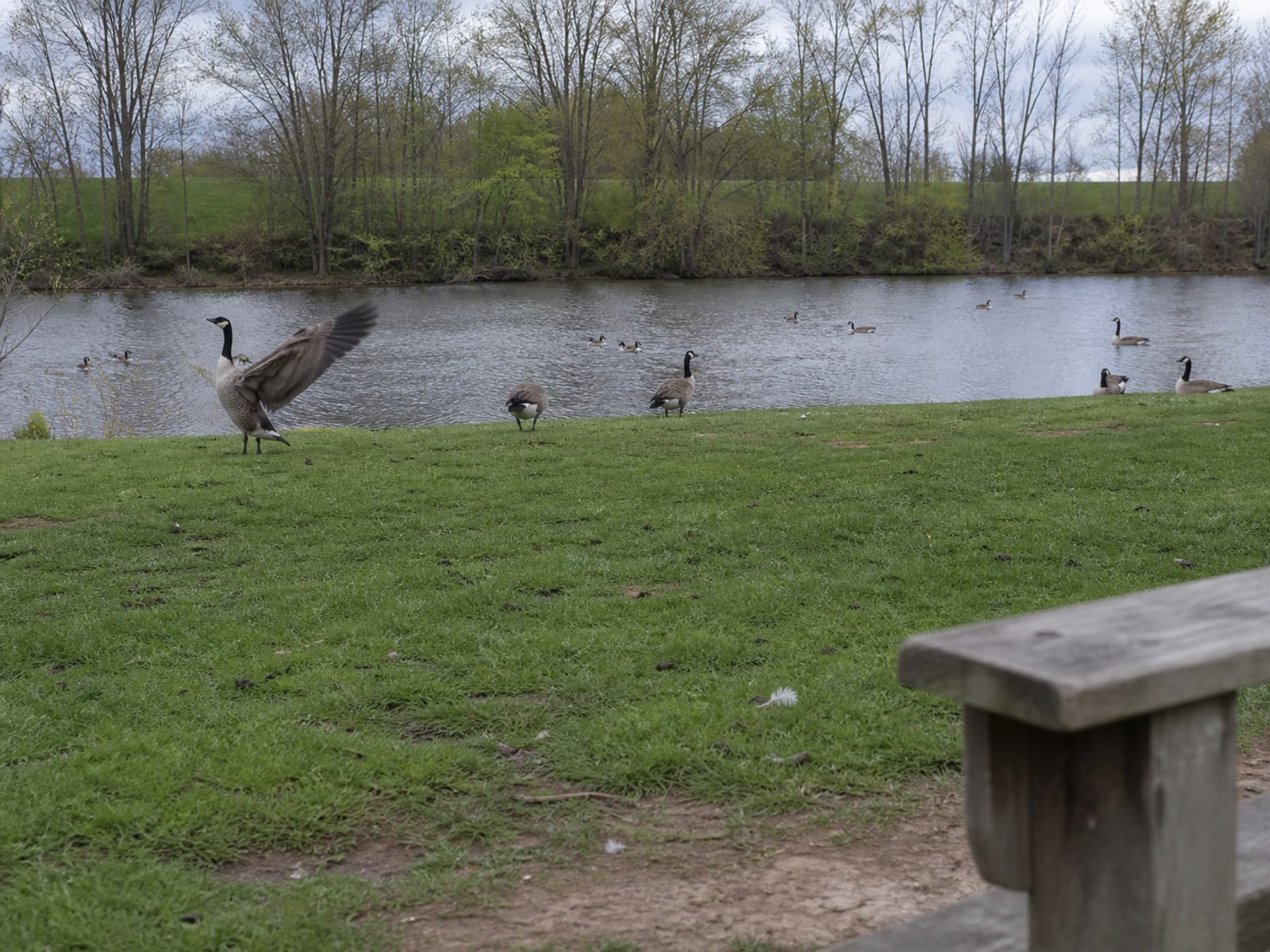
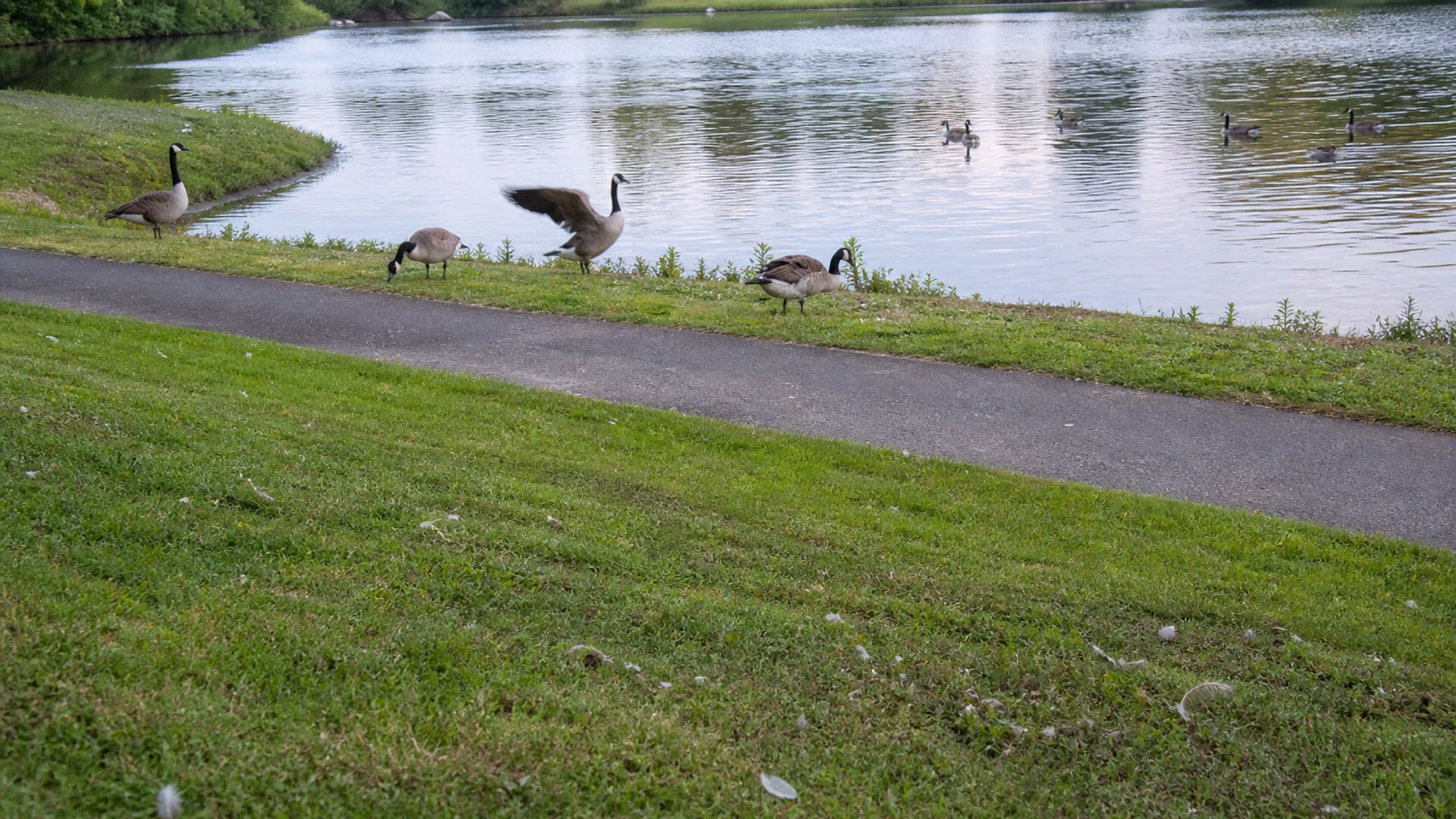
Canada goose droppings and grazed turf on maintained ground in Bloomfield, CT

Where does lawn meet water in Bloomfield?

Bloomfield has an unusual amount of both for a town its size. Where the record does not confirm a water feature, this says so instead of guessing, and nothing here is a customer list.

Filley Pond and Filley Park

The pond near Tunxis Avenue and the town center, and the site the town names in its own stormwater reporting alongside schools, ball fields and parks. It sits in a recently renovated park with a 2025 reopening, which changes the job: any plan there has to work around new plantings, public use and town maintenance rather than treating it as an empty lawn. Public Works Operations holds the grounds, with Parks and Recreation coordinating public use.

Three golf courses inside one town

Wintonbury Hills at 206 Terry Plains Road is town owned and open to the public, opened in 2005 as a Pete Dye design, marks water hazards on its own scorecard and carries Audubon International certification. Gillette Ridge at 1360 Hall Boulevard is public and advertises streams and lakes among its features. Tumble Brook at 376 Simsbury Road is a private 27 hole club. Three courses, three different ownership and purchasing routes, and calling any of them by the wrong one is the fastest way to sound like an out-of-town vendor.

The Cottage Grove Road corporate campus

The Connecticut General headquarters campus at 900 Cottage Grove Road is the clearest documented corporate example in town, known for extensive lawn and a designed pond. It is named here as local geography rather than as a client. Worth knowing operationally: the town's own corridor figures put Cottage Grove Road near the campus at around 23,700 vehicles a day, so even a short move across town can sit in commuter traffic.

Institutional campuses and association water

Duncaster at 30 Loeffler Road has documented meadow, woodland, wetlands, a wetland boardwalk and a designed water feature. The Greens at Gillette Ridge has a documented condominium stormwater basin, with 2025 wetlands records describing its reconstruction, sediment, invasive growth and earlier flooding. Seabury's 66 acre campus sits near Reservoir No. 2, but no on-campus ornamental pond is documented, and street names like South Pond Circle are not evidence of a pond either.

Who do you have to ask in Bloomfield, and what are the setback numbers?

Fieldwork on turf and physical work near water are two different questions with two different answers, and Bloomfield publishes unusually precise numbers for the second one.

The Inland Wetlands and Watercourses Commission adopted revised regulations and an official map in May 2023. The regulated upland review area runs 100 feet from a wetland, 200 feet from a watercourse and 500 feet from a potential or identified vernal pool. The buffer standards are 100 feet for a named watercourse or pond, 75 feet for another watercourse and 50 feet for a wetland.

Those distances are large enough that a lot of shoreline ideas land inside them. Planting a buffer, installing a barrier at a pond edge, regrading or changing drainage near a brook can all be regulated activity. Moving birds off maintained turf with a dog is a different sort of activity altogether, and it would be wrong to tell you every goose visit in Bloomfield needs a wetlands filing. The Wetlands Agent is the person who decides which side of that line a physical change falls on, and there is an administrative permit route for qualifying work in the upland review area that is unlikely to have significant impact.

On timing, the regulations reproduce the statutory outer limits: a hearing beginning within 65 days of receipt, finishing within 35 days of commencement, a decision within 65 days of the hearing, or within 65 days of receipt with no hearing. Those are legal ceilings rather than an estimate of how long yours will take.

On the land side, Public Works Operations maintains parks, public spaces, athletic fields and turf, Parks, Recreation and Leisure Services owns programming and public use, and school fields bring in Board of Education facilities. For a recurring municipal service there is a purchasing route as well: open market at or below 7,500 dollars, three written informal quotes above that, and a formal sealed bid at or above the Charter threshold, which is set at one tenth of one percent of the town's total annual budget and therefore moves with the budget in force.


What are the rules about working dogs in Bloomfield?

Less settled than in some neighboring towns, which cuts both ways and is worth being straight about.

We could not find a current Bloomfield ordinance setting a general leash rule for dogs in town parks, and we could not find a working-dog or commercial-dog exemption either. What the code does have is a definition of public property that includes parks, recreation areas, playfields and school grounds, a requirement to remove dog waste there, and an exemption written only for a guide dog accompanying a person who is blind. The vicious-dog provisions separately exempt law enforcement dogs on duty, which is not the same thing as a commercial working dog.

State law sits underneath all of that. Connecticut General Statutes Section 22-364 prohibits allowing a dog to roam at large on another person's land or a public highway when it is not under the control of its owner, keeper or agent. Handler control is therefore the operative concept, not a permission slip.

The honest position is this: absence of a specific park leash ordinance is not authorization. On municipal ground we ask for written site authorization and we set out how the dog stays under handler control, and we would treat any company claiming an automatic working-dog exemption in Bloomfield with caution. On the state park and forest land at the western edge of town, DEEP's own rule generally requires a leash no longer than seven feet, which is a different authority again.

Scheduling has a local rule too. Bloomfield's noise ordinance sets daytime as 7:00 a.m. to 10:00 p.m. Monday through Saturday and 9:00 a.m. to 10:00 p.m. on Sunday. Since goose work is most useful around the birds' feeding periods at either end of the day, that daytime window is a real constraint on an early start, and it is better handled at scheduling than argued about afterwards.

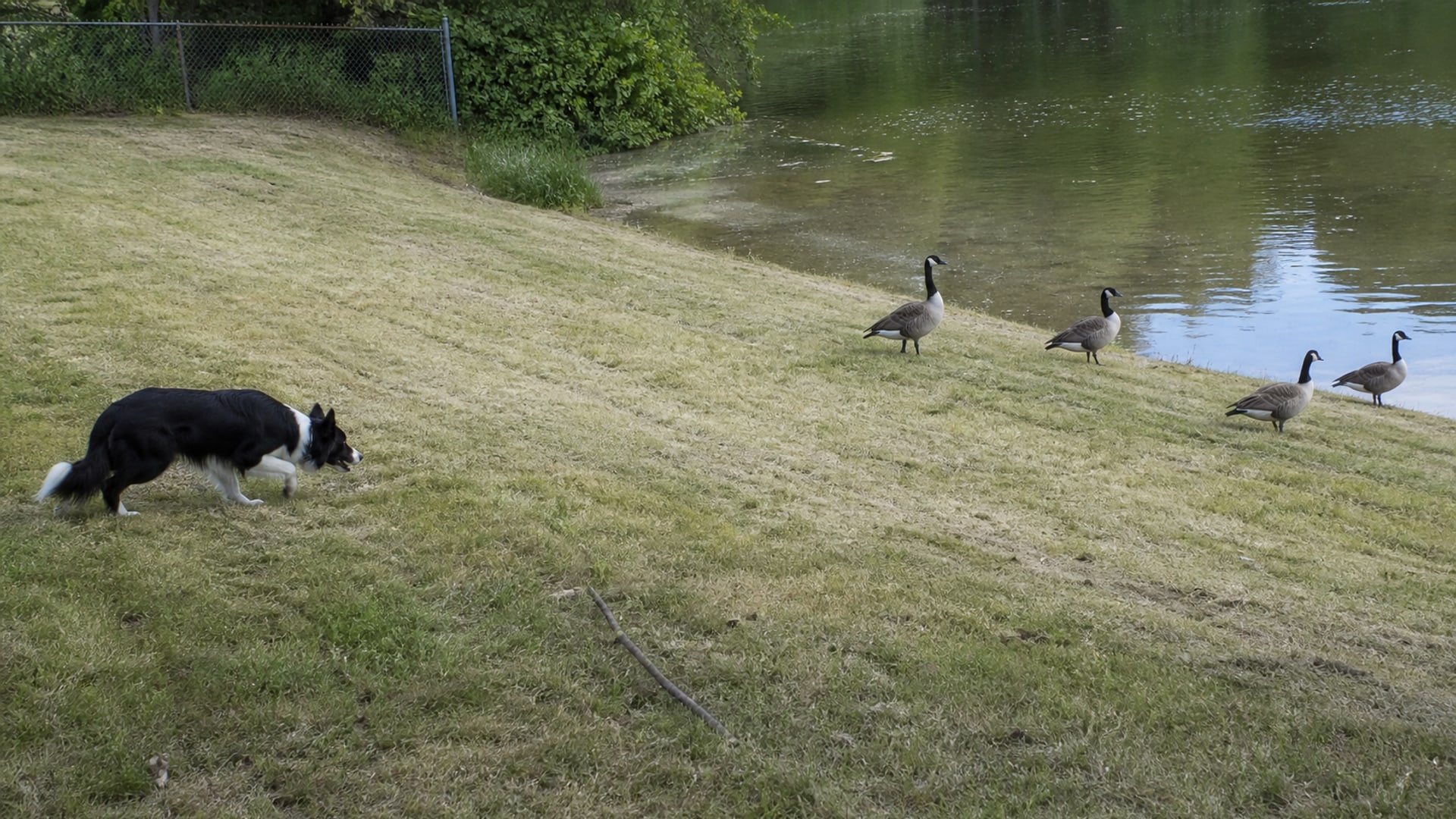
A Border Collie working a flock of Canada geese off maintained ground in Bloomfield, CT

What happens after you call about a Bloomfield property?

The sequence below is the same one we would follow at Filley Pond, on a fairway or on a company lawn. What changes is who has to say yes.

  1. 01

    We ask what you are seeing, and what has already been tried

    How many birds, on which surfaces, at what times, and how close the water is. In Bloomfield the second half of that question is unusually productive, because a lot of local sites have already had a device on them. What a flock has learned to ignore genuinely changes what to do next.

  2. 02

    We establish who holds the site

    Town park, school field, a golf course with its own ownership route, association common land or private ground. That answer decides who approves the work and how it gets bought.

  3. 03

    We walk the ground and map the way in from the water

    Geese walk between water and turf, so the useful map is not only where they stand. It is where they come up, which grass they graze, where they loaf, and which of that you actually control.

  4. 04

    We settle permissions before anything is scheduled

    Written site authorization on municipal ground, with handler control set out, and a conversation with the Wetlands Agent before anything that could count as a physical change inside those upland review distances.

  5. 05

    The dogs work at times the flock cannot anticipate

    A handler works the ground with a trained Border Collie holding a stalking posture. A goose reads that as a predator and leaves under its own power, with no contact and no capture. Then it repeats, unpredictably, which is the specific thing the lights at Filley could not do.

  6. 06

    We say what should change about the ground, and we keep score

    Where mowing stops, whether an unmown strip or a barrier is possible between water and turf, and where feeding is still happening. Then counts, locations, complaints, and the gap between a visit and the flock coming back. That gap widening is the first honest evidence you get, and it shows up long before the birds stop appearing at all.

What we do not do, including the one the town is considering

The 2025 stormwater report says the town is considering a turf application that geese find distasteful at its congregation areas. That is a repellent, and it is worth being precise about it, because it is exactly the sort of measure a property here might be offered.

We do not apply repellents. They are registered pesticides, applying one to commercial turf in Connecticut is licensed work, and we hold no such certification. If a repellent suits a defined surface, the person to call is a licensed applicator, and the questions to ask are which product is registered in this state, how often it needs redoing and what rain does to it.

We do not addle eggs or work on nests either. That is regulated activity, the landowner registers with the US Fish and Wildlife Service before anything happens, Connecticut accepts that federal registration and adds a further requirement where a commercial control firm is involved, and the authorization belongs to the landowner or the town rather than to a contractor. If somebody offers to handle a nest on Bloomfield ground, ask who is authorized for that site.

This is a maintained program rather than a one-time fix. The town's own file already contains one measure that did not fully address the issue, and a vendor promising certainty after that would be asking you to ignore your own records.

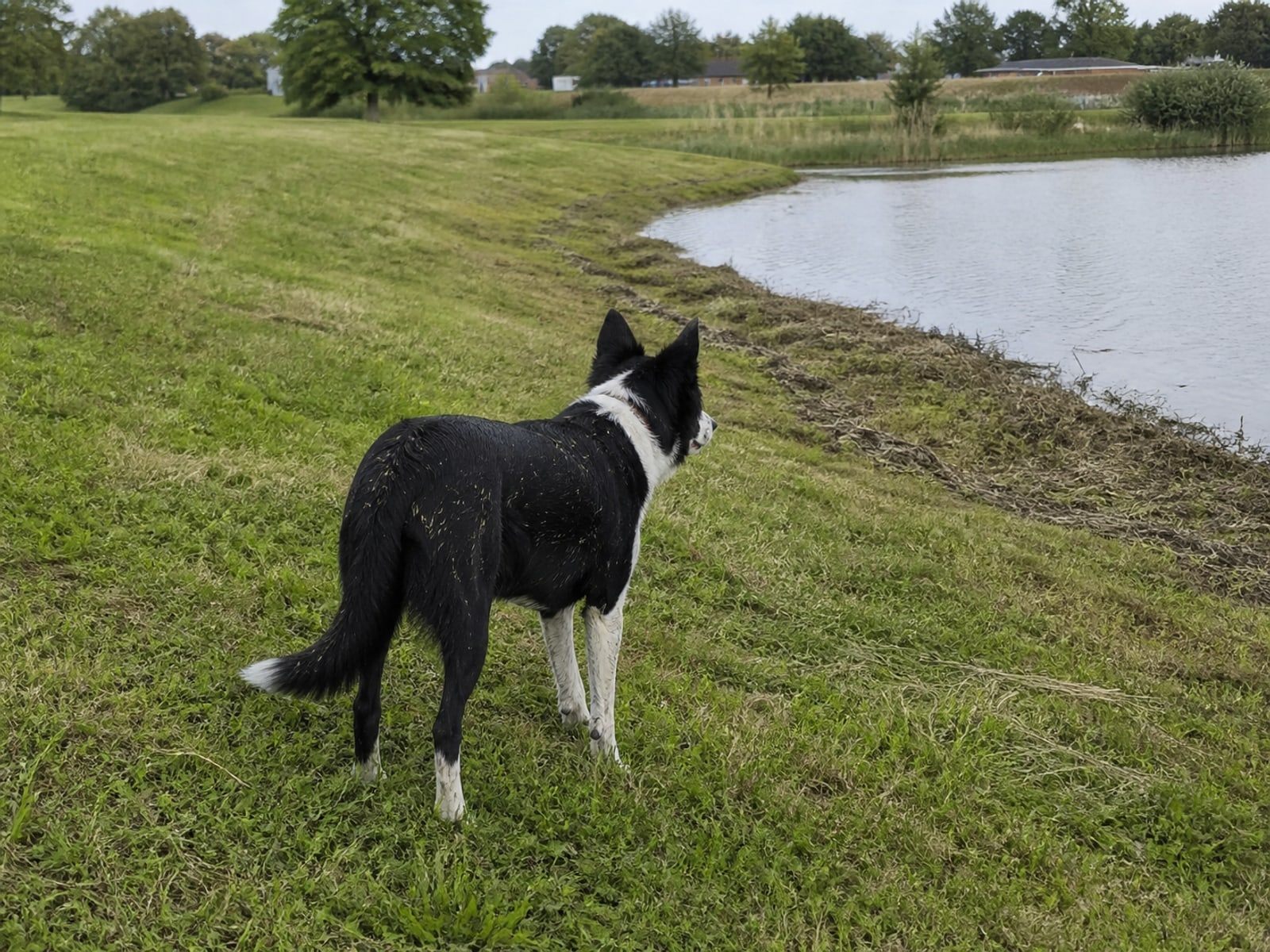
Maintained ground in Bloomfield, CT holding clear of Canada geese after repeat visits

Bloomfield goose control questions

Is there a documented goose problem in Bloomfield, or is that a sales line?

It is documented by the town. The draft 2025 stormwater annual report names schools, ball fields, parks and Filley Pond as goose congregation areas on town land and sets a goal of a feeding prohibition and a management program, with Public Works responsible. The Filley Park redesign material separately describes droppings making the lawn unusable and runoff carrying it into the pond.

The town installed deterrent lights. Why would anything else work?

Because the failure mode was habituation, and a dog does not trigger it. The town's fiscal 2018 to 2019 report records that eye-level deterrent lights were not fully addressing the issue. Connecticut DEEP says geese become accustomed to visual deterrents and that non-lethal methods other than habitat work are transitory alone. A predator response is instinctive, and an unpredictable schedule cannot be waited out.

Is feeding geese against the rules in Bloomfield?

Not yet, as far as the current code shows. The 2025 stormwater report sets a goal of prohibiting waterfowl feeding on town land, but we could not find an adopted ordinance that does so today. Signage and education are still worth doing on private ground, because feeding will hold a flock in place against everything else you are doing.

Do we need a wetlands permit near Filley Pond or a brook?

Possibly, if you are changing something physical. Bloomfield's upland review area runs 100 feet from a wetland, 200 feet from a watercourse and 500 feet from a vernal pool, so shoreline planting, fencing or grading often falls inside it. The Wetlands Agent decides, and there is an administrative permit route for qualifying low-impact work. Moving birds off turf with a dog is a different activity.

Can a trained dog work on a Bloomfield town field?

Only with written site authorization. There is no working-dog exemption in the town code that we could find, and state law requires a dog to be under the control of its owner, keeper or agent rather than roaming at large. We ask for permission in writing and set out how the dog stays under handler control.

How much does goose control cost in Bloomfield?

It is quoted per site, on ground worked, bird numbers, water edge, visit frequency and what the surface is used for. No credible published range exists for this region. For town work there is a second step: open market purchasing at or below 7,500 dollars, three written quotes above that, and formal sealed bidding at or above the Charter threshold of one tenth of one percent of the annual budget.

We have geese on a fairway rather than a park. Same answer?

Same method, different permissions and a different calendar, because play and maintenance decide when anyone can be on the ground. Bloomfield having three courses in town means the ownership question matters more here than usual: town owned, public and private all sit within a few miles of each other.

Local detail

Canada geese in Bloomfield, Hartford County

Bloomfield is a Hartford County town of roughly 21,500 residents, and it is one of the very few municipalities in the region that has written its own goose problem down. Its draft 2025 stormwater annual report names schools, ball fields, parks and Filley Pond as goose congregation areas on town land, and an earlier annual report records that eye-level deterrent lights had not fully addressed the issue.

The town carries an unusual concentration of the ground geese want: three golf courses inside one municipal boundary, a recently renovated central park with a pond, a large corporate campus known for lawn and a designed pond, and a set of flood-control reservoirs owned by the state and jointly maintained with the town. Several different ownership systems hold that water, which changes who authorizes work at a given shoreline.

Neighborhoods we cover in Bloomfield

Parts of Bloomfield where we work. Each one opens in Google Maps.

Bordering towns: West Hartford, Hartford, Windsor, East Granby, Simsbury, Avon. A flock does not recognize a town line, so a program sometimes has to be scoped wider than one parcel.

Getting there: Cottage Grove Road, Blue Hills Avenue, Bloomfield Avenue, Terry Plains Road, Simsbury Road, Route 189, Route 218.

We cover all of Bloomfield and the ground around it. If your neighborhood is not listed, or you are not sure which one you are in, it is very likely we work there. Ask and we will confirm.

Talk to us about your Bloomfield property

Tell us what you are looking at: roughly how many birds, which surfaces they are fouling, how close the water is, and what has already been installed there. If a device is already on site, say so, because it changes what the flock has learned.

Tri-State Geese Patrol runs humane Canada goose abatement with trained Border Collies across Connecticut, Massachusetts and New York, and we are reachable 24 hours. Call (203) 856-4889 and it goes to Bill.

And if the honest answer for your site is an unmown strip and a no-feeding sign rather than a contract, we will say so.