Tri-State Geese Patrol

Nesting Season Aggression

From March, a Canada goose pair stops being scenery and starts defending ground. Staff, residents and visitors get hissed at, followed and chased, usually near a path or a doorway, because urban geese nest close to water and close to the places people walk. New York's Atlantic Flyway plan links nesting-season aggression to injuries, most of them from people falling while backing away, along with lawsuits and areas becoming unusable. It runs roughly March into June, and it is the one goose problem that is a safety issue rather than a maintenance one. Call Tri-State Geese Patrol on (203) 856-4889.

At a glance

Territory defense starts

March

Peak hatch

First week of May

Usual injury

A fall, not the bird

Best time to act

Before the pair commits

What is actually happening

The bird is not being unpredictable. It is doing something specific, on a schedule, for a reason, and once you know the sequence the behavior stops being mysterious and becomes something you can plan around.

Connecticut DEEP says geese may begin defending territories in March and nest by early April, with hatching from April through June and a peak in the first week of May. New York DEC describes adult pairs returning to nesting areas in late February or March as the water opens, with egg laying and incubation extending through April.

Cornell's guidance on urban geese notes that they usually nest within about 150 feet of water. That single detail explains most of the complaints a property gets, because on a developed site the ground within 150 feet of the pond is generally the path, the courtyard, the parking island, the bank beside the entrance. The nest is not in a remote corner. It is where people walk.

Once eggs are down, the pair defends. The US Fish and Wildlife Service notes that the guarding male is usually the bird most likely to go after somebody who comes near a nest. The goose is not trying to injure anybody. It is escorting a person away from a nest they very likely never saw, and the display is designed to be intimidating rather than injurious.

That distinction matters for how staff should respond, and it is why the injuries that do happen mostly are not bites.

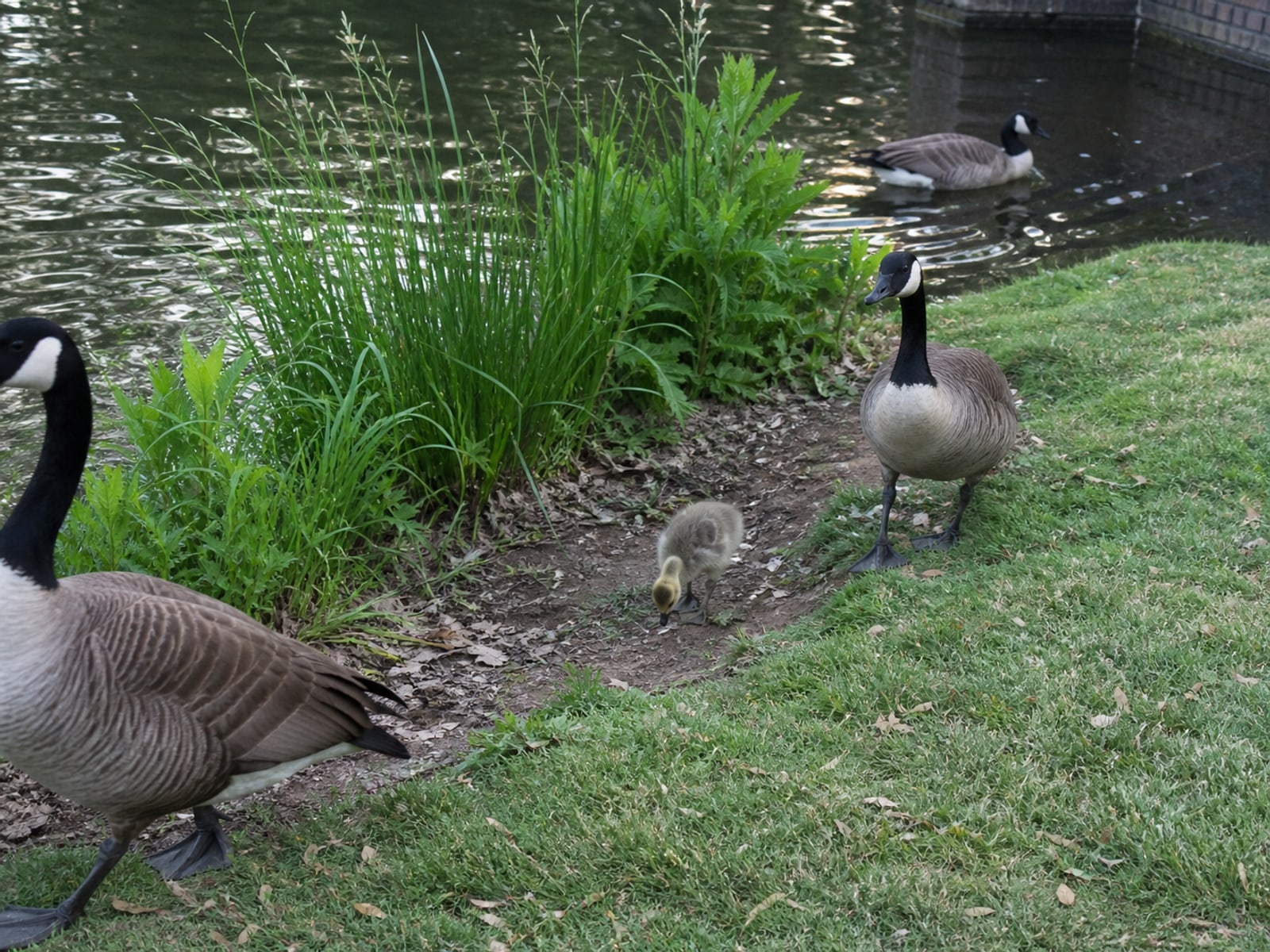
A Canada goose standing in an alert posture with its neck extended low

Why this one is a safety problem and not a grounds problem

Every other goose complaint costs money and patience. This one puts people on the ground.

New York's Atlantic Flyway plan documents public-safety problems from nest defense, and is specific about the pattern: aggressive geese have caused injuries usually resulting from falls, along with lawsuits and areas becoming inaccessible. It also notes traffic hazards, which on a campus or a park usually means somebody stepping backwards off a curb or into a path.

Read that carefully, because it changes the response. The risk is rarely the bird making contact. It is a startled person moving backwards fast on wet grass, on a step, beside a road, or while carrying something. The people most exposed are the ones who cannot easily change route: groundskeepers with equipment, delivery drivers, children on a school ground, older residents on a fixed walking loop.

The second cost in that list is worth reading twice as well. Areas becoming inaccessible is what happens when a property quietly stops using a path for six weeks because of one pair, and it is a real loss of the thing the site was built for.

There is a third consequence that shows up on a balance sheet rather than in an incident log. A property that has been chased off part of its own grounds tends to solve it with people rather than with wildlife: an extra staff member escorting a route, a delivery moved to a longer entrance, a groundskeeping task deferred until the birds move on. None of that appears as a goose cost, and all of it is one.

There is a liability dimension, and no credible published figure exists for goose-related liability on commercial or municipal property in this region. Treat any specific number you are given with caution.


Why it seems to happen overnight

Almost every property describes this the same way. The geese were there all winter and nobody minded them, and then one week in April somebody got chased and suddenly there is a problem.

Nothing changed about the number of birds. What changed is that a pair committed to a nest, and a Canada goose that is guarding is a different animal from one that is grazing. The switch is genuinely abrupt from the outside, because the thing that triggered it, a nest with eggs in it, is usually invisible from the path.

That is also why the first confrontation so often involves somebody who had walked past that spot every day for a month. They had not started doing anything wrong. They had crossed a line that appeared without a sign on it.

The practical consequence is that the useful moment is earlier than the moment it becomes visible. By the time your first incident report is filed, the nest is active, protected, and going to stay where it is for weeks.

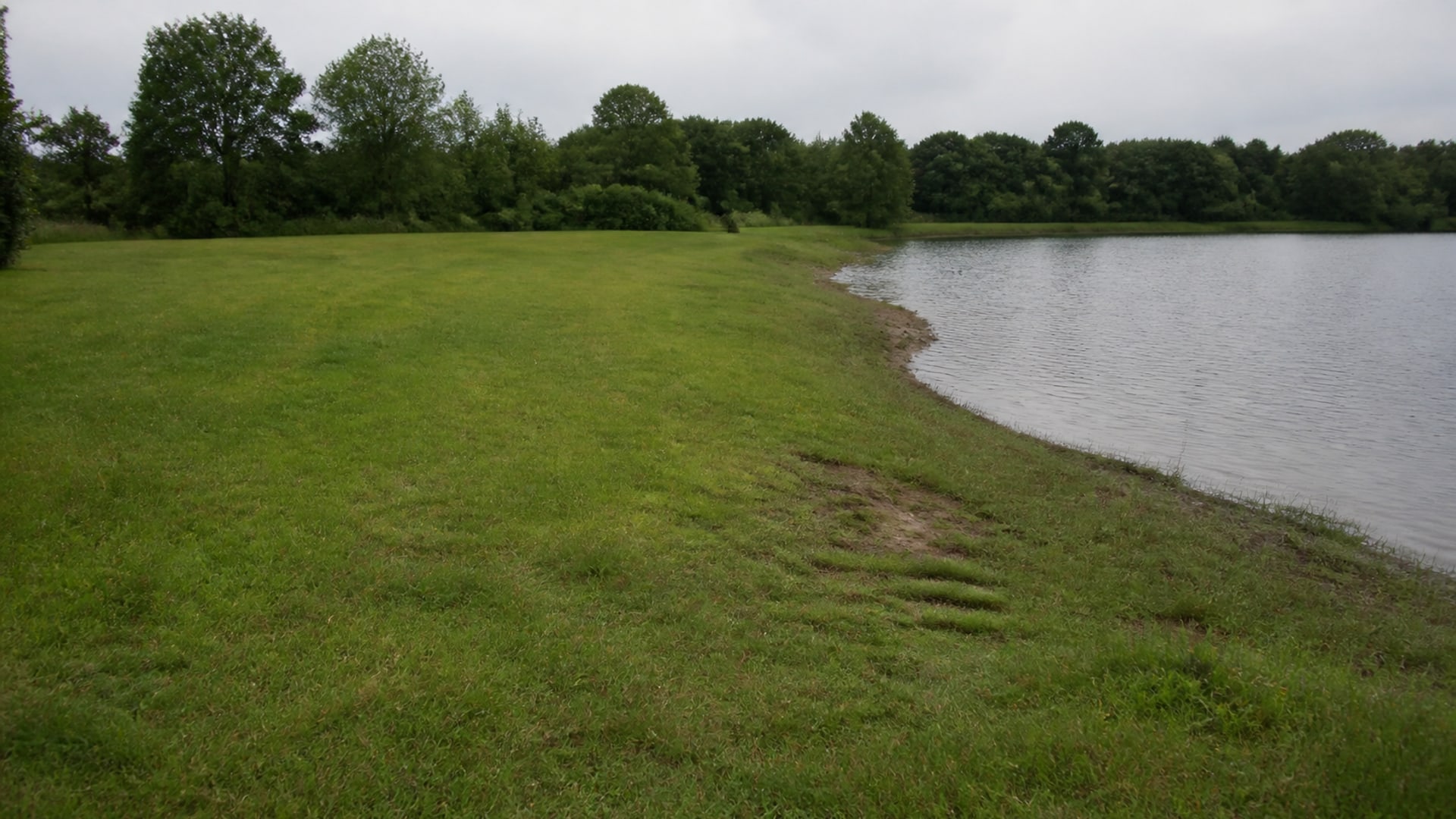
Maintained ground of the kind this page describes, on a nesting season aggression property

The season, and what each part of it means for your site

Spring shoreline vegetation and grass at the start of the nesting season

Late February and March, pairs return and claim

Birds arrive back at nesting areas as the water opens and territory defense begins. Nothing has been committed to yet, which makes this the single best window of the year for changing what a property offers. A pair that never settles is a problem that never happens.

Late March into April, nests go down

Connecticut's guidance describes nesting by early April. Once a nest is active, your options narrow to management and routing rather than prevention, and they stay narrow for weeks. This is the point at which most properties first notice, which is a few weeks after the point at which acting was easiest and least expensive.

Late April to early May, hatching

Peak hatch lands in the first week of May in Connecticut, with New York DEC describing peak hatch in late April or early May depending on location. Defensive behavior is at its most reliable around a nest with eggs close to hatching.

May and June, goslings on the ground

Adults with goslings hold ground and behave defensively while the young are mobile but vulnerable. The family group moves, so the confrontation zone moves with it, which is why a warning cone placed in April is often in the wrong place by June.

Mid-June to late July, the molt takes over

Aggression subsides into a different problem. New York DEC identifies a four to five week flightless molt in this window and Penn State Extension advises the birds should not be disturbed during it. The complaint shifts from confrontations back to volume, fouling and concentration.

What to tell your staff and your residents now

This is the practical part, and it costs nothing. If nesting season has already started on your property, this is the useful list.

Back away facing the bird, slowly

The injuries in the record are falls. Turning and hurrying away on wet grass, near a step or beside a road is the thing that actually hurts people. Facing the bird and walking backwards steadily removes the fall risk and satisfies the goose, which only wants distance.

Reroute rather than contest

A path closed or diverted for a few weeks costs far less than an incident, and it is the response the Atlantic Flyway plan's own list of consequences argues for. Mark it, say why, and put a date on it so it does not quietly become permanent.

Find the nests before somebody else does

Walk the ground within about 150 feet of any water in late March and map what you find. Knowing where the two nests are is what lets you route around them deliberately instead of discovering them one startled person at a time.

Warn the people who cannot reroute

Groundskeepers, delivery drivers, contractors and anyone working alone near water. They are the ones who meet a defending male while carrying something, which is the worst version of this.

Do not approach, move or touch a nest

Canada geese, their nests and their eggs are protected under the Migratory Bird Treaty Act. Acting on a nest requires a specific federal registration held by the landowner or a public body. An employee moving a nest to solve a path problem is a legal exposure, not a fix.

Stop the feeding

USDA APHIS says feeding encourages congregation, reduces fear of people and can increase aggression. On a site where somebody is feeding the birds, the nesting pair is both more likely to be there and less inclined to give way.

What can lawfully be done about it

The honest answer for an active nest is narrower than most people hope, and it is much wider before one exists. That asymmetry is the whole strategy.

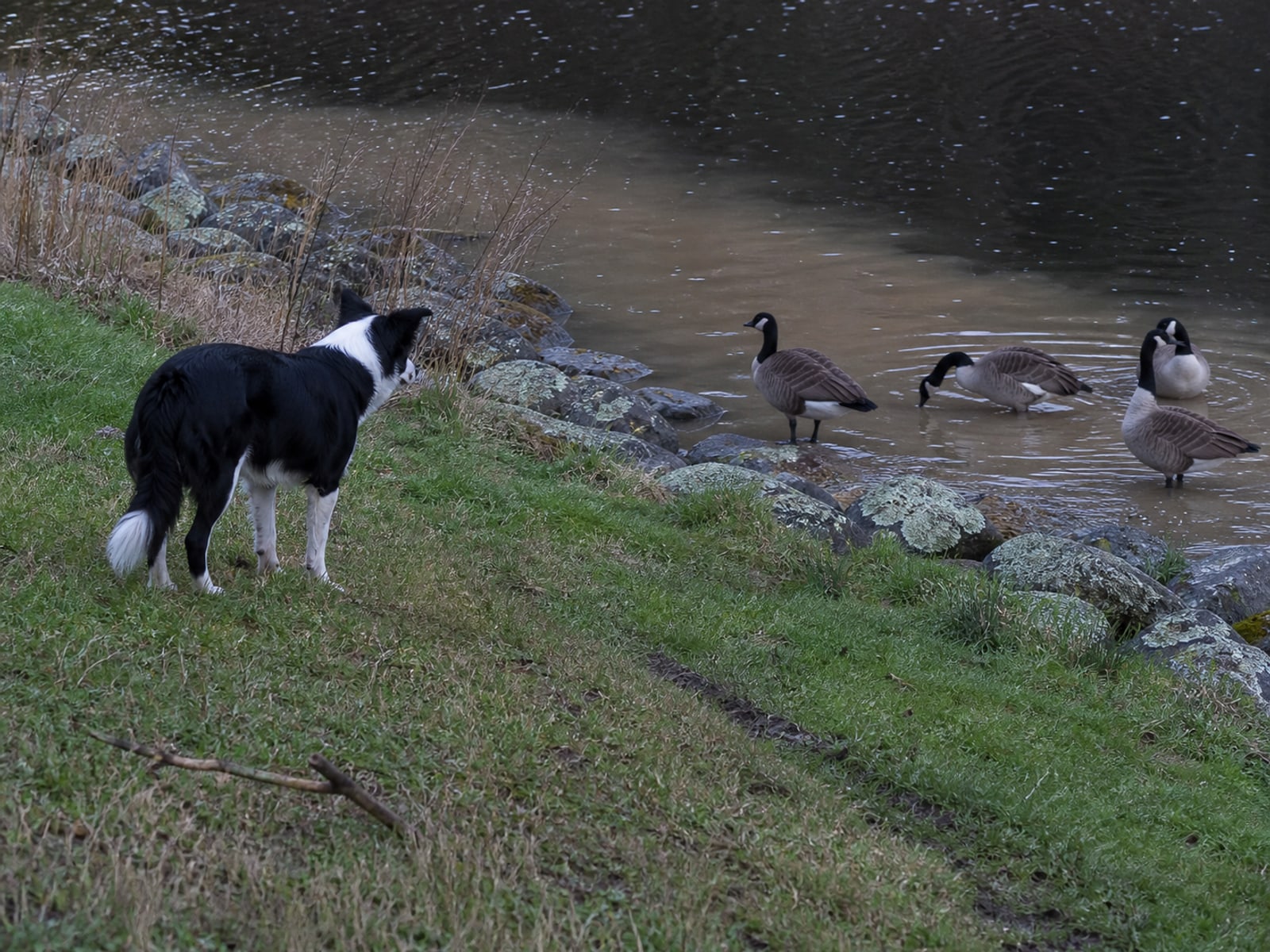
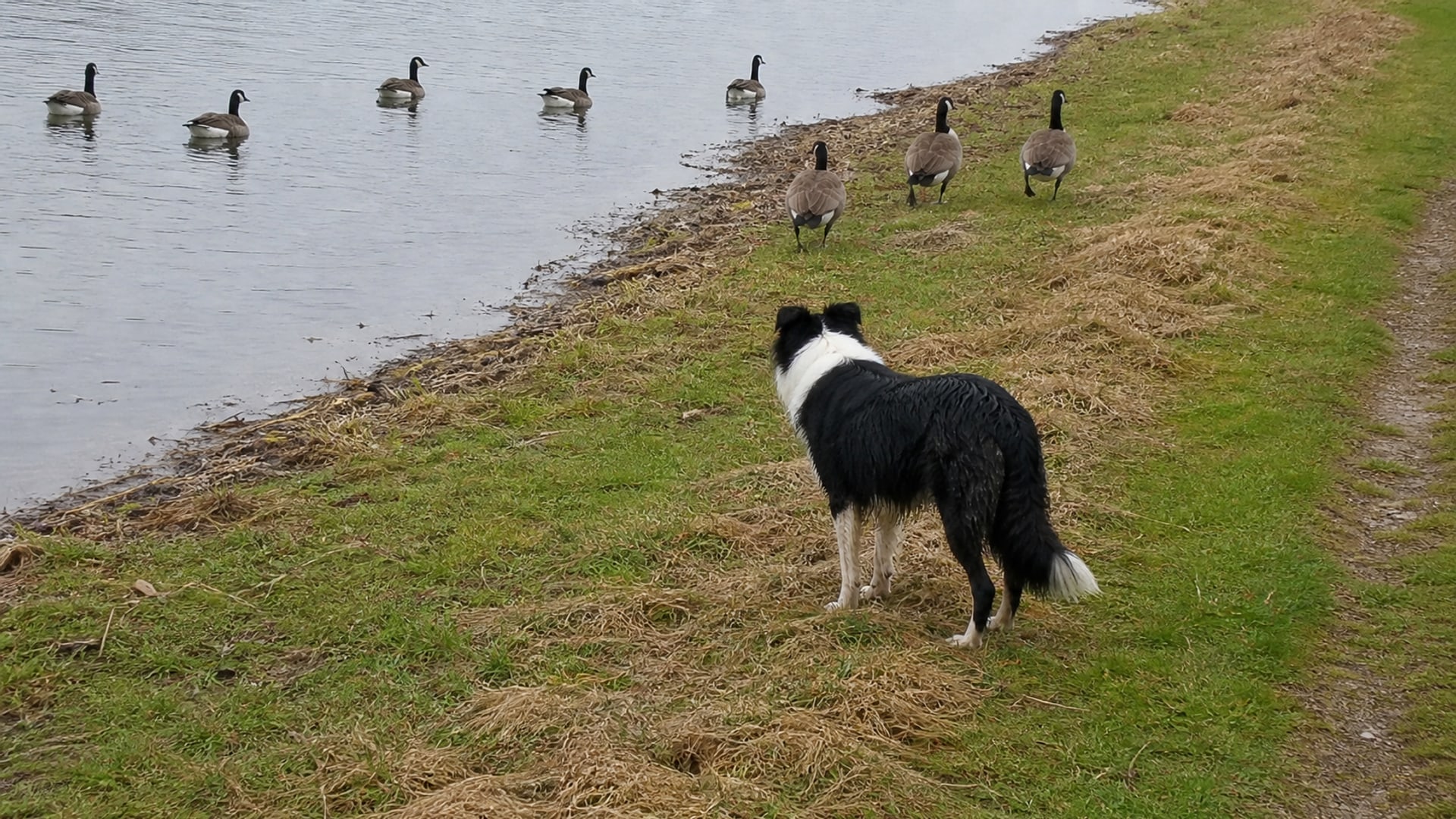
Moving birds without harming them needs no permit. New York DEC states that no federal or state permit is needed to scare, herd or chase geese, including with dogs or noisemakers, provided no bird is physically harmed. That is the legal footing for Border Collie goose abatement, and it works best here as prevention: a site that is being worked through late winter and early spring is a site a pair is less likely to choose in the first place.

Acting on a nest or its eggs is a different matter entirely. The US Fish and Wildlife Service describes a registered activity running March 1 through June 30, requiring annual registration before anything happens and annual reporting afterwards, with state requirements able to add conditions. Connecticut's state-contact entry notes an additional state requirement for commercial control firms. That authorization belongs to the landowner or the municipality. It is not something Tri-State Geese Patrol performs or holds, and we will tell you who administers it rather than blur the point.

Which leaves the lever that does the most over a season: making the ground less attractive before March. Connecticut DEEP calls habitat change the most effective non-lethal way to reduce conflicts, while being clear that not every change is feasible on a working public site. Habitat modification around the water's edge reduces the number of places within that 150-foot band that read as a good nest site.

The pattern across all of it is the one both agencies keep repeating. New York DEC says no single method is universally effective and that persistent use of a combination is usually necessary.

What a program does through nesting season

If you are already inside the window, the work changes shape. It stops being about moving birds and becomes about keeping people and nests apart while the season runs its course.

A clear walkway running past open water on a managed property

Map the nests early and keep the map current

Where they are, how close to which routes, and whether the family group has moved once goslings are mobile. A nest map from mid-April is out of date by late May, which is why the confrontation zone shifts and the cones end up in the wrong place.

Work the ground the birds have not committed to

Non-nesting birds on the same property are still hazeable, and keeping the wider site under pressure limits how many pairs settle there next year. Around an active nest, the work moves away rather than in.

Fix the routing with your operations people, not around them

Which paths, for how long, who signs off, and what goes on the sign. This is usually a conversation with facilities or a parks department rather than a wildlife decision, and it goes better when somebody has already walked it with them.

Brief the people at the sharp end

Grounds crews, delivery drivers, coaches, caretakers. Two minutes on how to withdraw is the single highest-value intervention available during nesting season, and it is free.

Plan the following February in June

The record of where pairs settled this year is the input to making those spots less attractive before the next return. Connecticut DEEP calls habitat change the most effective non-lethal way to reduce conflicts, and the window to act on it opens once the season ends.

Common questions

Will a goose actually hurt someone?

Direct injury from the bird is uncommon. The documented pattern in New York's Atlantic Flyway plan is injuries usually resulting from falls, which is why the advice to staff is about how to withdraw rather than about how to defend themselves.

Can you move the nest away from our doorway?

No. Nest and egg activity is separately regulated federal work requiring registration held by the landowner or a public body, and we hold no authorization for it. What we can do is help you route around it and reduce the chance of a pair choosing that spot next year.

How long does the aggressive phase last?

Broadly from territory defense in March through the gosling period into June, with the sharpest behavior around hatching in late April and early May. It does not end on a fixed date, it tapers as the young become less vulnerable and then gives way to the molt.

The same pair comes back to the same spot every year. Why?

Resident birds return to ground they know and to the same nesting spots. That is exactly why the useful work happens in late winter, before they commit, rather than in May when the options have already narrowed.

Can we put up a fence or a barrier around the nest?

Marking and rerouting around it is sensible and lawful. Enclosing or interfering with an active nest is not, and it risks turning a manageable six weeks into a regulatory problem. Keep any measure about where people go rather than about what the birds do.

We have a school ground. What is different?

Mostly that the people at risk are children and the routes are fixed by the timetable. Mapping the nests in late March, rerouting deliberately, and telling staff how to withdraw matters more here than anywhere else, and the case for working the site before nesting is stronger.

Does this mean the geese have to go?

Not necessarily, and framing it that way usually leads to disappointment. Most properties want the path back and the confrontations to stop. That is achievable by changing where the birds settle and where people walk, which is a smaller ask than an empty property.

Is one pair really worth calling somebody about?

For a maintenance problem, probably not. For this one, frequently yes, because a single pair beside the wrong path can close a route for six weeks and put somebody on the ground. The scale of a nesting problem is set by where the nest is rather than by how many birds are on the property.

What if the nest is somewhere genuinely impossible, like a doorway?

That is the case where the registered federal route becomes relevant, and it belongs to you or your municipality rather than to a contractor. We will tell you plainly that it exists, who administers it and what it requires, and in the meantime help you manage the routing. The authorization stays with you throughout; we work to it rather than in place of it.

Get ahead of next March

If a pair is already nesting, the useful conversation is about routing, staff guidance and reducing the chance of a repeat. If it is winter, the useful conversation is about making the ground a worse choice before they arrive, which is the version that costs less and works better.

Call Tri-State Geese Patrol on (203) 856-4889, or send us a message and it goes straight to Bill.

Tell us what your property is dealing with.

Call Tri-State Geese Patrol on (203) 856-4889 and we will talk through the site, the flock and what a program would look like.