Tri-State Geese Patrol

Goose Control in Windsor Locks, CT

Humane Canada goose abatement for Windsor Locks properties, using trained Border Collies that move birds without touching them. Nearly a fifth of this town is an international airport, and that changes whose problem your geese are.

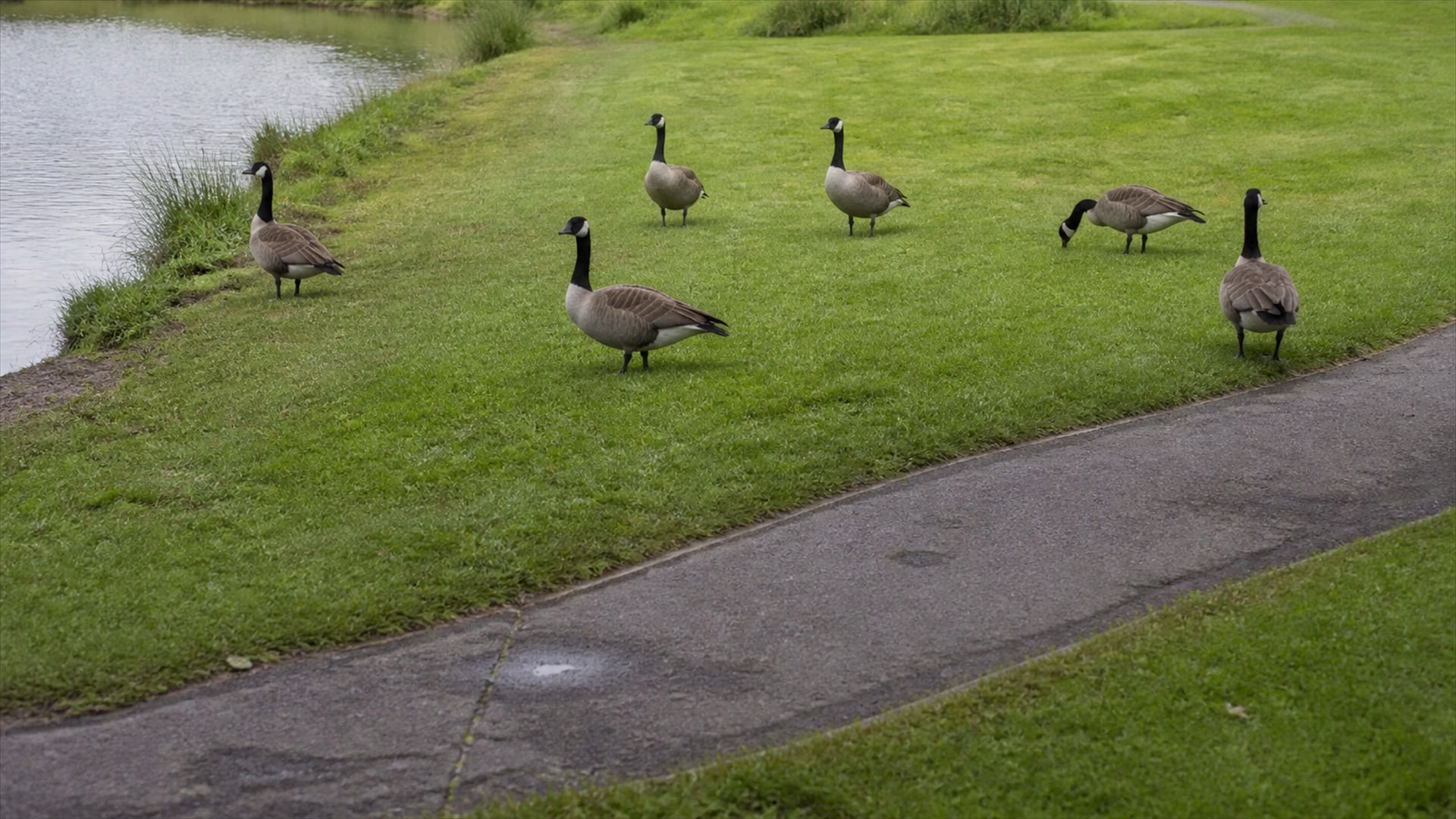
Open mown grass beside water of the kind Canada geese settle on in Windsor Locks, CT

At a glance

Town

Windsor Locks, Connecticut

Method

Non-lethal herding by trained Border Collies, no contact with any bird

Permit needed to move geese this way

None, provided no bird is harmed

The local factor

Bradley International Airport occupies roughly a fifth of the town

In Windsor Locks, your geese are not only your business

That sounds like an overstatement until you look at the land use. Bradley International Airport is a Part 139 Class I airport owned and operated by the Connecticut Airport Authority, with a 9,510 by 200 foot primary runway operating every day and every hour. The town's plan of conservation and development puts roughly 1,080.5 acres of airport inside the municipal boundary, which one of its land-use calculations gives as 19.8 percent of the town.

Nearly a fifth. That is not a neighbor, it is a defining feature of the town, and it changes the frame for any property in it.

It is also documented, and recently. In February 2020, USDA APHIS Wildlife Services gave notice that it would use pyrotechnics at Bradley as a non-lethal way to move Canada geese away, telling residents within five miles they might hear the devices. The notice described active dispersal of geese as critical to reducing aircraft strike risk, and it noted that the FAA encourages airports to work with neighboring properties within five miles.

Read that last part again, because it is the practical point for a Windsor Locks property owner. If your site sits within that radius and holds a resident flock, those birds are part of a wider safety question, and managing them is something the airport has a legitimate interest in rather than something that stops at your fence line.

That cuts both ways, and honestly it cuts in your favor. It means goose work on a commercial lawn, a school field or a company campus near Bradley is not merely a housekeeping expense. It is the kind of thing an airport wildlife program actively wants neighboring properties to be doing.

What we do not do, starting with the airport itself

We work the ground around Bradley. We do not work Bradley.

Wildlife management at a Class I airport is a different discipline from commercial grounds work, and it is governed accordingly. A wildlife hazard assessment can be triggered by multiple strikes, substantial aircraft damage, engine ingestion, or by wildlife capable of causing those outcomes getting access. Where a wildlife hazard management plan is required, it covers qualified personnel, inspections, control measures, communication with air traffic control, strike documentation, annual review and coordination with off-airport parties.

None of that is something a private contractor walks onto airside to do because a flock is standing there. Military aviation facilities are co-located on the airport property too, including Connecticut Army and Air National Guard facilities. Nothing on this page should be read as implying we have access to any of it, because we do not.

What we can do is the off-airport half: the properties nearby whose turf and water make the area attractive in the first place. If your site is genuinely airport-adjacent, the sensible thing is for that coordination to be part of the conversation rather than an afterthought, and we would say so at the quoting stage.

Two other things we do not do anywhere. We do not apply turf repellents, which are registered pesticides and licensed work in Connecticut that we hold no certification for. And we do not addle eggs or work on nests: the landowner registers with the US Fish and Wildlife Service before anything happens, Connecticut accepts that federal registration and adds a further requirement where a commercial control firm is involved, and the authorization belongs to the property rather than to a contractor.

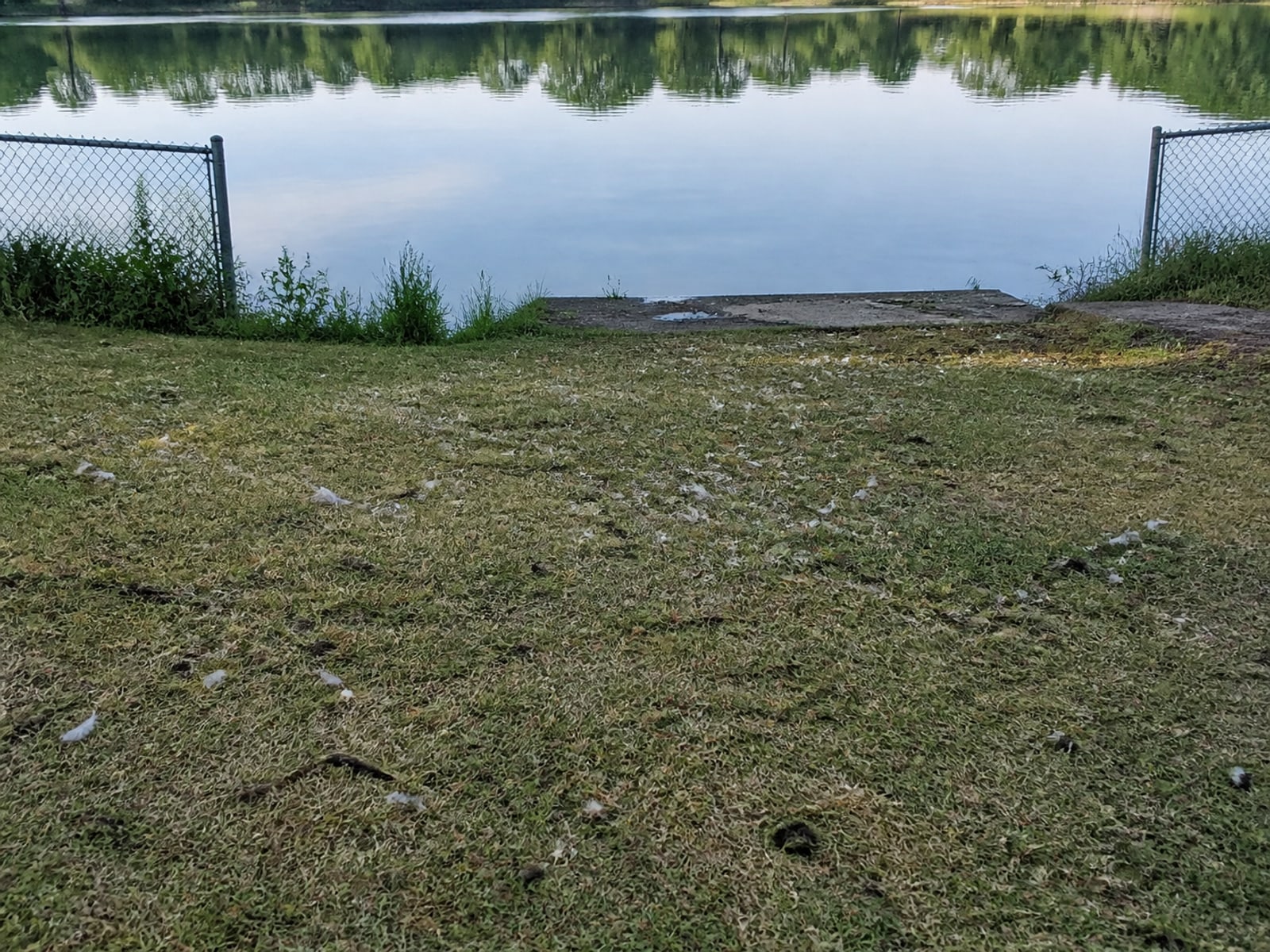
Canada goose droppings and grazed turf on maintained ground in Windsor Locks, CT

Where does lawn meet water in Windsor Locks?

The town lists fifteen public parks, and only one of them pairs a pond with recreation ground in its own description.

Spring Park

44.4 acres on Spring Street, and the only town listing that explicitly combines a pond with public recreation and open space, alongside a pavilion, picnic area and volleyball. It is the clearest municipal turf-and-water candidate in Windsor Locks. The town's own page does not quantify how much of that shoreline is mown, which is exactly the sort of thing a site walk settles.

Kettle Brook and the middle school

The plan of conservation and development says Kettle Brook passes extensively through Spring Park and Windsor Locks Middle School property, running from the Ella Grasso Turnpike area east to the Connecticut River. The middle school at 7 Center Street carries soccer, baseball and softball fields, so watercourse and athletic turf are verifiably together there. Goose presence at that specific site is not documented, and we are not going to assert it.

The other parks, and what they do not have

Veterans Memorial Park is 38.9 acres on Southwest Avenue with lighted soccer and softball, baseball, football, volleyball, a playground, pavilion and skating. Pesci Park, Reed Park, Southwest Family Park and Noden Reed Park add more maintained ground. What the town source does not document is a natural pond beside the playing fields at any of them, so the honest description is large open turf, which can hold birds on its own, rather than pond frontage.

Corporate stormwater, and the canal trail

A 2026 Planning and Zoning record for the Collins Aerospace campus at 21 Hamilton Road describes an existing drainage system and detention basin plus a proposed stone basin, with maintenance obligations including correcting clogging within 48 hours. That is a documented corporate basin, not evidence that geese use it. Separately, the Windsor Locks Canal State Park Trail follows the historic canal and river corridor, and it is state ground rather than town ground, which changes who authorizes anything there.

The park ordinance a dog program has to be reconciled with

Windsor Locks has a provision that most towns in this area do not, and any honest provider should raise it rather than hope you never read it.

Code section 251-5 requires a dog in a park or recreation area to be leashed, curbed and under the owner's control, and requires waste removal. Chapter 145 separately requires waste removal, with an exception written for a guide dog assisting a person with a disability, which is about waste rather than a park-leash or working-dog exemption.

Then section 251-11 prohibits destroying, molesting, killing, injuring, capturing or harming birds and other wildlife.

That word molesting is the one to think about. Our method involves no contact, no capture and no harm, and the entire legal basis for dog-based work is that the birds are not physically harmed. But a municipal program on Windsor Locks park land should be approved in writing in terms that reconcile the service with the leash rule, with the wildlife-protection language, and with the non-lethal purpose of the work, rather than assuming the point is obvious.

There is a route for that. Section 251-7 allows the Commission or the Park Director to regulate group use through a permit, which is a defined mechanism to work within. No blanket working-dog exemption exists in the code, and we would not represent otherwise.

On private ground, and the Hamilton Road and Ella Grasso Turnpike corridors have a lot of it, the property owner authorizes the work and the path is much shorter.


Who owns the ground, and why that list is longer here

For a town of about 12,600 residents, Windsor Locks has an unusual number of separate authorities holding land, and knowing which one you are dealing with is most of the front end of a job.

Municipal responsibility itself is split. Parks and Recreation administers the recreation facilities and programs while Public Works maintains the parks and public land, so a question about a field can belong to either depending on whether it is about use or about grounds. School property is a third route again, and the middle school is one of the two sites where a watercourse and athletic turf verifiably sit together.

Then there is everything that is not the town. The Windsor Locks Canal State Park Trail is state ground managed through the state park system rather than by the town. The airport is the Connecticut Airport Authority's, with military facilities co-located on it. Large private campuses along Hamilton Road and the Ella Grasso Turnpike hold their own drainage infrastructure, as the Collins Aerospace stormwater record shows.

That matters because the same flock will happily use several of those parcels in one day. A program scoped to one owner's land can move birds a few hundred yards onto somebody else's, which is not a solution so much as a transfer, and it is why we ask early who the neighbors are rather than only who is paying.

For anything physical near water, the wetlands question applies as it does everywhere. Moving birds off maintained turf with a dog is not a regulated activity; planting a buffer or building at a brook edge can be, and the town's drainage basins and preservation land make that worth establishing before materials are ordered rather than after.

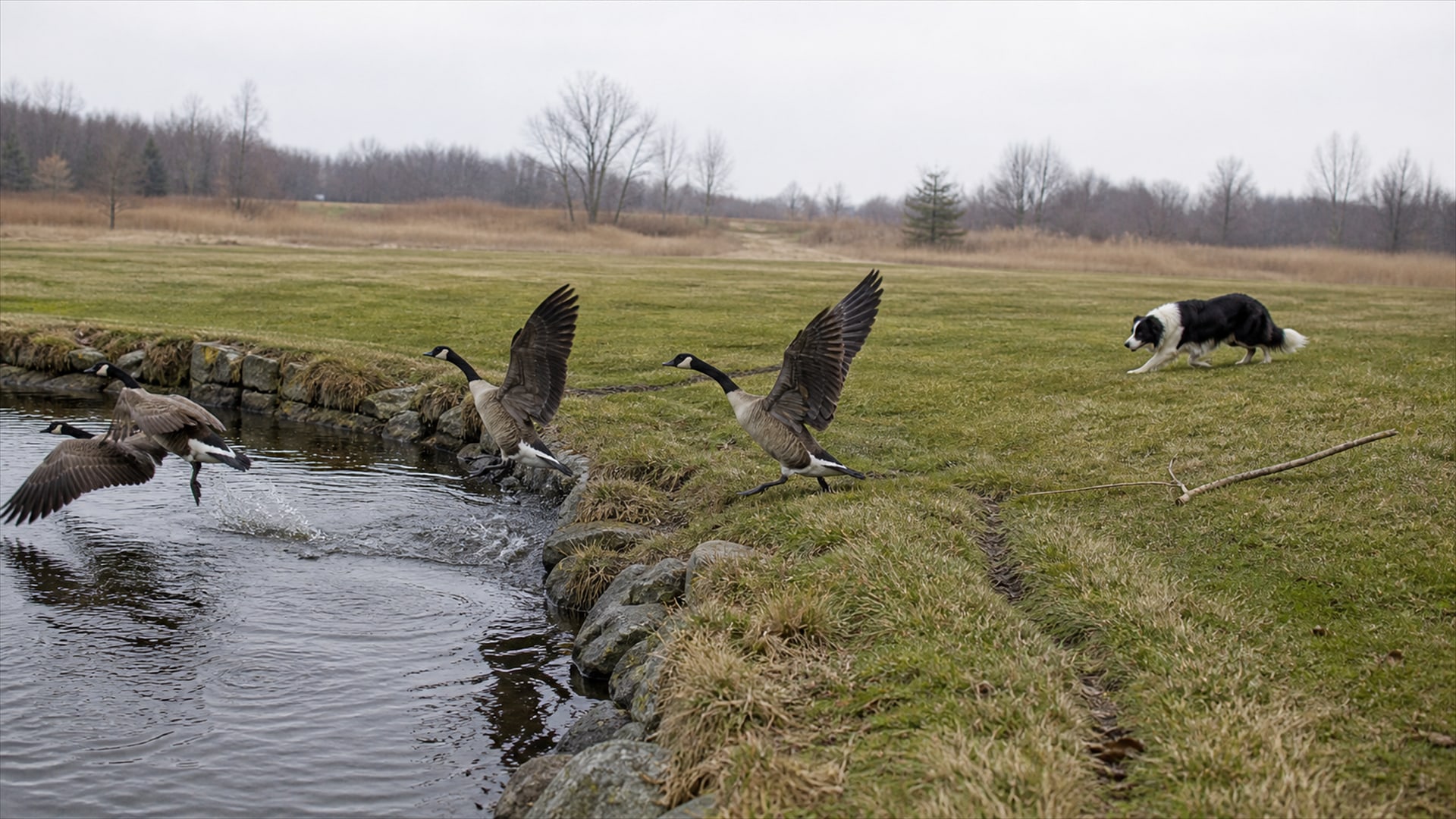
A Border Collie working a flock of Canada geese off maintained ground in Windsor Locks, CT

What happens after you call about a Windsor Locks property?

The fieldwork is the same on a corporate lawn and a school field. Here the front end is about proximity to the airfield and about which ordinance applies.

  1. 01

    We ask where you are relative to Bradley

    Not to alarm you, but because it changes who else should know. The FAA encourages airports to work with neighboring properties within five miles, and a resident flock inside that radius is part of a wider safety question as well as your own maintenance problem.

  2. 02

    We ask what you are seeing, and what has been tried

    How many birds, on which surfaces, at what times, and how close the water is. What a flock has already learned to ignore changes what is worth doing next.

  3. 03

    We establish whose ground it is

    Town park, school property, state park trail land, airport property or private commercial ground. Those are five different authorities in a town of this size, and airport land is not ours to work at all.

  4. 04

    We settle permission in writing before scheduling

    On town park land that means approval reconciling the work with section 251-5's leash requirement and section 251-11's wildlife-protection language, using the group-use permit route in 251-7 where that fits.

  5. 05

    The dogs work at times the flock cannot anticipate

    A handler works the ground with a trained Border Collie in a stalking posture. A goose responds to that as it would to a predator, by leaving, with no contact and no capture. The visits then repeat unpredictably, because a schedule the birds can learn is one they will sit out.

  6. 06

    We say what should change about the ground, and we measure

    Where mowing stops, whether an unmown strip or a barrier can sit between water and turf, and whether feeding is happening. Then counts, locations, complaints and the gap between a visit and the birds returning. Near an airfield that record is worth keeping properly, because somebody else may eventually ask about it.

When does acting in Windsor Locks cost the least?

Before nesting narrows what is lawful, which in a town this size can come round faster than people expect.

Connecticut DEEP puts territorial defense as early as March and nesting by early April, with incubation around 28 days and hatching through to June. Before a pair settles, a pond edge or a field margin is just ground and every option is open. Once a nest exists, the situation is protected in place and the choices narrow sharply.

The autumn and winter half runs on the river. DEEP records migrants arriving in early October, movement continuing through November with another arrival peak in mid-December, and most birds leaving the state by mid-January, though mild winters hold them. With the Connecticut River forming the eastern edge of town, that traffic is local rather than distant.

DEEP also says migrant and resident birds overlap in those months and cannot be told apart by appearance, so a flock on a Windsor Locks lawn in November tells you very little about whether you have a resident problem. That is worth knowing before anyone sells you a winter program on the strength of one sighting.

Nobody publishes freeze or thaw dates for the pond at Spring Park or anywhere else here, so we watch the water rather than the calendar.

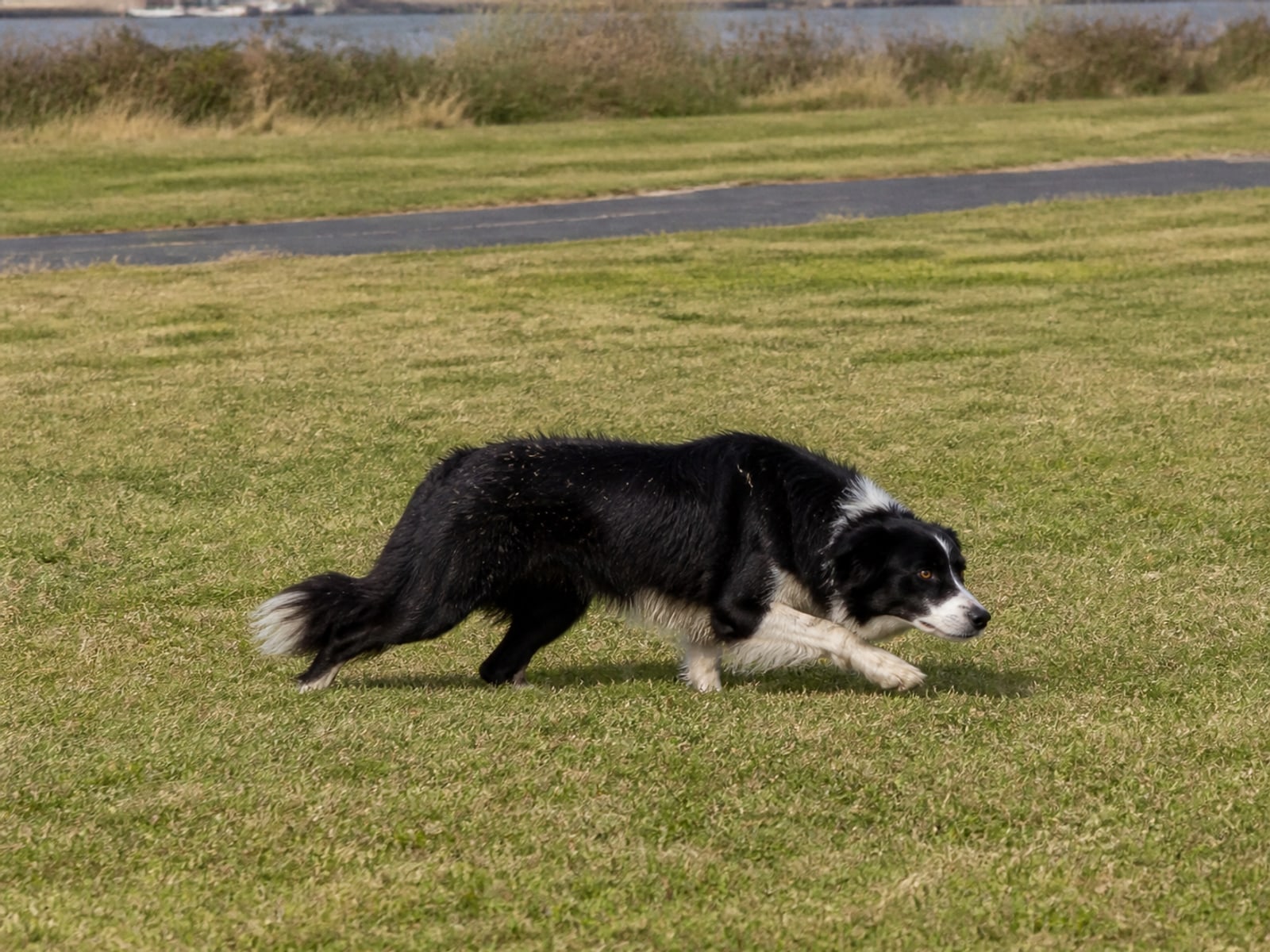
Maintained ground in Windsor Locks, CT holding clear of Canada geese after repeat visits

Windsor Locks goose control questions

Do you work at Bradley?

No. Wildlife management at a Part 139 Class I airport runs through the airport's own wildlife hazard program, with qualified personnel, air traffic communication, strike documentation and annual review, and military facilities are co-located there as well. We work the ground around the airport, not the airfield.

Does being near the airport actually matter for my property?

It does. The FAA encourages airports to work with neighboring properties within five miles, and the February 2020 notice about non-lethal dispersal at Bradley was sent to residents inside that radius. A flock on your turf near the airfield is part of a wider safety question, which is usually an argument for acting rather than against it.

Can a trained dog work on a Windsor Locks park?

Only with written approval that addresses the actual provisions. Section 251-5 requires dogs in parks to be leashed, curbed and under control, and section 251-11 prohibits molesting or harming birds and other wildlife. Our method involves no contact and no harm, but that should be established in writing rather than assumed, and section 251-7 gives the Commission or Park Director a permit route for group use.

Is feeding geese against the rules here?

Windsor Locks has no ordinance prohibiting or regulating the feeding of waterfowl. That absence is not permission either, because other property rules or state park rules can apply. On your own ground you can simply set the rule.

Does the town have a goose management plan?

Not that we could find. The town's 2017 stormwater plan is built around the six minimum control measures and contains no passage on geese, waterfowl or goose nutrient loading, and the plan of conservation and development does not carry one either. We would rather tell you that than present a general stormwater plan as a goose mandate.

How much does goose control cost in Windsor Locks?

It is quoted per site, on ground worked, bird numbers, water edge, visit frequency and what the surface is used for. There is no credible published range for this region, and a number given before somebody has walked your property is a guess.

Our fields have a brook rather than a pond. Same problem?

Often yes. Kettle Brook running through Spring Park and the middle school property is the local example: a watercourse beside maintained athletic turf is the same open-water-plus-grass pattern a pond creates, and the birds' route onto the fields is what a site walk is looking for.

Local detail

Canada geese in Windsor Locks, Hartford County

Windsor Locks is a Hartford County town of roughly 12,600 residents on the Connecticut River, and it is dominated by one fact that changes everything about wildlife here: Bradley International Airport sits within the town.

That makes it the one place in this service area where goose work has to start from aviation safety rather than from grounds maintenance, because an airfield runs its own wildlife hazard process with its own authorities. Away from the airport the town has Spring Park with its pond, Kettle Brook and Waterworks Brook, school athletic fields, and the Windsor Locks Canal State Park Trail along the river.

Bordering towns: Windsor, East Granby, Suffield, East Windsor. A flock does not recognize a town line, so a program sometimes has to be scoped wider than one parcel.

Getting there: Interstate 91, Route 20, Ella Grasso Turnpike, Route 159, Old County Road, Schoephoester Road, North Street.

We cover all of Windsor Locks and the ground around it. If your neighborhood is not listed, or you are not sure which one you are in, it is very likely we work there. Ask and we will confirm.

Talk to us about your Windsor Locks property

Tell us what you are dealing with: roughly how many birds, which surfaces they are fouling, how close the water is, and roughly how far you sit from the airfield.

Tri-State Geese Patrol runs humane Canada goose abatement with trained Border Collies across Connecticut, Massachusetts and New York, and we are reachable 24 hours. Call (203) 856-4889 and it goes to Bill.

And if the honest answer for your site is an unmown strip and a no-feeding rule rather than a contract, we will say so.