Tri-State Geese Patrol

Goose Control in Glastonbury, CT

Humane Canada goose abatement for Glastonbury properties, using trained Border Collies that move birds without touching them. Where people swim in the same water the birds use, the stakes are different.

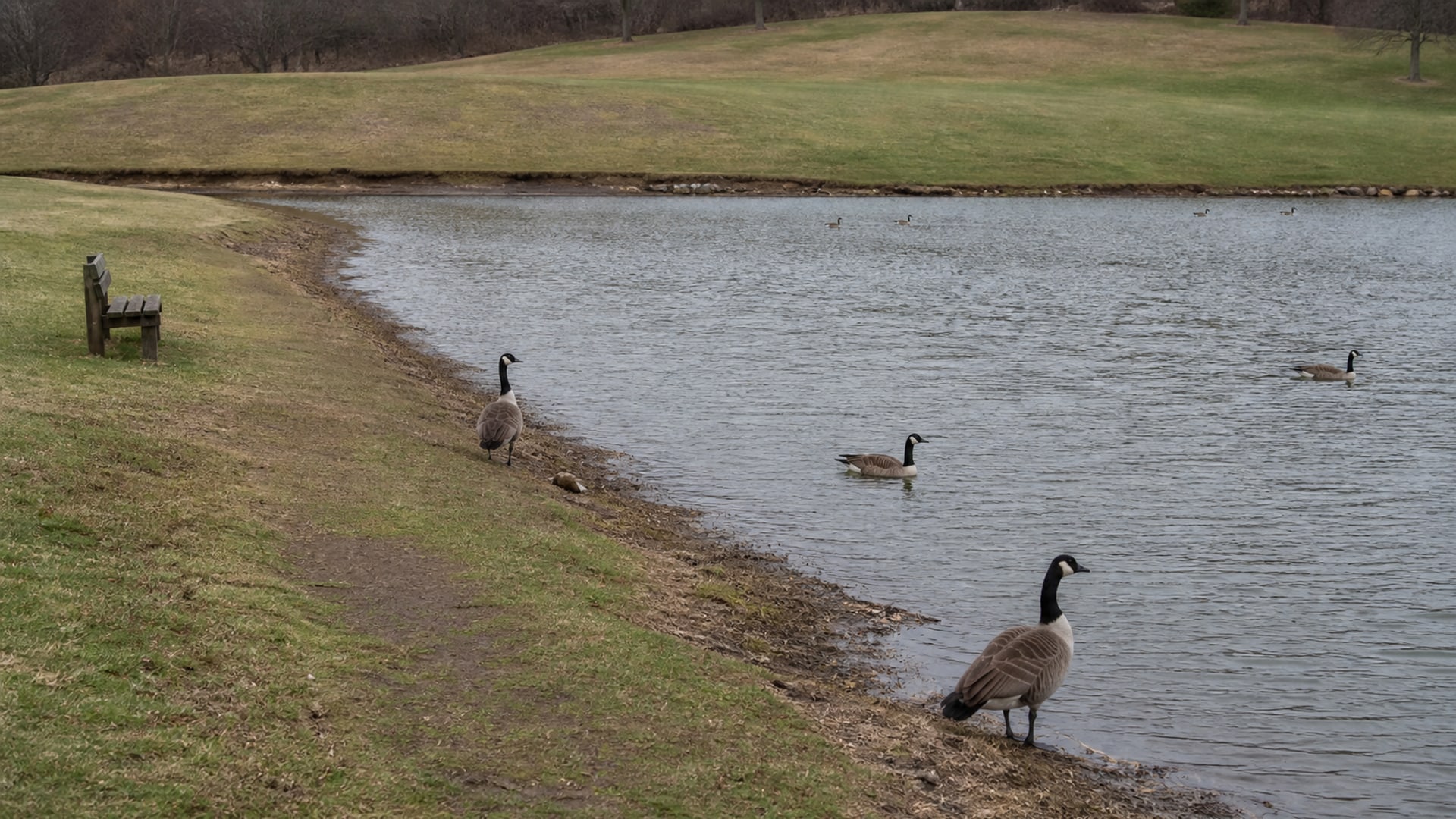
Open mown grass beside water of the kind Canada geese settle on in Glastonbury, CT

At a glance

Town

Glastonbury, Connecticut, including South Glastonbury

Method

Non-lethal herding by trained Border Collies, no contact with any bird

Permit needed to move geese this way

None, provided no bird is harmed

The local constraint

Town code requires dogs leashed on town property, with one fenced exception

Where people swim, this stops being about the grass

Most goose problems are a grounds problem with a cleanup bill attached. Glastonbury has a version that is not.

Eastbury Pond at 39 Fisher Hill Road is a large recreation pond fed by Roaring Brook, with a sand beach, an accessible pier, seasonal swimming, fishing and winter ice skating. That is direct public water contact, in the same water a resident flock would be using, and it moves the conversation from turf maintenance to the sort of question a health authority asks.

It also changes the practical shape of the work. On a site with a swimming season, a beach and skating in winter, the windows when anybody can work the ground are set by the public rather than by the birds, and the visible presence of a dog around people who are swimming needs planning rather than improvisation.

That is not an argument for doing less. Water people swim in is the strongest argument there is for acting early, before a flock settles into treating the beach lawn as its own. It is an argument for a program designed around the season rather than dropped on top of it.

Glastonbury has no goose complaint, management program or council item on public record. That is not evidence the town has no geese, and it should not be read that way. It means nobody has written it down, so anything you are told about a local history here should come with a source.

Where does lawn meet water in Glastonbury?

This town has a lot of water and an unusual amount of it in active public use. Where the record does not confirm a feature, this says so rather than assuming.

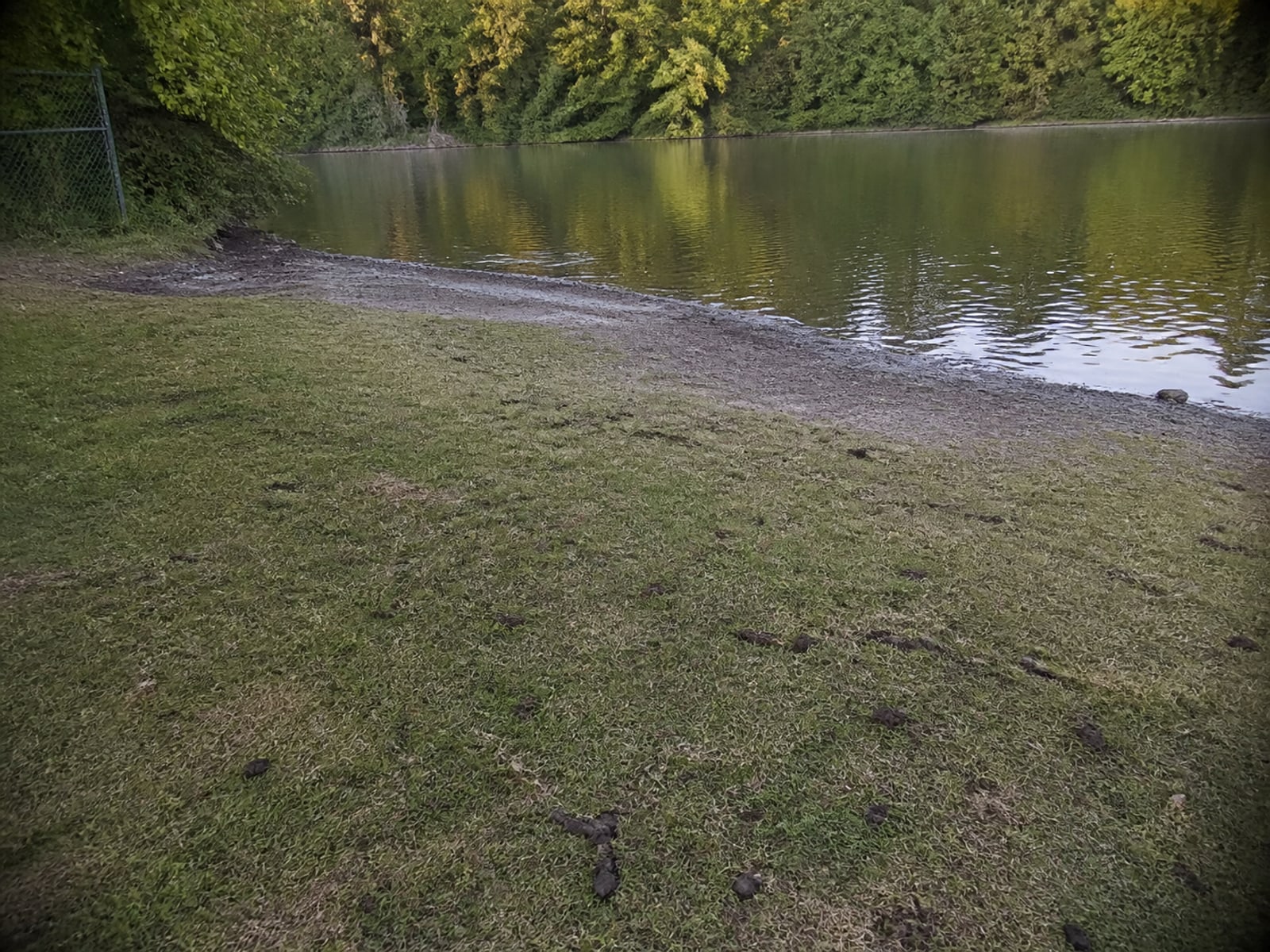
Canada goose droppings and grazed turf on maintained ground in Glastonbury, CT

Eastbury Pond and Butler Field

The pond, beach and recreation area at 39 Fisher Hill Road, with Butler Field's two baseball fields adjoining through a woodland trail. The trail connection is documented, though the ball fields are not described as sitting on the shoreline. Public swimming, fishing and skating make this the site in town where bird use and human use overlap most directly.

Minnechaug, a town course with a pond the town has already dredged

Minnechaug Golf Course is town owned, public, nine holes and par 35, with a documented irrigation pond beside hole 9. A town project removed roughly 2,300 cubic yards of sediment and restored that pond and its surroundings. It is worth knowing, because a pond somebody has just spent money on is a pond with an owner who cares what happens at its edges. Elsewhere the golf record is thinner: Glastonbury Hills Country Club is private with an 18 hole course, but no water feature is documented on its public material.

J.B. Williams Park, and the pond that is not there

789 Neipsic Road, 161.9 acres, with a softball field, pavilion, playground and a lower pond. The former upper pond has filled with sediment and its dam has been breached, so it is no longer a functioning pond. Anybody describing two ponds there is working from an old map, and that is the kind of detail worth testing a provider on before you sign anything.

Riverfront Park, Salmon Brook Park and Great Pond

Riverfront Park at 200 Welles Street carries Connecticut River frontage, the boathouse, large open lawns, athletic fields, a playground, trails, a boat launch and the town's dog park. Salmon Brook Park at 30 New London Turnpike has recreation facilities and benches overlooking a pond, behind the Glen Lochen area. Great Pond is a 12 acre glacial drawdown pond in a 70 acre town preserve whose level moves substantially across the year, which makes its shoreline a different proposition in June than in October.

Who supplies the water depends on where you are standing

Glastonbury is served by more than one water authority, and the one that matters changes with the part of town.

Public drinking water comes principally from the Metropolitan District, with the Manchester Water Department serving the northeast, private wells across much of the balance, and a small association documented as serving a limited number of homes at Neipsic Woods.

The northeast part is the one worth flagging. Manchester Water's Buckingham Reservoir watershed extends into northeastern Glastonbury, and town planning and forestry material identifies Manchester Water land and that watershed near Blackledge Falls and Gay City State Park. So in that corner of town the relevant public authority for water supply land is often Manchester Water rather than Glastonbury Parks and Recreation.

There is a related trap on the other side. The Metropolitan District supplies part of the town and holds watershed land regionally, but its major reservoirs are outside Glastonbury. An address being served by the MDC is not evidence that the site sits on an MDC reservoir, and treating it that way leads to asking the wrong body for permission.

For anything physical near water, the wetlands process governs as it does everywhere: moving birds off maintained turf is not a regulated activity, while planting a shoreline buffer or building a barrier at a pond edge can be. Given the Great Meadows floodplain along the river and the wetland systems inland, that distinction is worth settling early rather than discovering mid-project.

What happens after you call about a Glastonbury property?

The method is the same on a fairway, a school field and a beach lawn. What changes here is public use and who holds the ground.

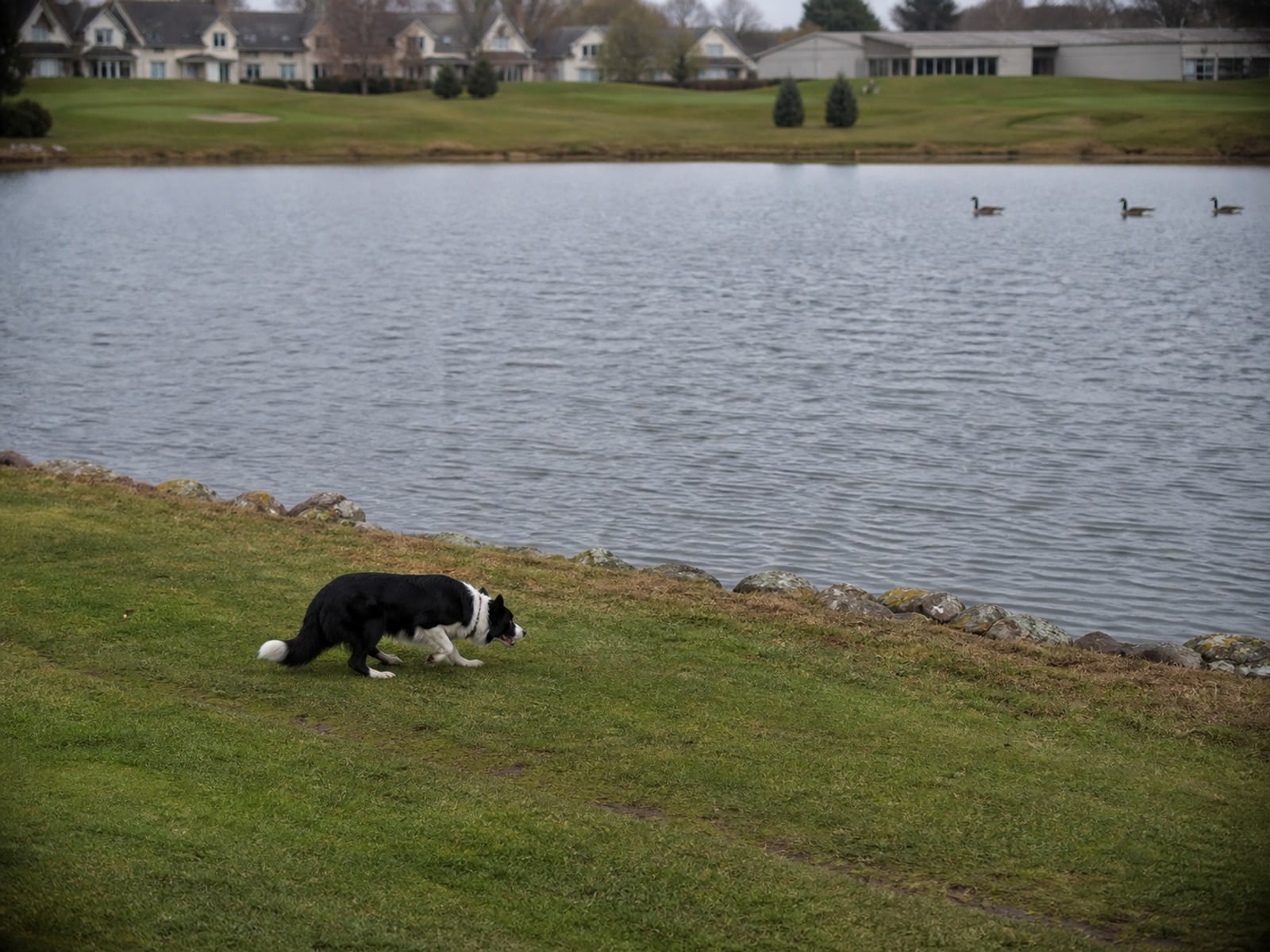
A Border Collie working a flock of Canada geese off maintained ground in Glastonbury, CT
  1. 01

    We ask what the site is, and who uses it

    A swimming beach, an athletic complex, a golf course, a river park with a dog park in it, or private campus ground. Public use decides the working window more than anything else in this town.

  2. 02

    We ask what you are seeing, and what has been tried

    How many birds, on which surfaces, at what times, and how close the water is. What a flock has already learned to ignore changes what is worth doing next.

  3. 03

    We walk the ground and map the way up from the water

    Geese travel between water and turf on foot, so the useful map is where they come up, which grass they graze and where they loaf. On a drawdown pond like Great Pond, that route moves with the water level through the year.

  4. 04

    We settle authorization before scheduling

    On town property that means written authorization or contract language covering off-leash work under section 14-39, and in the northeast of town it may mean talking to Manchester Water rather than only to the town.

  5. 05

    The dogs work at times the flock cannot anticipate

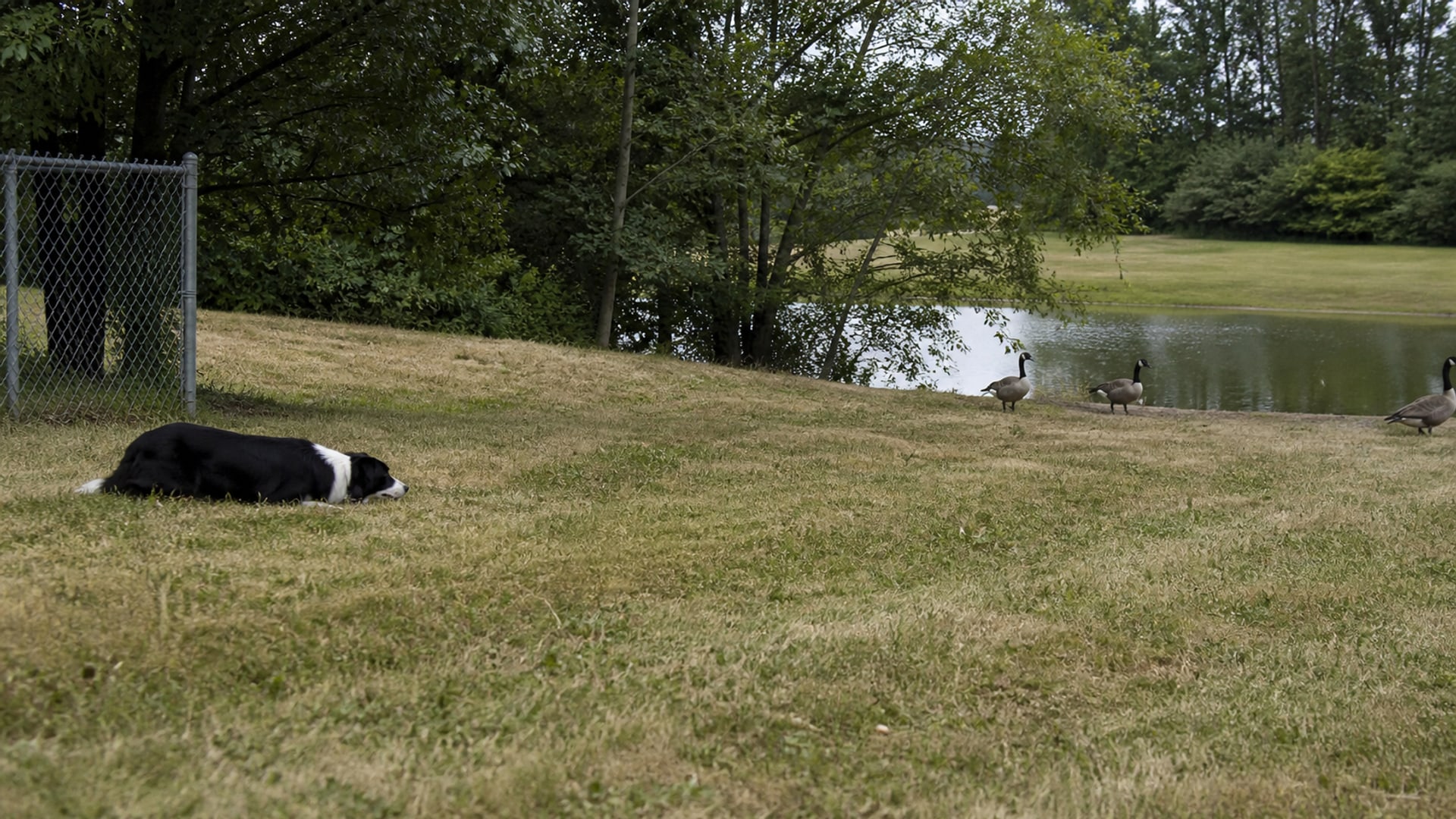
    A handler works the ground with a trained Border Collie in a stalking posture. A goose responds to that as it would to a predator, by leaving, with no contact and no capture. Around a public beach that timing is planned with the site, not improvised.

  6. 06

    We say what should change about the ground, and we measure

    Where mowing stops, whether an unmown strip or a barrier can sit between water and turf, and whether anybody is feeding them. Then counts, locations, complaints and the gap between a visit and the birds returning. On water people swim in, that record is worth keeping properly.

What we handle, and who handles the rest

We do not apply turf repellents. They are registered pesticides, applying one to commercial turf in Connecticut is licensed work, and we hold no such certification. A licensed applicator is the right call if a repellent suits a defined surface, and near a swimming beach the product questions matter more than usual.

We do not addle eggs or work on nests. That is regulated activity, the landowner registers with the US Fish and Wildlife Service before anything happens, Connecticut accepts that federal registration and adds a further requirement where a commercial control firm is involved, and the authorization belongs to the landowner or the town rather than to a contractor.

This is a maintained program rather than a one-time fix. Connecticut DEEP says non-lethal methods other than habitat work tend to be transitory when used alone. On a pond with a beach on it, the honest plan is a maintained program plus changes to the ground, not a single visit and a guarantee.

When does acting in Glastonbury cost the least?

Before a nest exists, and before the swimming season sets the calendar for you.

Connecticut DEEP puts territorial defense as early as March and nesting by early April, with incubation running about 28 days and young hatching through to June. Up to that point a shoreline is just a shoreline. Once a pair is holding ground, the situation becomes a protected-nest problem and what anyone may lawfully do nearby narrows a great deal. On a site with a public beach, that also happens to be the period when the ground is quietest and easiest to work.

Then the recreation season arrives and inverts it. Swimming, fishing and the general public presence at a pond like Eastbury put people on the exact ground the birds are using, at the exact times a program most wants access. Work that could have been done comfortably in March becomes a scheduling negotiation in July.

The winter half has its own logic here. Skating means the site stays in use when most properties have gone quiet, and DEEP's statewide timing has migrants arriving in early October, movement continuing through November with another peak in mid-December, and most birds leaving by mid-January, though mild winters hold them longer. A flock that settles in over the cold months is the flock you meet again in March with a fixed opinion about the place.

Two dates are worth treating carefully here. Nobody publishes when a Glastonbury pond freezes or opens, so we watch the water rather than the calendar. And on a drawdown pond like Great Pond, where the level moves substantially across the year, the shoreline itself is a moving target, so a plan drawn in one season should be checked in another.


Maintained ground in Glastonbury, CT holding clear of Canada geese after repeat visits

Glastonbury goose control questions

Can a trained dog work off leash on Glastonbury town property?

Not without explicit written town authorization or contract language. Section 14-39 requires dogs on town-owned property to be leashed or tethered, the only documented exemption is for a guide dog accompanying a person who is blind, and the fenced Riverfront Dog Park is the single legal off-leash area, with leashes required entering and leaving it.

Is there a Glastonbury ordinance against feeding geese?

None that we could find in the current code or ordinance index. That means the no-feeding argument on public ground is persuasion here rather than enforcement, while on your own property you can simply set the rule. Feeding is the single item most likely to hold a flock in place against everything else you do.

Does a swimming beach change what you can do?

It changes the scheduling and the care rather than the method. Eastbury Pond carries a sand beach, an accessible pier, seasonal swimming, fishing and winter skating, so the working windows are set around public use and the presence of a working dog is planned with the site rather than sprung on it.

Do we need a wetlands filing for goose work?

Not for moving birds off maintained turf. For physical work near a wetland, a watercourse or the Great Meadows floodplain, the wetlands process applies and the local body decides. Planting a buffer or setting a barrier at a pond edge is that sort of work; a dog crossing a lawn is not.

How much does goose control cost in Glastonbury?

It is quoted per site, on ground worked, bird numbers, water edge, visit frequency and what the surface is used for. There is no credible published range for this region, and a number offered before somebody has walked your property is a guess.

Our site is in the northeast of town. Anything different?

Possibly. Manchester Water's Buckingham Reservoir watershed extends into northeastern Glastonbury, so water supply land in that area is often Manchester Water's rather than the town's. It does not stop a program on your own ground, it changes who else needs to know.

How quickly will we see a change?

Behavior on the site starts changing from the first visits, because a predator response is instinctive rather than learned. Whether it holds depends on what changes about the ground. We will not give you a date, because no source we would rely on supports one.

Local detail

Canada geese in Glastonbury, Hartford County

Glastonbury is a Hartford County town of about 35,200 residents on the east bank of the Connecticut River, with the Great Meadows floodplain along its western edge and Roaring Brook and Salmon Brook draining the rest.

What sets the goose question apart here is public water contact. Eastbury Pond on Fisher Hill Road is a recreation pond with a sand beach, an accessible pier, seasonal swimming, fishing and winter skating, so bird use and human use overlap directly rather than merely coexisting. The town also owns a nine hole golf course whose irrigation pond it has already dredged, and its code leaves exactly one legal off-leash area in town, a fenced dog park at Riverfront Park.

Neighborhoods we cover in Glastonbury

Parts of Glastonbury where we work. Each one opens in Google Maps.

Bordering towns: East Hartford, Manchester, Wethersfield, Rocky Hill, Cromwell, Portland, East Hampton, Marlborough, Hebron, Bolton. A flock does not recognize a town line, so a program sometimes has to be scoped wider than one parcel.

Getting there: Route 2, Main Street, Hebron Avenue, New London Turnpike, Neipsic Road, Fisher Hill Road, Route 17.

We cover all of Glastonbury and the ground around it. If your neighborhood is not listed, or you are not sure which one you are in, it is very likely we work there. Ask and we will confirm.

Talk to us about your Glastonbury property

Tell us what you are dealing with: roughly how many birds, which surfaces they are fouling, how close the water is, and whether the public uses that water.

Tri-State Geese Patrol runs humane Canada goose abatement with trained Border Collies across Connecticut, Massachusetts and New York, and we are reachable 24 hours. Call (203) 856-4889 and it goes to Bill.

And if the honest answer for your site is an unmown strip and a no-feeding sign rather than a contract, we will say so.