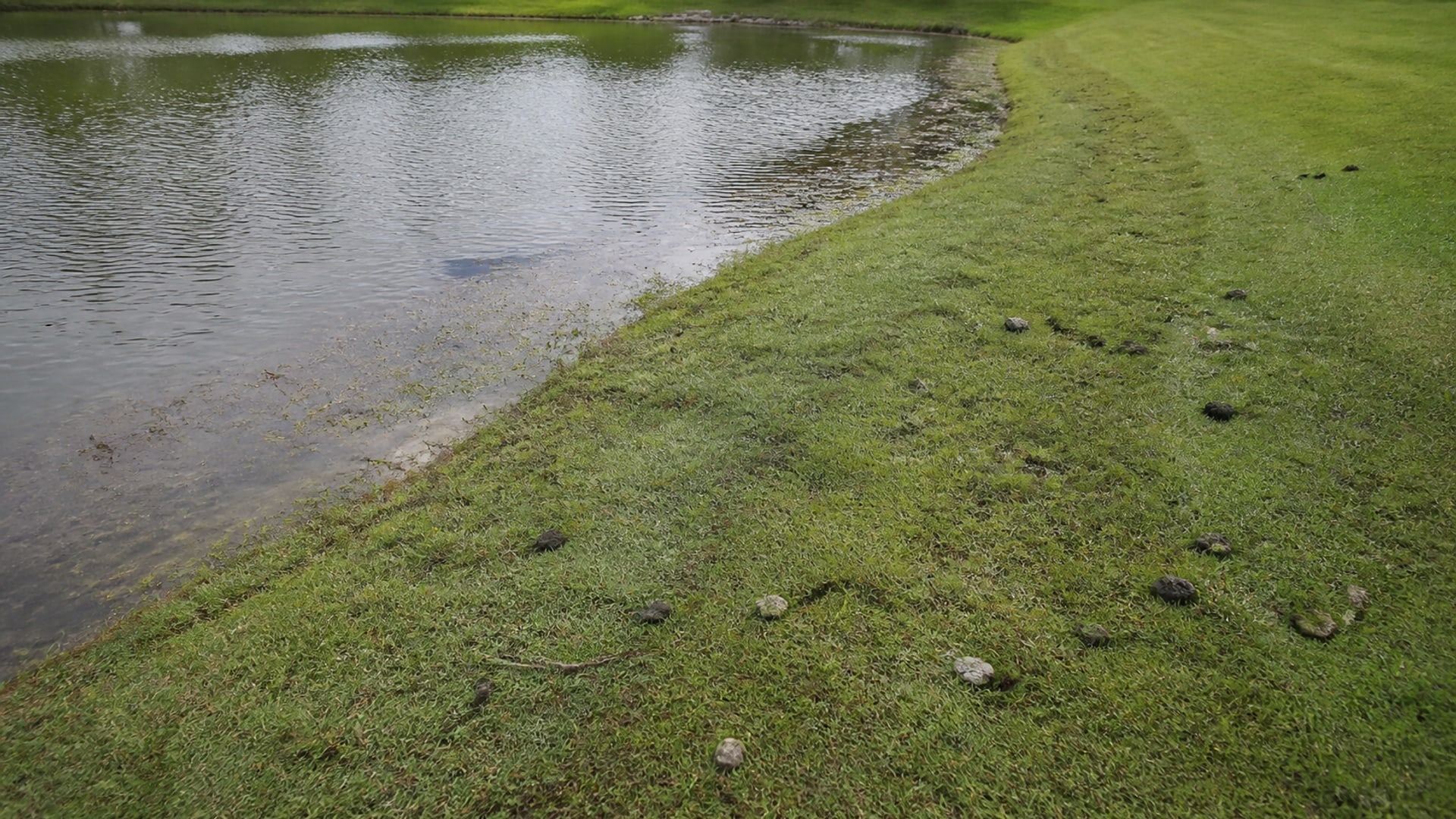
Connecticut DEEP, reporting what municipalities told it, said the most common and persistent problem was fecal waste on lawns, golf course fairways and greens, and parks, and that large quantities can make outdoor spaces unusable. That is the agency naming your playing surfaces specifically. MassWildlife puts the volume at one half to one and a half pounds of droppings per bird per day, which is the arithmetic behind a crew clearing the same three greens every morning before the first group goes out.
The second cost is the one that reaches the board. USGA's own guidance notes that complaints about course conditions can threaten a superintendent's job, and that a consistent message across the superintendent, the golf professional, the general manager and customer-facing staff matters when members are unhappy. A visible wildlife problem on a maintained course does not stay a grounds issue. It becomes a hospitality issue, then a committee issue.
There is no credible published number for annual goose cleanup, lost rounds or turf loss at a course in this region, so we describe the work in visits, hours and areas covered instead. Those are units a maintenance budget already speaks, and they are the ones a green committee can check.