Tri-State Geese Patrol

Goose Control in West Hartford, CT

Humane Canada goose abatement for West Hartford properties, using trained Border Collies that move birds without touching them. This is the town we work out of, and its rules got stricter in June 2026.

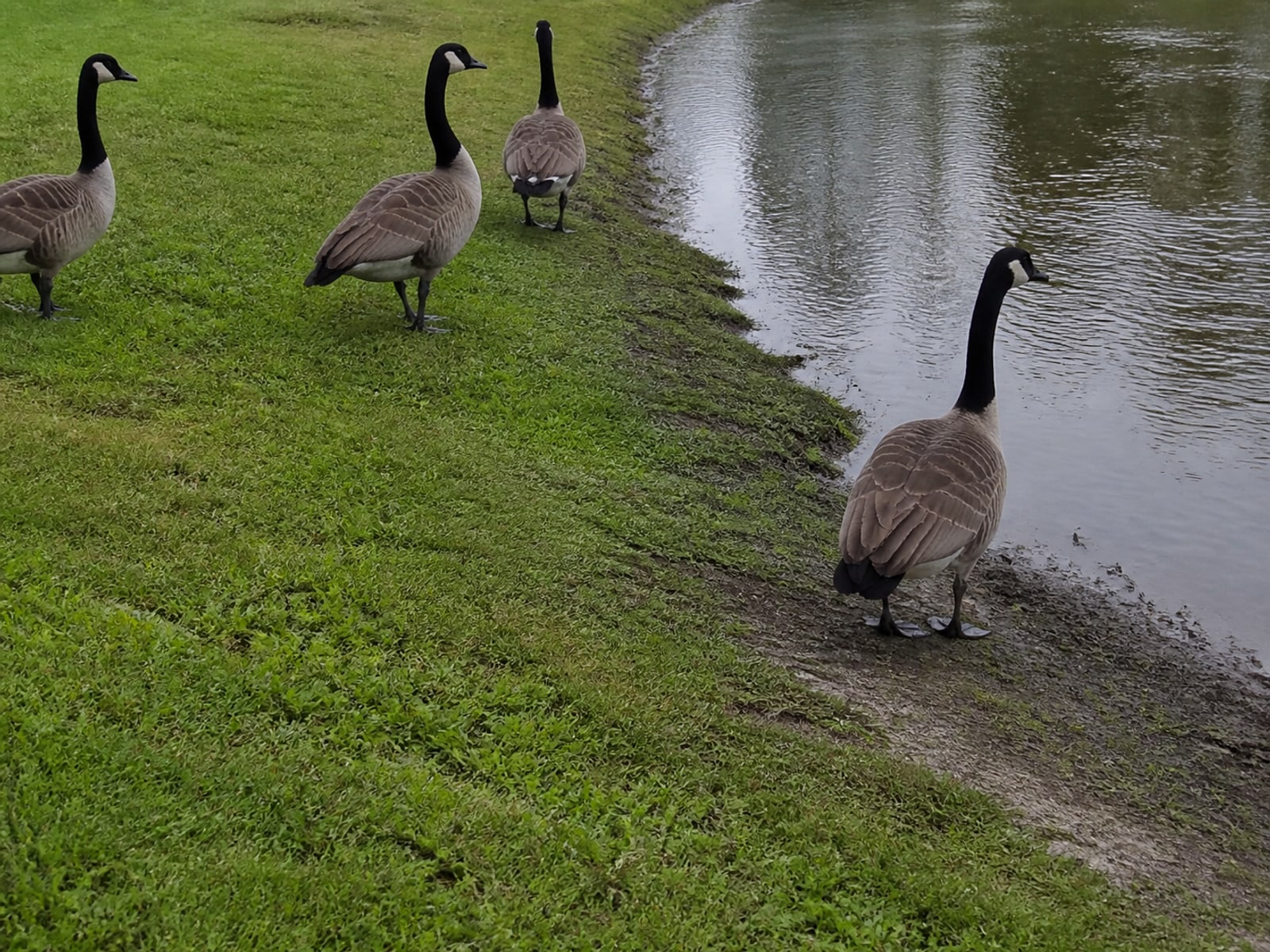
Open mown grass beside water of the kind Canada geese settle on in West Hartford, CT

At a glance

Town

West Hartford, Connecticut, where this company is based

Method

Non-lethal herding by trained Border Collies, no contact with any bird

Permit needed to move geese this way

None, provided no bird is harmed

Changed June 2026

A six-foot leash is now required on all town-owned property

The leash rule here changed in June 2026, and we are not going to be vague about it

This is our home town, so we would rather be the strictest about it than the loosest.

On June 23, 2026, the Town Council voted unanimously to adopt an ordinance requiring dogs to be kept under control on a leash or similar physical restraint no longer than six feet on public highways, streets, sidewalks and all other town-owned property. That expanded a rule which had previously applied to parks and playgrounds. The only exception is inside an enclosed dog park designated by the town manager. It took effect immediately, with fines of 25 dollars for a first offense, 50 for a second and 99 for a third and each subsequent offense in a calendar year.

Before that, the park-specific provisions already did real work. Section 128-3D requires a dog in a park or playground to be on a leash no longer than six feet and excludes pets from active play and athletic areas except when participating in a town-sponsored program. Section 128-3B prohibits disturbing wildlife or creating a nuisance. Westmoor Park prohibits dogs outright.

So there is no ambiguity to hide behind on town ground in West Hartford, and no blanket commercial working-dog exemption in any of it. A municipal program here needs written property authorization and, given how recent the change is, a legal read of how the work sits against the new ordinance.

Two practical notes if you are checking this yourself. The code publisher's site was only current through March 10, so the new section number may not have appeared yet when you look. And section 128-3B's language about disturbing wildlife is worth addressing directly in any approval rather than assumed away, even though our method involves no contact and no harm.

On private ground, and West Hartford has a great deal of it in the commercial corridors and the association properties, the owner authorizes the work and the path is much shorter.


Where does lawn meet water in West Hartford?

The town's stormwater plan names more than twenty ponds and lakes. That is a map for a site walk rather than a list of goose sites, and where ownership or a feature is not established this says so.

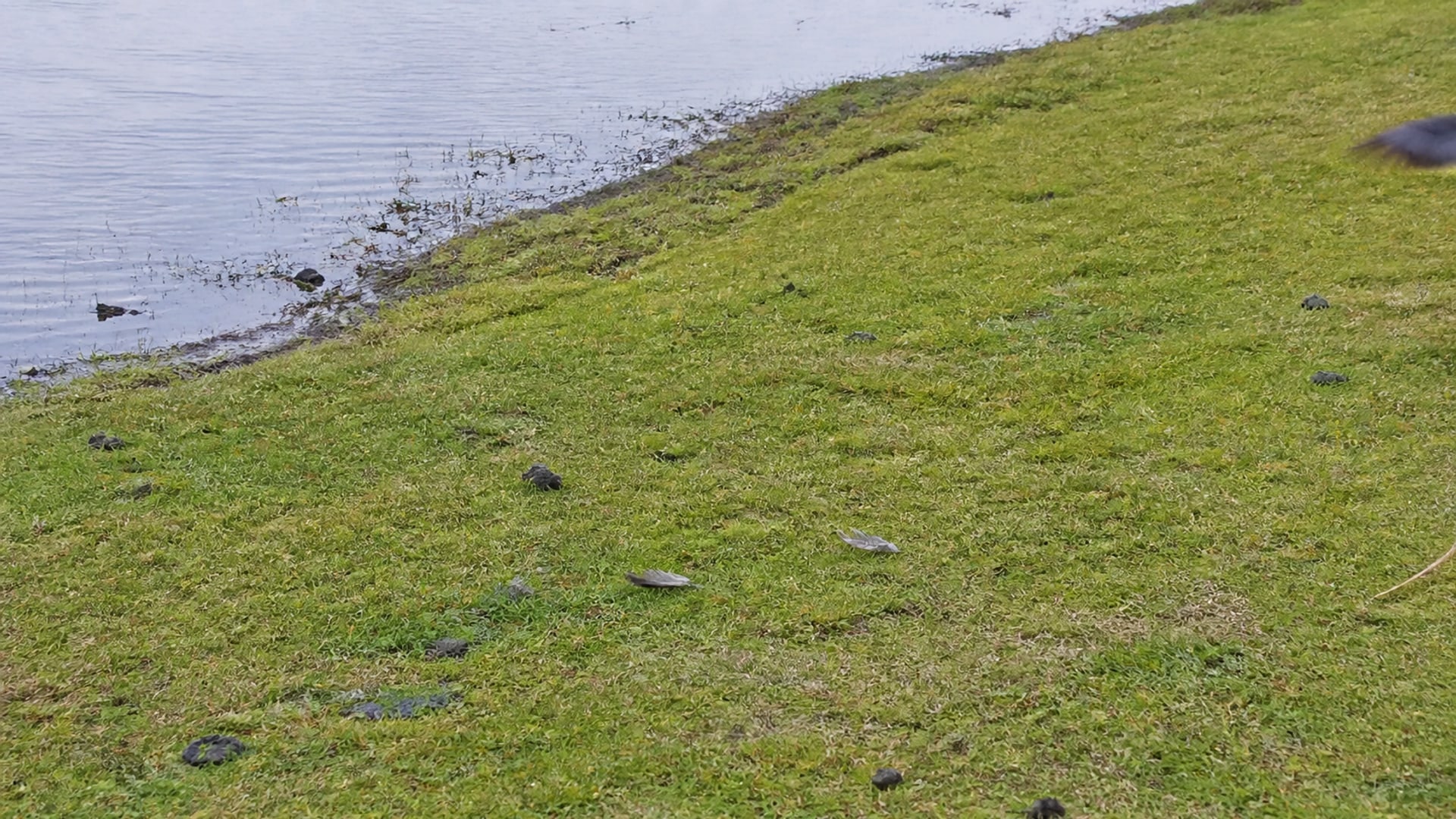
Canada goose droppings and grazed turf on maintained ground in West Hartford, CT

The town parks with real ponds

Fernridge Park runs about 30 acres with a pond, a river canal and athletic and open areas. Wolcott Park has a small pond, youth fields and an elementary school outdoor classroom beside it. Beachland Park carries its own named pond with Trout Brook Trail access. Spicebush Swamp Park is a 33 acre natural area holding the one acre McGovern Pond. Those are the clearest cases in town of maintained turf sitting next to standing water.

Westmoor, which is large and closed to dogs

162 acres with grassy meadows, two major ponds, wet meadow and a stream at Bugbee Dam. On paper it is the most goose-shaped property in the town. In practice Westmoor prohibits dogs, so a dog-based program is not the tool there, and saying that plainly is more useful to you than pretending otherwise. Habitat work and monitoring are still on the table; the fieldwork is not.

Four golf properties, two buying routes

Rockledge at 289 South Main Street is an 18 hole public municipal course, with a 2024 site plan documenting drainage and detention infrastructure. Buena Vista is the town's nine hole public course, though no named on-course pond is documented. Hartford Golf Club is a private 27 hole parkland club, and Wampanoag at 60 Wampanoag Drive is private with a Donald Ross course and town application material documenting wetlands and drainage work. Two public and two private means two completely different approval and purchasing paths.

The former UConn campus, and Elizabeth Park

1800 Asylum Avenue is the best documented institutional site: two manmade ponds, East Branch Trout Brook, roughly 8.9 acres of wetlands on a 33.5 acre application parcel, lawns, meadow, a footbridge and old ball fields. It is a live redevelopment site, so ownership and status should be rechecked. Elizabeth Park has lawns, sports areas and a pond, but it is owned and managed by the City of Hartford, not by West Hartford, which catches people out.

The reservoirs are not town parks, and they are policed

This is the distinction that matters most on the west side of town, and it is one people get wrong constantly because the land looks like a park.

The Metropolitan District controls the major drinking-water reservoir and watershed system there. It describes the West Hartford Reservoirs and Reservoir 6 as treatment facility sites with five small reservoirs and more than 3,000 acres of watershed woods and trails. Public use is regulated for drinking-water protection and enforced by MDC police.

So access, vehicle use, deploying a dog or doing anything at a shoreline on that land needs MDC review. Town permission does not cover it, and a provider who treats it as ordinary open space has misread who owns what.

The town's own historic material places Reservoir No. 1 north of Farmington Avenue west of Sunset Farm Road, opened in 1867, and the stormwater plan names Reservoirs 1, 2, 3, 5 and Hartford Reservoir No. 6. Some of those appear in a table organized by drainage basin rather than by municipal boundary, which is a good reminder that a name on a town list does not prove the water lies wholly inside the town.

For anything physical near water elsewhere, the usual line holds: moving birds off maintained turf with a dog is not a regulated activity, while planting a buffer or building at a pond edge can be, and that is a question for the local wetlands process rather than for a contractor.

What the town has committed to, and what it has not

West Hartford's stormwater plan is unusually direct on this subject, and it is worth quoting accurately rather than stretching.

The plan states that the permittee will implement a program to prohibit the feeding of waterfowl and to manage the populations of waterfowl. It separately requires documentation of bacteria-reduction actions, and its municipal facility procedures include waterfowl management. It lists nuisance wildlife and pets among possible bacteria sources, and identifies impairments in the North Branch Park River, Trout Brook, Piper Brook and the South Branch Park River.

Now the limits, because they matter. The plan does not prove geese caused any specific sample, and it does not identify a hired vendor, a cost or a completed program. And a commitment in a stormwater plan is not an enacted ordinance: we could not find a codified West Hartford section prohibiting the feeding of wildlife or waterfowl, so on public ground the no-feeding message is currently policy rather than an enforceable rule.

There is one location-specific trace worth mentioning honestly. Local reporting about the former UConn property recorded a resident recalling that the only nuisance on the property before had been goose droppings on the walkway, and that the geese no longer visited. That is a real local recollection about a real site, and it is not a management case study. We are including it because it is the only such record we found, not because it proves anything about your property.

On your own ground, feeding is a rule you can set and enforce yourself, and it is usually the single highest-value item available.

What happens after you call about a West Hartford property?

We are based here, so this is the closest ground we cover. The process is the same as anywhere; the local rules are tighter.

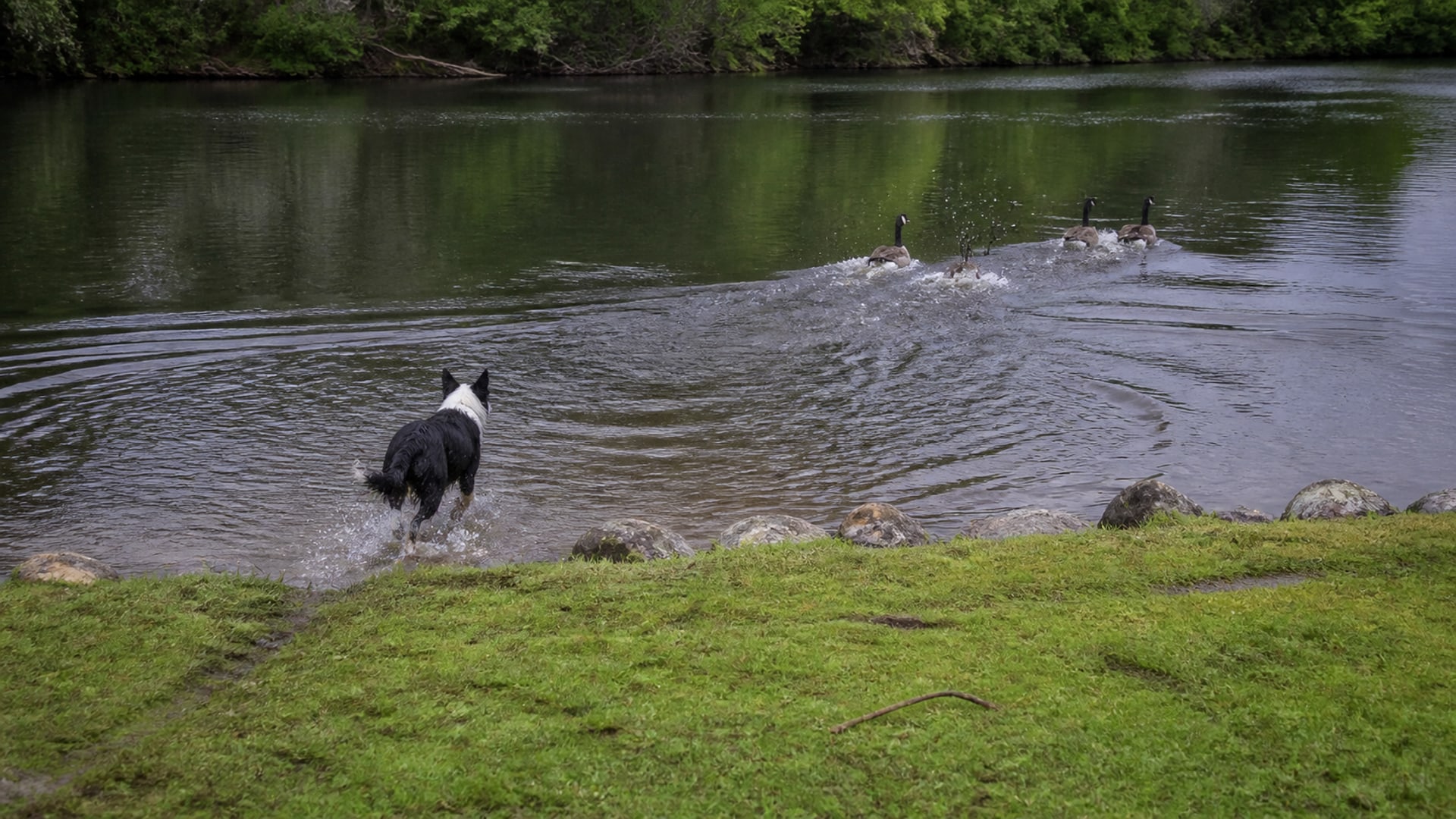
A Border Collie working a flock of Canada geese off maintained ground in West Hartford, CT
  1. 01

    We ask what you are seeing, and what has been tried

    How many birds, on which surfaces, at what times, and how close the water is. With Trout Brook running most of the length of the town and ponds scattered through the parks, the nearest water is often not the one the flock is actually using.

  2. 02

    We establish who holds the ground

    Town park, school ground, a public or private golf property, City of Hartford parkland like Elizabeth Park, MDC watershed, association common land or private commercial ground. Those are genuinely different authorities, and two of them are not the town at all.

  3. 03

    We deal with the leash ordinance up front

    Since June 2026 a six-foot leash is required on all town-owned property, with the only exception an enclosed designated dog park. Any municipal program here needs written authorization and a legal read of how the work sits against that ordinance and against the wildlife-disturbance provision. We would rather raise it than have you run into it later.

  4. 04

    We walk the ground and map the way up from the water

    Geese travel between water and turf on foot, so the useful map is where they come up, which grass they graze and where they loaf, and which of that you control.

  5. 05

    The dogs work at times the flock cannot anticipate

    A handler works the ground with a trained Border Collie in a stalking posture. A goose responds to that as it would to a predator, by leaving, with no contact and no capture. The visits then repeat unpredictably, because a schedule the birds can learn is one they will sit out.

  6. 06

    We say what should change about the ground, and we measure

    Where mowing stops, whether an unmown strip or a barrier can sit between water and turf, and whether anybody is feeding them. Then counts, locations, complaints and the gap between a visit and the birds returning. Given the impairments the town's own plan lists, that record is in the language the stormwater side already speaks.

What we handle, and who handles the rest

We do not apply turf repellents. They are registered pesticides, applying one to commercial turf in Connecticut is licensed work, and we hold no such certification. A licensed applicator is the right call if a repellent suits a defined surface.

We do not addle eggs or work on nests. The landowner registers with the US Fish and Wildlife Service before anything happens, Connecticut accepts that federal registration and adds a further requirement where a commercial control firm is involved, and the authorization belongs to the landowner or the town rather than to a contractor.

We do not run dogs at Westmoor Park, which prohibits them, or on MDC watershed land without MDC review, or on any town-owned ground without written authorization under the June 2026 ordinance.

And we do not promise the geese will be gone permanently. Connecticut DEEP says non-lethal methods other than habitat work tend to be transitory when used alone, which is why this is a maintained program rather than a repair, here as anywhere.

When does acting in West Hartford cost the least?

Before nesting narrows the options, and in this town also before a program has to be re-scoped around the newer leash rule.

Connecticut DEEP puts territorial defense as early as March and nesting by early April, with incubation about 28 days and hatching through to June. Up to that point a pond edge is just a pond edge and every method is available. Once a pair is holding ground it becomes a protected-nest problem, and on a park path or beside a school field that is a safety issue as well as a legal one.

The autumn side follows the statewide pattern. DEEP records migrants arriving in early October, movement continuing through November with another arrival peak in mid-December, and most birds leaving the state by mid-January, although mild winters hold them longer. DEEP also says migrant and resident birds overlap in those months and cannot be told apart by appearance, so a large flock on a West Hartford lawn in November tells you very little about where those birds nested.

There is a local reason to keep looking through the quiet months anyway. The town's own stormwater plan lists impairments in the North Branch Park River, Trout Brook, Piper Brook and the South Branch Park River, and its municipal facility procedures already include waterfowl management. A property that can show what it recorded across a full year is in a much stronger position in that conversation than one relying on an impression.

Nobody publishes freeze or thaw dates for the water here, so we watch it rather than the calendar. No source we would rely on publishes one, and a plan built on a guessed date is worth nothing.

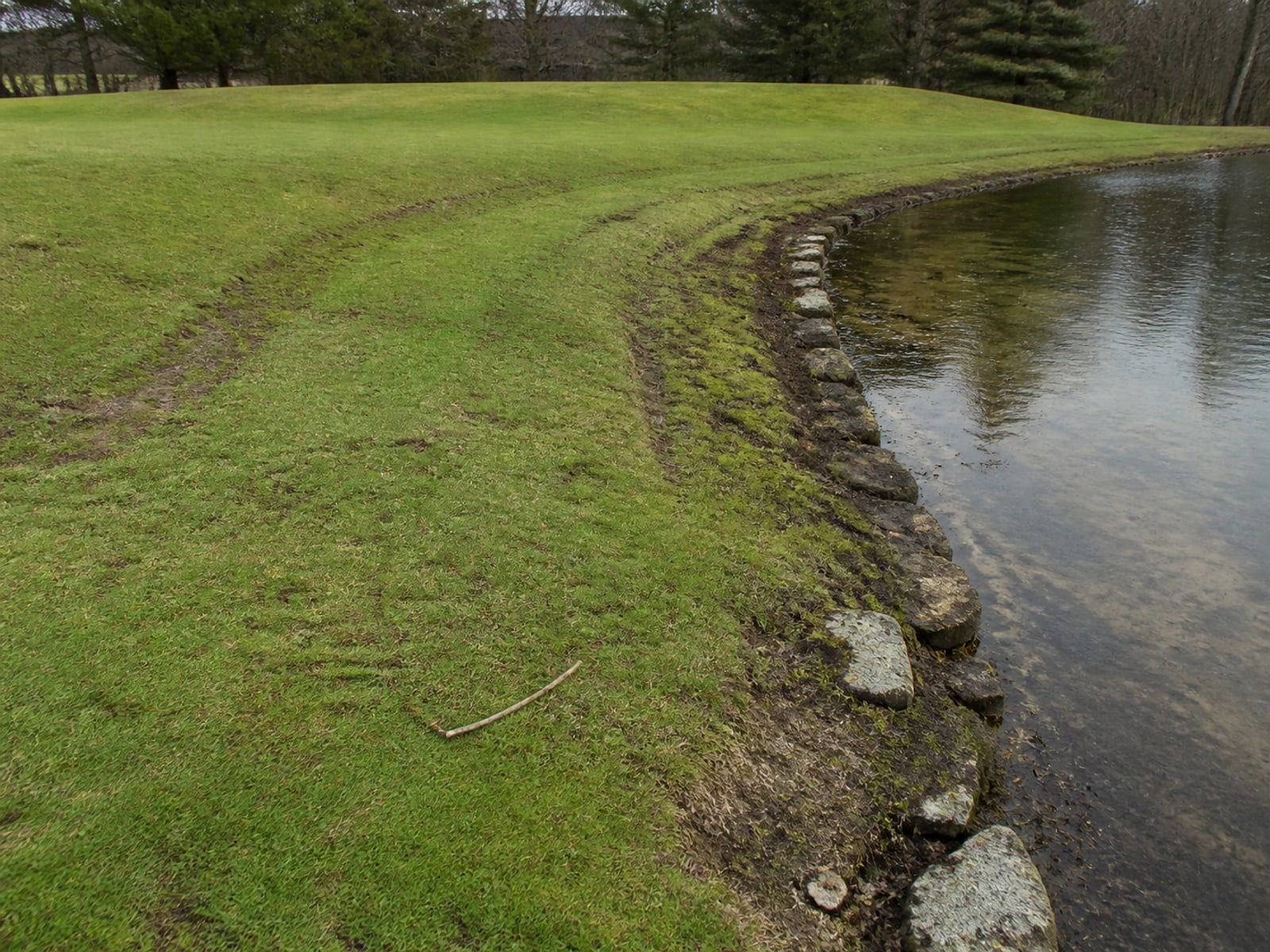
Maintained ground in West Hartford, CT holding clear of Canada geese after repeat visits

West Hartford goose control questions

Can a trained dog still work on West Hartford town property?

Only with written authorization, and the bar moved in June 2026. The Town Council unanimously adopted a six-foot leash requirement covering all town-owned property, effective immediately, with the only exception an enclosed designated dog park. There is no commercial working-dog exemption, and the park code separately prohibits disturbing wildlife, so both need addressing in any approval.

You are based here. Does that mean faster response?

It means this is the closest ground we cover and scheduling is easier than for a site an hour out. We will still give you a real answer for your specific address and time of day rather than publishing a drive time that would be wrong for half the town.

Is Elizabeth Park a West Hartford job?

Not exactly. It has lawns, sports areas and a pond, and it is owned and managed by the City of Hartford rather than by West Hartford. That changes who authorizes anything there, and it is a good test of whether a provider knows the town or just the map.

What about the reservoirs on the west side?

That is Metropolitan District land, not town parkland: treatment facility sites with five small reservoirs and more than 3,000 acres of watershed woods and trails, with public use regulated for drinking-water protection and enforced by MDC police. Anything there needs MDC review rather than town permission.

Is feeding geese against the rules in West Hartford?

The stormwater plan commits the town to implementing a program to prohibit waterfowl feeding and manage waterfowl populations, but we could not find a codified ordinance that does so today. So it is policy rather than an enforceable rule on public ground. On your own property you can set and enforce it directly.

How much does goose control cost in West Hartford?

It is quoted per site, on ground worked, bird numbers, water edge, visit frequency and what the surface is used for. There is no credible published range for this region, and a figure offered before somebody has walked the property is a guess.

Our site is a golf course. Same conversation?

Same method, different approval route depending on which course. Rockledge and Buena Vista are public municipal properties, while Hartford Golf Club and Wampanoag are private. The turf and water problem looks similar across all four; the decision and the budget do not sit in the same place.

Local detail

Canada geese in West Hartford, Hartford County

West Hartford is a Hartford County town of about 64,100 residents, and it is where this company works from, so it is the closest ground we cover.

The water here is a mix of public supply and park pond. The West Hartford Reservoirs and Reservoir No. 6 are Metropolitan District watershed land with their own rules, while Trout Brook runs the length of the town and Beachland, Fernridge, McGovern and Wolcott ponds sit inside municipal parkland. There are four golf properties in or on the edge of town, from the municipal course at Rockledge to private clubs, and Elizabeth Park and Westmoor Park add substantial maintained lawn.

Bordering towns: Hartford, Bloomfield, Newington, New Britain, Farmington, Avon. A flock does not recognize a town line, so a program sometimes has to be scoped wider than one parcel.

Getting there: Interstate 84, Farmington Avenue, Albany Avenue, Trout Brook Drive, New Britain Avenue, Quaker Lane, Prospect Avenue, Mountain Road.

We cover all of West Hartford and the ground around it. If your neighborhood is not listed, or you are not sure which one you are in, it is very likely we work there. Ask and we will confirm.

Talk to us about your West Hartford property

Tell us what you are dealing with: roughly how many birds, which surfaces they are fouling, how close the water is, and whether the ground is town, MDC, City of Hartford, private or association land.

Tri-State Geese Patrol runs humane Canada goose abatement with trained Border Collies across Connecticut, Massachusetts and New York, and we are reachable 24 hours. Call (203) 856-4889 and it goes to Bill.

And if the honest answer for your site is an unmown strip and a no-feeding rule rather than a contract, we will say so. We would rather keep the neighbors than win the job.