Tri-State Geese Patrol

Habitat Modification for Canada Geese

Habitat modification means changing the parts of a property that make it easy for Canada geese to feed, walk in from the water, land and take off. In practice that is a barrier at the water and grass edge, a wider strip left unmown or planted, and shrubs or small trees that break up the open view the birds rely on. It reduces how attractive the ground is over a season rather than clearing it in an afternoon, and it does its best work alongside active hazing. Tri-State Geese Patrol assesses the site first, then designs what is feasible on that particular property. Call (203) 856-4889.

At a glance

Method

Non-lethal site change, no bird handled

Best window for barriers

June and July, the flightless molt

Before installation

Wetlands and shoreline permit screen

Works with

Border Collie hazing, not instead of it

Why do Canada geese keep coming back to the same grass?

Because the ground is giving them four things at once, and none of them are accidental. Connecticut DEEP describes Canada geese as drawn to open grassy areas near water, and its nuisance guidance is more specific than that: geese need room to land and take off, and they are uncomfortable feeding where their view of a predator is poor. Short mown turf beside open water supplies food, a walking route, a clear line of sight and a runway.

DEEP also links the rise in resident geese to the ponds, lakeside lawns, golf courses and athletic fields built since the 1950s, and says the birds now nest statewide with the highest populations in Fairfield, Hartford and New Haven counties. That is the corridor this company works, so the pattern on your site is a regional one rather than bad luck.

New York DEC puts numbers to the same pressure: more than 200,000 resident Canada geese statewide, against a long-term goal at or below 85,000. It also lists what that produces on the ground, and the list will look familiar. Over-grazed grass and droppings across the turf, nutrient loading that shows up in pond water quality, public-health concerns near beaches, dining areas and gathering places, nesting aggression, and hazards near roads and airports.

So the recurring problem has a physical explanation rather than a mysterious one. Change enough of what the site offers and it stops being the easy option on that stretch of water.

What habitat modification actually changes

There is no single device here. There is a set of levers, and which ones are available depends entirely on what your ground has to keep doing.

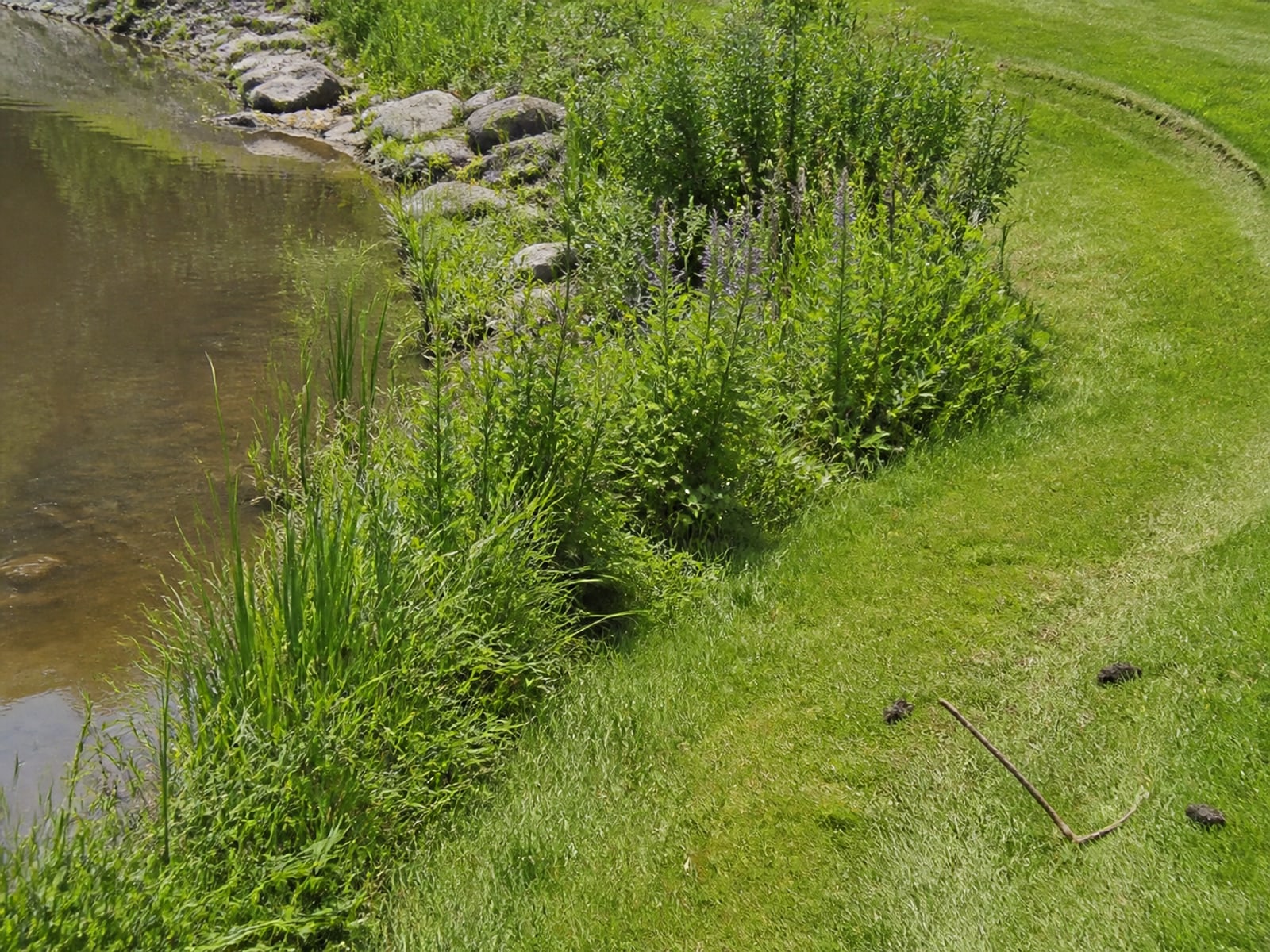
A tall planted buffer strip separating open water from mown lawn

The edge between water and grass

This is where most of the work happens. Massachusetts DCR tells its own site managers not to mow to the water edge and to keep a vegetated buffer instead, and MassWildlife recommends a hedge, or a wide swath of uncut growth, between the water and the mowed grass. The strip does two jobs at once: it interrupts the walking route in from the pond, and it takes away the clear view the birds want before they settle.

Sightlines

Geese are reluctant to feed where they cannot see what is coming. Shrubs, small trees and planted islands break up a wide open view, which is why Connecticut DEEP lists them among the habitat methods worth using. On a property whose whole point is an open vista, this is the lever that has to be designed around the view rather than straight through it.

The turf itself

DEEP identifies grass allowed to reach a foot or more, reduced fertilizer and watering, and less-palatable groundcover as habitat measures. Fertilized, irrigated, closely mown grass is high-quality goose food. Where a piece of ground does not have to be a lawn, it does not have to be fed like one.

Walking access

A low barrier along the shoreline stops birds strolling up out of the water onto the grass. It is a control on one specific behavior, walking, which is why the month it goes in matters as much as the material it is made of.

Food you may not know you provide

Massachusetts DCR pairs its buffer guidance with a straight prohibition on feeding. On public ground, a handful of people feeding birds can undo everything else on this list, which is why signs and a groundskeeping instruction belong in the plan rather than in a footnote.

Runoff, which you may be managing anyway

DCR treats a vegetated buffer as both a small waterfowl barrier and a strip that absorbs nutrients before they reach the water. Where a property already carries a stormwater or pond obligation, the same planting can be justified twice, which changes how the spend is argued internally.

Will a fence keep geese off the grass?

Partly, and mostly at one time of year. Here is the straight answer.

Connecticut DEEP says fencing loses much of its effectiveness once the birds can fly. MassWildlife says a three-foot fence is effective during the flightless summer molt. Both statements are correct, and they are describing the same barrier at two different points on the calendar.

A goose that walks up out of the water is stopped by a low fence. A goose that flies in and lands on the far side of it is not. A fence is therefore a control on walking access, and the moment it is sold as a year-round barrier, the proposal has started overselling.

That is also why a planted shoreline is described here as one part of a combination rather than as a fix on its own. New York DEC states that no single method is universally effective and that persistent use of a combination is usually necessary. Connecticut DEEP reaches the same place by a different route: long-term solutions are complex, there is no panacea, and several non-lethal techniques used together at the right time do better than any one of them used alone.

What happens on your property

New shoreline planting establishing along the edge of a managed pond
  1. 01

    The site assessment

    We walk the property before proposing anything. Where the water is, how much mown ground sits between the water and everything else, the slopes, where the birds have room to land and take off, what blocks the view and what does not, where people are feeding them, how the ground drains, and how the site is actually used through the week. In breeding season we also look for active nests, because that changes what can be touched and when.

  2. 02

    The permit screen

    Before a plan goes further we establish whether the work sits inside a regulated wetland, buffer, riverfront or shoreline area. That answer changes the project, and finding it out afterwards is the expensive order to do it in. This is a screen rather than a determination: the municipality and the state agency decide.

  3. 03

    The written plan

    You get a scope that says what changes where, what stays untouched, what it does to mowing and irrigation, who maintains it, and in what order the work happens across the season. Where a change is not feasible on your site, the plan says so plainly instead of leaving it in to pad the page.

  4. 04

    The work

    Barriers, planting and mowing changes go in on the agreed sequence. Some of it is a single visit. Anything planted is not a visit at all, it is a change to how the grounds are maintained from that point forward, and the plan treats it that way.

  5. 05

    Monitoring and adjustment

    We record where the birds are using the site afterwards, not merely whether they are present at all. DEEP notes that visual deterrents need regular maintenance and can be vandalized, and a planted or unmown strip changes mowing, irrigation, access and appearance. Anything nobody owns operationally stops working inside a season.

Keeping the ground usable while it changes

The most common reason a habitat plan fails is not biology. It is that the plan quietly asked a working site to stop working. Connecticut DEEP says it directly: shrubs may not be practical on recreational fields, and tall grass can conflict with public use. So the design question is never what would deter a goose most. It is what will deter geese in the places this property can afford to change.

A mown access point cut through a shoreline buffer down to the water

Golf courses

Play routes, cart paths, sightlines from the tee and the visual character of the course are constraints before a single shrub gets chosen. Pond edges away from play, a far bank, and the ground behind a green are usually where a buffer can sit without changing how the hole plays. Turf inputs on out-of-play ground are a separate lever again, and often the easier one to start with.

Municipal parks and beaches

Public ground has to stay public. Sightlines matter for safety as much as appearance, appearance matters because residents will comment on it, and a no-feeding instruction is only as strong as the signs and the staff behind it. Massachusetts DCR's operations plan for public land is a useful document to put in front of a board, because it is a state agency recommending exactly this approach on its own property.

Corporate campuses and office parks

A retention pond ringed with mown grass is close to ideal goose habitat, and the walkways between buildings are where staff complaints start. Campuses often have the most room to work with, because the ground around a decorative pond is rarely programmed the way a ballfield is.

Airports and airfields

A different regulatory environment entirely. FAA guidance treats wildlife hazard management as an airport safety function, and 14 CFR 139.337 sets out the wildlife hazard assessment and management plan requirements for the airports it applies to. Habitat work airside fits inside that plan and the airport's own operating rules rather than sitting alongside them.

Schools and athletic fields

Playing surfaces cannot be left to grow and cannot be fenced across. The workable changes are at the water, at the edges, and in what the grounds crew feeds and waters, which is a narrower set of levers but not an empty one.

HOAs and condominium communities

Shared grass, a pond, and a board that has to answer to residents. The constraint here is as much about consent as design, so the plan has to be something a board can show people and defend at a meeting.

What needs approval before anything is installed

Changing vegetation, regrading ground or installing a barrier near water can be regulated work. The rules are set per state and administered, in two of these three states, largely per town.

In Connecticut, activities in or affecting inland wetlands and watercourses are regulated under Connecticut General Statutes sections 22a-36 through 22a-45a, and local inland-wetlands agencies administer permits under those statutes. A project is screened with the municipality before anything is graded, filled, obstructed or materially altered.

In Massachusetts, the Wetlands Protection Act, M.G.L. chapter 131 section 40, and 310 CMR 10.00 govern work affecting protected resource areas. Vegetation removal, regrading and construction can all be regulated, and the work area can reach into the 100-foot buffer zone where the activity may alter a protected area. The local conservation commission is the reviewing body.

In New York, DEC administers freshwater wetlands and protection of waters permits, and whether either applies depends on the particular waterbody and the particular work. Separately, DEC states that no federal or state permit is needed to scare, herd or chase geese by means that do not physically harm them. That is the legal footing for the dog work. It is not the legal footing for digging.

None of this stops a project. It sets the order of operations. A provider who has never raised it with you is either doing very small work or is about to hand you a problem with your name on it.


Where habitat modification fits alongside the dogs

These are two halves of one job, and each fails in its own way when it is asked to work alone.

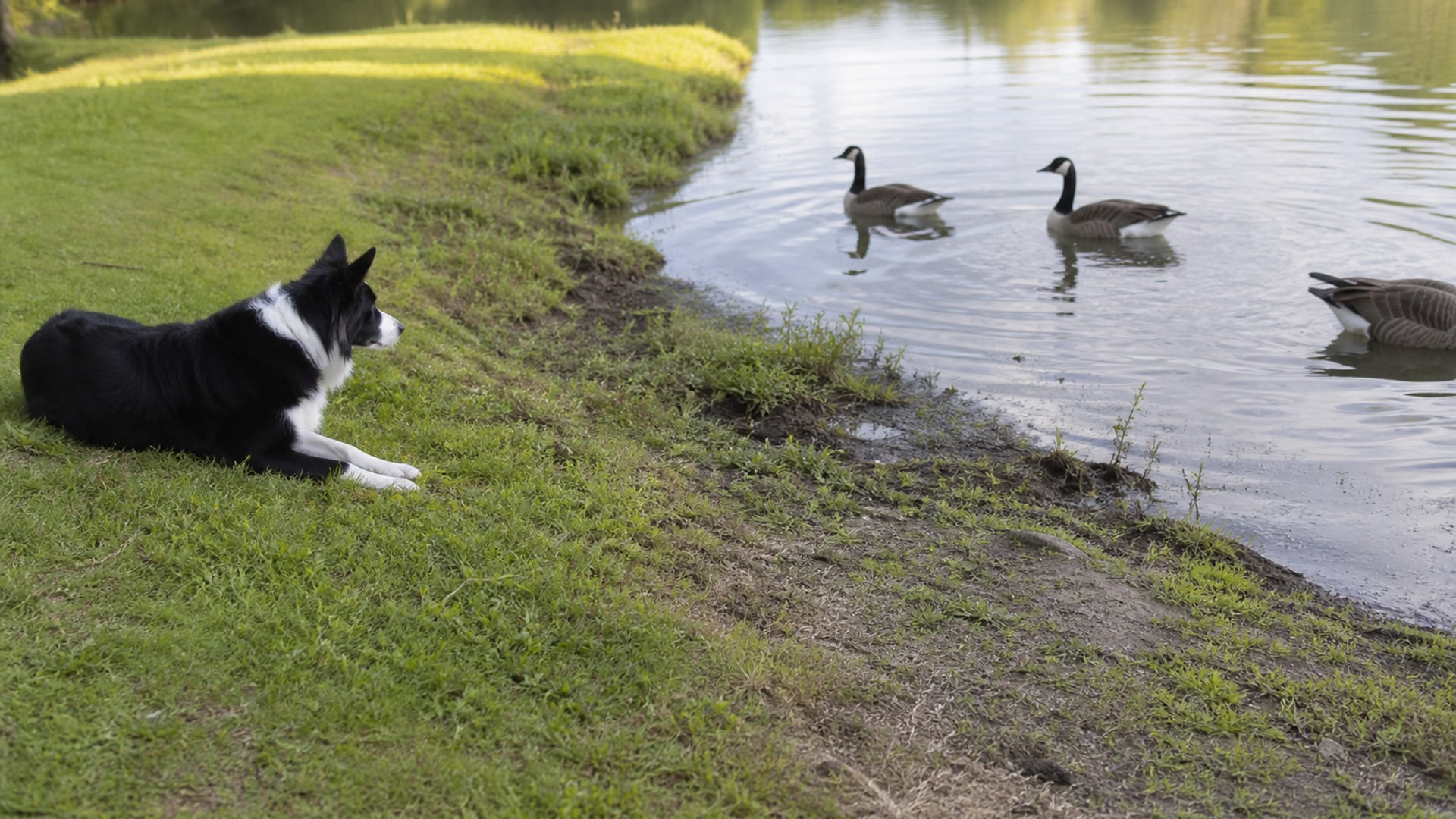
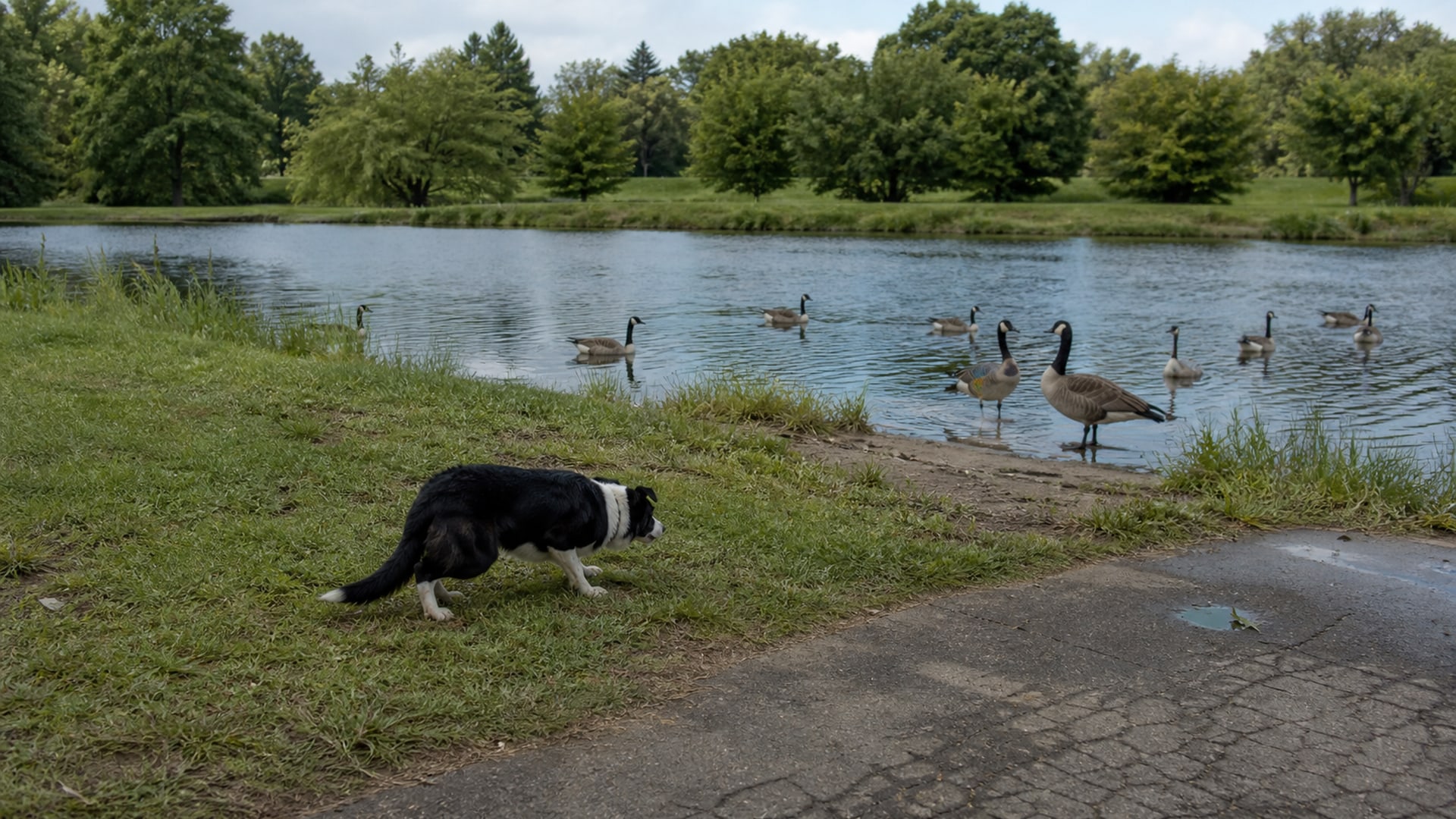
Connecticut DEEP describes both sides. Trained Border Collies can haze geese, but the birds can return once the dog leaves. Habitat modification it calls the most effective non-lethal way to reduce conflicts, while being equally clear that many of the useful changes are not feasible at public-use sites.

Put plainly, the dogs change what the birds do today and the site changes what the birds make of the ground over a season. Border Collie goose abatement is what moves a flock now. The habitat work is what makes each of those visits go further, because the ground the birds return to is worth less to them than it was.

Timing decides the balance. Through the June and July flightless molt a walking-access barrier is doing real work and the dogs have less ground to cover. Once the birds can fly, the physical changes cannot be described as a barrier at all, and the active hazing carries more of the load.

If you are not sure which combination your site needs, that is the question consultation and program design exists to answer.

What the season decides

March to June. Connecticut's guidance describes resident geese defending territories in March and nesting by early April, with hatching running from April through June and a peak in the first week of May. Work near an active nest becomes a legal question rather than a scheduling one, so this window changes what can be touched at all. It is also when nesting season aggression turns a footpath into a confrontation, which tends to be when the phone rings.

June and July. DEEP's watershed guidance identifies these as the months when geese have molted their flight feathers and cannot fly. This is when a low barrier at the water is at its most useful, and it is the best window in the year for any measure that depends on the birds walking rather than flying.

October to mid-January. In Connecticut, migrants arrive in early October, movement continues through November, another peak lands in mid-December, and most migrants have gone by mid-January, though a mild winter holds numbers later. Autumn complaints often involve a different set of birds from the spring ones, and telling residents from migrants changes what the site work is fairly expected to achieve.

The practical consequence is simple. A plan written in February and a plan written in August are not the same plan, even on the same property.

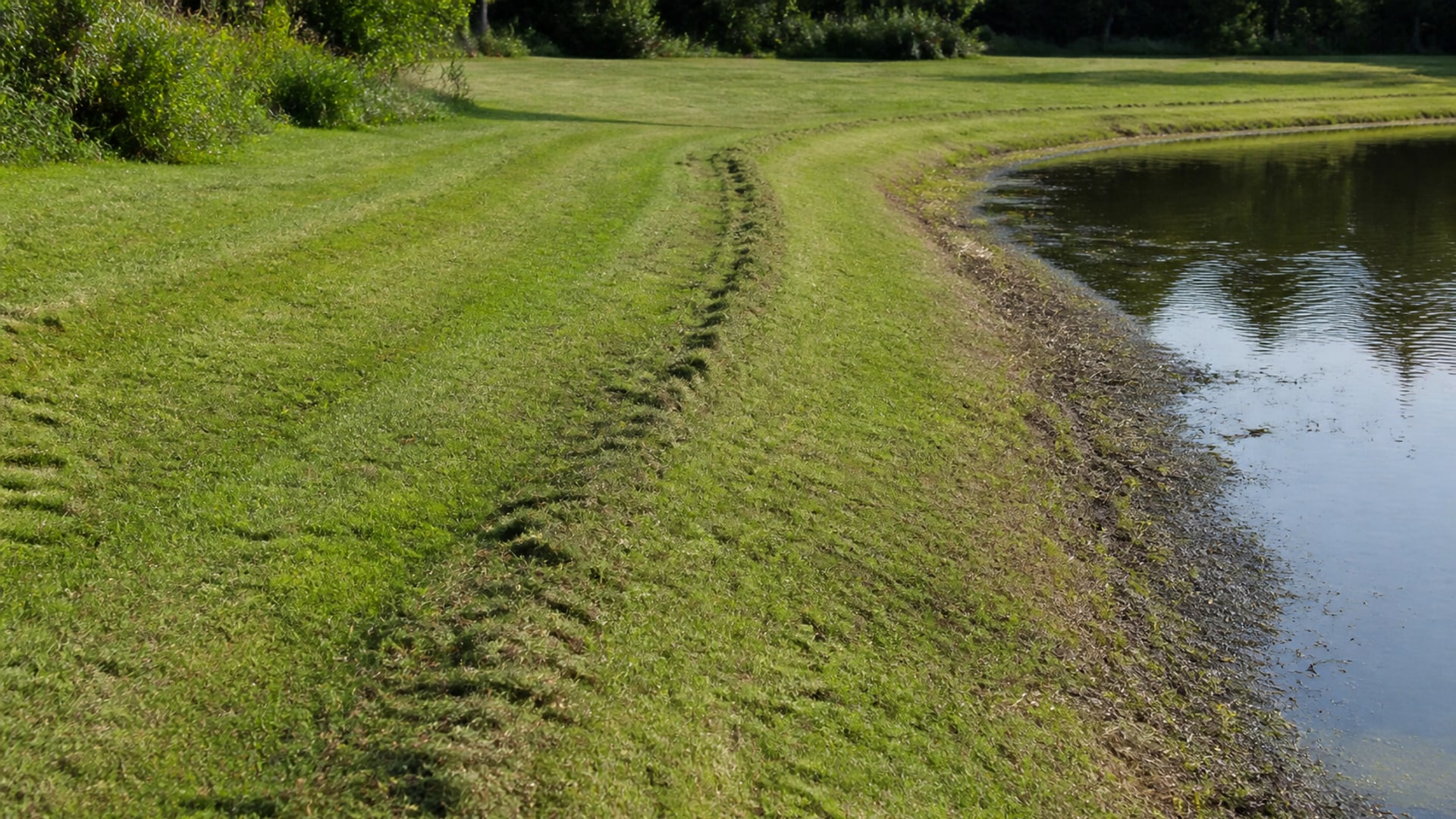
Maintained ground of the kind this page describes, on a habitat modification property

What this service does not do

Being specific about limits is not a weakness in a bid. It is the part that lets you hold a provider to a scope later.

We do not touch nests or eggs

The Migratory Bird Treaty Act, 16 U.S.C. 703, makes it unlawful, unless a regulation allows it, to take, capture or possess a protected migratory bird or its nests or eggs. Massachusetts treats interfering with Canada goose eggs as illegal without a special permit. Nest and egg work is separately authorized federal activity and it is not part of what we provide.

We do not promise the geese will be gone for good

A planted shoreline makes ground less attractive; a barrier makes it harder to walk in and out of. Neither is permanent removal, and the agencies that manage this species are clear that no single measure is. You are entitled to hold a provider to whatever they call it, which is why the wording here is the wording we would defend.

We do not skip the wetlands question

Where the work sits in regulated ground, the review happens before installation, even when waiting makes the schedule look untidy.

We do not plan a site we have not seen

A generic plant list is the tell. Two ponds fifteen minutes apart can need different work, because what the ground beside them is used for is different.

We do not sell habitat work as a replacement for hazing

DEEP describes non-lethal methods other than habitat change as transitory in effect, and describes habitat change itself as limited by what a site can practically accept. Neither statement makes either one sufficient on its own.

Common questions

Why do the geese come back after we chase them off?

Because chasing changes behavior for a while and does not change the ground. Connecticut DEEP notes that geese adapt to visual and sound deterrents and can return once a dog leaves. New York DEC's position is that no single technique is universally effective and that a persistent combination is usually needed.

Will a fence work if the geese can fly?

Not as a barrier. A low fence controls birds walking up from the water, and MassWildlife calls a three-foot fence effective during the summer flightless molt. Connecticut DEEP says it loses much of its effect once the birds are flying, so it belongs in a plan as one control rather than as the plan.

How high should the barrier be and how wide should the planted strip be?

That comes out of the assessment. The agencies describe the technique and the season it works in; they do not publish one dimension that suits every shoreline. A provider quoting you a universal number before seeing the property is guessing at your expense.

What can we plant near the pond?

It depends on what is regulated there and on what the site has to keep doing. MassWildlife describes a hedge or a wide swath of uncut growth between water and mowed grass, and Connecticut DEEP lists shrubs and small trees that cut the open view. Species selection comes after the permit screen, not before it.

Do we need approval before changing anything near the water?

Often, yes. Connecticut regulates work in and affecting inland wetlands and watercourses, Massachusetts regulates work affecting protected resource areas including a 100-foot buffer zone, and New York runs its own freshwater wetlands and protection of waters programs. The screen takes far less time than an enforcement action.

Who maintains it afterwards?

You do, and the plan says so in writing before the work starts. DEEP notes that visual deterrents need regular maintenance and can be vandalized, and a planted or unmown strip permanently changes mowing, irrigation and access. We set the schedule and hand it over, because a change nobody owns stops working inside a season.

Will you take a nest off the pond bank while you are here?

No. Nest and egg work is regulated separately under federal rules and needs its own authorization, and Massachusetts carries its own penalty for interfering with the eggs of a protected bird. Where there is an active nest, we plan around it.

Tell us what your property is doing

Send us what you are seeing: where the birds are, what the ground is used for, how close the water is, and what the site cannot afford to change. We will look at the property properly before proposing anything, and if habitat work is the wrong lever for your site we will say so.

Call Tri-State Geese Patrol on (203) 856-4889, or send us a message and it goes straight to Bill.

Tell us what your property is dealing with.

Call Tri-State Geese Patrol on (203) 856-4889 and we will talk through the site, the flock and what a program would look like.