

A walk of the site with whoever owns the grounds
Entry lawns, walkways, loading and service roads, pond banks, swales, detention basins and landscaped buffers. Where the birds feed, where they rest, and the path they walk between water and grass.
The retention pond that makes the campus look good is also the reason the flock stays, and on many sites it is a regulated stormwater asset as well as an amenity. Tri-State Geese Patrol runs recurring Border Collie abatement across Connecticut, Massachusetts and New York. Call (203) 856-4889.
Who we work with
Facilities and property managers, asset managers
Vendor onboarding
COI, additional insured, portal registration
The usual ground
Entry lawn, walkways, retention pond, swales
Scheduling
Around operating hours and tenant traffic
USDA APHIS describes resident Canada geese as adapted to human-dominated landscapes, nesting near sidewalks, entryways, paths, roadways and rooftops, and using open grass and water during the molt. That is not a description of wilderness. It is a description of a business park.
Look at what a campus puts next to each other by design. Closely mown lawn from the building line to the water. A retention or detention basin with gentle banks a bird can walk up. Open sightlines across parking and access drives, because that is what feels safe and looks maintained. Landscaped buffers that are decorative rather than obstructive. Every one of those choices is correct for the property and convenient for the bird.
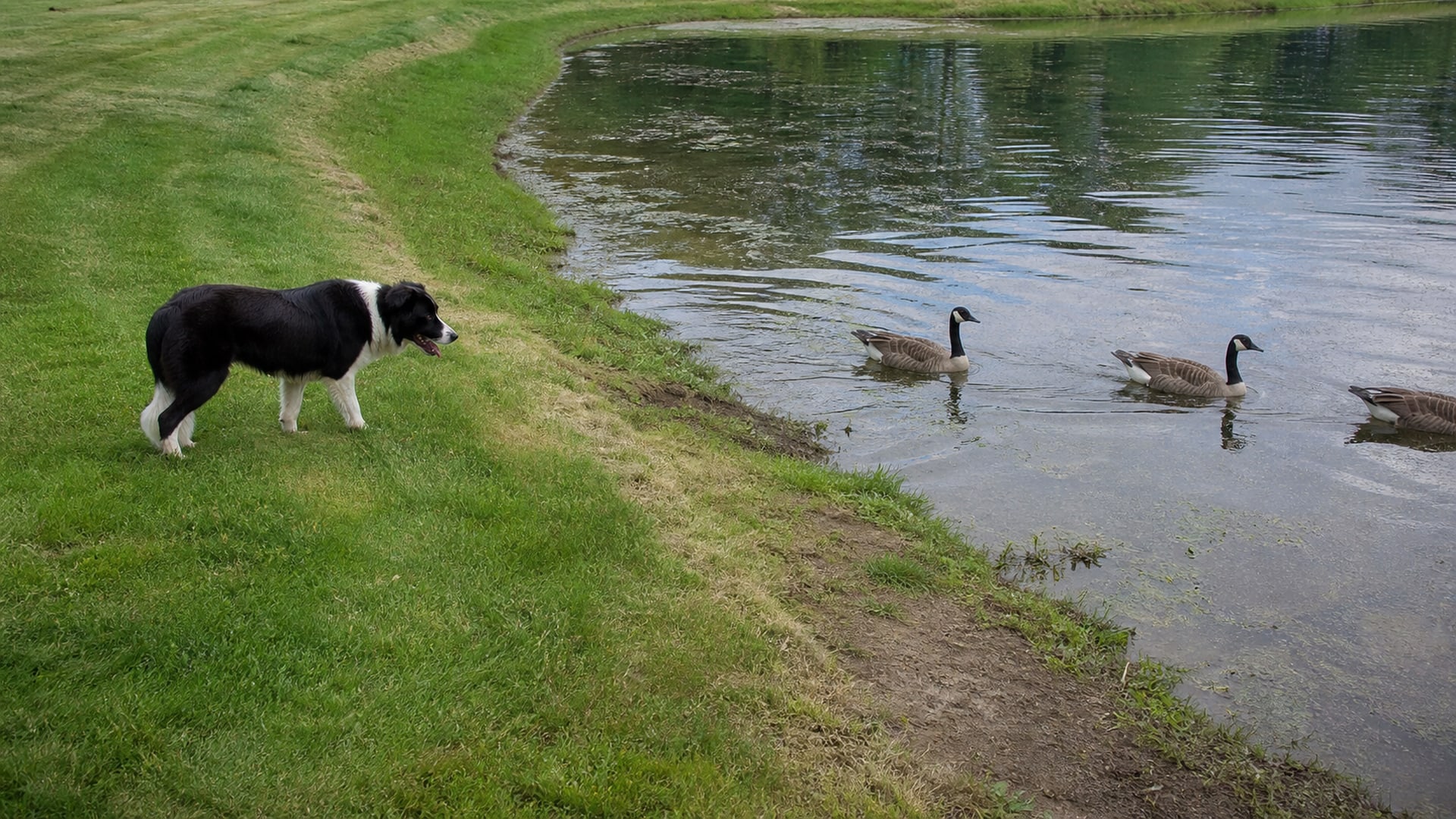
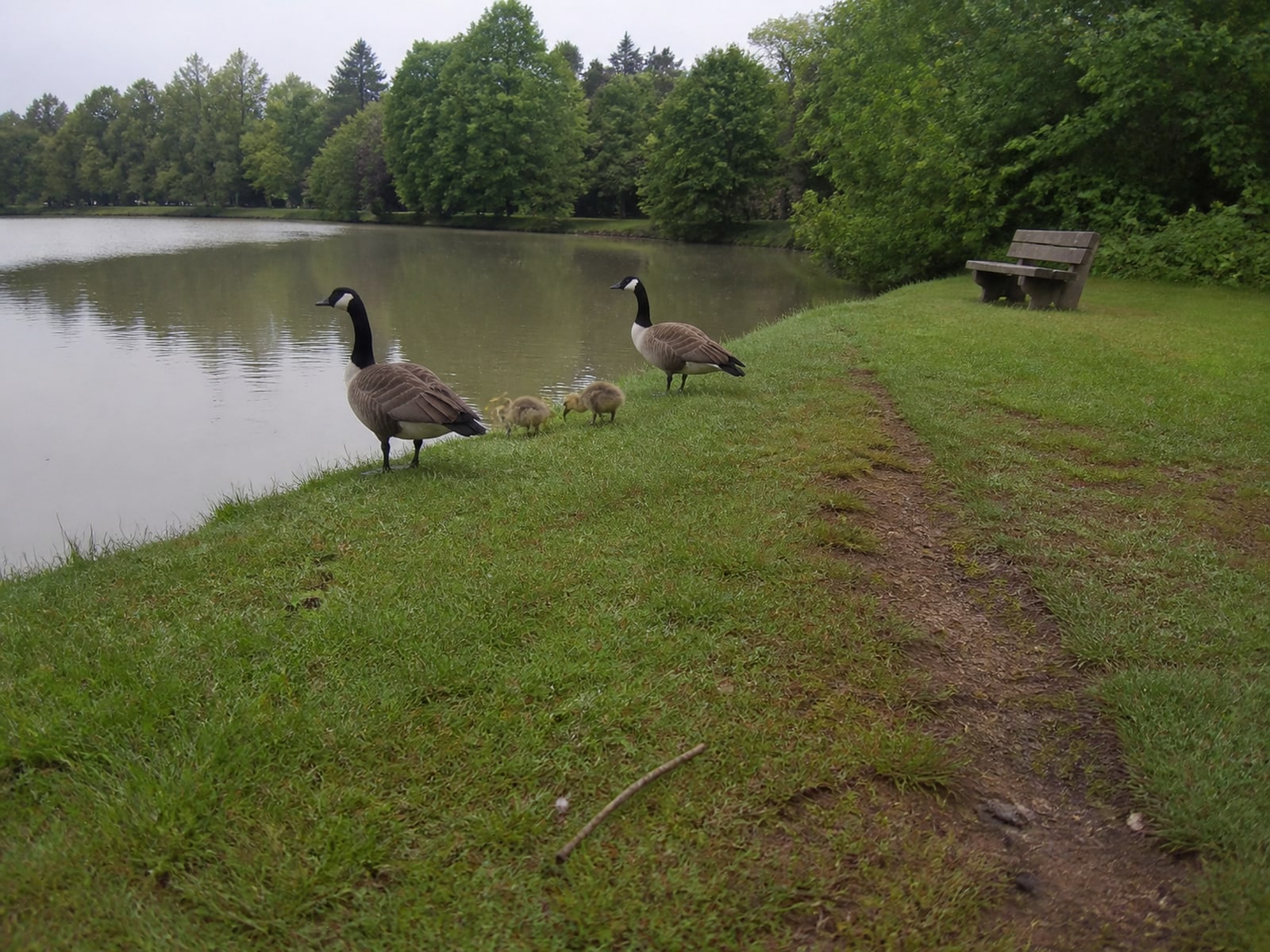
The result shows up where it is least welcome. The entrance lawn a visitor sees first, the walkway between the parking lot and the door, and the pond edge in the photographs. A flock does not distribute itself evenly across your acreage; it concentrates on the mown ground nearest the water, which on most campuses is the frontage.
This is the part most goose conversations miss, and it is the one that can turn a grounds nuisance into a compliance question. Connecticut's 2025 Commercial Stormwater General Permit can regulate a commercial site with five or more contiguous acres of impervious cover where the activity and discharge criteria are met, and it requires the operator to use best management practices to control contamination at the source. In Massachusetts, stormwater standards reach office and commercial projects subject to the Wetlands Protection Act or sitting in its buffer zone. New York's stormwater regulation carries maintenance obligations for stormwater control facilities.
Waterfowl are a recognized loading pathway into that water. APHIS reports that waterfowl can reduce water quality through feces and runoff. A Connecticut DEEP watershed plan for the Mill River identifies Canada goose droppings in or near a waterbody as a direct nutrient and bacteria loading vector, and discusses trained dogs among the non-lethal approaches to it.
We are not going to tell you your permit status, and nobody should from the outside. What we will say is that if your pond sits inside a permitted stormwater system, the inspection and maintenance documentation your operator already keeps is the place a goose problem becomes visible to somebody other than your grounds crew. Worth checking before it does.
Built around your operating day rather than dropped on top of it.
Entry lawns, walkways, loading and service roads, pond banks, swales, detention basins and landscaped buffers. Where the birds feed, where they rest, and the path they walk between water and grass.
Certificate of insurance, additional-insured wording, security clearance and whatever supplier portal your organization uses. This is usually the longest part of starting, so we begin it early rather than at signature.
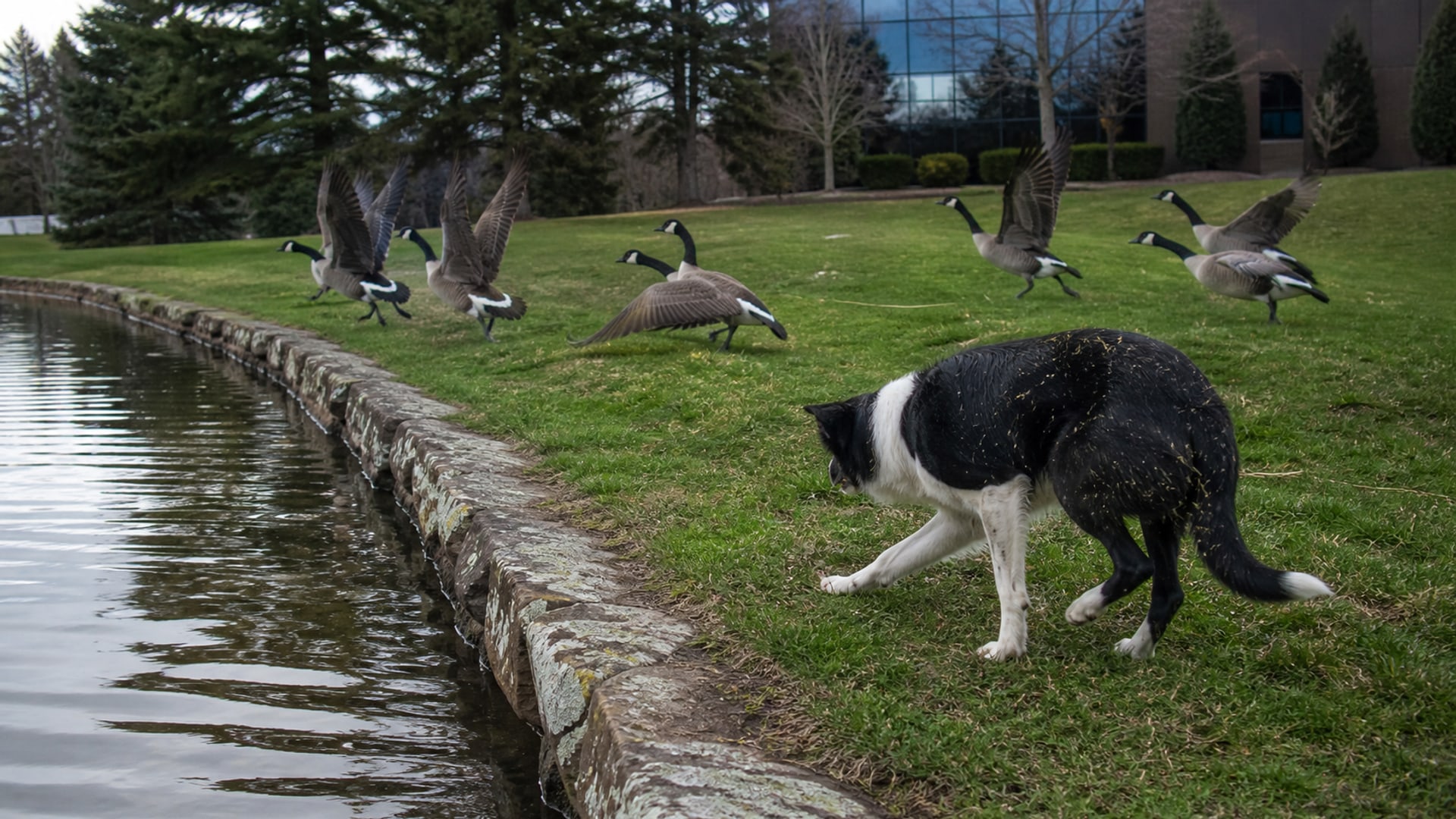
Most sites want the work before staff and visitors arrive. A handler and dog work the birds off the turf and water, no bird is touched or harmed, and the timing is varied so the flock cannot learn the pattern.
What was covered, when, and what the crew saw. If your stormwater or grounds records need to show action was taken, that record is what shows it.
On most campuses the facilities manager owns the operating budget, the contracts and the vendor performance, and can move on a recurring grounds service inside their discretion. A property manager may solicit and approve service contracts and approve the invoices. Above a certain number, or where the spend was not budgeted, an asset manager or the ownership group has to agree.
The split that catches people out is landlord versus tenant. If the grounds are tenant-controlled rather than landlord-controlled, the tenant facilities lead and the landlord both need to agree the scope, the access and who pays, before anybody is on site. It is worth resolving that in the first conversation rather than after a proposal has gone to the wrong party.
Then there is the onboarding chain, which is real work at any organization of size: risk management or legal on insurance and indemnity, security on contractor access, and accounts payable on vendor setup. Large corporate supplier processes commonly verify insurance, health and safety frameworks and business continuity before a supplier is created at all. Tell us what yours requires and we will work through it.
Some of the numbers a proposal would like to quote here simply do not exist in any honest form.
There is no credible published figure for goose cleanup, cleaning hours or grounds cost at a corporate campus in this region. Pricing follows the assessment, because a number produced before anyone has walked the ground is a guess that one of us pays for later.
We looked. There is no citable, named corporate campus goose-management case in Connecticut, Massachusetts or New York that does not run through a competitor's marketing. We would rather say that than imply a case history we cannot show you.
Abatement is a maintenance program. Geese habituate, neighboring water is outside our control, and no single technique is universally effective. Anyone promising a permanently clear campus is selling you something else.
That work runs through an annual US Fish and Wildlife Service registration held by the landowner, with reporting due at year end. We hold no such registration and will not present it as our service.
A campus has no term dates or playing season, so the biology is the calendar that matters. APHIS describes resident Canada geese nesting from March through June, with nesting beginning as early as late February and most hatching in early May. Adults are flightless while moulting through mid-June into early July.
Two consequences for a property. Once a pair is on a nest near your entrance, the legal position tightens and the bird gets bolder, which is when the complaints about aggression near a doorway start. And during the moult the birds physically cannot fly off, so numbers concentrate on the water and the bank beside it for several weeks. Neither window is a reason to wait; both are reasons to have a program already running when they arrive.
It should not. Most campuses put the visits before staff and visitors arrive, and a handler with one dog is a considerably smaller presence on site than the landscaping crew.
Tell us what your onboarding requires, including the exact additional-insured wording, and we will meet it or say plainly that we cannot. It is the most common reason a start date slips, so it is worth raising in the first call.
It may change your documentation rather than the work. Non-injurious dog hazing does not alter land or water. Changing pond banks, wetland vegetation, grading or drainage structures is a different matter and can trigger separate review, so we screen for it before proposing anything physical.
Habitat modification is a separate service and it is usually the right companion to hazing rather than an alternative. It is also the part most likely to need approval, which is why we screen the permitting question before designing anything.
Yes, and we will say so rather than pretend otherwise. A campus in a business park shares its flock with everyone around it. We can make your ground the least attractive option on the block, which is a real result, but it is not the same as clearing the area.
Yes. We run more than one crew for exactly that reason, and on a program whose mechanism is consistent repetition, a schedule that thins at the edge of somebody's range is the failure you find in month three.
Call Tri-State Geese Patrol on (203) 856-4889 and tell us where the water sits, which lawns and walkways are carrying the problem, and what your vendor onboarding will need from us. If a goose program is the wrong answer for your site, you will hear that on the first call.
Call Tri-State Geese Patrol on (203) 856-4889 and we will talk through the site, the flock and what a program would look like.