Tri-State Geese Patrol

Goose Control in Hartford, CT

Humane Canada goose abatement for Hartford properties, using trained Border Collies that move birds without touching them. In this city the water is often not where it looks like it is.

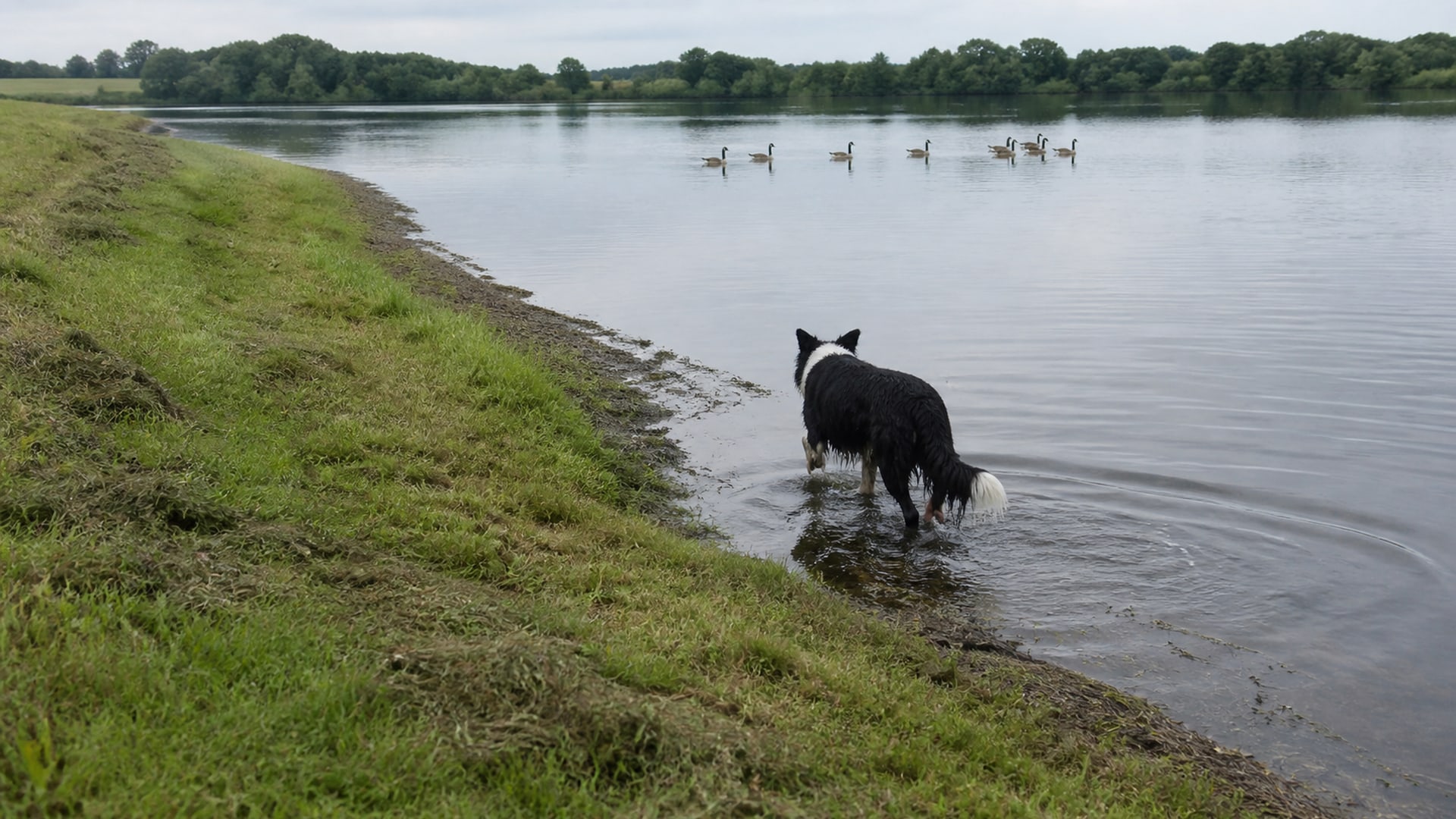
Open mown grass beside water of the kind Canada geese settle on in Hartford, CT

At a glance

City

Hartford, Connecticut

Method

Non-lethal herding by trained Border Collies, no contact with any bird

Permit needed to move geese this way

None, provided no bird is harmed

The local constraint

City code requires a dog leashed whenever it is off its owner's property

In Hartford, the water is not where it looks like it is

This city breaks the usual rule of thumb, and it does it in both directions.

The Park River, which older Hartford knew as the Hog River, runs largely buried through the center of the city. Its North Branch is still open where it crosses the University of Hartford campus, and the South Branch and its tributaries approach from the west and south. The consequence for a property owner is worth stating plainly: a site can sit in a Park River floodplain or watercourse corridor while looking nothing like waterfront, which means the rules that apply to work near water can apply to ground where no water is visible.

Then the reverse. The Connecticut River makes the eastern edge, and the most visible public lawns beside it, at Riverside Park, Mortensen Riverfront Plaza and Charter Oak Landing, are not run day to day by the department you would expect.

So the two questions that decide a Hartford job are what is under the ground and who operates the surface. Both have answers, and neither is obvious from a map.

One thing this page will not claim is a Hartford goose program. We searched the city's board pages, procurement material, park pages and stormwater documents and found no city goose-control contract, formal complaint, council action or management program. What does exist is a 2011 report of geese at Riverside Park during Connecticut River flooding, which establishes birds at a named Hartford park on a particular day and nothing more. It would be dishonest to build that into a history.

Where does lawn meet water in Hartford?

The verified water in this city concentrates in the parks, the riverfront and one cemetery, rather than in the office core.

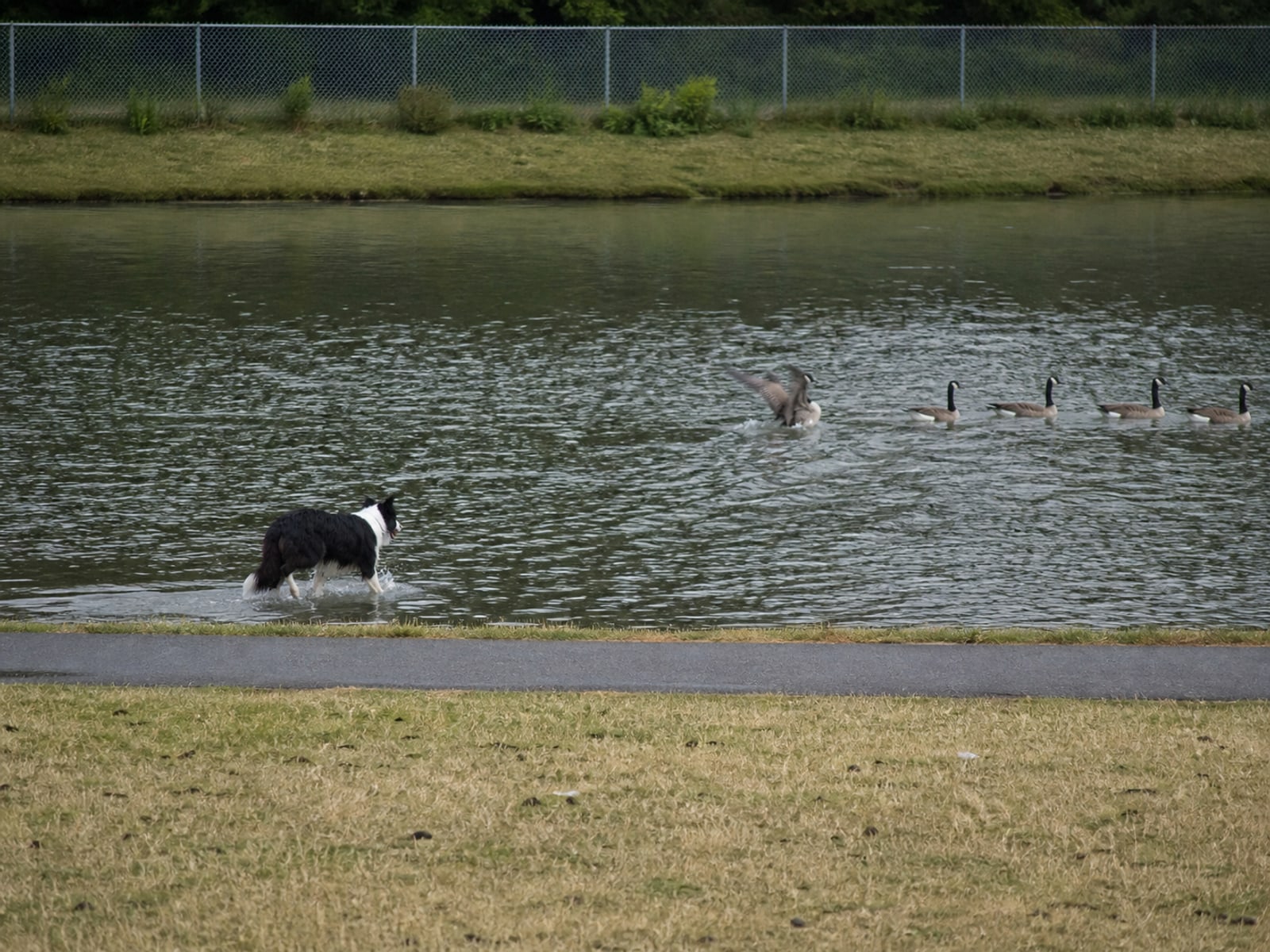
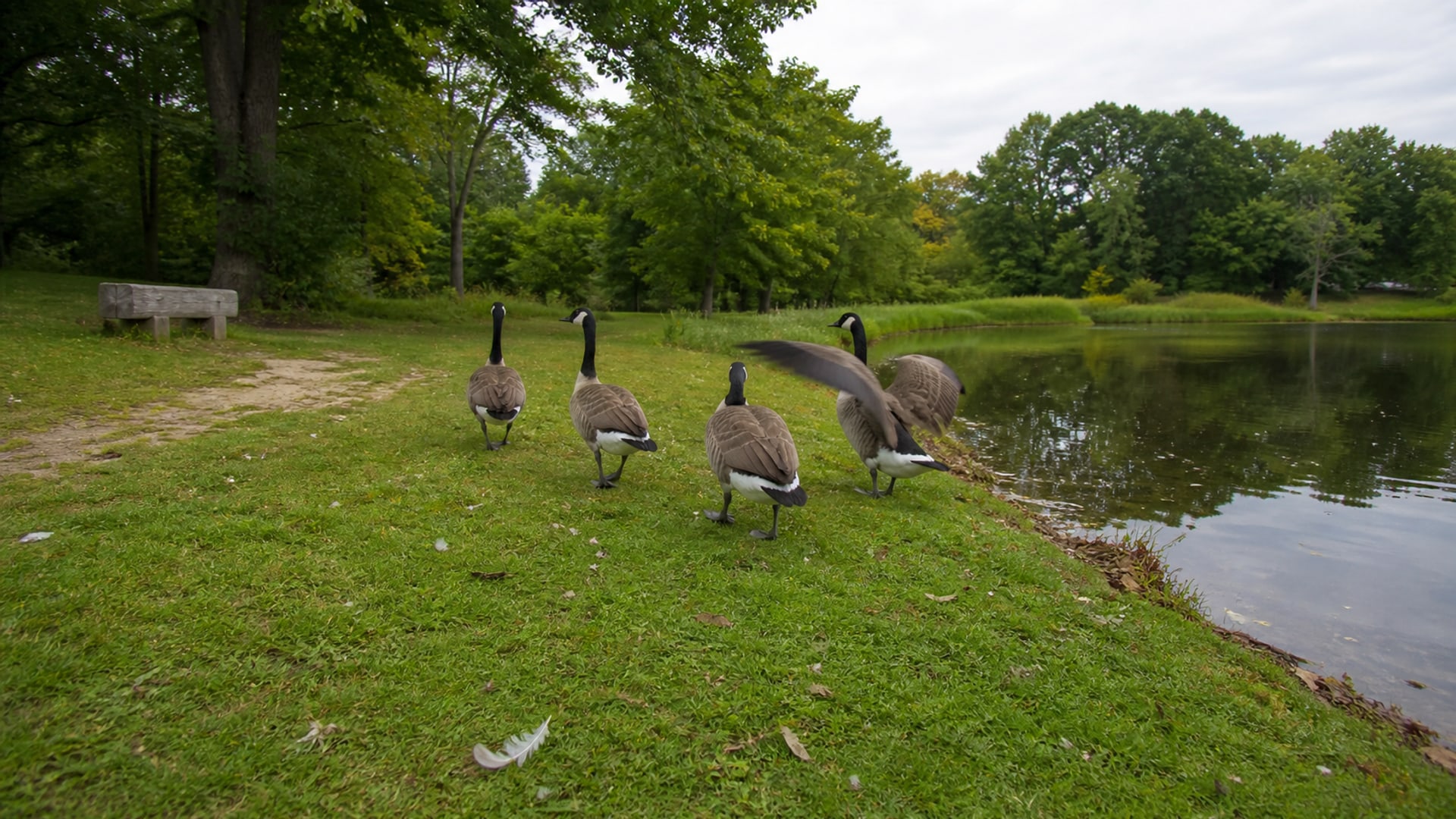
Canada goose droppings and grazed turf on maintained ground in Hartford, CT

Goodwin Park and its golf course

Three ponds across 237 acres, with fishing areas and a 27 hole municipal public course, extending across the Hartford and Wethersfield line. The city's material does not establish that every pond sits inside the playing area, so which pond and which fairway edges are actually involved is a question for the course superintendent rather than something to assume from a map.

Keney Park and its course

An 18 hole municipal public course inside the much larger Keney Park landscape near the city's northern boundary, with Keney Park Pond as a named water body in the park. No current official course plan tying that pond to a particular hole turned up, so the relationship between the water and the played ground is a site walk question.

The riverfront, run by somebody else

Riverside Park has river frontage, picnic lawn, trails, a boat launch, fishing and a cricket field. Charter Oak Landing carries frontage, picnic areas, fishing, a boat launch, a playground and paved walks. Mortensen Riverfront Plaza has a riverfront lawn and a grassy terrace designed to seat 2,500. All of it is operated by Riverfront Recapture under a separate nonprofit arrangement rather than by Public Works, so a recurring program there needs both the landowner and the operator in the conversation.

Cedar Hill Cemetery, and the city's densest core

The clearest verified institutional landscape with substantial private water: 270 acres with more than 65 acres of open landscape and ponds, including the eight acre manmade Llyn Mawr, at 453 Fairfield Avenue. Beyond that, Hartford is denser than a suburban office park market, and no authoritative source establishes a landscaped pond at the downtown and Asylum Hill campuses, the hospitals or Trinity College. We are not going to invent an insurance company retention pond to fill out a list.

Hartford's dog rule is the strictest in our service area

This is the single most important thing a Hartford buyer should understand before anybody quotes them for dog-based work.

Hartford Code section 6-2 requires a dog to be on a leash whenever it is off the property of its owner, with a published penalty of fifty dollars. Not off town park land specifically. Off the owner's property, full stop. No working-dog or commercial-dog exemption appears in the section's text, and the city's own resident guidance repeats that dogs must be leashed at all times, including in city parks.

The parks chapter adds a second provision that matters for one of the city's largest open landscapes: a person may not walk or allow a dog to roam in a municipal cemetery.

We are telling you this because it directly constrains a method that depends on controlled working movement, and because the public text does not establish that a contract, a permit or a departmental approval automatically creates an exception. Anybody who tells you their commercial purpose overrides section 6-2 is telling you something the code does not say.

What that means in practice is that a Hartford deployment needs written site authorization plus a clear, legally confirmed account of how section 6-2 is satisfied, agreed before the first visit rather than after a complaint. On a municipal cemetery the separate cemetery provision has to be resolved as well. On private ground, a course, a campus, a cemetery in private hands, an association, the owner's authorization plus the leash rule's application to that property is the question, and it is usually a much shorter conversation.

We would rather lose a job at the quoting stage than start one that gets stopped in week two.

Two Hartford ownership traps

Both of these catch out providers working from a list rather than from the ground.

The first is Batterson Park. It is owned by the City of Hartford and it is not in Hartford. It sits in Farmington and New Britain. Hartford ownership does not make it a Hartford water body, and a proposal that lists it among the city's ponds has confused a deed with a boundary.

The second is aviation, and it is unusual for a city this size. Hartford-Brainard Airport is inside the city at 239 Maxim Road, so the distance from the city limits is zero. It covers 201 acres with two asphalt runways, a seasonal turf runway, a lighted helipad, a control tower and tenant facilities, and it is controlled by the Connecticut Airport Authority rather than by Hartford Public Works. There are also two private medical heliports inside the city, at Hartford Hospital and at Saint Francis.

Wildlife work on an active airfield, or near a hospital flight path, is a different discipline with its own authorization and safety coordination, and an ordinary park or commercial scope cannot simply be extended onto it. If your property genuinely sits in that setting, that coordination belongs at the start of the conversation.

On the water utility side, there is no public drinking-water reservoir inside Hartford. The Metropolitan District supplies the region from reservoirs about twenty miles away, and Hartford holds nine of the twenty-nine seats on its board. Inside the city the practical water authority question is usually sewer and separated storm system control rather than reservoir shoreline, because the district owns and operates the combined sewers and a number of separated storm systems while the city and private owners control other drainage.

What happens after you call about a Hartford property?

The fieldwork is the same on a fairway, a riverfront lawn and a cemetery. In Hartford the front end is about authorization, and it is heavier than in the suburbs.

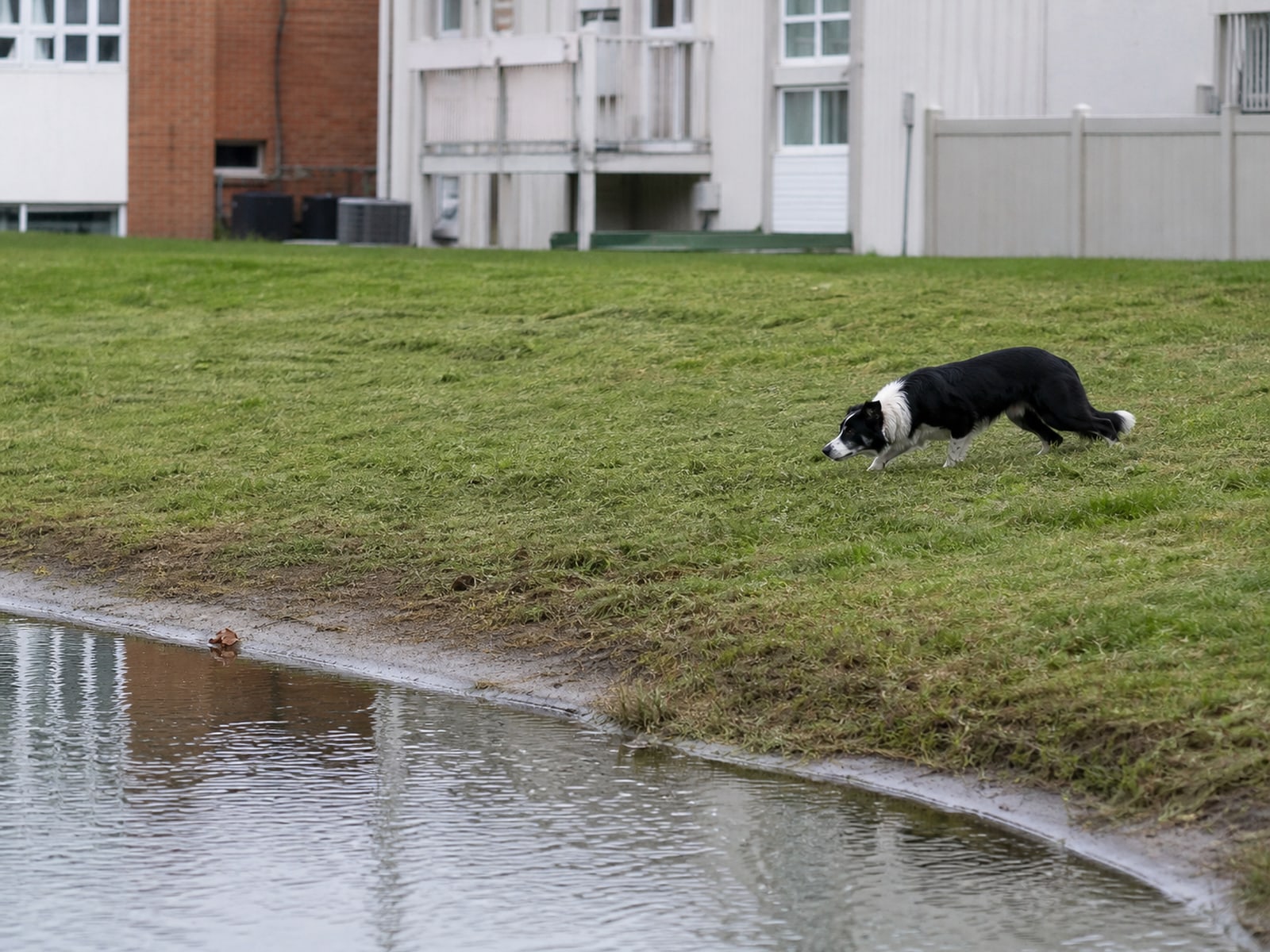
A Border Collie working a flock of Canada geese off maintained ground in Hartford, CT
  1. 01

    We establish who owns it and who operates it

    In this city those are frequently different answers. A riverfront park is city land run by a nonprofit; a municipal course sits under a Golf Course Oversight Commission with a Golf Operations Manager in Public Works rather than under general park permitting; an airfield is a state authority's ground.

  2. 02

    We work out what is under the site

    A buried river corridor does not show on the surface. Whether a property sits in a Park River floodplain or watercourse corridor changes what physical work is possible near it, and it is not something you can tell by looking.

  3. 03

    We ask what you are seeing, and what has been tried

    How many birds, on which surfaces, at what times, and how close the nearest water is. What a flock has already learned to ignore changes what is worth doing next.

  4. 04

    We resolve section 6-2 in writing before scheduling

    Written site authorization plus a clear account of how the leash requirement is satisfied for the proposed work, and on a municipal cemetery the separate prohibition on dogs resolved too. This step is not a formality in Hartford.

  5. 05

    The dogs work at times the flock cannot anticipate

    A handler works the ground with a trained Border Collie in a stalking posture, under control throughout. A goose responds to that as it would to a predator, by leaving, with no contact and no capture. The visits then repeat unpredictably, because a schedule the birds can learn is one they will sit out.

  6. 06

    We say what should change about the ground, and we measure

    Where mowing stops, whether an unmown strip or a barrier can sit between water and turf, and whether anybody is feeding them. Then counts, locations, complaints and the gap between a visit and the birds returning.

What we handle, and who handles the rest

We do not apply turf repellents. They are registered pesticides, applying one to commercial turf in Connecticut is licensed work, and we hold no such certification. A licensed applicator is the right call if a repellent suits a defined surface.

We do not addle eggs or work on nests. That is regulated activity, the landowner registers with the US Fish and Wildlife Service before anything happens, Connecticut accepts that federal registration and adds a further requirement where a commercial control firm is involved, and the authorization belongs to the landowner rather than to a contractor.

We do not work airfield ground on our own initiative, and nothing here should be read as implying access to Brainard or to a hospital heliport.

This is a maintained program rather than a one-time repair, and that is deliberate. Connecticut DEEP finds that non-lethal methods other than habitat work tend to be transitory when used alone, so the visits continue and the record of them is what shows the ground is holding.

When does acting in Hartford cost the least?

Before the nesting season closes the options, and before a flock has decided a particular lawn belongs to it.

Connecticut DEEP puts territorial defense as early as March and nesting by early April, with incubation around 28 days and young hatching through to June. Up to that point a lawn is just a lawn. Once a pair is holding ground, it becomes a protected-nest situation and the lawful choices narrow sharply, which in a city means a defended nest beside a plaza, a path or a building entrance rather than out in a field where people can simply walk around it.

The autumn and winter half runs on the river. DEEP's statewide timing has migrants arriving in early October, movement continuing through November with another arrival peak in mid-December, and most birds leaving the state by mid-January, although mild winters hold them. On the Connecticut River edge that seasonal traffic sits on top of whatever resident flock a property already has, and DEEP is clear that migrant and resident birds overlap in those months and cannot be told apart by appearance. So a large flock on a Hartford lawn in November tells you very little about where those birds nested.

There is one Hartford-specific reason to keep watching in the off season. Riverfront ground floods, and the one documented account of geese at a named city park is from a flood event at Riverside Park. High water rearranges where birds can stand, which means the map you drew in August may not describe the site in April.

There is also a development angle worth knowing if you are building or reworking a site. Hartford zoning requires pollutants to be controlled at their source to the maximum extent feasible, with on-site stormwater treatment for covered development. A design that leaves an open run of mown grass straight down to water is a design that keeps producing the input somebody else then has to treat.

Maintained ground in Hartford, CT holding clear of Canada geese after repeat visits

Hartford goose control questions

Can a trained dog work off leash on Hartford city property?

Not on assumption. Section 6-2 requires a dog to be leashed whenever it is off its owner's property, with a fifty dollar penalty and no working-dog exemption in the text, and the parks chapter separately prohibits dogs in municipal cemeteries. A deployment needs written site authorization and a legally confirmed account of how the leash requirement is met.

Is there a Hartford ordinance against feeding geese?

None that we could find in the current searchable code, having looked in the animal and parks chapters and across the code. That does not mean feeding is permitted everywhere: riverfront, state, institutional or event rules can add site restrictions, and a property owner can set their own rule.

Who do we talk to about a city golf course?

Not general park permitting. Hartford has a Golf Course Oversight Commission and Public Works lists a Golf Operations Manager, so a Goodwin or Keney inquiry has its own route. On Goodwin in particular, the superintendent is the person who can say which of the park's three ponds actually touch played ground.

Is Batterson Park a Hartford site?

It is Hartford owned and it is in Farmington and New Britain. That distinction matters for who authorizes work and which town's rules apply, and it is a good test of whether a provider is reading deeds or reading maps.

Do we need a wetlands or floodplain review?

It depends on what is being changed, and in Hartford it is harder to eyeball than elsewhere because the Park River is largely buried. Moving birds off maintained turf with a dog is not regulated activity; planting a buffer or building at a watercourse edge can be, and a site in a corridor may not look like waterfront at all.

How much does goose control cost in Hartford?

It is quoted per site, on ground worked, bird numbers, water edge, visit frequency and what the surface is used for. There is no credible published range for this region, and for city work the route runs through the relevant department and the city's procurement process rather than a handshake.

Our building is downtown with no pond. Can we still have a goose problem?

Yes, and it is more common than people expect. Birds commute between water and grass, so an open lawn, a plaza terrace or a campus green within reach of the river or a park pond can carry a flock without having any water of its own. The site walk is about the route in, not only about what is on your parcel.

Local detail

Canada geese in Hartford, Hartford County

Hartford is Connecticut's capital and a city of roughly 121,000 residents, and it breaks the usual rule about where water is. The Park River, historically the Hog River, runs largely buried through the center of the city, so a property can sit in a watercourse corridor while looking nothing like waterfront.

The verified open water is concentrated in the parks, on the riverfront and at one cemetery rather than in the dense office core. Goodwin Park holds three ponds across 237 acres alongside a 27 hole municipal course, Keney Park carries an 18 hole municipal course and a named pond, and Cedar Hill Cemetery has an eight acre pond in 270 acres of grounds. The riverfront parks are city owned but operated by Riverfront Recapture.

Bordering towns: West Hartford, East Hartford, Bloomfield, Windsor, South Windsor, Wethersfield, Newington, Glastonbury. A flock does not recognize a town line, so a program sometimes has to be scoped wider than one parcel.

Getting there: Interstate 84, Interstate 91, Route 2, Albany Avenue, Farmington Avenue, Main Street, Maxim Road.

We cover all of Hartford and the ground around it. If your neighborhood is not listed, or you are not sure which one you are in, it is very likely we work there. Ask and we will confirm.

Talk to us about your Hartford property

Tell us what you are dealing with: roughly how many birds, which surfaces they are fouling, where the nearest water is, and who owns and operates the ground.

Tri-State Geese Patrol runs humane Canada goose abatement with trained Border Collies across Connecticut, Massachusetts and New York, and we are reachable 24 hours. Call (203) 856-4889 and it goes to Bill.

And if the honest answer for your site is an unmown strip and a no-feeding rule rather than a contract, we will say so.