
Tri-State Geese Patrol

Border Collie Goose Abatement

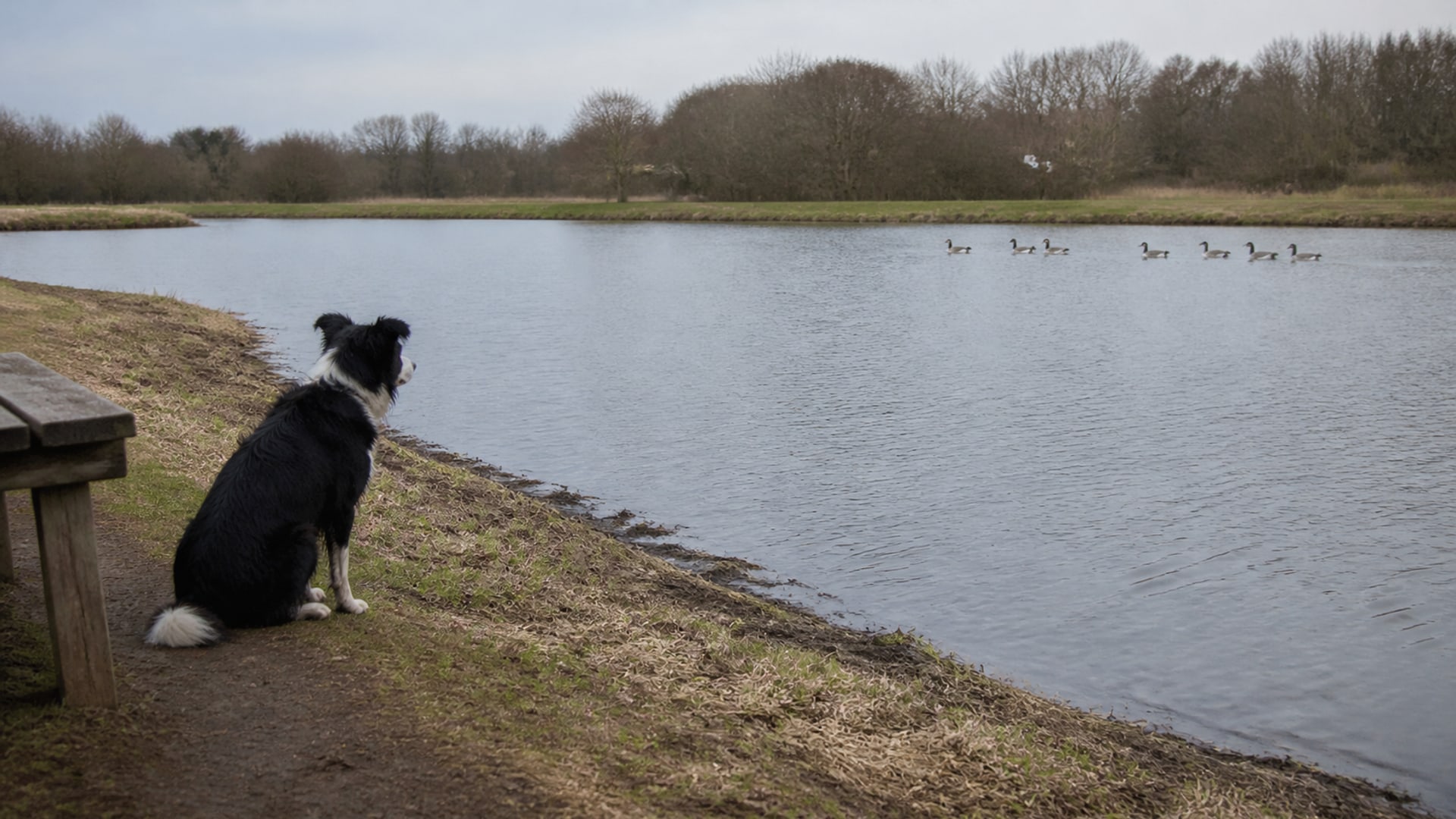
Trained Border Collies and their handlers work your property on a schedule, moving Canada geese off it without touching a bird. The dogs read to a goose the way a predator does, and the flock stops treating your ground as a safe place to feed and rest. Tri-State Geese Patrol runs this program across Connecticut, Massachusetts and New York from a base in West Hartford. Call (203) 856-4889.

At a glance

Species

Branta canadensis

Legal status

Protected under the Migratory Bird Treaty Act

Method

Non-lethal herding, no contact

Permit needed to haze with dogs

None, when no bird is harmed

Why geese chose your property in the first place

Canada geese are not wandering onto your site by accident. They are responding to conditions your landscaping created.

Connecticut DEEP describes the pattern plainly: resident Canada geese nest statewide, and the habitat that holds them is lawn beside water. Golf courses, athletic fields, corporate campuses with retention ponds, municipal parks and airport grounds are the exact combination the birds are looking for. Short, fertilized, irrigated turf is high-quality food. Open water a few steps away is an escape route from anything that threatens them. MassWildlife makes the same point about mown, watered, fertilized lawns close to water.

New York DEC fills in the rest. Resident geese have become year-round residents of parks, waterways, residential areas and golf courses because those places offer short grass, ponds, very little predation, no hunting pressure, and in many cases people who feed them.

So the site is not neutral ground that geese happen to visit. It is good habitat, and they know it.

Resident geese and migratory geese are different problems

This distinction decides what your program looks like, and a provider who does not raise it early is guessing.

USDA APHIS defines resident Canada geese for federal management purposes as birds that nest in the lower 48 states and the District of Columbia during March through June, or that reside there during April through August. Those are your year-round birds. They are the ones that treat your pond as home, return to the same nesting spots, and produce the goslings that become next year's resident flock.

Migratory geese are a different pressure. They arrive, they use the site, and they move on. A flock that shows up in November and leaves in March needs a different response than a pair that has nested beside your eighteenth green for four years.

Part of the first assessment is working out which one you have, because promising the same outcome for both would be dishonest.
What the dogs actually do

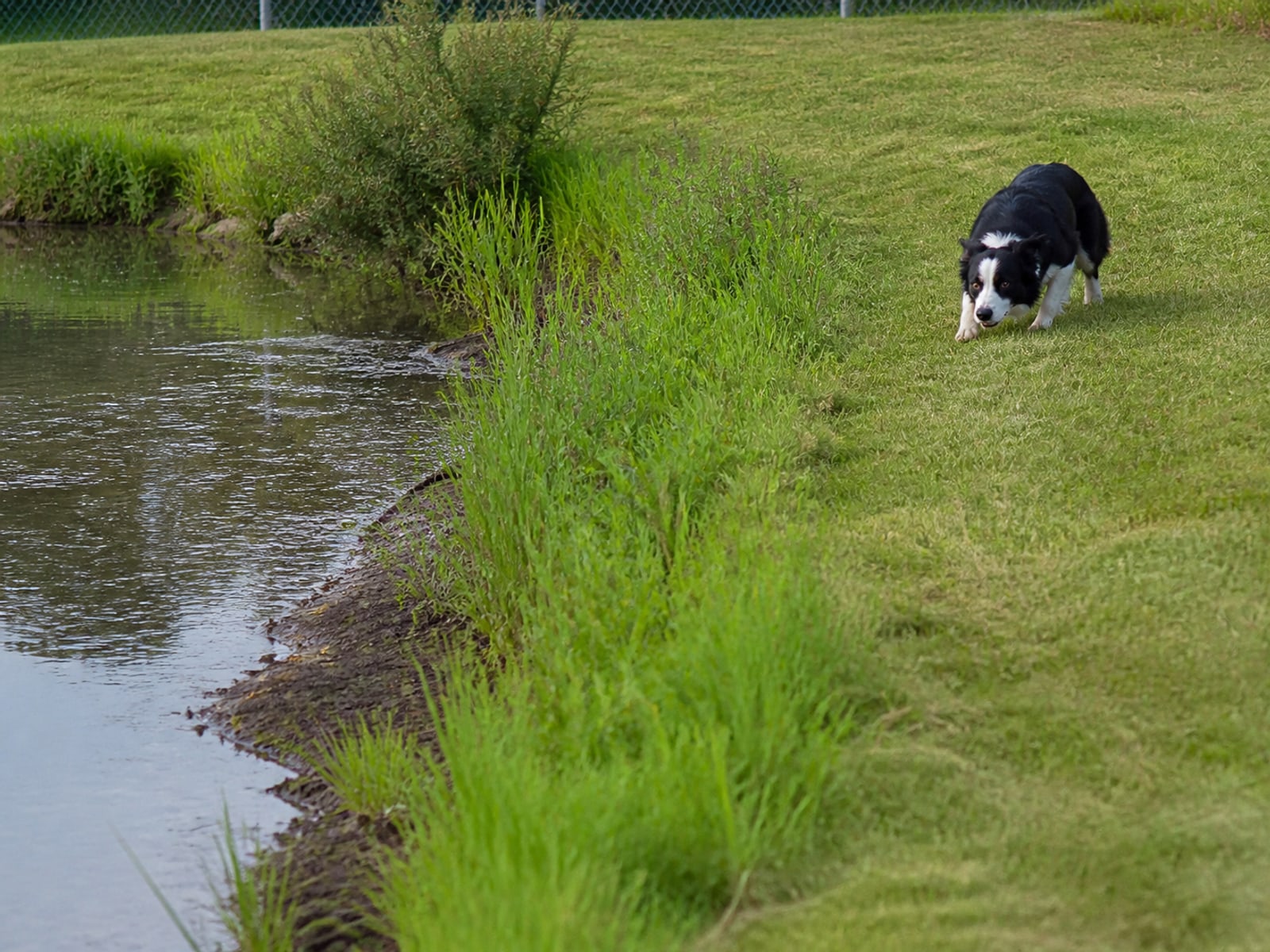
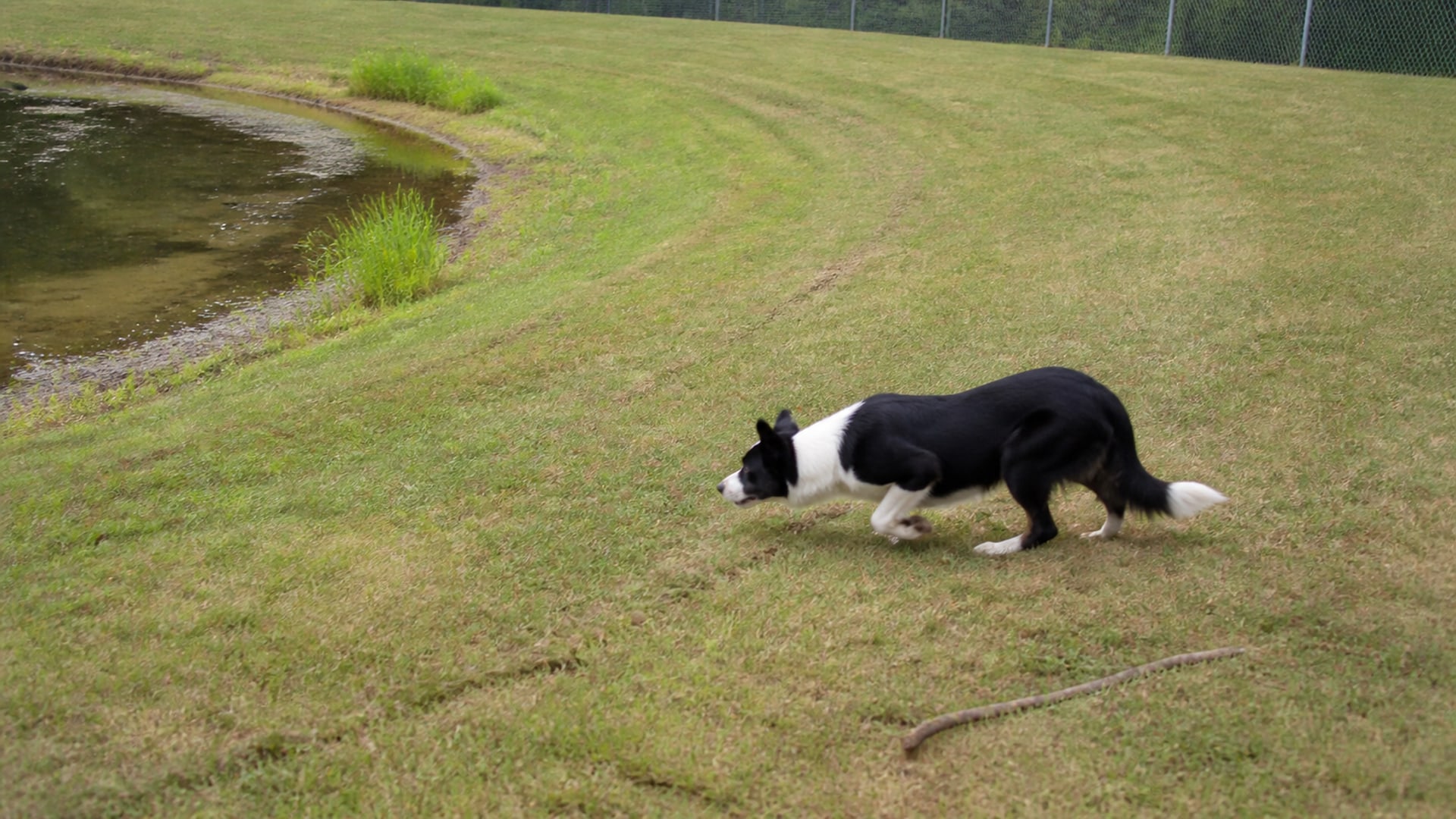
A Border Collie works a stalking posture. Head low, shoulders down, eyes locked, moving in a controlled arc. To a goose that reads as a predator, and the response is instinctive rather than learned. The bird does not need to be caught, touched or startled by noise. It needs to conclude that this ground is not safe to stand on.

MassWildlife's own guidance says trained dogs are especially effective among the non-lethal options available. That matters, because it means this is an established management category recognized by the state wildlife agency, not a novelty.

The handler is as much of the method as the dog. The dog stays under control, never makes contact with a bird, and is called off before pressure turns into pursuit. On water, the dogs will enter and work the birds off the surface. Nothing about the method requires harming a goose, and nothing about it is improvised on the day.

A Border Collie holding the low stalking stance that a Canada goose reads as a predator

Why one visit is not the program

This is the part most providers are vague about, and being straight about it is the difference between a program that works and a contract that disappoints.

USDA Wildlife Services studied winter hazing in urban greenspaces and found something useful: hazing made geese leave sites more often, but the birds returned more quickly than on days without hazing, and they did not avoid a site for longer than 48 hours. Connecticut DEEP puts it another way, noting that geese adapt quickly to noise devices when nothing reinforces the deterrent.

Read those together and the answer is plain. A single visit moves birds. It does not change their assessment of your property. What changes their assessment is repetition on an unpredictable schedule, so the site stops being reliably safe.

A USDA case study in Denver recorded what that can look like at the demanding end: some locations required several visits per day, several days per week, and the same flock was moved off as many as 21 times in a season. That is one case study, not a universal schedule, and your site may need far less. It does tell you the shape of the work.

What happens on your property

Canada geese lifting off open turf as a working dog moves through
  1. 01

    The assessment

    We look at the site before quoting anything. Where the birds are, where the water is, where they feed, where they loaf, where they nest, and what the ground is used for and when.

    Connecticut DEEP lists what a management strategy should weigh: problem locations, time of year, the options available given the site's characteristics, effectiveness, acceptability, cost and community support. That is a sensible checklist for a buyer as well as a provider, and it is roughly what the assessment covers.

  2. 02

    The program design

    You get a written scope: which areas are worked, roughly how often, how visits are scheduled through the season, and what we will and will not do. The cadence is set for your site rather than sold as a package, because a corporate pond with eight resident birds and a golf course with a hundred are not the same job.

  3. 03

    The visits

    Handlers and dogs work the property on an unpredictable pattern. Unpredictability is the mechanism. A flock that can time your arrival will simply wait you out, which is exactly how geese learn to ignore a static deterrent.

  4. 04

    The reporting and adjustment

    We record what we find and what changed: dates, where the birds were, how they responded, how quickly they came back. That record is what tells us whether the cadence is right, and it is what tells you whether you are getting value.

    Agencies are consistent that persistent, combined methods work better than any single technique applied once. New York DEC says exactly that: no single method is universally effective, and persistent use of a combination is usually necessary.

What this service does not do

Being clear about limits is not a weakness in a bid. It is the thing that separates a provider you can hold to a scope from one you cannot.

We do not touch nests or eggs. Federal regulation 50 CFR 21.162 allows certain parties to destroy resident Canada goose nests and eggs under specific conditions, and it requires registration with the US Fish and Wildlife Service. Massachusetts law makes it illegal to destroy the eggs of most birds, including Canada geese, with penalties under Chapter 131, Section 90 of the General Laws. This is regulated work with its own authorization, and it is not part of what we provide.

We do not relocate geese. New York DEC generally does not permit relocation of Canada geese at all, with or without a permit.

We do not harm birds. That is the method, not a marketing position. New York DEC states that no federal or state permit is needed to scare, herd or chase geese with dogs or noisemakers, as long as the birds are not physically harmed. The moment a program crosses into harming birds it becomes a different legal activity entirely.

We do not promise a permanent result from a fixed number of visits. The research does not support that promise, and neither will we. Resident geese use favorable habitat year after year. Abatement is maintenance.

Where this fits alongside other methods

Dogs move birds. They do not change why the birds wanted the ground.

Connecticut DEEP notes that non-lethal methods other than habitat modification tend to be transitory in their effect. That is not an argument against the dogs. It is an argument for pairing them with changes to the site, so the program has less work to do over time.

The most common pairing is habitat modification: altering sightlines, letting a buffer grow at the water's edge, or removing whatever makes the approach to the pond comfortable. Registered turf repellents are another lever in the field, though applying them is licensed pesticide work and not something we offer. Ending supplemental feeding, where the public is feeding birds, removes one of the strongest attractants there is.

Which combination makes sense depends entirely on the property, which is why the assessment comes first.

Properties we work

Golf courses. Droppings on greens and approaches, fouled collars, and birds on fairways during play. Turf damage from grazing and the cleanup burden are the visible costs.

Airports and airfields. The highest-stakes version of this problem. Note that a separate federal control order, 50 CFR 21.159, governs certain resident-goose actions within three miles of airport boundaries, and any work airside has to fit the airport's own wildlife hazard mitigation plan and operational restrictions. The FAA maintains wildlife hazard resources and a national strike database for exactly this reason.

Corporate campuses and office parks. Retention ponds surrounded by mown lawn are close to ideal goose habitat, and the walkways between buildings are where staff complaints start.

Municipal parks and beaches. Public ground where droppings make the space unusable and where a nesting pair can turn a path into a confrontation.

HOAs and condominium communities. Shared lawns, ponds and walkways, with a board that has to answer to residents.

Schools and athletic fields. Playing surfaces that have to be clean and safe for use.

Cemeteries. Grounds where appearance and dignity are the whole point.

Open managed grounds beside water where scheduled goose abatement is run

What nesting season changes

From March the birds behave differently, and your site changes with them.

Connecticut's guidance describes the sequence: geese may begin defending territories in March and nest by early April, with hatching from April through June and a peak in the first week of May. The US Fish and Wildlife Service notes that the guarding male is usually the bird most likely to go after a person who comes near a nest.

Practically, that means the spring complaints are not the same as the autumn ones. In autumn you have a droppings and turf problem. In spring you have staff, residents and visitors being chased, and a pair that will not move because they are defending a nest they are legally entitled to sit on.

A program that does not plan around this window is going to be tested by it.

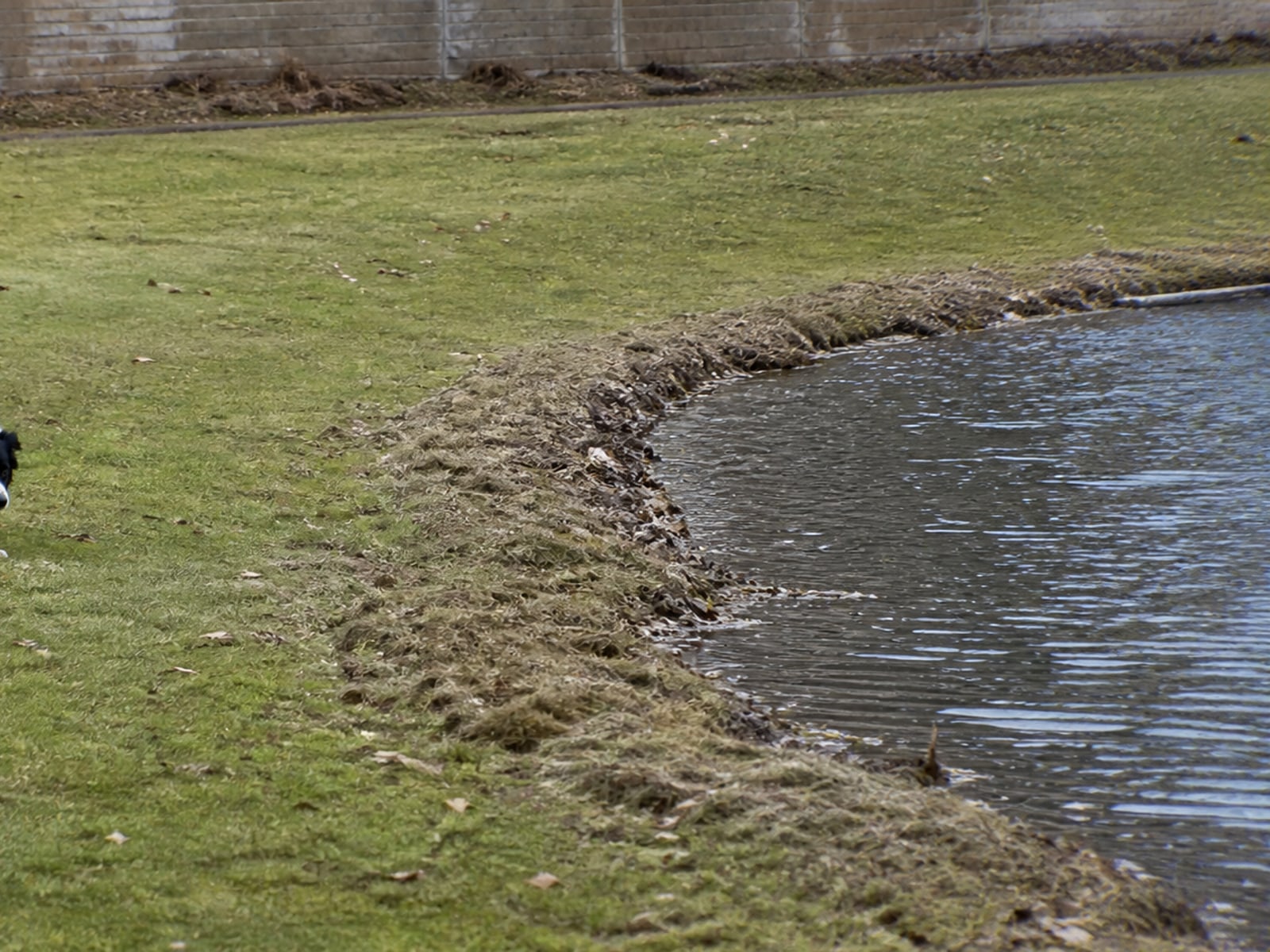
Shoreline vegetation of the kind Canada geese nest in during spring

How much does it cost

Pricing is per site, because the variables that drive it are per site: acreage worked, how many birds, how much water, how often we visit, and what the ground is used for.

The figure comes after the site walk. A number produced without seeing the ground is a guess, and it is the kind of guess that one of us pays for later.

More than one team, so distance is scheduling

We run more than one crew. If a job is far, that team takes no second job that day, or another team covers the other location.

For a procurement buyer that is worth knowing for a specific reason: a program that depends on one handler stops the week that handler is unavailable. Ours does not.

How you know it is working

"Are the geese gone?" is the wrong measure, and any provider who accepts it is setting you up to be disappointed the first week a migrating flock drops in.

The useful measures are the ones that show the flock's behavior changing.

Where the birds are, not just whether they are there. A flock that has moved from the fairway to the far bank of the pond has already given you back the ground you cared about. That is progress even though the count has not changed.

How long they stay away between visits. This is the number that matters most, and it is the one USDA's research points at directly. Early in a program the return interval is short. As the site stops reading as safe, that interval stretches. A lengthening gap is the program working, and a flat gap tells us the cadence needs to change.

How the birds respond when the dog arrives. Birds that lift immediately are behaving differently from birds that shuffle a few yards and settle. The response itself is data.

What the ground looks like. Droppings are the complaint most people started with. MassWildlife estimates a Canada goose produces between half a pound and one and a half pounds of droppings a day, so the cleanup burden falls fast once grazing pressure drops, and your grounds staff will notice before anyone else does.

Complaints. On municipal ground, in an HOA, or on a campus, the count of people reporting a problem is a real measure even though it is not a biological one.

We report on these rather than on a headline number, because a headline number invites both of us to lie to each other.

Common questions

Do the dogs hurt the geese?

No. The dogs work birds off ground and water using pressure and posture, under handler control, without contact. New York DEC treats scaring, herding and chasing geese with dogs as an activity needing no federal or state permit, specifically because no bird is physically harmed. Harming birds is a legally different act and is not what this is.

We already tried chasing them off and they came back. Why is this different?

Because a one-off and a maintained program are not the same intervention. USDA research recorded geese returning within 48 hours of hazing, and Connecticut DEEP notes birds adapt quickly to deterrents that carry no consequence. The mechanism here is repetition on an unpredictable schedule, sustained long enough to change where the flock thinks it is safe.

Do you need a permit to do this?

Not for hazing with dogs where no bird is harmed. New York DEC states that plainly. Canada geese are still protected under the Migratory Bird Treaty Act, and anything that would take a bird, nest or eggs is a separate matter with its own authorization. Site rules, local ordinances and, near airports, the airport's own procedures still apply, and we confirm those before work starts.

Will the geese come back?

Some birds will come back and test the ground again. Residents remember where they were comfortable, and migrating flocks arrive knowing nothing about your program at all. That is why abatement is maintenance rather than a one-time fix, and why the visit record matters.

Can you remove the nest while you are here?

No. Nest and egg work is regulated separately under 50 CFR 21.162 and requires registration with the US Fish and Wildlife Service, and Massachusetts law carries its own penalties for destroying the eggs of protected birds. It is not part of this service.

How soon will we see a change?

Birds move on the first visit. What takes longer is the change in the flock's habit, and how long depends on the site, the season and whether the birds are resident or passing through. We would rather tell you what we are seeing after the first visits than commit to a number before we have seen your property.

Do you work through winter?

Yes. Resident geese are year-round birds, and USDA's winter hazing research exists precisely because the problem does not stop in the cold months.

Talk to us about your site

Tell us what your property is dealing with and we will look at it properly. Call Tri-State Geese Patrol on (203) 856-4889, or send a message and it goes straight to Bill.

Tell us what your property is dealing with.

Call Tri-State Geese Patrol on (203) 856-4889 and we will talk through the site, the flock and what a program would look like.