Tri-State Geese Patrol

Connecticut · Massachusetts · New York

Geese off your property. Without harming a single bird.

Tri-State Geese Patrol moves Canada geese off golf courses, airfields, corporate campuses, municipal parks and private ponds using trained Border Collies and their handlers, on a recurring schedule, across Connecticut, Massachusetts and New York. The dogs work birds off ground and water using posture and pressure, never contact, which is why no federal or state permit is needed for the method and why no bird is harmed by it.

We run more than one crew from a base in West Hartford, so a site ninety minutes out gets the same program as one down the road, and a program does not stop the week a single handler is unavailable.

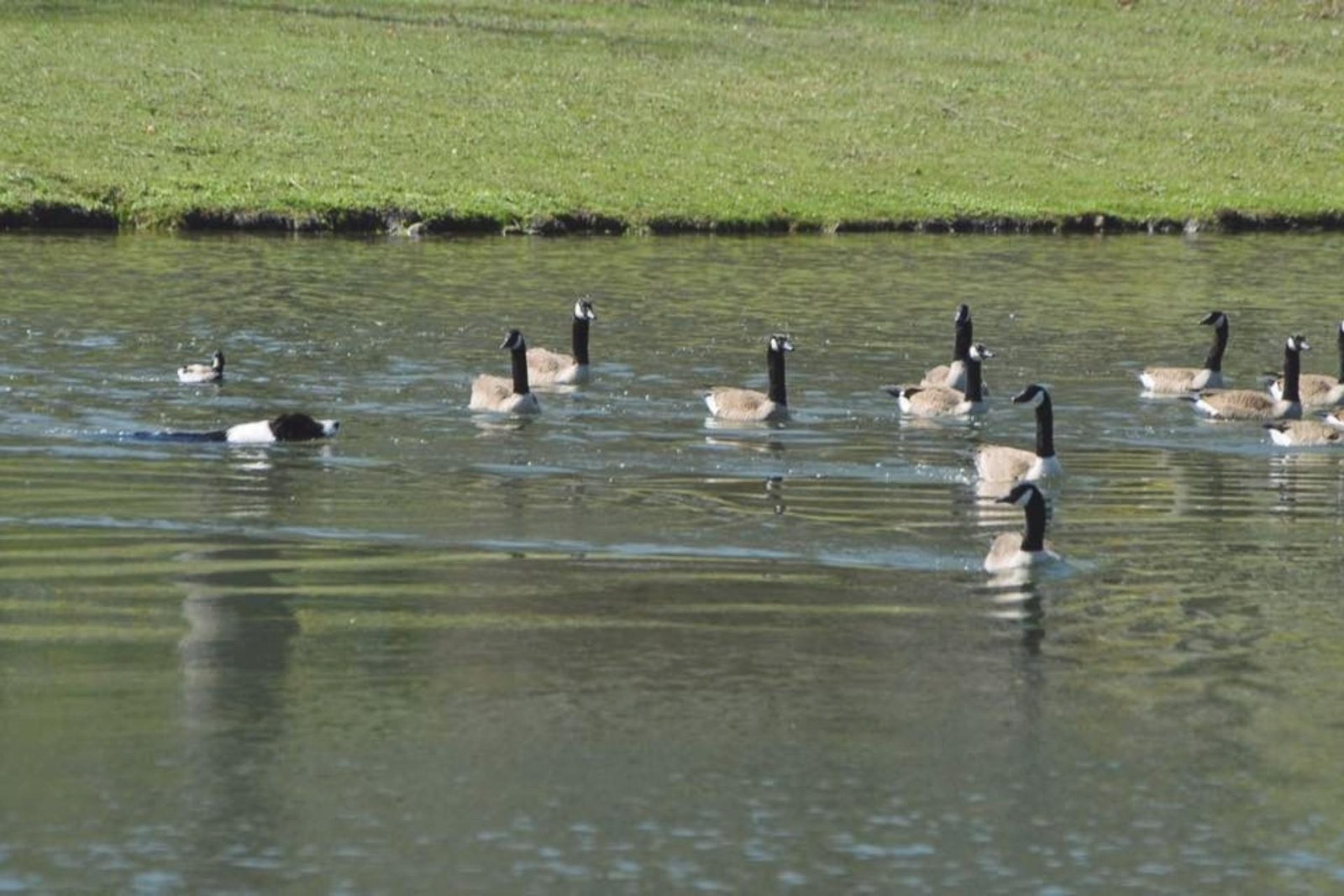
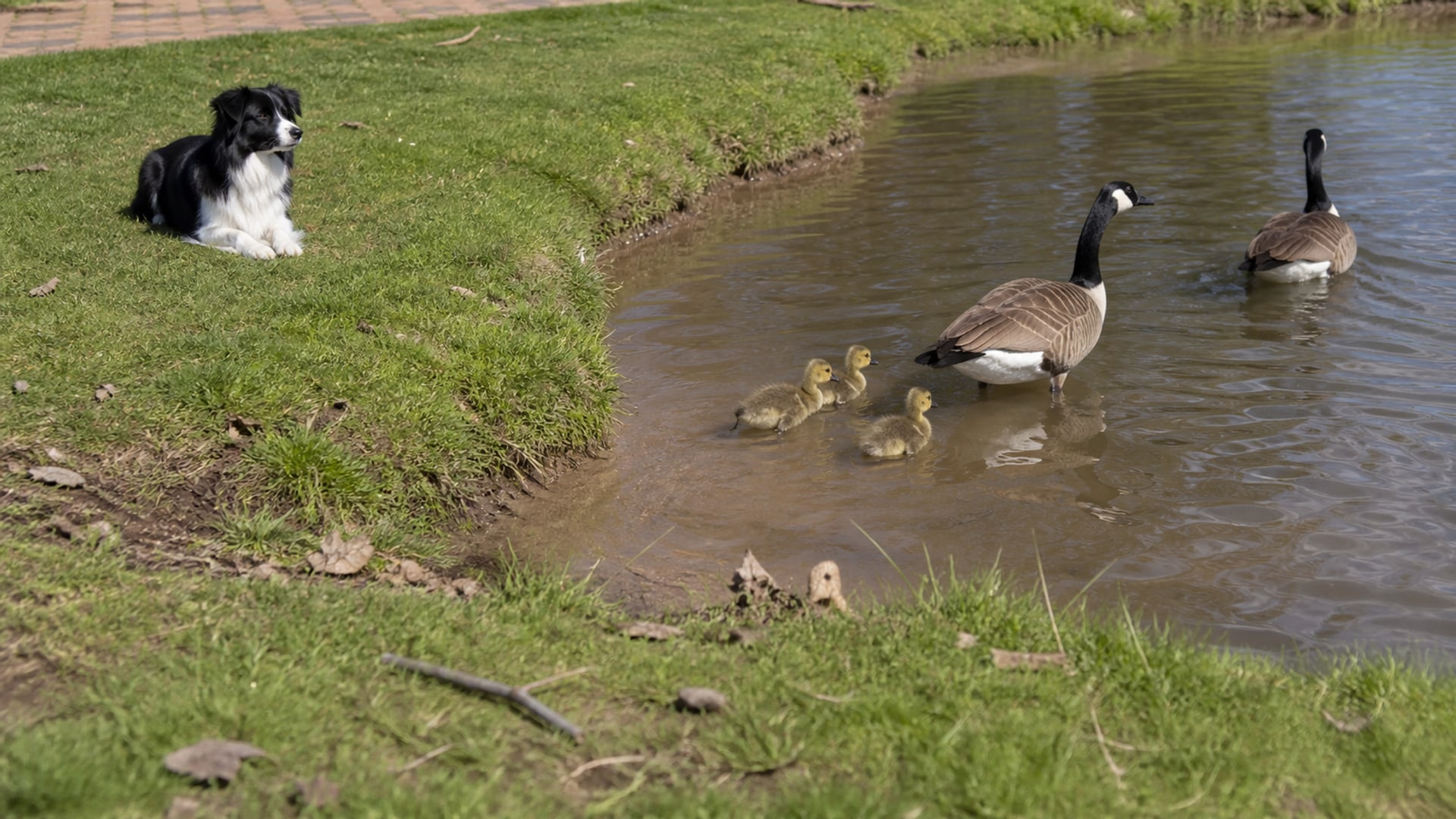
A trained Border Collie entering the water to move a group of Canada geese off a managed pond

Species

Branta canadensis

Legal status

Federally protected

Method

Non-lethal herding, no contact

Availability

Open 24 hours

The problem

A resident flock does not move on by itself

Canada geese are protected under the Migratory Bird Treaty Act, which rules out most of what people try first. They also have no reason to leave. Connecticut DEEP links the rise in resident geese to the ponds, lakeside lawns, golf courses and athletic fields built since the 1950s, and describes the birds as drawn to open grass beside water. Your property is not neutral ground the flock wandered onto. It is good habitat, and the birds know it.

What changes that is not a device. It is changing the flock's assessment of the ground, repeatedly, until standing on it stops feeling safe. Here is what the problem costs you in the meantime.

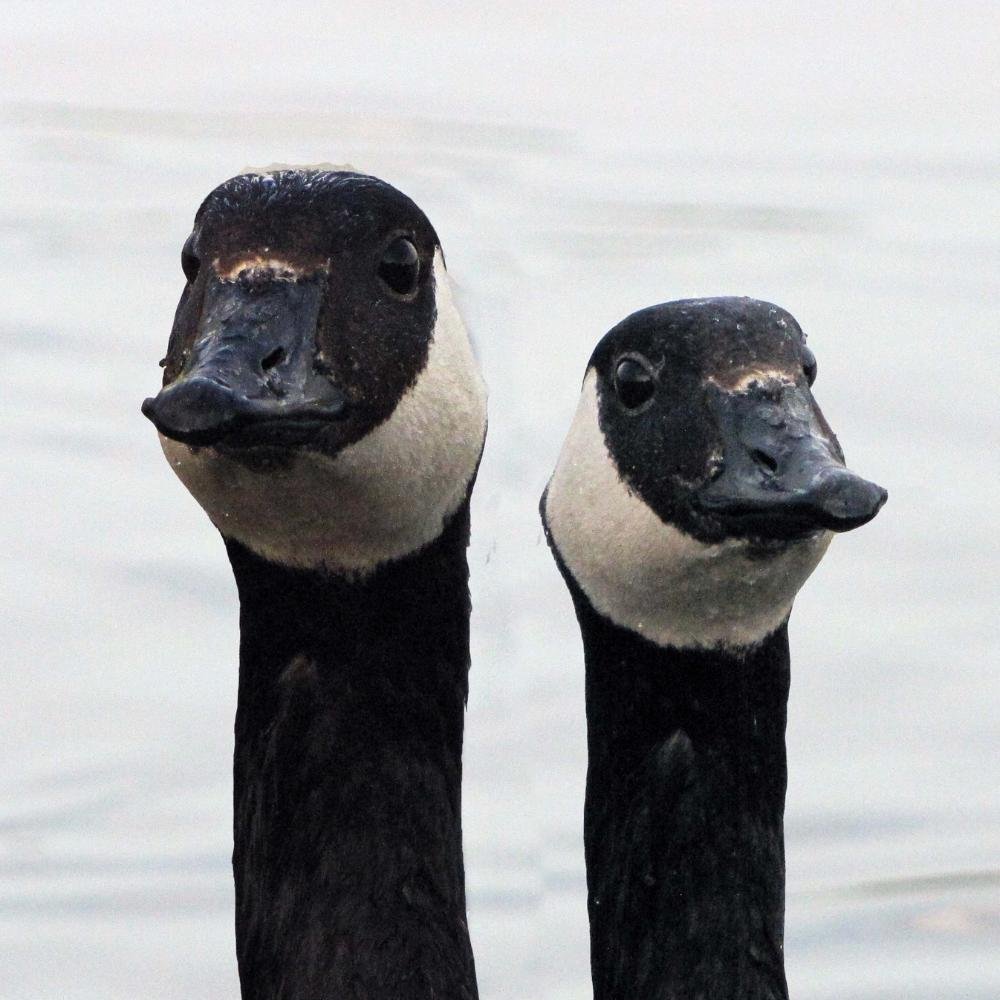
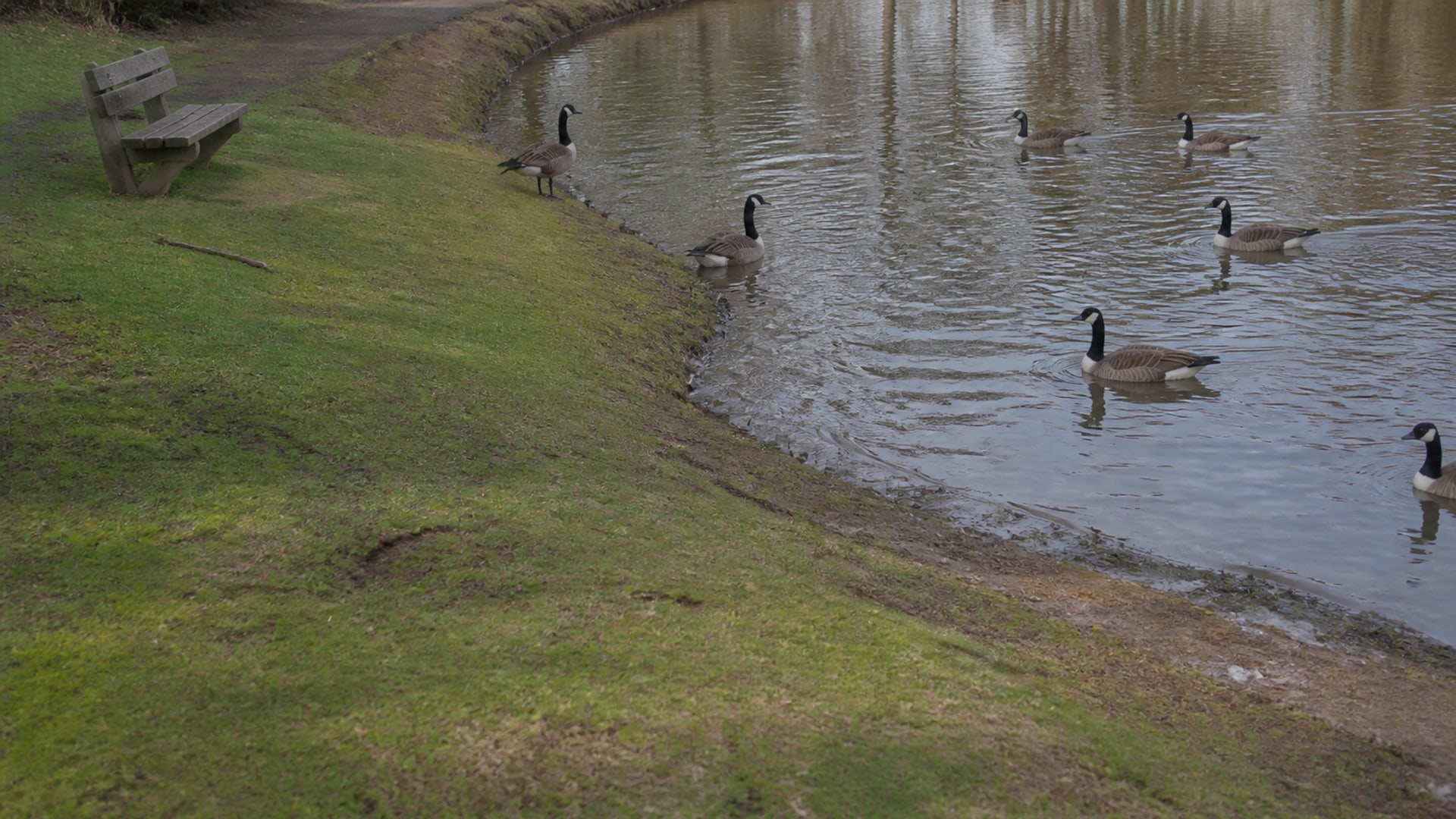
A resident flock of Canada geese grazing on close-mown turf beside open water

01

Droppings across the turf

A resident flock grazes and fouls the same ground every day. MassWildlife estimates a single Canada goose produces between half a pound and one and a half pounds of droppings daily, which is why fairways, greens, beaches and playing fields stop being usable long before the bird count looks alarming. The cleanup burden lands on the same grounds crew every morning.

02

Aggression during nesting

From March a pair will defend its ground, and Connecticut's guidance describes nesting by early April with hatching from April through June. The US Fish and Wildlife Service notes the guarding male is usually the bird most likely to go after somebody who comes near a nest. Staff, residents and visitors get chased, and the complaints arrive on your desk rather than on ours.

03

Bird-strike risk near runways

The highest-stakes version of this problem. FAA reports that waterfowl account for about 4 percent of civil aircraft strikes involving identified species but 27 percent of the strikes that damage aircraft. An airfield needs the activity genuinely reduced, not pushed a hundred yards down the field.

04

Water quality in ponds

Connecticut's stormwater manual identifies waterfowl as a significant source of nutrient and pathogen loading to surface waters. On a site with a retention pond or a lake, the goose problem and the water quality problem are usually the same problem being reported by two different departments.

05

The measures that stopped working

Most properties call after something else failed. MassWildlife notes that geese adapt to loud noises, Penn State Extension says they acclimate quickly to visual deterrents, and Connecticut DEEP makes the same point about devices that carry no consequence. A deterrent the flock has learned to ignore is worse than none, because the ground has now been proven safe.

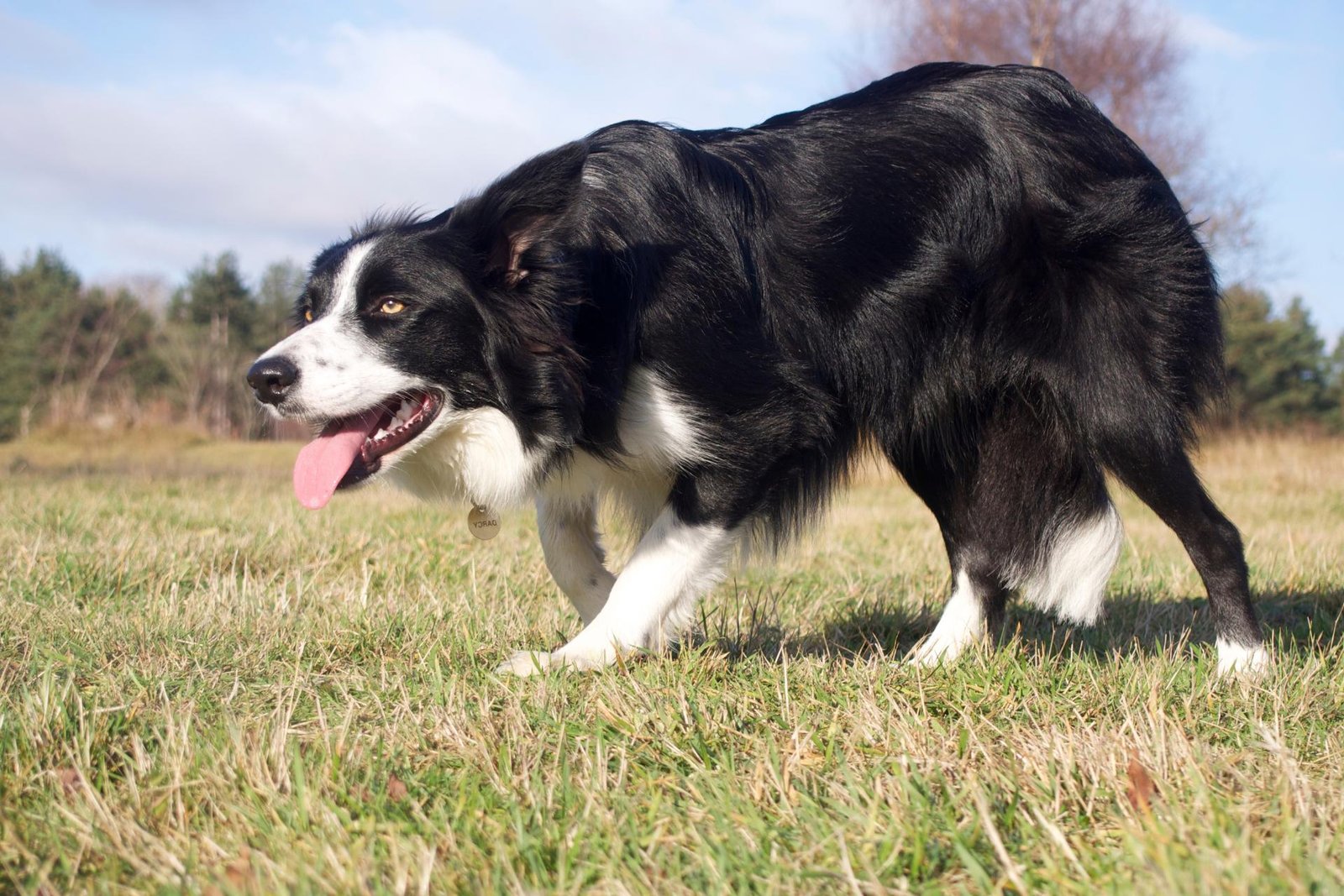
A Border Collie holding a working stance on open turf during a goose abatement visit

How it works

The dogs read as a predator. The geese read the ground as unsafe.

A Border Collie works a stalking posture. Head low, shoulders down, eyes locked, moving in a controlled arc. To a goose that reads as a predator, and the response is instinctive rather than learned. The bird does not need to be caught, touched or startled by noise. It needs to conclude that this ground is not safe to stand on. The dogs will enter water and work birds off the surface, and the handler is as much of the method as the dog: the dog stays under control, makes no contact, and is called off before pressure turns into pursuit.

MassWildlife's own guidance names trained dogs as especially effective among the non-lethal options available, which matters because it makes this an established management category recognized by a state wildlife agency rather than a novelty. New York DEC states that no federal or state permit is needed to scare, herd or chase geese with dogs or noisemakers, provided the birds are not physically harmed.

The part most providers are vague about is why one visit is not the program. USDA Wildlife Services studied winter hazing and found that geese left sites more often when hazed, but returned more quickly than on days without it, and did not avoid a site for longer than 48 hours. So a single visit moves birds without changing their assessment of the property. What changes that assessment is repetition on an unpredictable schedule, because a flock that can time your arrival will simply wait you out.


Services

What we actually do on your site

Three services, and on most properties the answer is a combination rather than one of them. New York DEC's position is that no single method is universally effective and that persistent use of a combination is usually necessary, which matches what the work looks like in practice.

A Border Collie working a scheduled goose abatement visit on a client property

Border Collie Goose Abatement

Trained dogs and handlers working your property on a recurring, deliberately unpredictable schedule, moving geese off ground and water without touching a bird. This is the lever that changes what the flock does now, and it is the core of almost every program we run.

Learn more about Border Collie Goose Abatement
A planted buffer strip along a pond shoreline separating open water from mown lawn

Habitat Modification

Changing what the site offers: a barrier at the water and grass edge, a wider strip left unmown or planted, shrubs that break up the open view geese rely on. Connecticut DEEP describes habitat change as the most effective non-lethal way to reduce conflicts, while being clear that not every change is feasible on a working site.

Learn more about Habitat Modification
A site assessment walk across grounds where Canada geese are using the property

Consultation and Program Design

A walk of the property, a written scope with the areas mapped, a seasonal calendar, named responsibilities on both sides, and a clear line between what we do and what requires the owner or a public body to act. For multi-site and municipal buyers this is usually where the money is best spent first.

Learn more about Consultation and Program Design

Who we serve

Anywhere a flock has decided to settle in

The pattern is the same everywhere: short mown grass, open water within walking distance, and a clear view of anything approaching. What differs is what the ground has to keep doing while the program runs, and that is what shapes the plan.

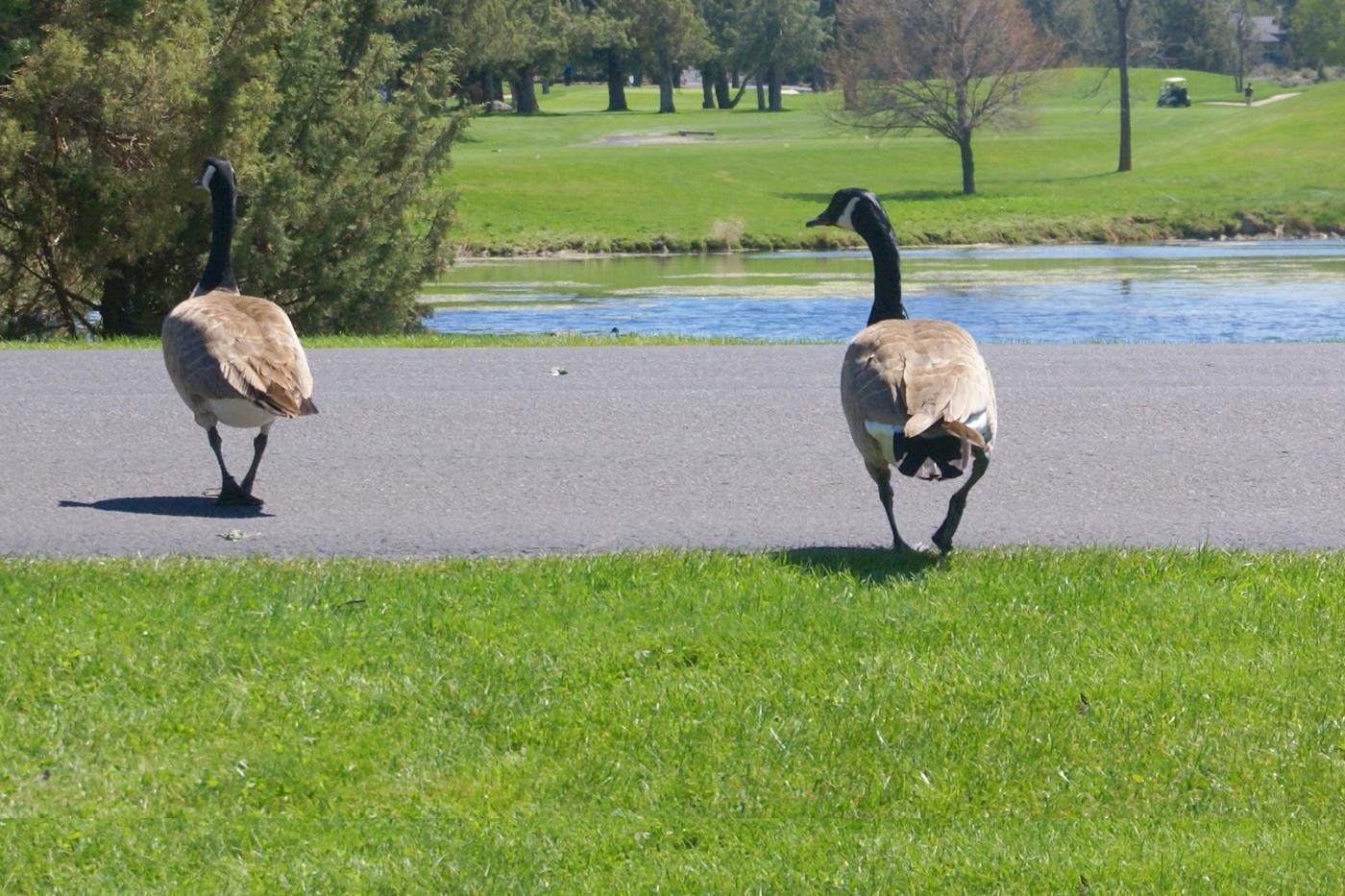
Canada geese on a golf course fairway beside a water hazard

Golf Courses

Droppings on greens and approaches, birds on fairways during play, and turf damage from grazing. Play routes and sightlines set the limits on what can change.

Airports and Airfields

Work fits inside the airport's own wildlife hazard management plan and operating rules. FAA guidance also looks at attractants within five miles, so off-site ground matters here.

Corporate Campuses

A retention pond ringed by mown grass is close to ideal goose habitat, and the walkways between buildings are where staff complaints start.

Municipal Parks and Beaches

Public ground that has to stay public, an appearance residents will comment on, and a feeding problem that signs alone rarely fix.

HOAs and Condominiums

Shared lawns, a pond, walkways, and a board that has to answer to residents at a meeting. The plan has to be something you can show people.

Schools and Athletic Fields

Surfaces that must stay clean and safe for use, on a calendar built around a season of play rather than a season of birds.

Cemeteries

Grounds where appearance and dignity are the entire point, and where a fouled path is noticed immediately.

Why us

Why property managers stay with the program

These are the things we put in writing.

01

More than one crew

Distance is handled by scheduling rather than by declining the work, and a program does not pause because one handler is unavailable. For a procurement buyer running several sites, that is the difference between a service and a dependency.

02

No bird is harmed, and that is the method

Not a marketing position. The legal footing for hazing with dogs is precisely that the birds are not physically harmed, so the moment a program crossed that line it would become a different activity entirely.

03

A visit record you can actually use

Dates, where the birds were, how they responded, and how quickly they came back. The return interval between visits is the number that tells both of us whether the cadence is right, and it is the one we report on.

04

Limits stated up front

We do not touch nests or eggs, we do not relocate geese, and we do not promise a permanent result from a fixed number of visits. Being specific about that at the quote stage is what lets you hold a provider to a scope later.

05

Available around the clock

Open 24 hours, which matters most to airfield and municipal staff whose own problems do not keep office hours.

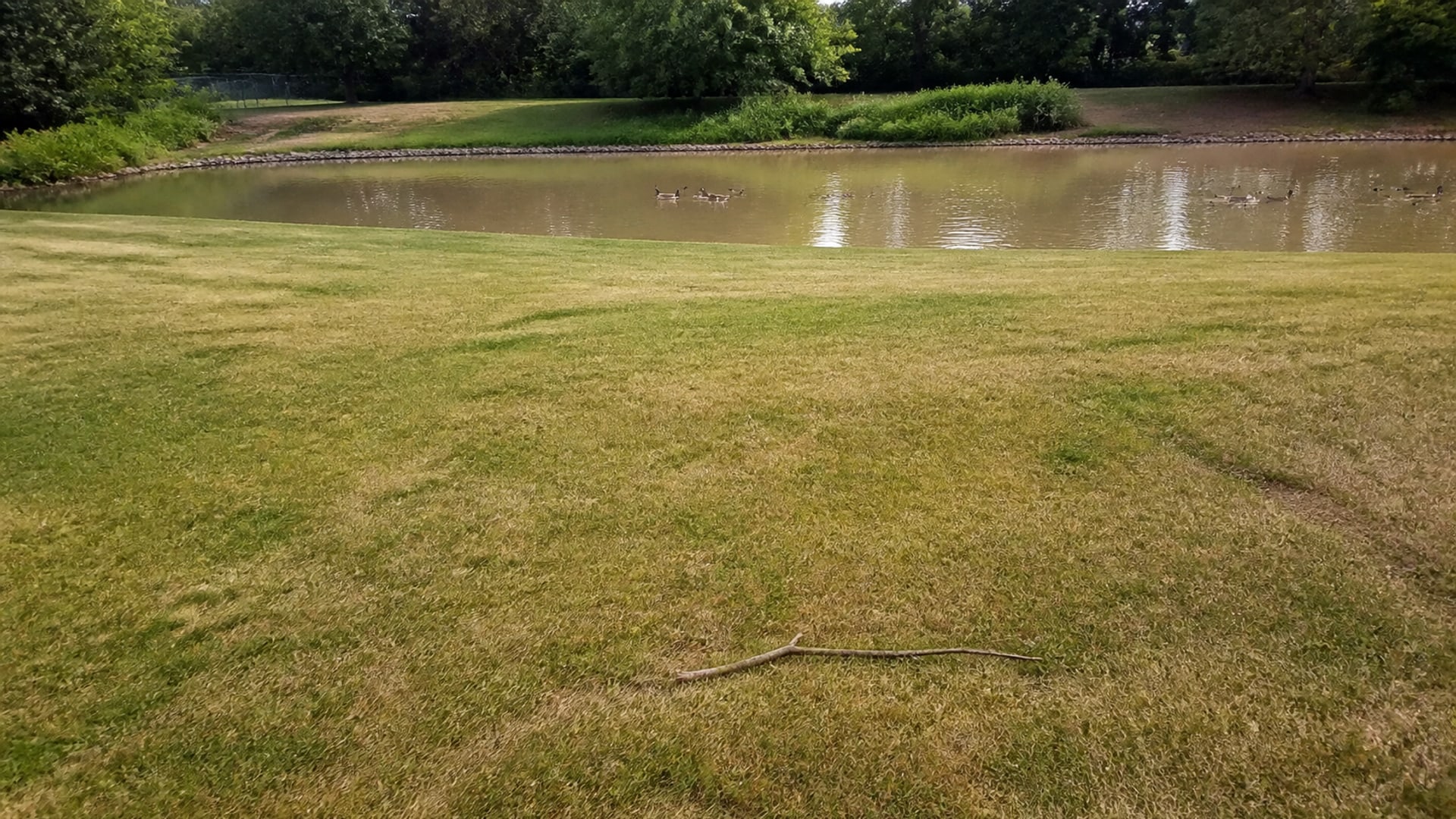
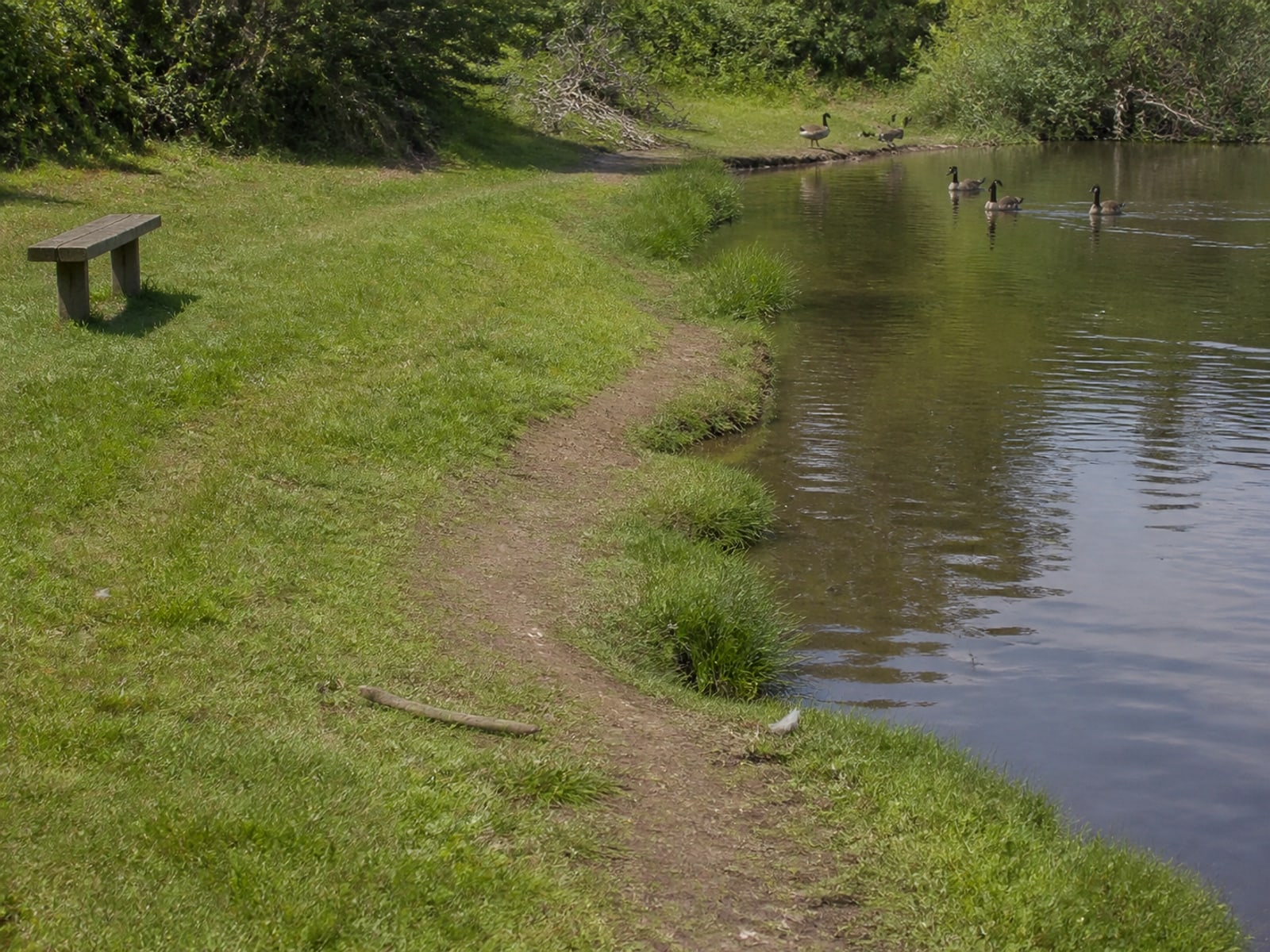
Mown turf beside water showing the recovery that repeat visits produce

The process

What happens when you call

  1. 01

    You tell us what the property is dealing with

    Where the birds are, what the ground is used for, how close the water is, and what has already been tried. A few minutes on the phone rules a lot in or out before anybody drives anywhere.

  2. 02

    We look at the site properly

    Where they feed, where they rest, where they enter and leave the water, and in season whether there are active nests. Connecticut DEEP's own list of what a management strategy should weigh, problem locations, time of year, the options the site allows, effectiveness, acceptability, cost and community support, is a fair summary of the walk.

  3. 03

    You get a scope, not a slogan

    Which areas are worked, roughly how often, how visits are scheduled through the season, and what we will and will not do. A corporate pond with eight resident birds and a golf course with a hundred are not the same job and are not quoted as though they were.

  4. 04

    The program runs, and gets adjusted

    Handlers and dogs work the property on an unpredictable pattern, we record what changes, and the cadence moves when the record says it should. A lengthening gap between visits is the program working.

Common questions

Common questions

Do the dogs hurt the geese?

No. They work birds off ground and water using pressure and posture, under handler control, without contact. New York DEC treats scaring, herding and chasing geese with dogs as an activity needing no federal or state permit, specifically because no bird is physically harmed.

How much does it cost?

Pricing is per site, because what drives it is per site: how much ground is worked, how many birds are using it, how much water is involved, how often we need to visit and what the property is used for. The figure comes after the site walk, so call and we will arrange to come and look.

How soon will we see a change?

Birds move on the first visit. What takes longer is the change in the flock's habit, and how long depends on the site, the season, and whether the birds are resident or passing through. We would rather report what we are seeing after the first visits than commit to a number before we have seen your property.

Will the geese come back?

Some birds will come back and test the ground again. Residents remember where they were comfortable, and migrating flocks arrive knowing nothing about your property at all. That is why this is a maintained program rather than a one-time fix, and why we keep a record of every visit and what we saw.

Do you work in winter?

Yes. Resident geese are year-round birds, and USDA's research on winter hazing exists precisely because the problem does not stop in the cold months.

Which towns do you cover?

Our crews work outward from West Hartford across Connecticut, Massachusetts and New York. The full list is on the service areas page, and if your property is not on it, please call and ask, because we often can reach it.

Service areas

Based in West Hartford. Working the tri-state region.

Our base is West Hartford, CT, and our teams work out from there across Connecticut, Massachusetts and New York.

See every town we cover

Tell us what your property is dealing with.

Call Tri-State Geese Patrol on (203) 856-4889 and we will talk through the site, the flock and what a program would look like.