Tri-State Geese Patrol

Goose Control in Springfield, MA

Humane Canada goose abatement for Springfield properties, using trained Border Collies that move birds without touching them. This is the largest city we work in, and the one with the least public goose record.

Open mown grass beside water of the kind Canada geese settle on in Springfield, MA

At a glance

City

Springfield, Massachusetts

Method

Non-lethal herding by trained Border Collies, no contact with any bird

Wetlands authority here

The Springfield Conservation Commission, under Massachusetts law

The honest starting point

No documented city goose program or complaint exists

The biggest city we serve has the thinnest goose file

We looked for a Springfield goose record the way we looked for one in every other municipality on this site, and we did not find it.

No published Canada goose complaint, management program, council item or news report exists. The city publishes a stormwater management plan through its engineering side, and in the material we located it contains no passage on Canada geese, waterfowl, goose nutrient loading or goose management at all.

Compare that with the towns across the river in Connecticut, several of which name their goose sites, publish their deterrent history or write waterfowl into a code section, and it is a striking gap for a city of roughly 155,900 residents with this much open water.

We are not going to fill that gap with an inference. Waterfowl being present at city ponds is not the same as a documented local goose problem, and turning the first into the second is precisely the kind of thing this site is written to avoid.

What it means practically is more useful than a scare would be. In Springfield, an assessment starts from your property rather than from a municipal file. There is no local precedent to point at, no city program to slot into, and no published history telling you what has already been tried. So the site walk carries more weight here than almost anywhere, and anybody quoting you off a template rather than off a visit is guessing twice over.


Where does lawn meet water in Springfield?

For a dense city the open water inventory is substantial, and much of it is in active public use.

Canada goose droppings and grazed turf on maintained ground in Springfield, MA

Watershops Pond, also called Lake Massasoit

A 180 acre impoundment of the Mill River with city-managed shoreline access from Alden Street and from Thomas J. Sullivan Park, and further public access at Alden Street Park and Harriet Tubman Park. Springfield College's East Campus material shows canoeing on it under the Lake Massasoit name. Parks, Buildings and Recreation Management operates and maintains the two Watershops waterfront parks. It is the largest single water body in the city's own recreation inventory.

Forest Park and Porter Lake

The most documented municipal pairing of open turf and water in Springfield, with Porter Lake inside the park and the city recently advertising swan boat use on it. One detail worth carrying into any conversation: the city's open space material ties Porter Lake to irrigation withdrawals by both municipal golf courses, so the lake and the fairways are connected by more than proximity.

Two municipal golf courses

Franconia at 619 Dwight Road and Veterans at 1059 South Branch Parkway are both 18 hole municipal courses, which the city's parks page describes as such. What the material does not establish is which course carries which on-course pond or water feature, so that is a question for each superintendent rather than something to read off a map. Municipal ownership also means the buying route runs through the city rather than a club.

The northern and eastern ponds

Fivemile Pond Park has a beach and walking trails on its western and southern shorelines with a city-managed boat ramp. Lake Lorraine shoreline and Fivemile Pond both appear in the city's conservation and open space material. Loon Pond and both branches of the Mill River complete the set, and MassWildlife's stocked waters list names Fivemile, Loon, Lake Lorraine, both Mill River branches and Watershops as Springfield waters.

Massachusetts rules, not Connecticut ones

We work across three states, and Springfield sits under a different structure from most of our service area. A provider quoting you Connecticut process here has not noticed which side of the river you are on.

Wetlands are administered through the Springfield Conservation Commission under Massachusetts law rather than through a Connecticut inland wetlands agency. Anything that would alter a wetland or its buffer, which includes planting a shoreline buffer, installing a barrier at a water's edge or changing drainage, goes through that process. Moving birds off maintained turf with a dog is a different activity, and it would be wrong to say every goose visit here needs a filing.

On wildlife, MassWildlife is the state authority. Egg addling is regulated here through a MassWildlife permit, which is a different route from Connecticut's, and it is not something we perform in either state.

Procurement is different too. A recurring service for a city or school department in Massachusetts runs under the state's uniform procurement law, which sets its own thresholds and process, and that is worth establishing before a scope is written rather than after.

None of that changes the fieldwork. It changes who is asked, in what order, and under which statute.

What the city code does and does not give you

Two provisions matter, and neither is quite what people assume.

On feeding, there is no Springfield prohibition on feeding waterfowl or wildlife that we could find. What Chapter 110 does say is that people feeding or caring for wild animals must not cause those animals to become a public nuisance. That is a nuisance standard rather than a feeding ban, and it should not be described as one, but it is not nothing either: where somebody's feeding is demonstrably creating a problem, the city's code already frames that as their responsibility.

On your own ground the position is much simpler. You can set and enforce a no-feeding rule outright, and it remains the single item most likely to hold a flock in place if you do not.

On dogs, section 110-5 requires animals to be restrained in public, defines restraint as a leash, lead or other physical restraint, and requires dogs to be leashed no longer than six feet except when confined in a fenced area or pen, or in a dog park. No working-dog or commercial exemption appears in the section we reviewed.

That is an animal control rule rather than a parks rule, which means a program on city ground will usually need a site-specific parks permit or the property owner's authorization separately, on top of satisfying the restraint requirement. We would rather establish that before quoting than meet a second approval halfway through a season.

Who administers what in a city this size

Springfield is the largest municipality in our service area, and the number of separate bodies holding relevant ground goes up with it.

Parks, Buildings and Recreation Management operates and maintains the waterfront parks on Watershops Pond, and the Parks Department lists Forest Park, Fivemile Pond Park, the two municipal golf courses and the recreation programming under its management. Engineering, on the public works side, carries the city's stormwater program. The Conservation Commission holds anything that would alter a wetland or its buffer. School grounds bring their own facilities route, and Springfield College is a private institution with its own campus authority at the east end of Watershops Pond.

So the useful first question on a Springfield job is not which department to call, it is which of those five or six routes your particular parcel and your particular request sit in. Moving birds off a lawn and planting the edge of a pond are not the same request and often do not go to the same office.

That is doubly true of the golf. Both courses are municipal, and the city's own material ties Porter Lake in Forest Park to irrigation withdrawals by both of them, so a question about water at either course reaches beyond the course grounds themselves.

None of this is unusual for a city. It is worth setting out because it is the practical difference between a program that starts in six weeks and one that starts next season, and because a provider who does not know it will hand you the delay without warning you it was coming.

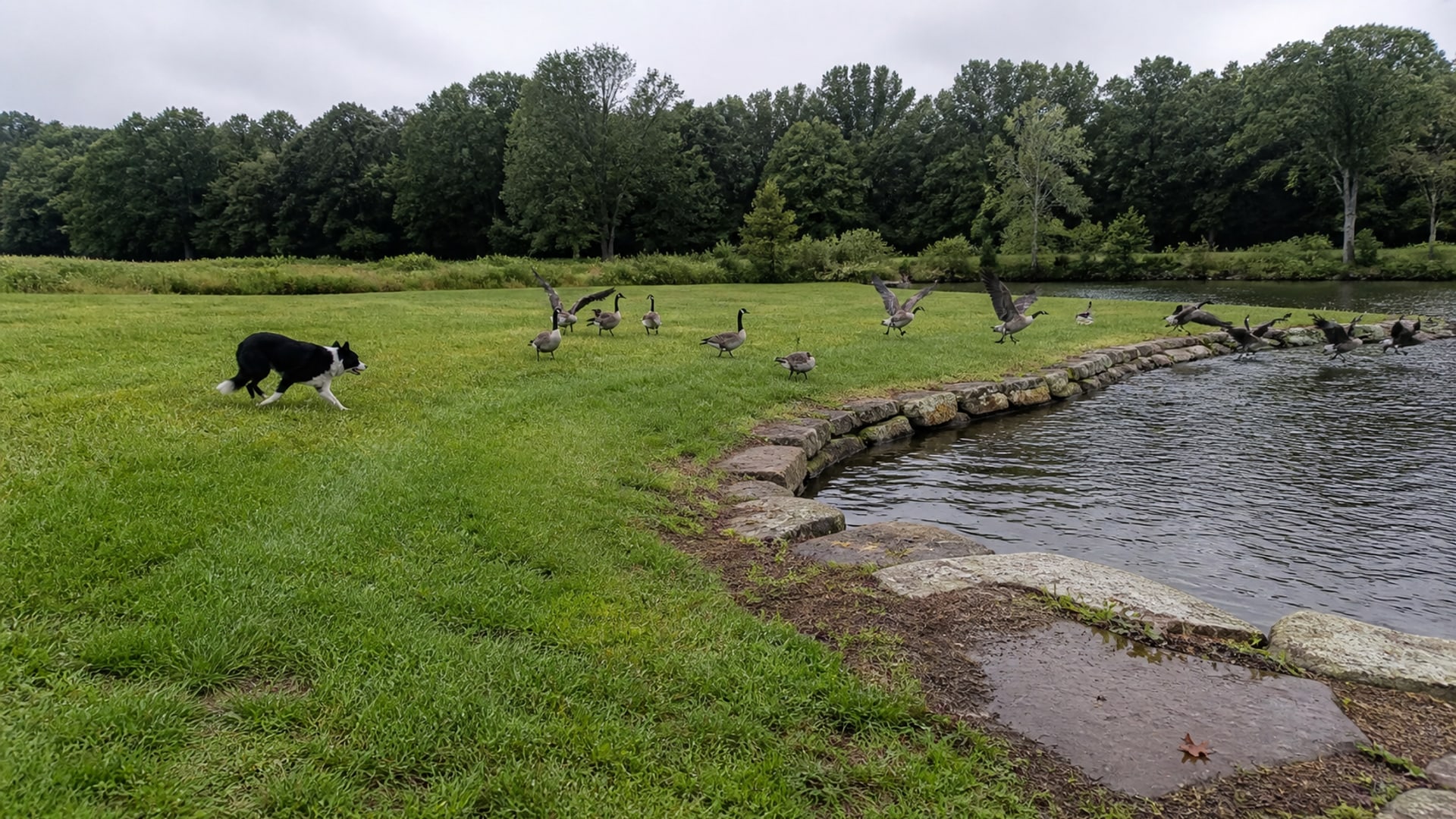
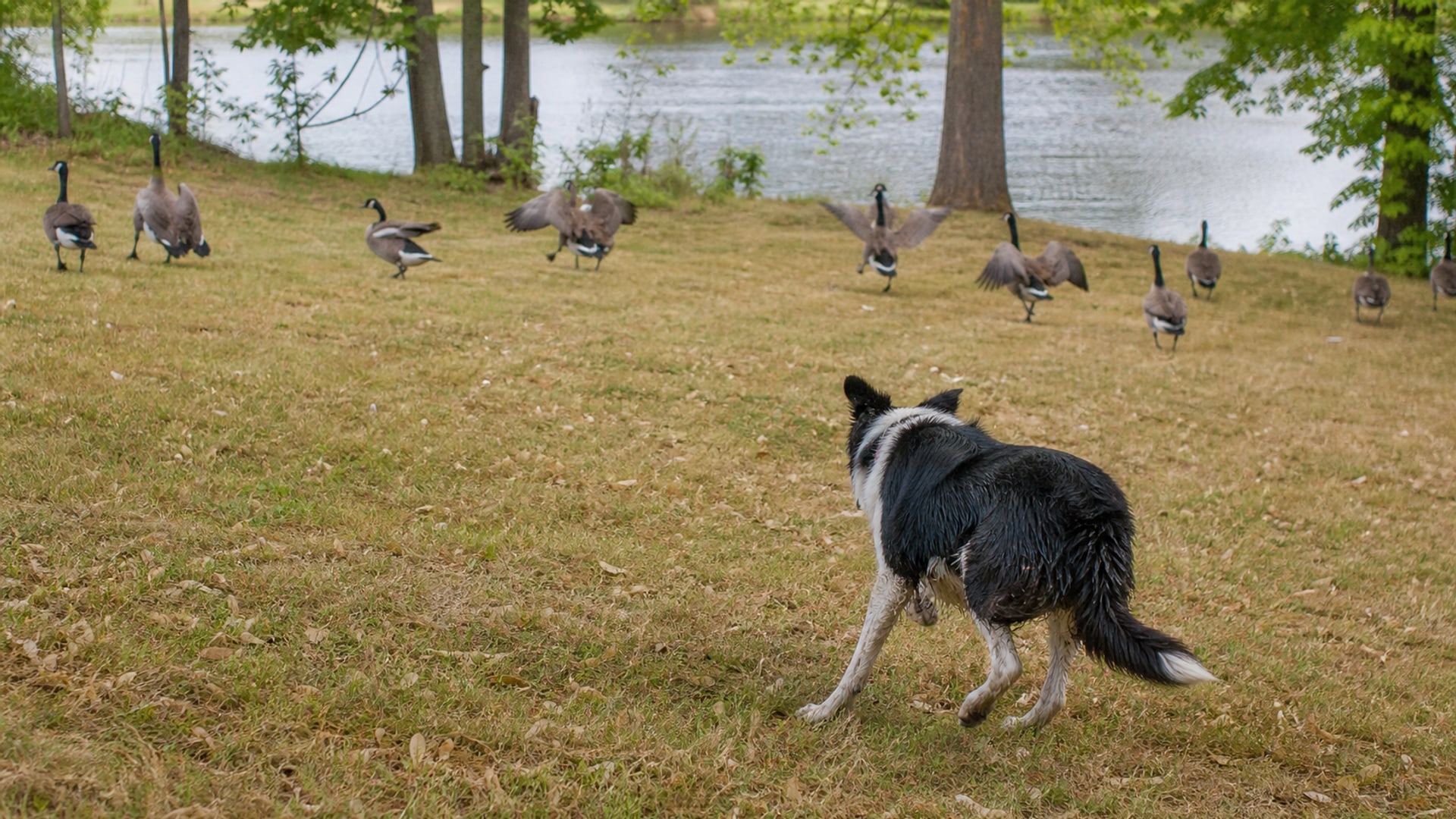
A Border Collie working a flock of Canada geese off maintained ground in Springfield, MA

What happens after you call about a Springfield property?

The fieldwork is the same on a park lawn, a fairway and a company campus. Here the front end leans harder on the site walk, because there is no local file to read.

  1. 01

    We ask what you are seeing, and what has been tried

    How many birds, on which surfaces, at what times, and how close the water is. With no municipal record to consult, what you have already observed and already attempted is the primary evidence rather than a supplement to it.

  2. 02

    We establish whose ground it is

    City park, a municipal golf course, school property, a college campus, private commercial ground or a conservation parcel. Springfield has all of those, and the approval path differs across them.

  3. 03

    We walk the ground and map the way up from the water

    Geese travel between water and turf on foot, so the useful map is where they come up, which grass they graze and where they loaf. In a dense city that route often crosses a parcel boundary or a road, which changes what any one owner can fix alone.

  4. 04

    We settle permissions before scheduling

    Owner authorization, a site-specific parks permit where the ground is the city's, restraint under section 110-5 addressed directly, and a conversation with the Conservation Commission before anything that would alter a wetland or its buffer.

  5. 05

    The dogs work at times the flock cannot anticipate

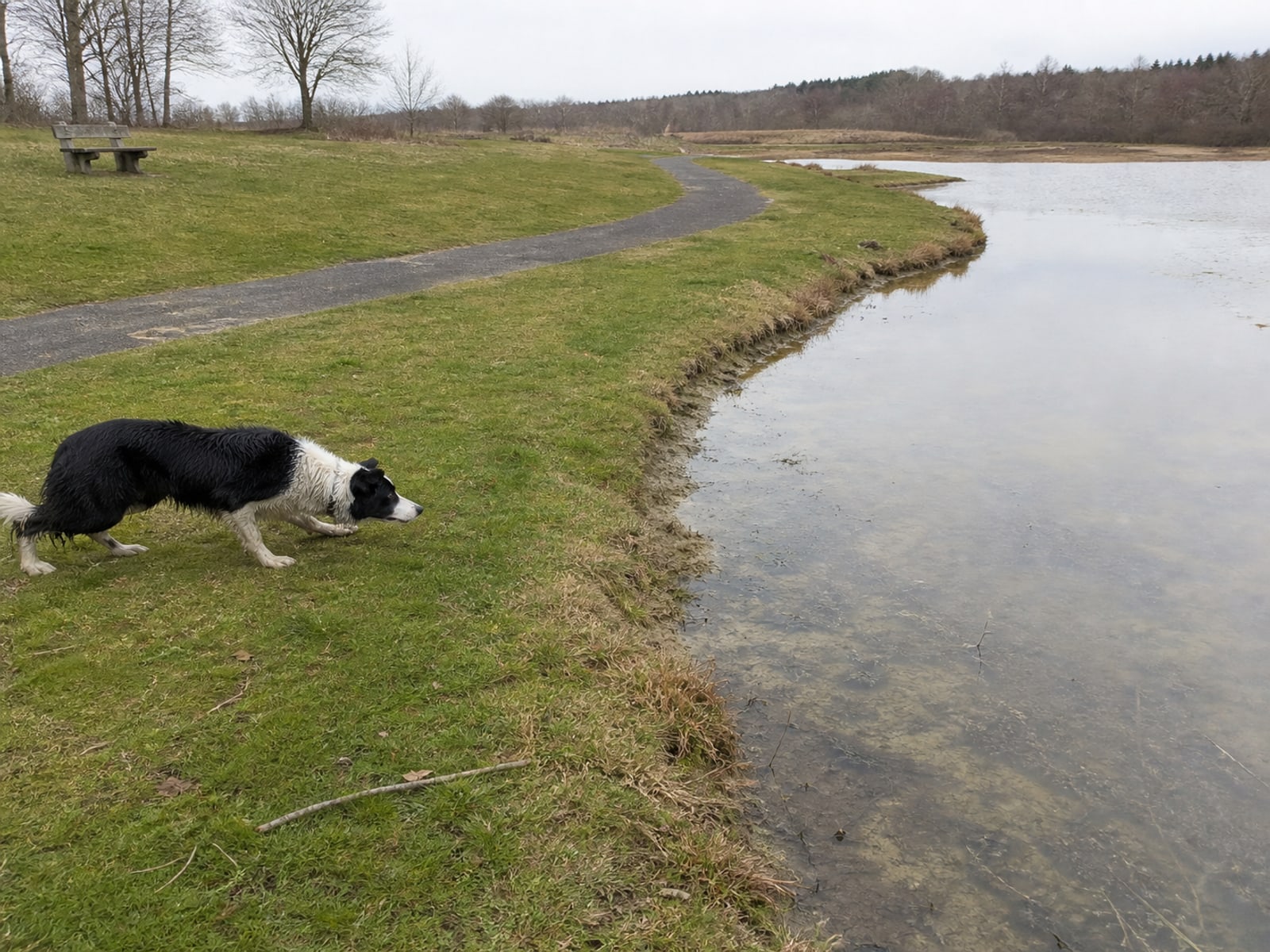
    A handler works the ground with a trained Border Collie in a stalking posture. A goose responds to that as it would to a predator, by leaving, with no contact and no capture. The visits then repeat unpredictably, because a schedule the birds can learn is one they will sit out.

  6. 06

    We say what should change about the ground, and we measure

    Where mowing stops, whether an unmown strip or a barrier can sit between water and turf, and whether anybody is feeding them. Then counts, locations, complaints and the gap between a visit and the birds returning. In a city with no existing record, yours becomes the record.

What we handle, and who handles the rest

We do not apply turf repellents. They are registered pesticides and applying one to commercial turf is licensed work in Massachusetts as in Connecticut and New York. We hold no such certification. A licensed applicator is the right call if a repellent suits a defined surface.

We do not addle eggs or work on nests. In Massachusetts that runs through a MassWildlife permit, and the authorization belongs to the landowner or the municipality rather than to a contractor.

And we do not promise the geese will be gone permanently. Where a property keeps offering open water beside mown grass, this is maintenance run properly rather than a repair, in Springfield as anywhere else.

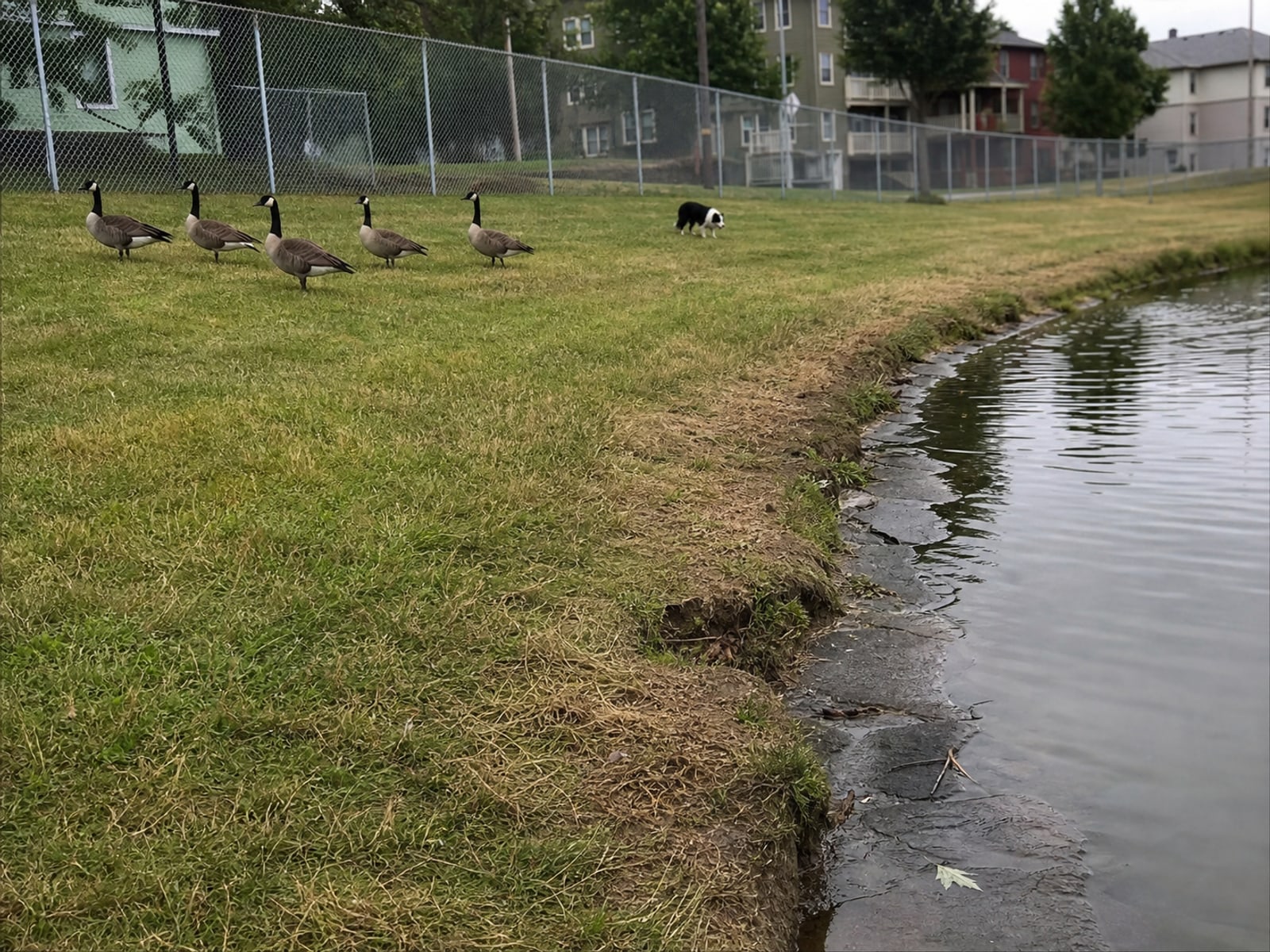
Maintained ground in Springfield, MA holding clear of Canada geese after repeat visits

When does acting in Springfield cost the least?

Before nesting narrows what is lawful, and before the public season takes the ground back.

MassWildlife describes Canada geese as present in Massachusetts year round, so a resident flock here is not a seasonal visitor to be waited out. On top of that, the region sees both spring and autumn migratory passage, which lands on whatever a property already carries.

The practical consequence is the same as across the river. A shoreline or a field margin addressed in late winter is a straightforward job, because nothing is established and nobody is using the ground. The same work in June is being done around nesting birds, a swimming season at Fivemile Pond, boats on Porter Lake and play on two municipal courses.

Shoreline planting is on a longer clock again, because vegetation takes a season to establish and, near a wetland or its buffer, it can involve a Conservation Commission filing rather than a decision. A buffer meant to help next summer is autumn or early spring work.

Nobody publishes freeze or thaw dates for Watershops Pond or any other water here, so we watch the water rather than the calendar.

Springfield goose control questions

Does Springfield have a documented goose problem?

Not one we could find. No published complaint, management program, council item or news report exists, and the city's stormwater material contained no goose or waterfowl passage in what we located. Birds at city ponds are not the same as a documented problem, and we are not going to present them as one.

So how do you assess a property here?

By walking it. With no municipal file to read, what you have observed and what is physically on the site carry more weight than they would in a town with a published history. That is a reason to insist on a real site visit rather than accept a number over the phone.

Is feeding geese against the rules in Springfield?

Not as a prohibition we could find. Chapter 110 says people feeding or caring for wild animals must not cause those animals to become a public nuisance, which is a nuisance standard rather than a feeding ban. On your own property you can set the rule outright, and it is usually the most effective single item available.

Can a trained dog work on city ground?

With permission and with the restraint rule addressed. Section 110-5 requires animals to be restrained in public and dogs to be leashed no longer than six feet, with exceptions only for a fenced area or pen or a dog park, and no working-dog exemption appears in it. Because that is animal control rather than a parks rule, a site-specific parks permit or owner authorization is usually needed as well.

How much does goose control cost in Springfield?

It is quoted per site, on ground worked, bird numbers, water edge, visit frequency and what the surface is used for. There is no credible published range for this region. For city or school work, Massachusetts procurement law sets the route and the thresholds.

Do the municipal golf courses have ponds?

The city's material does not establish which course carries which water feature, so that is a question for the site walk. What it does record is that Porter Lake in Forest Park is tied to irrigation withdrawals by both Franconia and Veterans, which makes the park lake and the courses part of one water system even where the fairway water is not documented.

Our site is near the Connecticut River. Same approach?

Same method, different plan. A broad river corridor with lowland beside it does not behave like a contained pond with a mown edge, and the birds' route onto your turf is usually longer and less obvious. That is what the walk is for.

Local detail

Canada geese in Springfield, Hampden County

Springfield is a Hampden County city of roughly 155,900 residents, the largest municipality in western Massachusetts, at the confluence of the Connecticut and Westfield rivers.

Its open water is unusually varied for a city this dense: Watershops Pond, also called Lake Massasoit, on the Mill River, Porter Lake inside Forest Park, plus Fivemile Pond, Lake Lorraine and Loon Pond in the eastern neighborhoods. The city runs two municipal golf courses at Franconia and Veterans, and wetlands here go through the Springfield Conservation Commission under Massachusetts law rather than Connecticut's.

Bordering towns: Chicopee, West Springfield, Agawam, Longmeadow, East Longmeadow, Wilbraham, Ludlow. A flock does not recognize a town line, so a program sometimes has to be scoped wider than one parcel.

Getting there: Interstate 91, Interstate 291, Route 20, Route 21, Boston Road, Sumner Avenue, Alden Street.

We cover all of Springfield and the ground around it. If your neighborhood is not listed, or you are not sure which one you are in, it is very likely we work there. Ask and we will confirm.

Talk to us about your Springfield property

Tell us what you are dealing with: roughly how many birds, which surfaces they are fouling, how close the water is, and who owns the ground.

Tri-State Geese Patrol runs humane Canada goose abatement with trained Border Collies across Connecticut, Massachusetts and New York, and we are reachable 24 hours. Call (203) 856-4889 and it goes to Bill.

And if the honest answer for your site is an unmown strip and a no-feeding rule rather than a contract, we will say so.