

Key Takeaways
01
Authority to act follows the parcel. The federal nest and egg order is limited to property under the registrant's own jurisdiction, so an association cannot authorize work on an owner's lot and a town cannot authorize work on a private pond.
02
The birds are protected under [16 U.S.C. 703](https://uscode.house.gov/view.xhtml?req=%28title%3A16+section%3A703+edition%3Aprelim%29) regardless of whose land they are standing on, and that protection does not weaken because they have become a nuisance.
03
No source establishes a clean liability rule for goose droppings or an aggressive bird in Connecticut, Massachusetts or New York. What exists is a documented duty to manage conditions you control, which is a different and more useful thing.
Which question are you actually being asked?
Separate them before you answer anybody, because the person complaining has merged them and you do not have to.
The first question is authority. Who may lawfully do something about the birds on this specific piece of ground. That one has reasonably clear answers, and they follow property lines and federal permit structure.
The second question is consequence. If somebody was hurt, or a beach closed, or turf was destroyed, who bears it. That one is genuinely unsettled in the published record, it turns on facts specific to the incident, and it is the part where an honest answer includes the words "ask your counsel."
Answer the first in your reply today. Do not attempt the second in writing without advice.
Authority follows the parcel
Who is allowed to act, and on what?
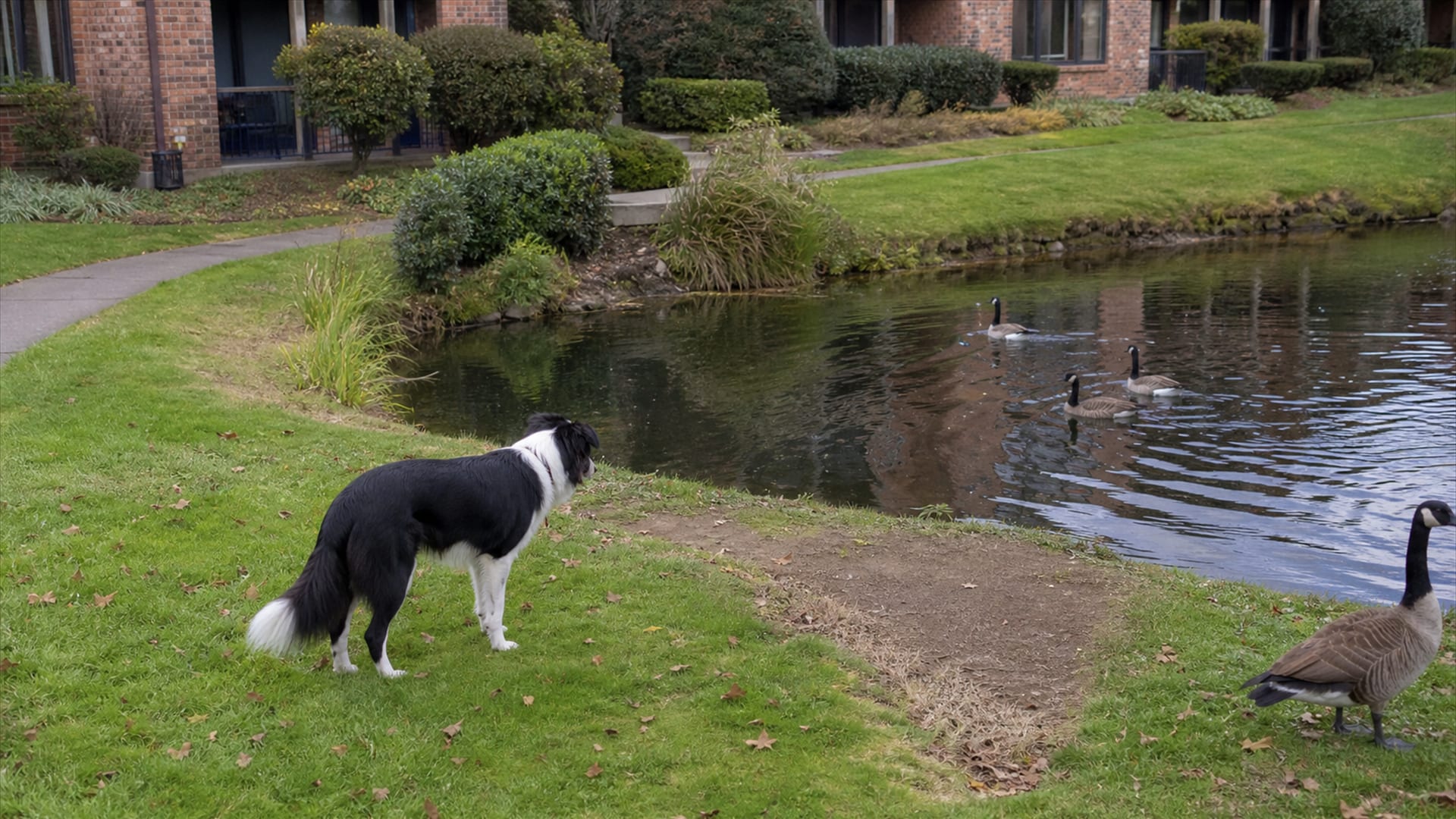
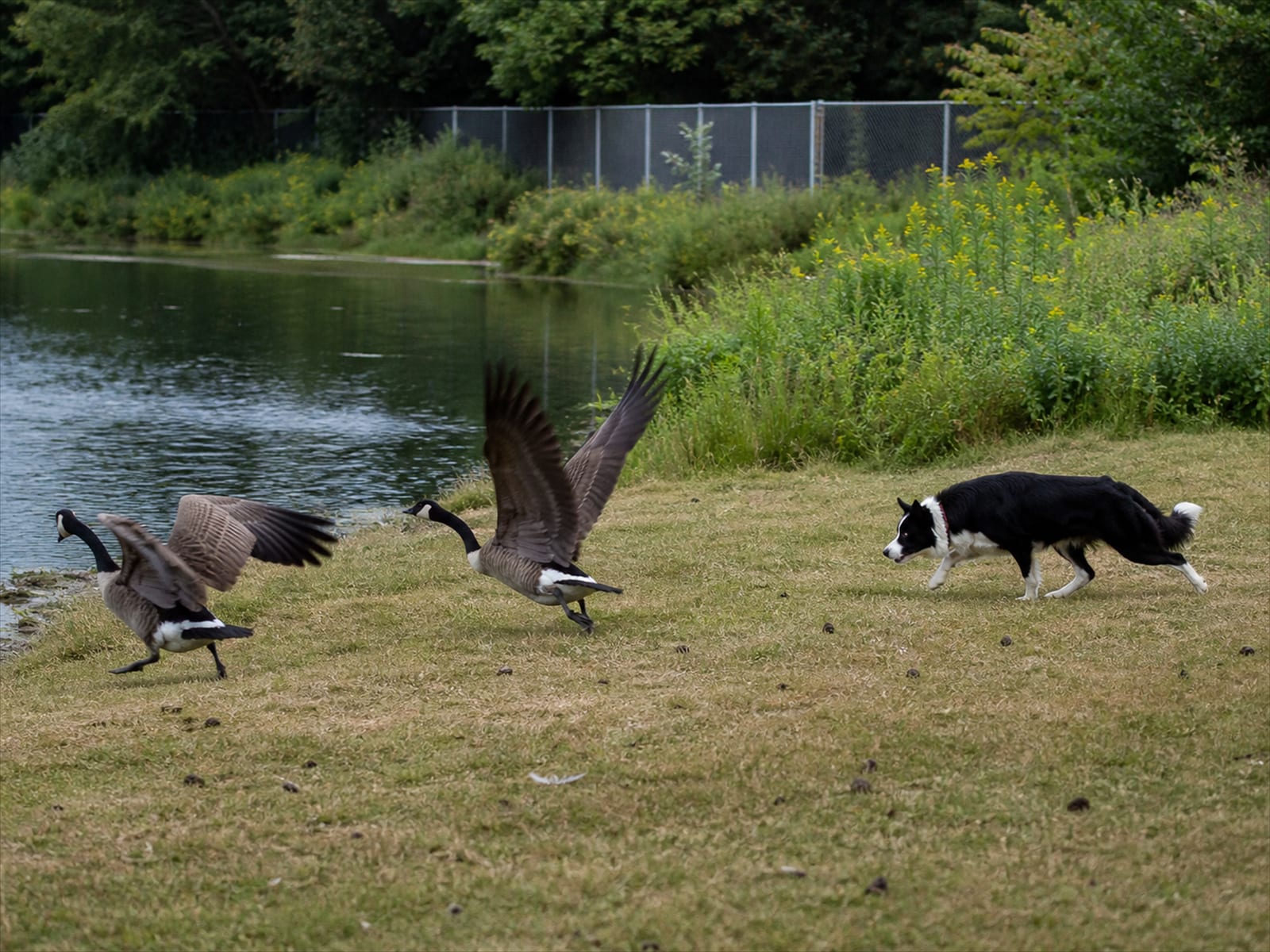
Non-injurious work is the wide lane. New York DEC states that no federal or state permit is needed to scare, herd or chase geese, including with dogs, provided no bird is physically harmed. That is available to a property owner or to whoever they engage, on ground they control.
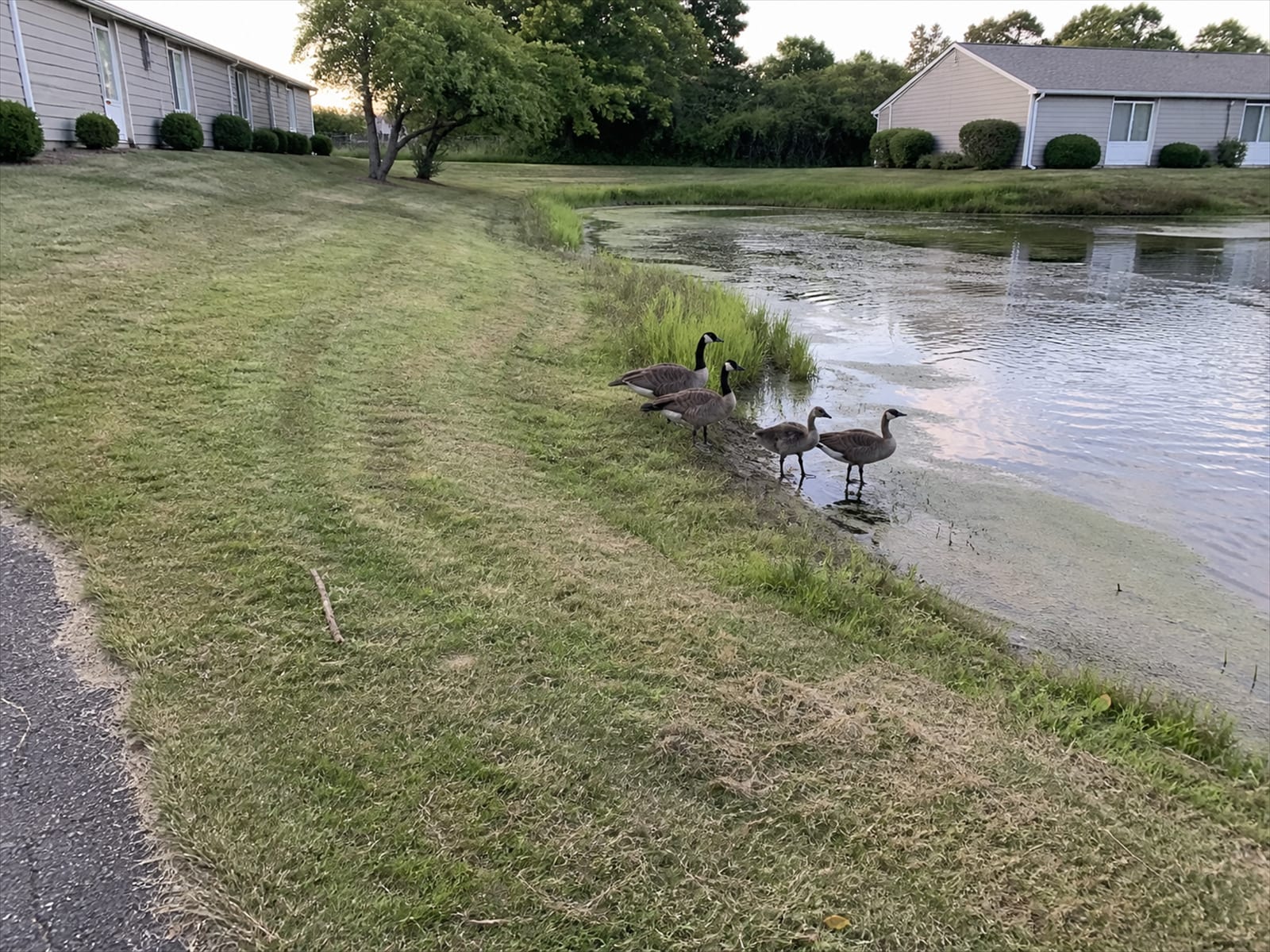
Everything beyond that narrows sharply. 16 U.S.C. 703 makes it unlawful, absent a permitting regulation, to take, capture or possess a migratory bird or any part, nest or egg, among other prohibited acts. Nest and egg work for resident Canada geese runs through 50 CFR 21.162 and the associated USFWS registration, which is held annually by the landowner or responsible manager and is limited to property under that registrant's jurisdiction.
That jurisdiction limit is the sentence worth reading twice. It is what makes authority a property question rather than a wildlife question. An HOA registering for its common areas has not registered for the twelve lots that back onto the same pond.
States layer their own law on top. Massachusetts addresses protected wildlife at M.G.L. c.131 s.11, and New York at ENV 11-0307. Connecticut's practical guidance sits with CT DEEP.
What happens when somebody acts without checking?
It stops being a wildlife question and becomes an enforcement one, and this is the most common way a well-meaning property makes things worse.
A frustrated resident, a groundskeeper who has had enough, or a board member who decided to be decisive can each create a violation the organization then has to answer for. The prohibition in 16 U.S.C. 703 does not have a nuisance exception, and 16 U.S.C. 704 frames the regulatory authority that determines when anything is permissible at all.
This is worth a line in your reply to the complaint. "We are looking into it, and in the meantime please do not attempt to move the nest or the birds" is a sentence that has saved organizations real money.
Authority, in four common situations
Pick an answer to see how you did
1. A resident wants the nest by the clubhouse door removed. The association has no USFWS registration. What can the board authorize?
2. The worst flock uses a pond that straddles your property and the business next door. Who can authorize work?
3. A town beach closes after a water quality exceedance and geese are suspected. Who decides the closure?
Nothing answered yet.
So who is liable if somebody gets hurt?
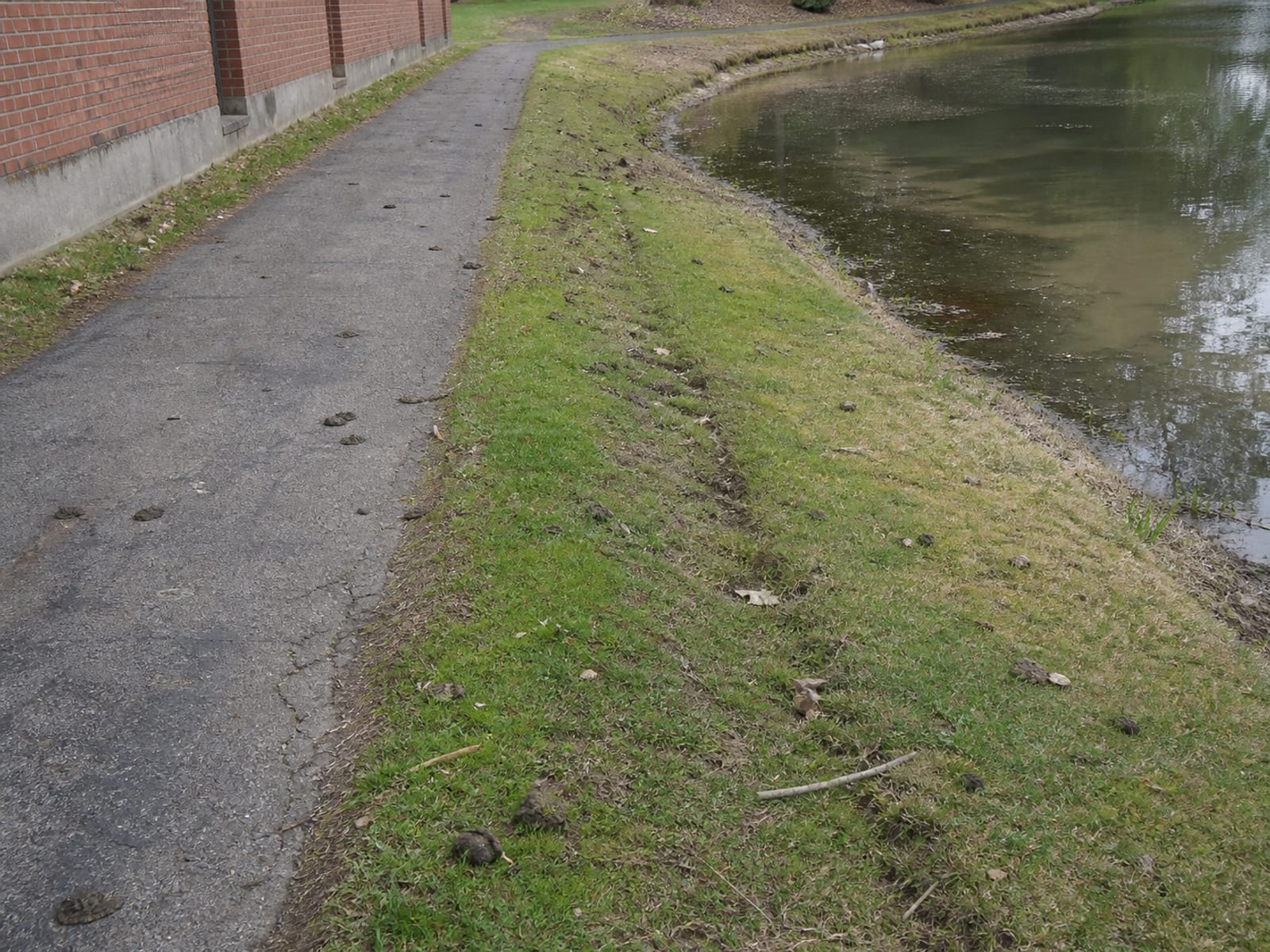
Here is the honest answer: there is no clean, citable liability rule for a slip on goose droppings or an injury from a defending bird in Connecticut, Massachusetts or New York. Anyone telling you otherwise on a marketing page is guessing, and a guess in this area is worth less than nothing.
What the record does support is narrower and more useful. Agencies document that these conditions are foreseeable and manageable. New York DEC lists overgrazed lawns, nutrient loading, public health concerns at beaches and gathering places, aggressive nesting behavior and safety hazards near roads and airports as known consequences of resident flocks. CT DEEP has publicly reminded residents and businesses to prepare for nuisance resident geese, naming fecal waste on lawns and parks as the most common reported problem.
The practical implication is about records rather than rules. An organization that documented the condition, took proportionate action within its authority, and can show what it did is in a materially different position from one that has a two-year complaint file and nothing else. That is true regardless of how any particular claim is eventually decided.
Which is why the most valuable thing you can do this afternoon is not to determine liability. It is to start the record.
What to record, starting today
01
The condition itself
Dates, times, approximate flock size, where the birds feed and rest, and which surfaces are affected. Photographs with dates.
02
Every complaint
Who raised it, when, what they described, and what you replied. This is the file that shows the organization was not ignoring it.
03
What you control, and what you do not
Which parcels are yours to act on, and where the same flock uses ground belonging to somebody else.
04
Actions taken
Rerouted traffic, signage, cleaning frequency, any professional engaged, and the dates. Proportionate action, documented.
05
Water results, if a pond or beach is involved
Your existing monitoring data is the credible measure, not anybody's assertion about geese.
06
What you were advised
Including where you asked counsel or your insurer and what they said.
What does a defensible response actually look like?
Not a purchase. A sequence, and most of it is free.
Start by establishing what is actually on the ground, because the response differs sharply depending on which situation you have. New York DEC describes the conditions that support resident flocks in suburban settings: short mown grass, ponds and lakes, few predators, limited hunting pressure and supplemental feeding, producing overgrazed lawns and nutrient loading. If that is your site, you have a habitat situation that will recur every year until something about the ground changes.
Nesting season is different and it needs a different response. USDA APHIS notes that nests turn up near sidewalks, entryways, paths, roadways, rooftops and porches, and that both members of a pair attend the nest. A defending pair beside a doorway is not a habitat problem to solve over a season, it is a people-routing problem to solve this week.
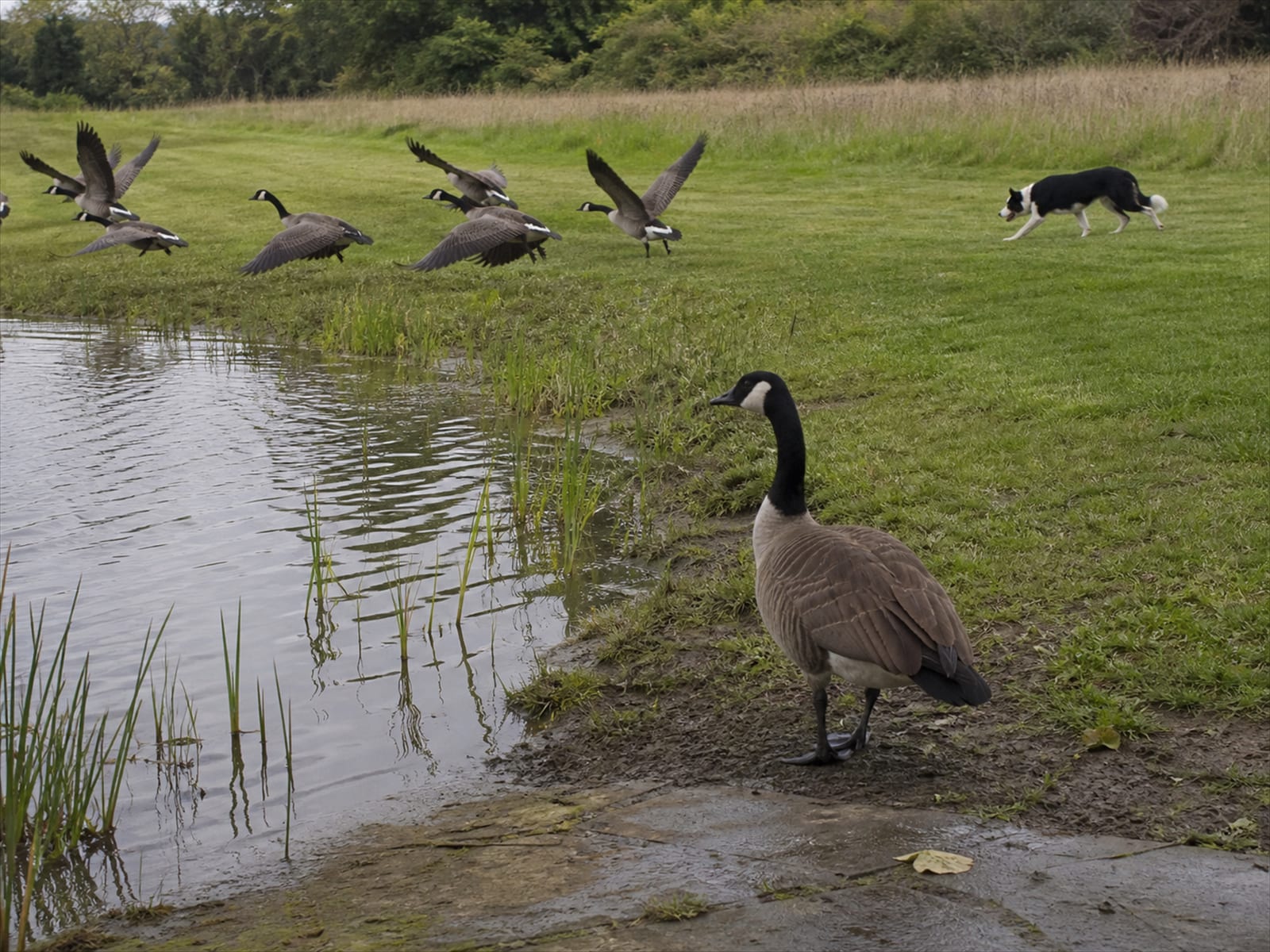
Then act within the lane that is unambiguously yours. Agency guidance is consistent on what a property may do without any permit, provided no bird is harmed: stop feeding, change what the landscape offers, install barriers, and disperse birds using non-injurious methods. MassWildlife gets specific, noting that a three foot fence can be effective and describing hedges or a broad uncut strip between water and mown grass. CT DEEP has publicly urged residents and businesses to begin before nesting rather than after.
The word "defensible" is doing real work in that heading. An organization that can show it identified the condition, understood which response the situation called for, and acted inside its own authority is in a different position from one that did nothing, and also from one that did something rash.
Timing changes what is available to you
The calendar constrains your options more than most people expect, and knowing it stops you from asking for something that is not on the table.
CT DEEP notes that dispersal is more effective started before nesting begins, though it publishes no number of days to a result. USDA APHIS places resident nesting from as early as late February through mid May, most eggs hatching in early May, with incubation running 28 days.
The regulated route has its own dates. The USFWS resident nest and egg registration is available January 1 through June 30, authorized activity runs March 1 through June 30, the registration is annual, and reporting is due by October 31. If your organization is going to need that route, the decision has to be made months before the nest appears, not in the week somebody complains.
Then the molt, mid June into early July, when APHIS places adults flightless. It is a management timing fact rather than a deadline, but it is the period when a complaint about fouled surfaces is most likely to arrive.
The practical read: a board that discusses geese in April is choosing from a much shorter menu than one that discussed them in January.
Where responsibility is clearer than you think
Three situations have much sharper edges, and it is worth knowing whether you are in one.
A swimming area. Closure authority does not sit with you or with any contractor. In Connecticut it rests with the local health department or district; Massachusetts and New York run their own bathing water regimes. Your responsibility is the condition and the response, not the closure decision, and it is a mistake to let anyone imply a goose program guarantees an open beach.
A drinking water supply. These are managed seriously and with dedicated programs. Massachusetts publishes material on its water supply protection bird program and on watershed land at Wachusett and Quabbin. If your property borders a supply watershed, the watershed authority is a party to the conversation.
Anywhere near an airfield. The FAA's wildlife hazard program treats attractants near airports as a safety matter, and its national strike report documents why. A property inside the relevant distances has a stake in what its pond and lawn contribute, whether or not anyone has raised it yet.
When the question tends to arrive
March into April
Territorial defense begins and the aggression complaints start. This is the season that produces incident reports rather than grumbling.
April through June
Nests and goslings are present. Authority is at its most constrained precisely when the pressure to act is highest.
June and July
The flightless molt. Numbers concentrate, droppings accumulate fastest, and fouled-surface complaints peak.
Summer
Bathing water monitoring is active where a swimming area is involved, so any exceedance lands in this window.
Autumn and winter
Migrants arrive on top of resident birds. Counts rise for reasons unrelated to anything the property did or failed to do.
What should you write back today?
Something short, accurate and non-committal on the part that is genuinely unsettled.
Acknowledge the specific thing they reported. Say what you are doing about the immediate hazard, which for a fouled walkway is cleaning and for a defending bird is rerouting people away from it. Say that the birds are federally protected and ask them not to attempt anything themselves. Say when you will come back to them.
Do not assign blame, promise a permanent result, or state a position on liability. None of those help you and all of them are hard to walk back.
Then take the slower step, which is establishing whether the condition on your ground is something you can change. That is a question about the site, not about the complaint.
Terms that come up in this conversation
Tap a term to see what it means
Take. The legal term covering pursuing, capturing, killing or possessing a protected bird. It is the line between lawful dispersal and an offense.
What This Means for You
You can answer the authority question today with confidence: it follows the parcel, non-injurious work is broadly available on ground you control, and anything touching a nest, an egg or a bird runs through a registration your organization would hold rather than a contractor. That is enough to write a straight reply and to stop anyone taking matters into their own hands.
The liability question you should not answer today, because the honest position is that it depends on facts specific to the incident and the published record does not supply a rule. What you can do instead is make sure that whatever is eventually asked, the answer includes a documented condition, a proportionate response and dates. Organizations rarely regret having that file.
If it would help to have somebody look at the ground rather than the paperwork, call Tri-State Geese Patrol on (203) 856-4889. We work out of West Hartford across Connecticut, Massachusetts and New York, we will tell you which parts of your problem sit on ground you actually control, and we will say plainly when the right next call is your counsel or your health department rather than us. Where recurring work is the answer, that is our Border Collie goose abatement, and where the site itself is the invitation, habitat modification is the longer-term change. You can also send us a message with the details.
Keyword: who is responsible for geese on property