

Key Takeaways
01
A Canada goose nest, its eggs and the birds themselves are federally protected under [16 U.S.C. 703](https://www.law.cornell.edu/uscode/text/16/703), which makes it unlawful to take or otherwise deal in a migratory bird, its nests or its eggs unless a regulation permits it.
02
Nest and egg work runs through an annual registration held by the LANDOWNER with the [US Fish and Wildlife Service](https://apps.fws.gov/rcgr/resources/faq), not by a contractor acting on your behalf.
03
Roof access is an [OSHA](https://www.osha.gov/laws-regs/regulations/standardnumber/1910/1910.28) question before it is a wildlife question. Within 6 feet of a low-slope roof edge, fall protection is required, and no bird problem changes that.
Why would a goose nest on a roof at all?
Because from a goose's point of view it is a good site, and the qualities that make it good are the ones a flat commercial roof supplies by accident.
Canada geese look for a nest location with visibility, some cover, and separation from ground predators, near water where possible. Connecticut DEEP lists man-made structures among the nest-site types the species uses, and Cornell's life history describes the same preference for elevated, defensible spots with a clear view.
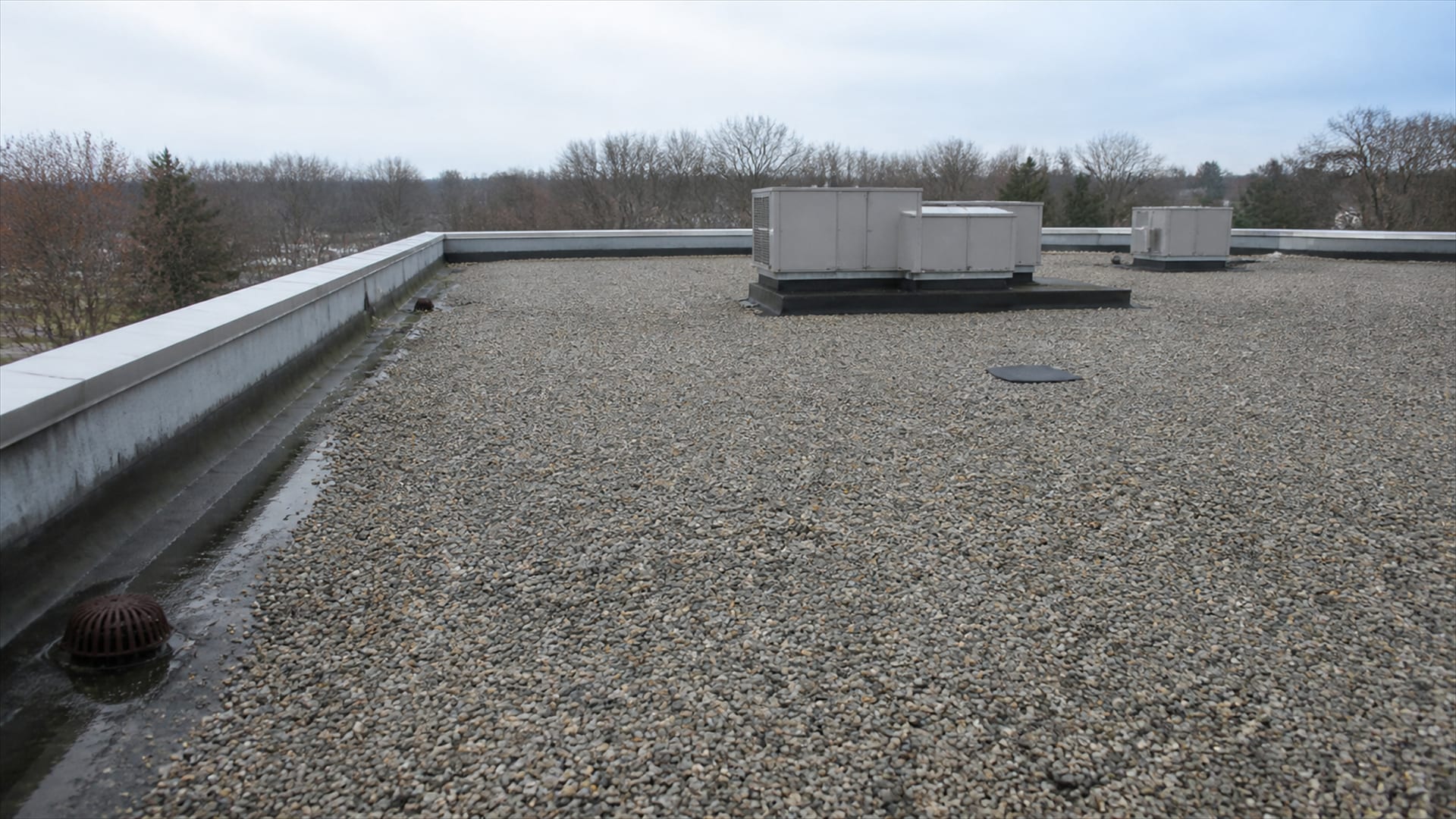
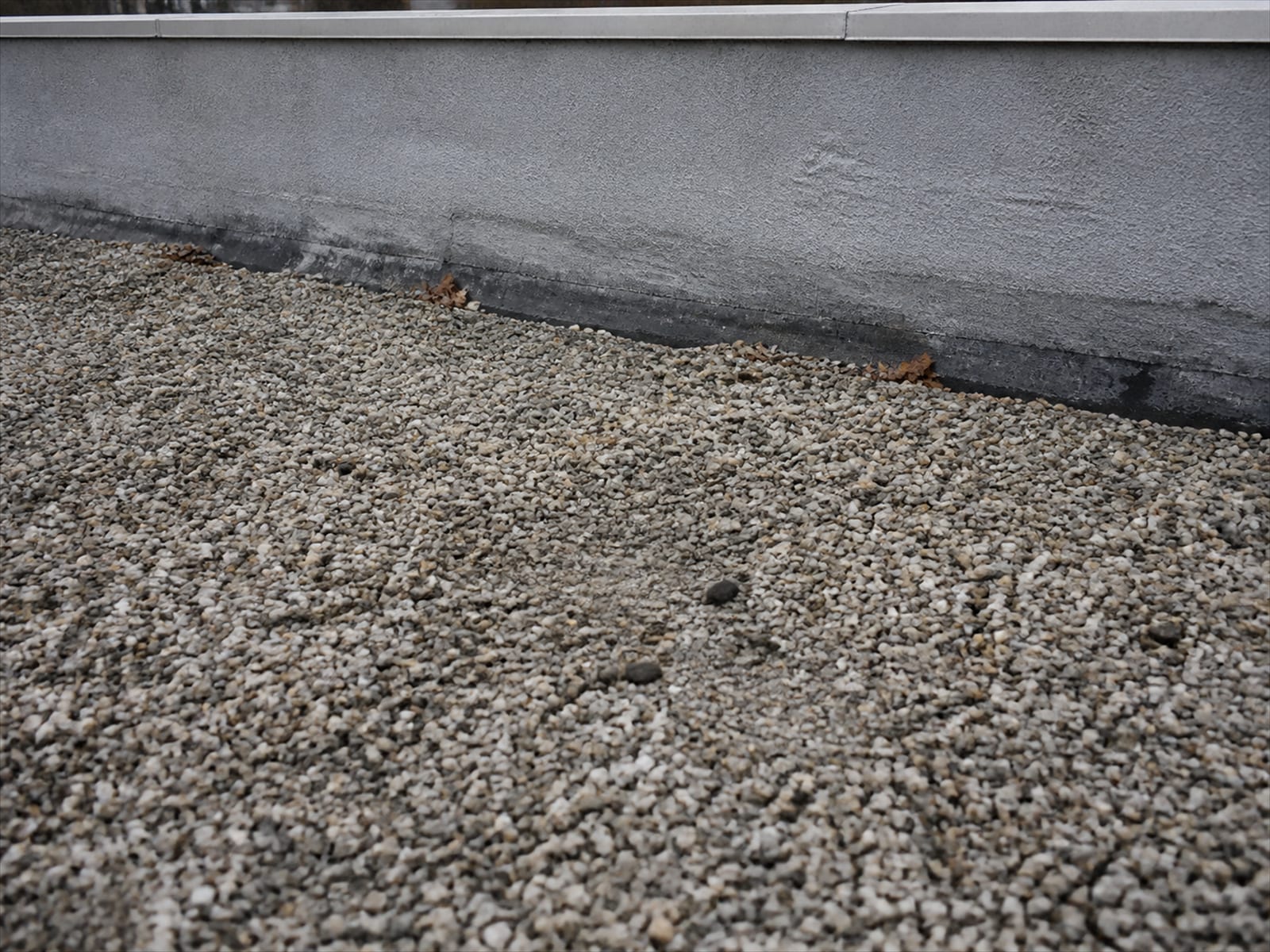
A flat roof with a parapet, a gravel ballast surface, a setback, or a rooftop planted area offers exactly that: a raised platform, a clear line of sight in every direction, and nothing that walks up to it. If there is a retention pond or a campus water feature within a short flight, the site is better still.
This is not a sign of neglect on your part. A well-kept roof is, if anything, a more attractive nest platform than a cluttered one.
What are you actually dealing with, before anybody goes up?
Three different situations get reported as the same thing, and they have different answers.
A pair may be prospecting, standing on the roof and behaving territorially without having built anything. There may be a nest with eggs, which is the most legally constrained case. Or there may already be goslings, which is the most time-sensitive one, because goslings that cannot fly and cannot get down have a welfare problem that develops within days.
There is also the possibility that nothing is nesting at all and birds are simply resting up there, which is a nuisance rather than a nest.
Work out which you have before anyone climbs. Ask for photographs taken from an existing safe vantage point, a window in a taller adjacent section, a stairwell landing, or a camera. Get the roof plan, the access method, the parapet condition, the dates the behavior started, and whether staff or the public use the ground below. That intake is genuinely most of the job, and none of it requires being on the roof.
Four rooftop situations, and what each one means
What does the law actually say?
The baseline is federal and it is broad. 16 U.S.C. 703 makes it unlawful, unless permitted by regulation, to take, capture, possess, sell, transport or otherwise deal in a migratory bird or any part, nest or egg of one, and the statute's list of prohibited acts is broader still. Canada geese are migratory birds managed by the US Fish and Wildlife Service, and a nest on your roof is covered the same as a nest anywhere else.
There is a route for nest and egg work, and it matters that you understand who holds it. The USFWS registration for resident Canada goose nest and egg activity is registered annually by the landowner or the responsible manager, is valid for a nesting season, and carries a reporting obligation. It is not a license a contractor holds and applies to your building. If your property needs that route, your organization registers.
We do not hold such a registration and will not act as though we do. That is a boundary, not a modesty statement: presenting somebody else's regulated authority as your own service is exactly the failure this whole area of law is designed to prevent.
State guidance sits on top of the federal baseline. Connecticut DEEP, MassWildlife and New York DEC each publish their own nuisance guidance and permit conditions, and Massachusetts publishes an egg addling annual report that shows what that regulated activity looks like when it is done through the proper channel.
Before you send anyone to the roof
Pick an answer to see how you did
1. There is a nest with eggs on your parapet. Which of these can the building do today without any registration?
2. Who holds the federal registration for resident goose nest and egg work?
3. Your tech needs to look at something 4 feet from a low-slope roof edge. What governs that?
Nothing answered yet.
The roof is a safety problem before it is a bird problem
This is the part that gets skipped, and it is the one that can hurt somebody.
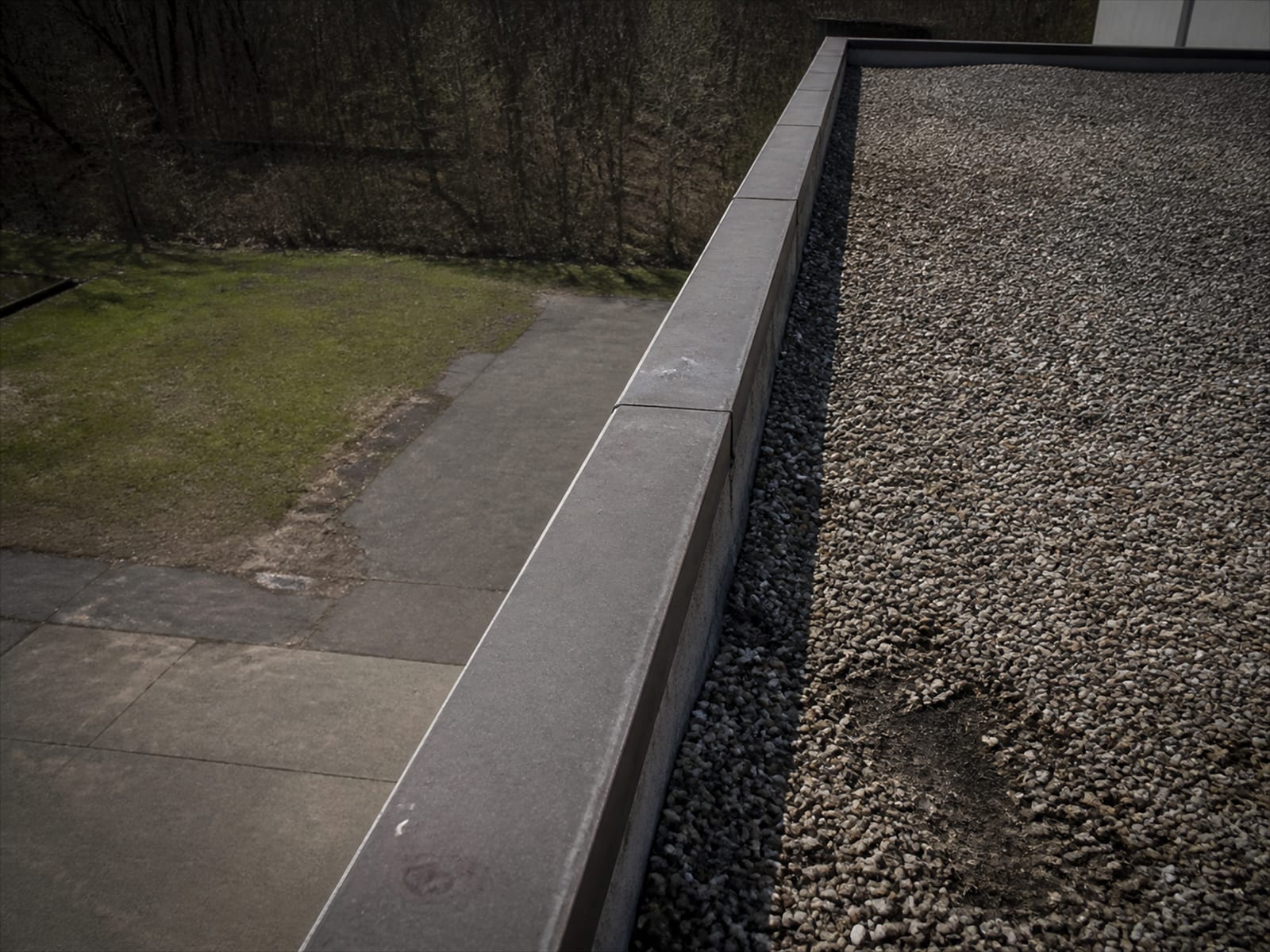
OSHA's walking-working surfaces standard requires fall protection for work less than 6 feet from a low-slope roof edge: guardrails, safety nets, travel restraint or personal fall arrest. Between 6 and less than 15 feet, protection is generally required as well, subject to a narrow designated-area provision for work that is both temporary and infrequent.
Nothing about a goose changes any of that. A nest sitting close to a parapet is, from a compliance standpoint, work near an edge, and it has to happen under your building's fall-protection program with whoever has authority over roof access.
There is a second-order risk worth naming too. A defending goose advancing on somebody who is already working near an edge is a genuinely bad combination, and it is a good reason not to send a lone technician up for an unplanned look.
So the sequence is: establish authority over the roof, establish how access happens safely under your existing program, and only then think about the birds.
What can you do while a nest is active?
More than you might think, and none of it involves the nest.
Deal with the ground-level aggression, because that is the complaint you are actually fielding. A defending bird has a territory it will advance within, so rerouting foot traffic away from that door, using an alternative entrance, or putting up a temporary barrier and a sign solves the human problem immediately and legally. New York DEC's guidance on goose problems covers the behavior you are seeing during nesting.
Document everything. Dates, photographs from safe vantage points, complaints received, what you did in response. If your organization later needs the registration route, that record is the basis for it, and if somebody is hurt it is the record of a reasonable response.
Then plan for next year, which is where the real leverage is. A pair that nests successfully on a roof is likely to return to the same area, and the window to make a roof unattractive is before a nest exists, not after.
The nesting year on a roof, and where your options are
February into March
Pairs prospect and begin defending territory. THIS is the window with real options, before anything is built. Deterrence now is straightforward and raises no permit question.
Early April
Nesting can be underway. CT DEEP describes nesting by early April, and from this point the nest and eggs are protected.
April through June
Incubation around 28 days, hatching peaking in the first week of May. Defending behavior at ground-level entrances is at its most intense.
Once goslings appear
A welfare problem develops quickly, because young birds cannot fly off a roof. This is the case to escalate to your state wildlife agency rather than manage in house.
Mid June to late July
The flightless molt. Adults cannot fly either, which changes what any measure can achieve anywhere on the property.
Late summer onward
The planning window. Make the roof unattractive before the next prospecting season rather than after.
What can you do today without going up there?
A useful amount, and this is the list to work through before anyone plans a roof visit.
Document from a safe location. Photographs from a window in a taller section, a stairwell landing or an existing camera position establish what you have, and they are the record you will need if the situation escalates or if your organization later pursues the registration route.
Stop any feeding on the property. MassWildlife is blunt about what feeding does: it concentrates geese, encourages them to stay, can build a flock beyond what the habitat would otherwise support, makes the birds less wary of people, and can harm water quality. A building with a nesting pair on the roof and somebody feeding birds in the car park below is working against itself.
Manage pedestrian access at ground level where a bird is defending. That is the complaint you can actually resolve this week.
Report a sick or dead bird to your state wildlife agency rather than handling it. And if you need to know whether your situation qualifies for any authorization, contact USFWS or the state agency directly for advice. That call is free, it is the authoritative answer, and it is a better first move than a contractor's opinion, including ours.
How much mess is one pair, really?
Worth calibrating, because rooftop droppings turn into a drainage question rather than a walkway one.
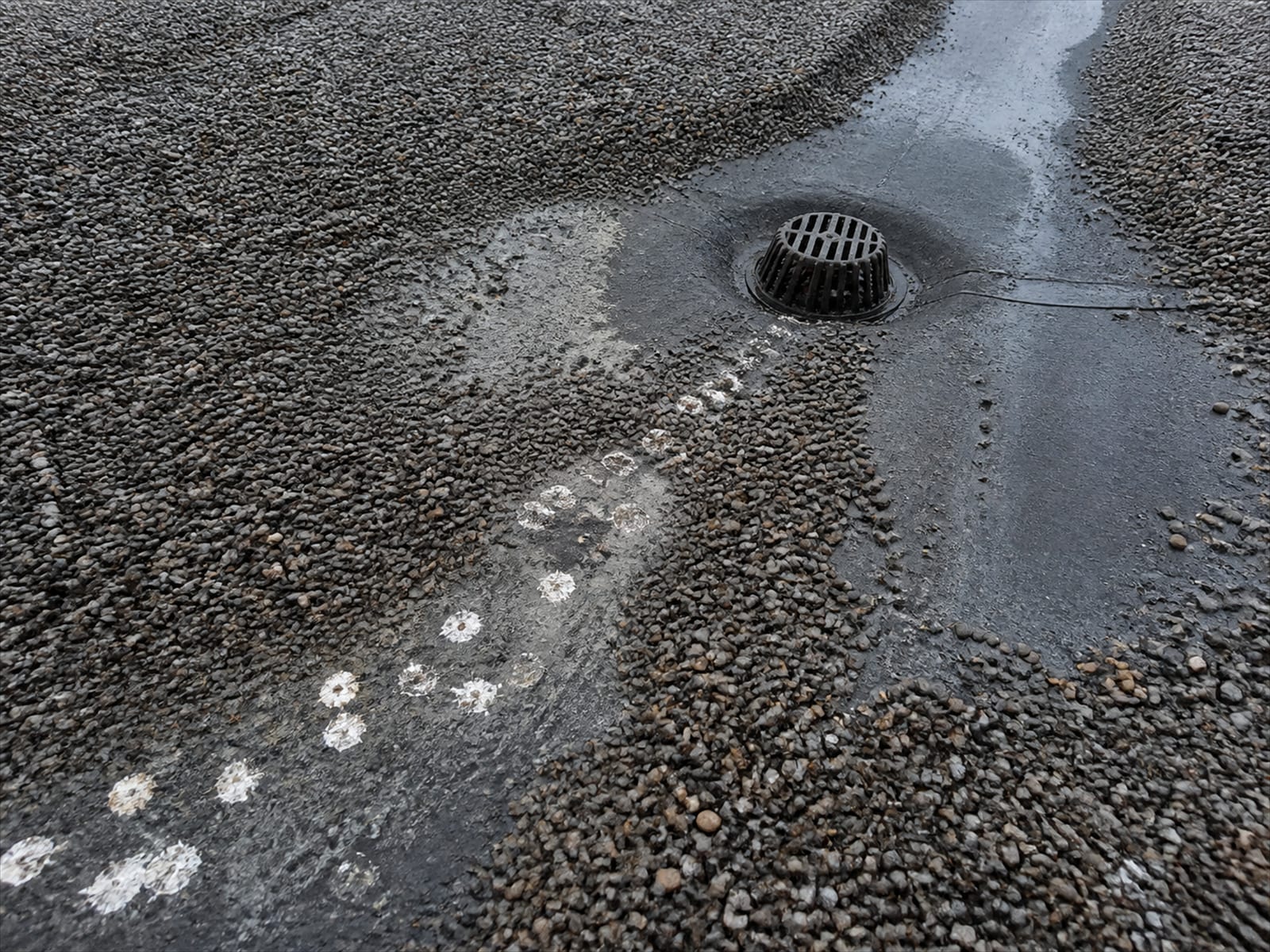
New York DEC puts a Canada goose at about one pound of droppings per day. MassWildlife gives a range of one half to one and a half pounds. The gap between those two published figures is itself the lesson: do not treat any single number as a site estimate without observing your own birds and your own cleaning conditions.
On a roof the concern is less about appearance and more about where it goes. Droppings on a roof surface move toward drains and scuppers with every rainfall, which affects both the drainage system and whatever the roof discharges into. If your building drains to a retention pond, the material is going into the water you may separately be trying to keep clean.
That is also the argument for treating a rooftop nest as a building-systems matter and not only a wildlife one, and for getting your roofing contractor's view before anything is installed up there.
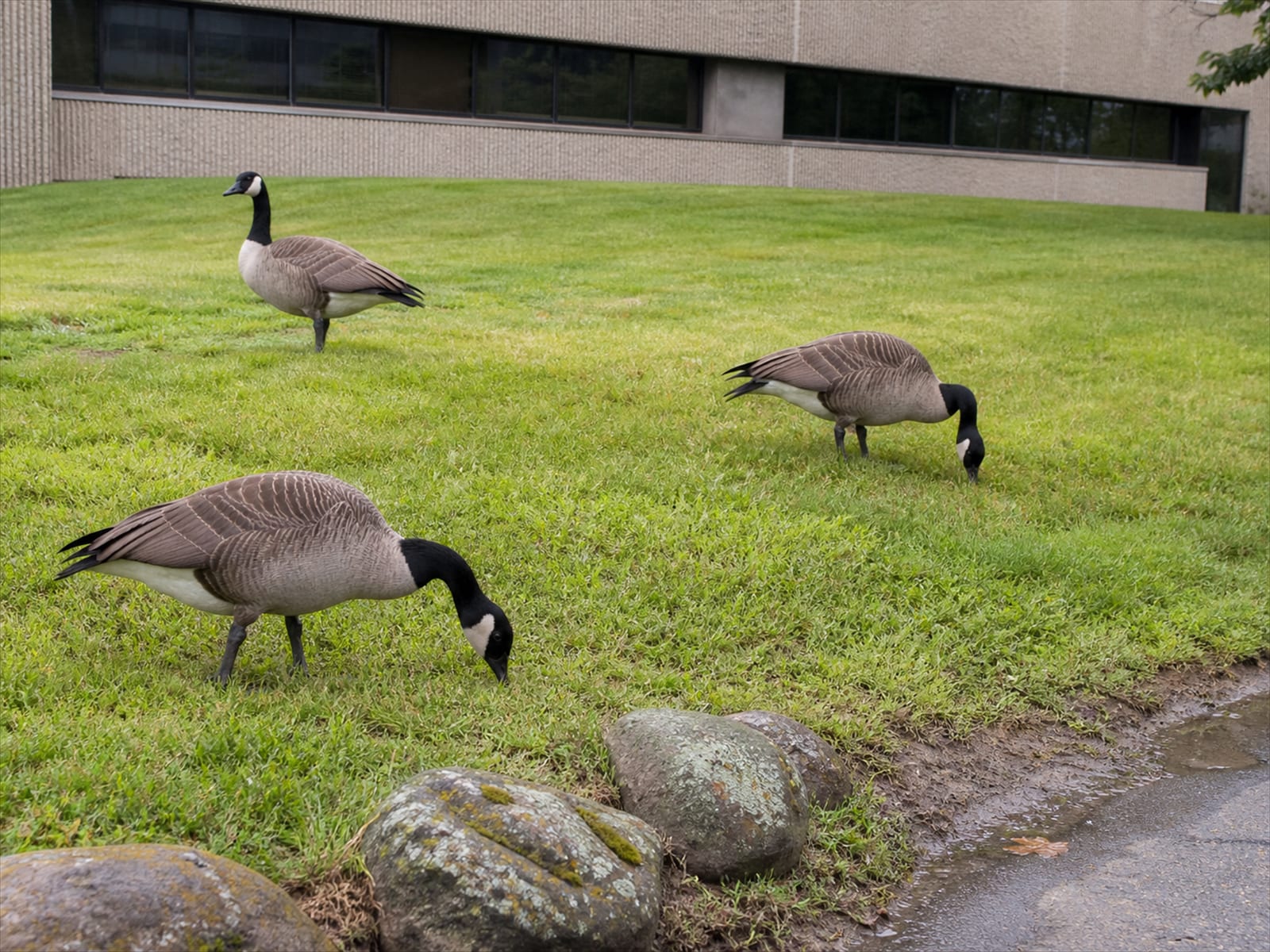
How do you stop it happening again?
By changing what the roof offers, in the months when no nest exists.
The general principle across the agency guidance is that geese select for open, visible, defensible ground. A roof that reads that way is a candidate. Interrupting the sightlines, breaking up large open ballast expanses, and addressing standing water and rooftop planting areas all reduce how well the site fits what the birds are looking for. Virginia Cooperative Extension's guidance on managing goose conflicts covers the same habitat logic that applies at ground level.
Two cautions. Anything installed on a roof has to respect the roof: membrane warranties, drainage, and wind loading are real constraints, and a deterrent that voids a warranty or blocks a drain has traded one problem for a worse one. And whatever goes up needs to be in place before prospecting starts, because once a pair has committed you are back inside the protected window with very few options.
If your site is anywhere near an airfield, there is a further dimension. The FAA's wildlife hazard program treats attractants near airports as a safety matter, and a rooftop nesting population is part of that picture for a building inside the relevant distances.
What to do this week, in order
01
Do not send anyone up unplanned
Establish who controls roof access and how a visit happens under the building's fall-protection program.
02
Identify what is actually there
Pair, nest, eggs or goslings, using photographs from an existing safe vantage point rather than a climb.
03
Solve the human problem first
Reroute foot traffic away from the entrance the bird is defending. This is immediate, legal and effective.
04
Leave the nest alone
It is protected under 16 U.S.C. 703, and the registration route belongs to the landowner, not a contractor.
05
Escalate goslings
Young birds stranded on a roof are a welfare case for your state wildlife agency, not a maintenance task.
06
Write next year in the calendar now
The only easy version of this problem is the one addressed before a pair commits in late winter.
What This Means for You
You are holding three problems that arrived together and have to be separated to be solved. There is a bird-law question, and the answer is that the nest is protected and the registration route belongs to your organization rather than to anyone you hire. There is a roof-safety question, and the answer is that OSHA governs it exactly as it would for any other reason to be near an edge. And there is a people question, the complaints from staff being buzzed at a doorway, which is the one you can fix today by moving where people walk.
Next year is where this actually gets solved. A roof that is made less suitable in February is a roof with no nest in April, and no nest in April means none of the constraints above apply at all.
If you want somebody to talk it through, call Tri-State Geese Patrol on (203) 856-4889. We work out of West Hartford across Connecticut, Massachusetts and New York, and we will tell you plainly when the honest answer is your state wildlife agency rather than us, which for goslings on a roof it usually is. For the ground-level side of a property that keeps attracting birds, our Border Collie goose abatement is the recurring work, and habitat modification is where we look at what the site is offering in the first place. You can also send us a message with the details.
Keyword: geese nesting on roof