

Key Takeaways
01
A feeding ban removes an artificial food subsidy, which [Connecticut DEEP](https://portal.ct.gov/deep/wildlife/nuisance-wildlife/problems-with-canada-geese) says can go a long way toward ending habituation, but it does not by itself remove the pond, the short grass or the open sightlines that also hold a flock.
02
There is no sourced timeline for how long after a ban a flock leaves. Anyone quoting you a number of weeks is inventing it.
03
[New York DEC](https://dec.ny.gov/nature/animals-fish-plants/nuisance-wildlife-species/canada-geese) says signs can help but that further reduction may need an ordinance carrying penalties and actual enforcement, which is the difference between a rule and a posted notice.
What does a feeding ban actually remove?
One ingredient out of several, and it is a real one.
New York DEC identifies the combination behind resident goose abundance in suburban settings: short grass, water, few predators, limited hunting pressure, and supplemental feeding. Read that list again with your own site in mind. A ban addresses the last item. The other four are still exactly as they were the day before the rule passed.
That is not an argument against the ban. Feeding is the one factor on that list that a town can change with a vote rather than with a budget, and Connecticut DEEP is direct that ending feeding can go a long way toward ending habituation. Habituated birds are the ones that walk toward people expecting food, and those are the birds that generate the complaints about boldness and the incidents near children.
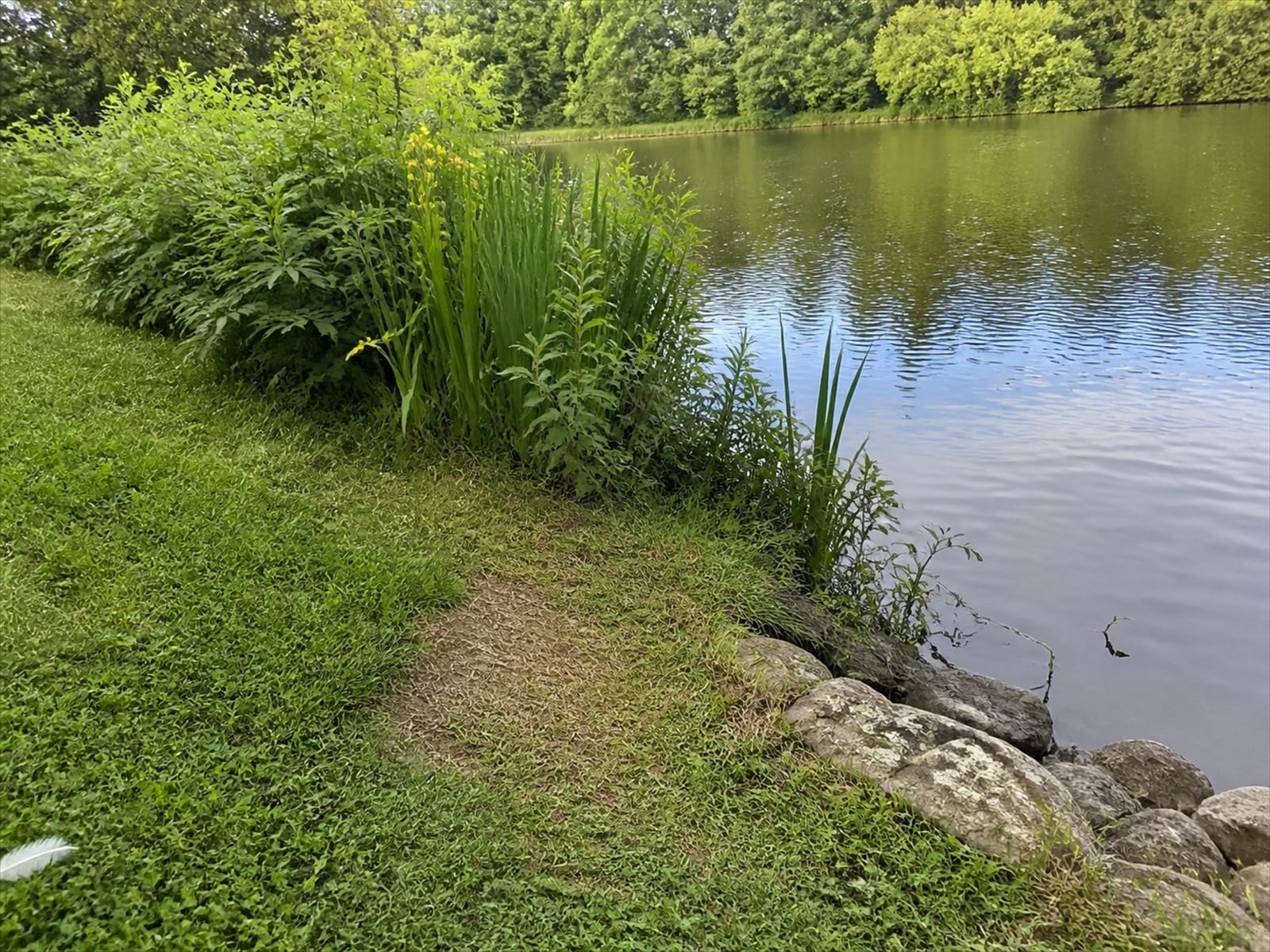
What the ban does not do is make your ground less suitable. A pond with mown grass to the water and clear sightlines is good habitat whether or not anybody is throwing bread at it.
What a feeding ban reaches, and what it leaves untouched
Why are the geese still here?
Usually one of four reasons, and they are worth separating before you conclude the rule failed.
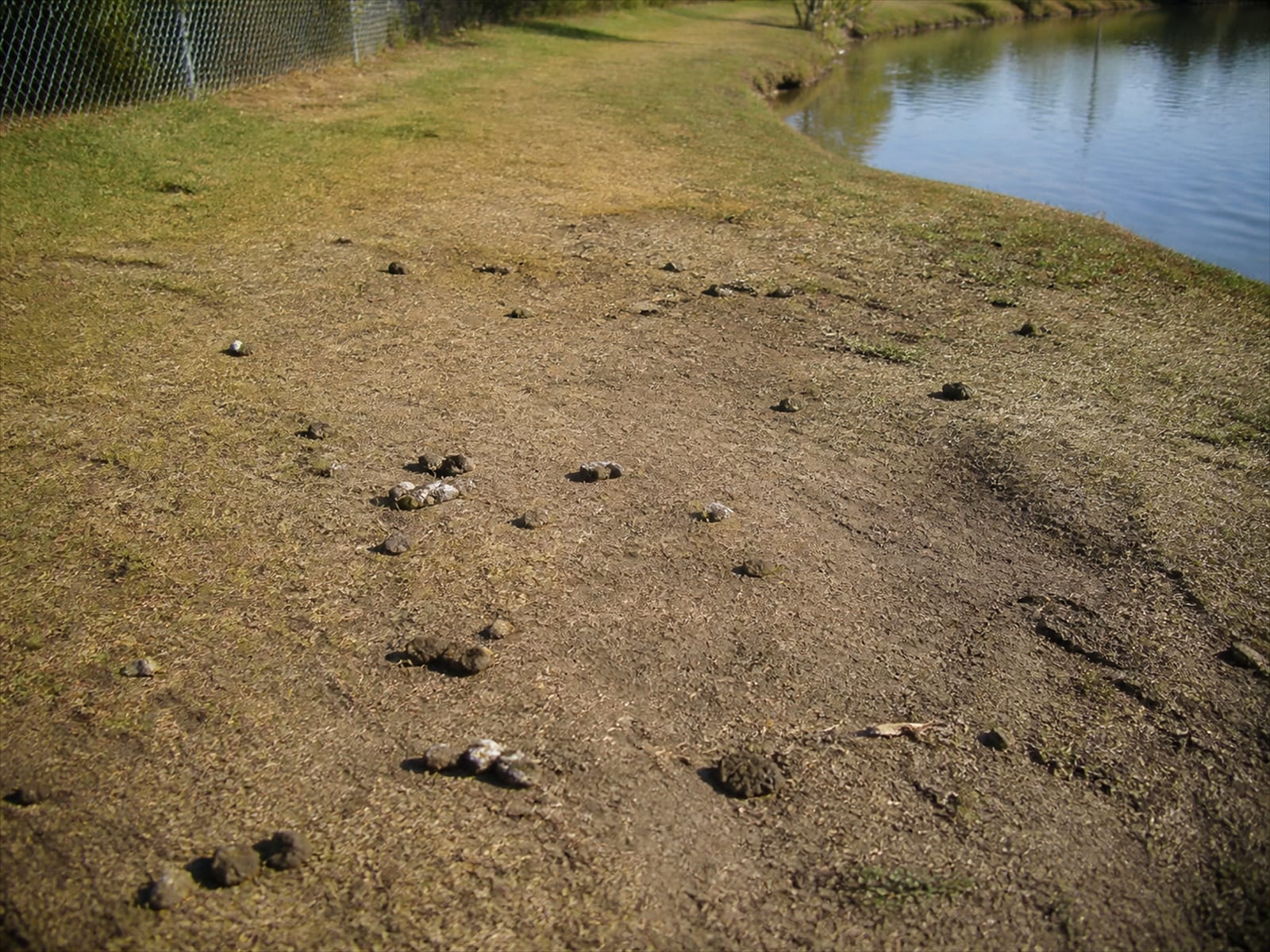
The first is that somebody is still feeding them. This is the most common and the least visible, because it often happens early in the morning or at a corner of the site nobody watches. New York DEC is explicit that a sign alone may not be enough and that reduction may require an ordinance with penalties and enforcement behind it.
The second is that the rule does not cover where the birds actually are. An ordinance written for town-owned parkland does exactly nothing about a private pond across the road, and a flock will happily use both.
The third is that the site was never held by food in the first place. If your geese are grazing turf rather than waiting for handouts, removing the handouts changes very little about why they are standing there.
The fourth is timing. Connecticut DEEP describes migrants arriving in early October with movement continuing through November, so counts at a Connecticut site can go up for reasons that have nothing to do with local compliance. A ban passed in September and judged in November is being judged against the wrong baseline.
Does the ordinance cover the ground you are worried about?
This is the question worth spending an afternoon on, because the answer is written down and most people never check it.
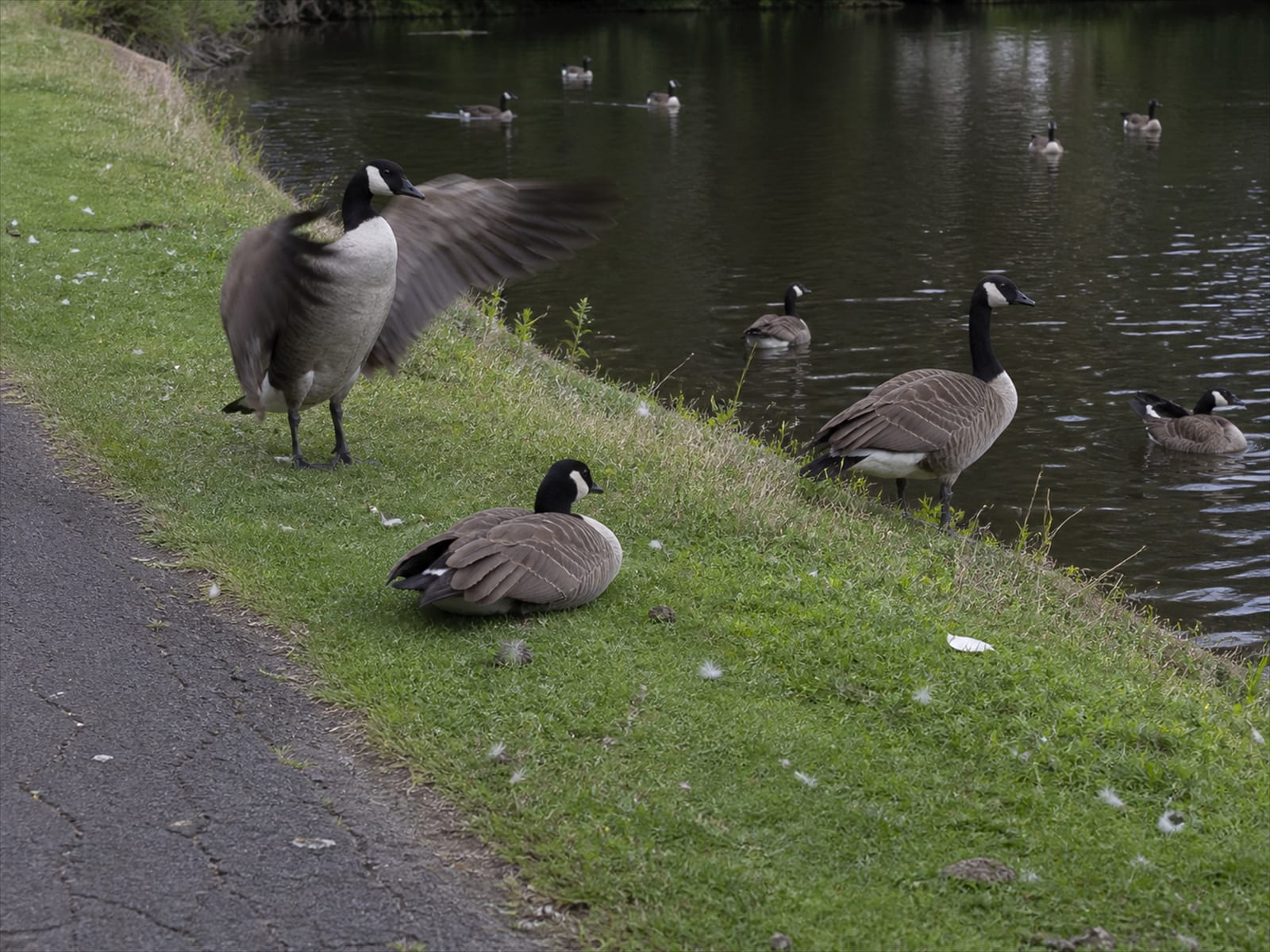
An ordinance reaches the territory and property its text names. Connecticut towns have taken different approaches to that scope, and the language is public. Waterford's code sits within its health and sanitation title, and other Connecticut and New York municipalities have adopted their own versions with their own boundaries and penalties, published on eCode360 and similar municipal code sites. Some reach all public property. Some name specific parks or ponds. Some reach private property where a nuisance condition results, and some do not reach private property at all.
Pull your own text and answer three questions. Which parcels does it cover. What is the penalty, if any. Who is responsible for enforcing it, in practice rather than on paper.
If the pond generating your complaints is not inside the answer to the first question, the ban was never going to fix it, and no amount of waiting will change that.
Reading your own ordinance
Pick an answer to see how you did
1. Your town's rule covers "town-owned parks and recreation areas." The worst flock is on a private office park pond that borders one. What does the ban do about it?
2. Signs are posted and people have mostly stopped feeding, but the flock has not shrunk. What is the most likely explanation?
Nothing answered yet.
What Connecticut towns have actually written
Three real examples, because reading somebody else's ordinance is the fastest way to understand your own.
Waterford prohibits feeding migratory and domestic waterfowl on town-owned lands and waters, and its stated purpose is to prevent the attraction and concentration of birds affecting beaches, swimming facilities and parks. Note what that scope does and does not reach: town-owned land, named for a reason.
New Canaan prohibits providing food to migratory or domestic waterfowl on public lands or waters, and attaches a listed fine of $90 per offense, or the schedule maximum. That is the difference between a rule and a notice. New York DEC says signs can help but that further reduction may need an ordinance with penalties and enforcement, and a specified fine is what that looks like in practice.
Stratford takes the narrowest approach of the three, prohibiting feeding within the boundaries of Longbrook Park and Wooster Middle School, with a purpose clause naming ducks and geese and public health, safety and welfare. A geographically specific rule is easier to pass and easier to enforce, and it will do nothing at all two streets away.
Those three represent the real range: all town land, all public land with a penalty, or specific named sites. Find which shape yours is before you judge its results, because a Stratford-style rule was never intended to change a flock across the whole municipality.
How long should it take to see a change?
There is no honest number here, and it is worth knowing why before you judge whether a ban is working.
No source supports a specific elapsed time after which a feeding ban alone produces a departure. What the agencies support is direction and method rather than a countdown. Connecticut DEEP says stopping feeding can go a long way toward ending habituation. New York DEC says to begin measures as soon as geese are noticed and to be persistent, because established birds are more tolerant of disturbance than new arrivals.
That second point is the practical one. A ban passed early, before a flock has settled in for a season, is working with the grain. A ban passed after three years of daily feeding is asking birds to unlearn a habit, and unlearning takes longer than learning did.
What you can do is set a baseline on day one and watch the right things. Where the birds are, not just how many. Whether anybody is still feeding. Whether the concentration point has moved. Those tell you something within weeks. A single headcount in month two tells you almost nothing.
Reading your site through the Connecticut year
March
CT DEEP says geese may begin defending territories. A no-feeding rule still reduces the food subsidy, but the site can feel worse before any nest is visible.
Early April
Nesting can begin. A feeding rule is not permission to touch a nest, and nothing on the shoreline should be disturbed.
April through June
Hatching, peaking in the first week of May, with eggs incubated about 28 days. Family groups appear on the turf.
June and July
The flightless molt. Birds walk between water and feeding areas rather than flying, which is when a low barrier at the water and grass edge does its most useful work.
Early October through November
CT DEEP describes migrant arrival and continued movement. Your counts can rise while local compliance is unchanged.
What else fails when it is the only thing you do?
Worth knowing, because the usual next step after a ban is to buy something, and the agencies are unusually blunt about what disappoints on its own.
MassWildlife says flags, pie plates, scarecrows, swan decoys and coyote decoys work only until the birds learn they pose no threat, and that decoys need to be moved periodically to keep any effect at all.
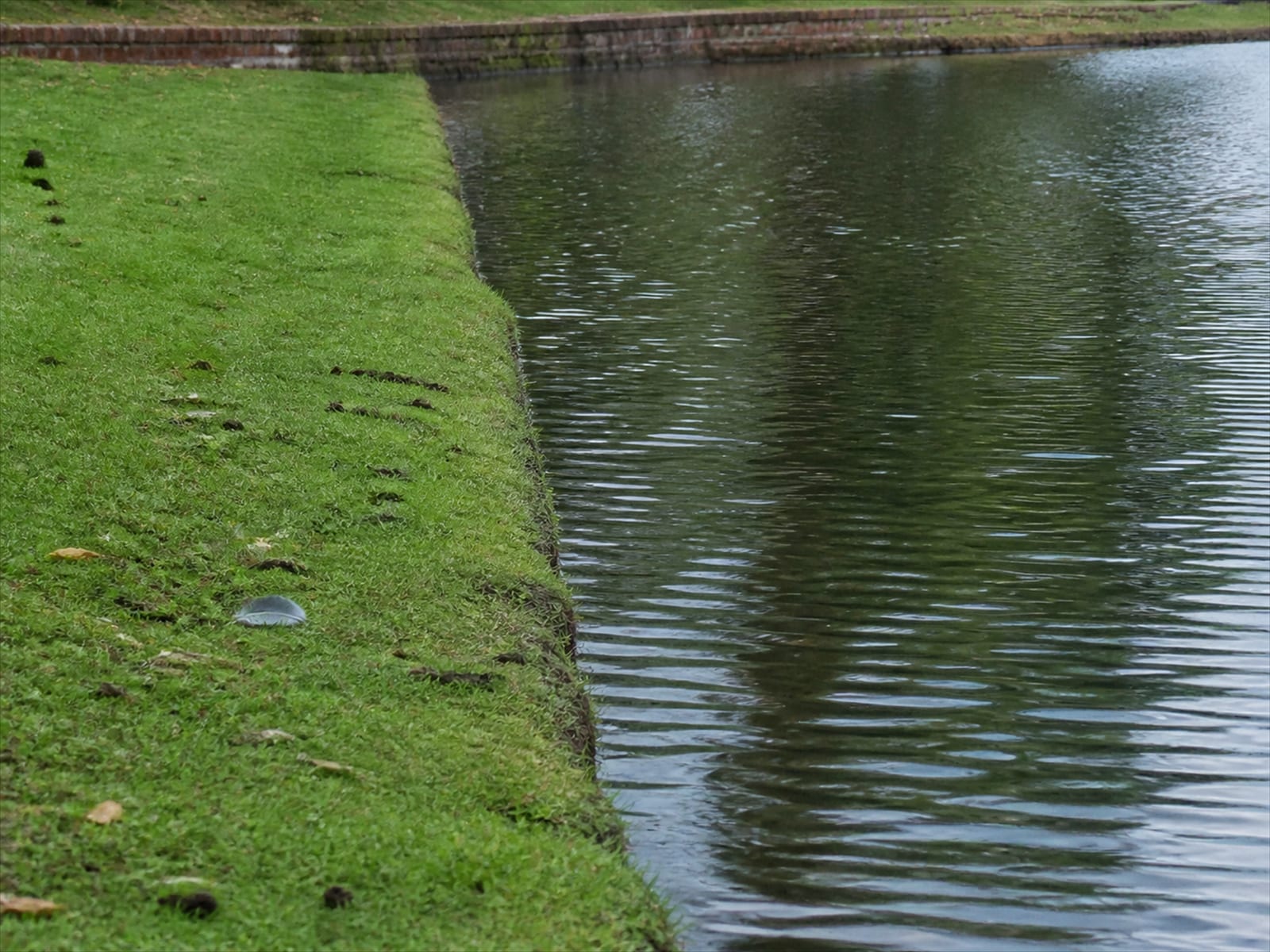
Connecticut DEEP says geese adapt to noise and that the desired effect is not achieved without reinforcement. It also makes a point that saves money: it is futile to fence a pond if the birds are flying in to feed on the turf. Fencing the water when the problem is the grass solves nothing.
On repellents, the same source notes they need reapplication after rain and are practical for small lawns rather than large turf areas. Applying a repellent to commercial turf is licensed pesticide work in Connecticut, Massachusetts and New York, so it is a technique that exists in the field rather than something we perform.
And relocation is not the simple answer it sounds like. New York DEC generally does not allow it, and CT DEEP notes that moving urban birds commonly just moves the problem somewhere else.
After the ban, in order of what actually helps
01
Verify compliance first
Before concluding the rule failed, establish whether anybody is still feeding. This is the most common reason a ban appears not to work.
02
Read the ordinance's scope
Confirm the rule covers the parcel where the problem is. If it does not, stop measuring the ban against a site it never reached.
03
Record where, not just how many
Concentration points moving is a real signal. A flat headcount across a migration month is not.
04
Change what the ground offers
A buffer at the water and grass edge interrupts the walking route, and matters most during the June and July molt.
05
Add repetition where it is needed
Agencies are consistent that persistent, combined, non-injurious methods outperform any single measure used alone.
06
Leave nests alone
Nest and egg work is regulated under 50 CFR 21.162 and runs through an annual registration held by the landowner.
Where does the law sit if people ignore the rule?
Two separate systems, and it helps not to confuse them.
Your feeding ordinance is local law. Its penalty, if it has one, is whatever the town wrote into it, and enforcement is a municipal matter.
The birds themselves are protected federally, which is a different and much older layer. Canada geese are listed among migratory birds at 50 CFR 10.13, and the permit framework around them sits at 50 CFR 21. That protection does not soften because a resident broke a feeding rule, and it does not soften because a flock has become a nuisance.
The consequence of getting that wrong is real. New York DEC reported in April 2025 that an officer ticketed a homeowner for unlawful take of a migratory bird out of season and hunting without a license, and directed them to lawful routes instead, including registration for nest and egg removal or a licensed operator. A frustrated resident who decides to handle it themselves creates a problem the town then owns.
Terms that come up at the meeting
Tap a term to see what it means
Habituation. The process by which fed birds learn to approach people. It is the specific thing a feeding ban is designed to reverse.
What This Means for You
The ban was not a mistake and it was not theater. It removed a real cause, and it is the one cause a town can address by decision rather than by budget. What it could never do is change the pond, the turf or the sightlines, and if those are what is holding your flock then the rule was always going to look like it underdelivered.
So the useful next move is not to wait longer. It is to establish three things: whether anybody is still feeding, whether the ordinance actually covers the ground you are worried about, and whether the birds on your site are there for food or for habitat. Those three answers point at completely different responses, and only one of them is about the ban at all.
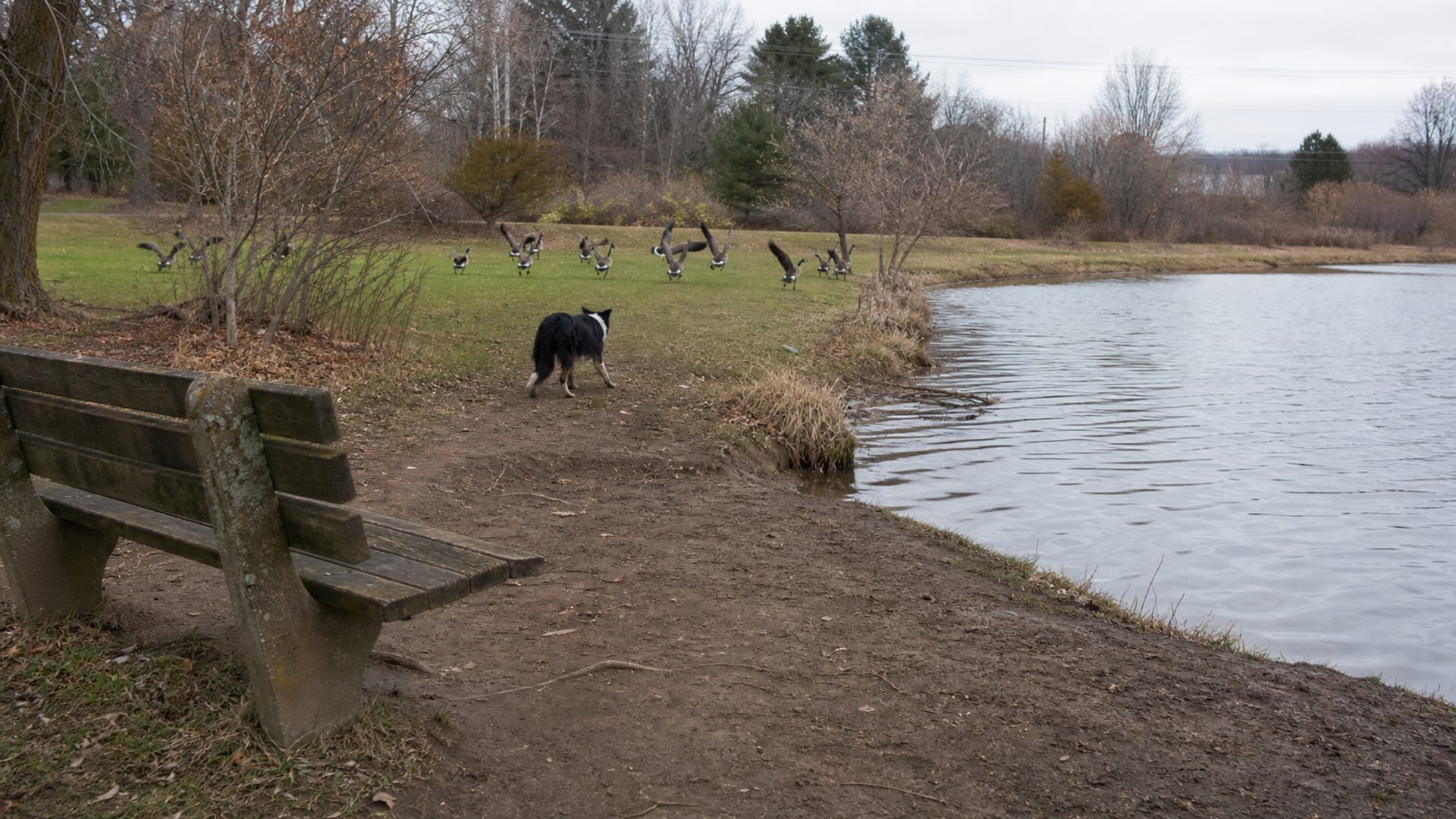
If you want a second opinion on which of those you are dealing with, call Tri-State Geese Patrol on (203) 856-4889. We work out of West Hartford across Connecticut, Massachusetts and New York, and we are happy to tell you that your rule is working and your patience is the answer, if that is what the ground says. Where it is not, our Border Collie goose abatement supplies the repetition the agencies say a single measure lacks, and habitat modification is how the water and grass edge stops being the invitation the ban could never withdraw. You can also send us a message with the details.
Keyword: goose feeding ban