Tri-State Geese Patrol

Goose Control in Newington, CT

Humane Canada goose abatement for Newington properties, using trained Border Collies that move birds without touching them. The town has publicly said it is looking for non-lethal methods at Mill Pond Park.

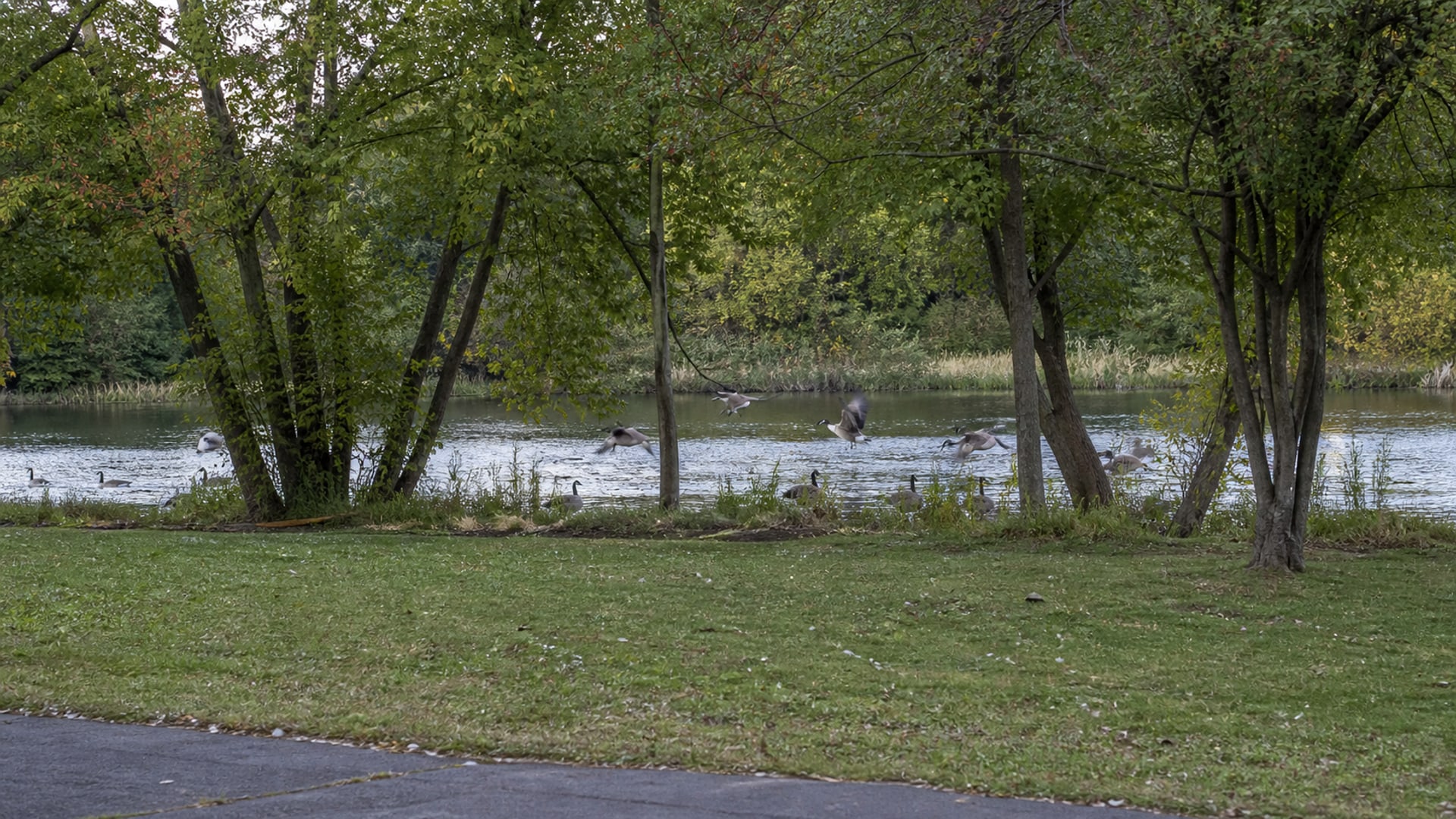
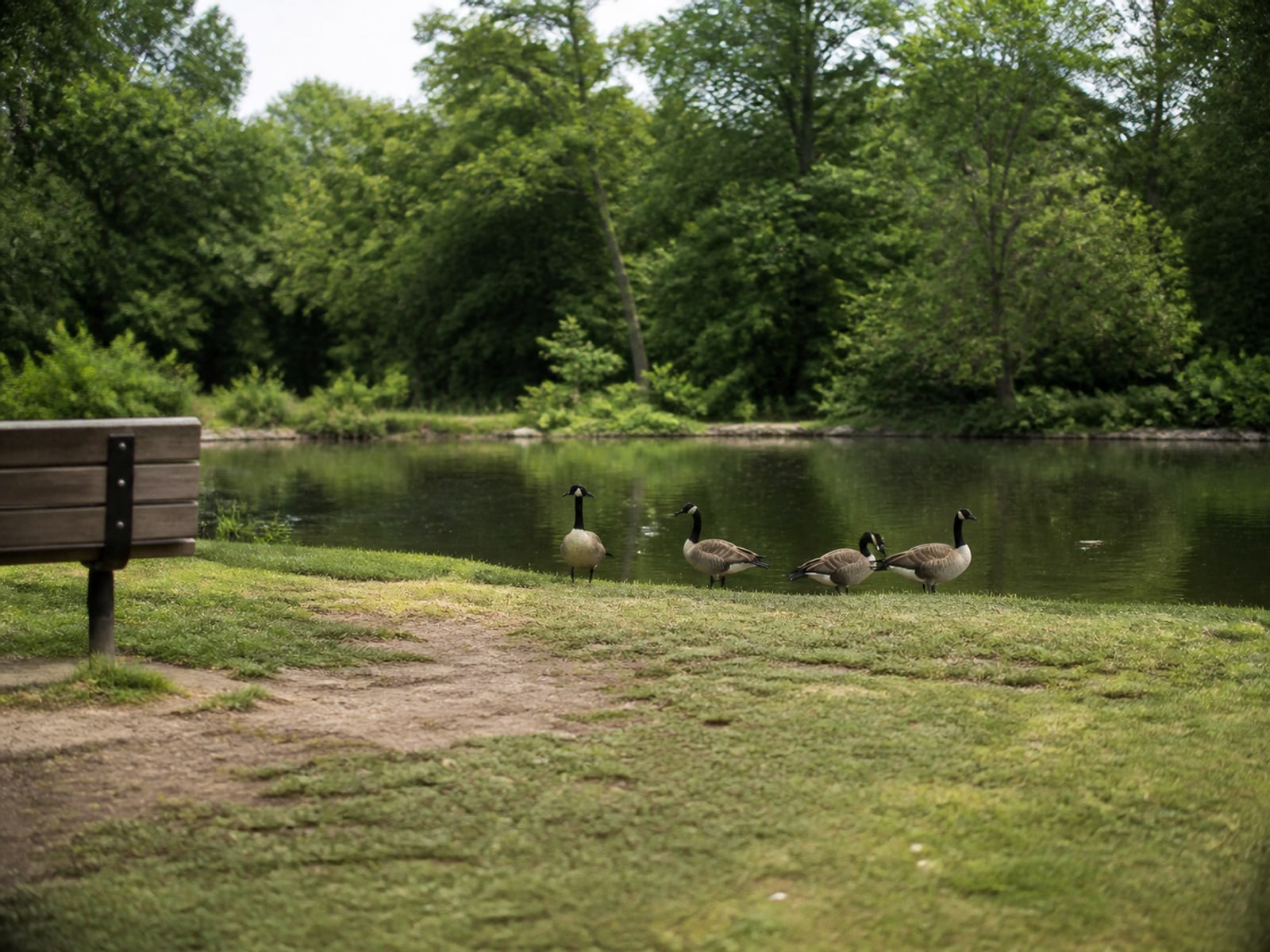
Open mown grass beside water of the kind Canada geese settle on in Newington, CT

At a glance

Town

Newington, Connecticut

Method

Non-lethal herding by trained Border Collies, no contact with any bird

Permit needed to move geese this way

None, provided no bird is harmed

The timing that matters

Before nests are established, the options are wide open. Afterwards they are not

Newington has said out loud that it is looking for non-lethal methods

In its operations highlights for fiscal 2024 to 2025, the town's Parks and Grounds unit describes taking on the challenge of finding non-lethal ways to stop Canada geese establishing nests at Mill Pond Park.

That is a municipality naming the species, naming the site, naming the constraint that the answer has to be non-lethal, and framing the goal as prevention rather than removal. We have read a lot of town documents for this work and that is about as direct as they get. The town's own seasonal photo gallery even carries a label associating a Canada goose family with Mill, which corroborates the connection between the birds and that park rather than leaving it to inference.

For a Newington property owner the useful part is not that the town has a problem. It is that the town has framed the problem correctly, and the framing carries a deadline.

Preventing nests and dealing with nests are two completely different activities in law. Discouraging birds from settling on a site before they nest is non-injurious work that needs no federal or state permit, provided no bird is harmed. Once a nest exists, everything about it is regulated, the authorization sits with the landowner rather than a contractor, and the practical options collapse.

So the whole game on a site like this is the calendar, and it is a much shorter window than people expect.

Why the nesting window decides what your options are

Connecticut DEEP puts territorial defense as early as March and nesting by early April, with incubation running about 28 days and young hatching from April through June.

Read that as an operating calendar rather than as biology. In late winter a pond edge is just a pond edge and a program can work freely: move the birds, change the mowing line, put something in the walking route up from the water, repeat it on a schedule the flock cannot anticipate. That is when prevention costs the least and asks the least of everybody.

By late April the same site may have a defended nest on it. At that point the birds are not merely inconvenient, they are protected in place, and a pair holding ground beside a path or a pool gate is a safety problem as well as a legal one.

This is why we push hard on the front end of the year with any property that has a history, and why the town's own word for it, prevention, is exactly right. A program that starts in February is doing prevention. The same program starting in May is working around something it can no longer touch.

The other half of the year matters too, and it is the half most properties ignore. DEEP records migrants arriving in early October, movement continuing through November with another arrival peak in mid-December, and most birds leaving by mid-January, although mild winters hold them. DEEP also says migrant and resident birds overlap in those months and cannot be told apart by appearance, so a flock on Newington grass in November tells you nothing reliable about where those birds nested. What it does tell you is that the site is being assessed by birds for next spring.

Canada goose droppings and grazed turf on maintained ground in Newington, CT

Where does lawn meet water in Newington?

This is a built-out town, so the water is concentrated rather than scattered. Where the record does not confirm a feature, this says so instead of guessing from aerial imagery.

Mill Pond Park, which is the whole story here

123 Garfield Street, and it is not a generic municipal pond. The town's listing carries the pond, Mill Pond Falls, fishing for children and seniors, a walking path, a soccer field, a multi-use field, a pool and wading pool, tennis, a pavilion, a playground and outdoor exercise equipment, all in one place. That is the town's public life concentrated on one site, including summer camps and community events, which makes access and scheduling a real part of any plan rather than an afterthought.

A golf course the town owns but does not run

Indian Hill Country Club at 111 Golf Street is the in-town 18 hole course, and the arrangement is unusual: the town says it owns the course while the club manages it. That is municipal ownership with club management, which is neither a public municipal course nor a conventional private club, and it means the approval path has two parties in it. On water features there, we found no official source confirming ponds, so that is a course map or a site walk rather than an assumption.

The brooks, and the fields that are not on them

The town identifies Mill Brook, Piper Brook and Webster Brook in its regional flooding and watershed material, and academic work places Mill Brook at Mill Pond Park inside the Park River watershed. Newington also lists athletic fields at its elementary, middle and high schools and at parks including Churchill, Clem Lemire, Badger Field, Mary Welles and others, with four soccer fields at the high school. What the town inventory does not establish is water immediately beside those other fields, so we are not going to put any there.

The institutional and commercial corridor

Newington's own records identify Hartford Hospital's Newington campus, the Veterans Administration hospital, the state Department of Transportation, Eversource, Data-Mail on Hartford Avenue, GKN Aerospace on Louis Street, EDAC Technologies on Richard Street and the Berlin Turnpike retail centers among substantial local landholders and tenants. Those are real facilities-management audiences. None of them is documented as having a landscaped pond or retention basin, and appearance from the air is not evidence.

Who to ask, and what the 100 foot line means

The operations side of this town is refreshingly concrete, which makes the conversation easier than in some larger municipalities.

Parks and Grounds runs from 679 Willard Avenue under a Supervisor of Parks, Grounds and Cemeteries, and its scope covers park, school, municipal grounds and cemetery responsibilities. That is one named unit with a wide remit, and it is the practical path for public property here.

For anything physical near water, the Conservation Commission publishes a 100 foot review area outside wetlands, and the town's current wetland delineation map displays wetlands, watercourses and that upland review area. In a town of 8,383 acres that is roughly 93 percent developed or committed, a 100 foot line takes in a lot of ground that does not look like wetland at all.

One thing worth being careful about, because it is where local pages usually overreach. Newington maintains a stormwater program and posts annual reports under the state's small municipal permit, and the town names Mill Brook, Piper Brook and Webster Brook in its flooding and watershed work. What none of that material does is link geese to nutrient loading or to a water-quality impairment here. Birds on a pond are a reason to test rather than a test result, and we are not going to borrow another town's bacteria finding and attach Newington's name to it.

The distinction we draw everywhere applies here. Working a dog across maintained turf is not a regulated activity. Planting a buffer, setting a barrier at a pond edge or changing drainage can be, and the delineation map is the right first place to look before anybody orders materials.

On the buying side, the town publishes a procurement route where purchases over 30,000 dollars require formal bids, through the Town Manager's Office. For a recurring municipal program that is a real threshold with a real process behind it, and it is worth knowing before a scope is written rather than after.

On dog rules, the honest answer is that we could not pin down an exact code section. The Town Clerk's dog licensing page says dogs must remain under proper control and be kept on a leash, and that owners of roaming dogs are liable to prosecution, but it does not give a section number and it states no working-dog or commercial-dog exemption. So we treat written site permission and confirmation of the applicable park rules as prerequisites rather than relying on a general dog page to carry a program.


What happens after you call about a Newington property?

The fieldwork is the same at Mill Pond Park, on a fairway or on a company lawn. The urgency changes with the month.

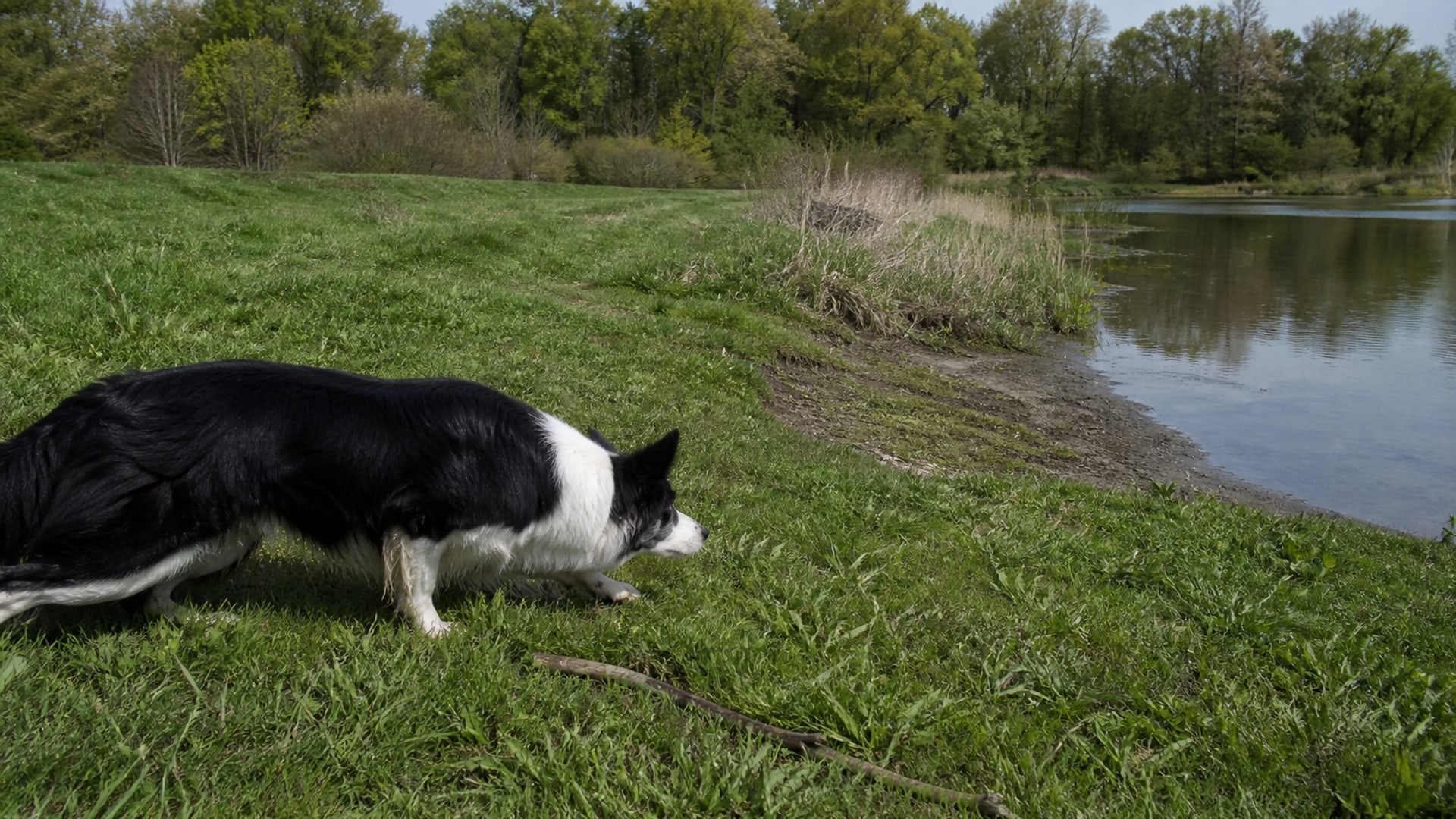
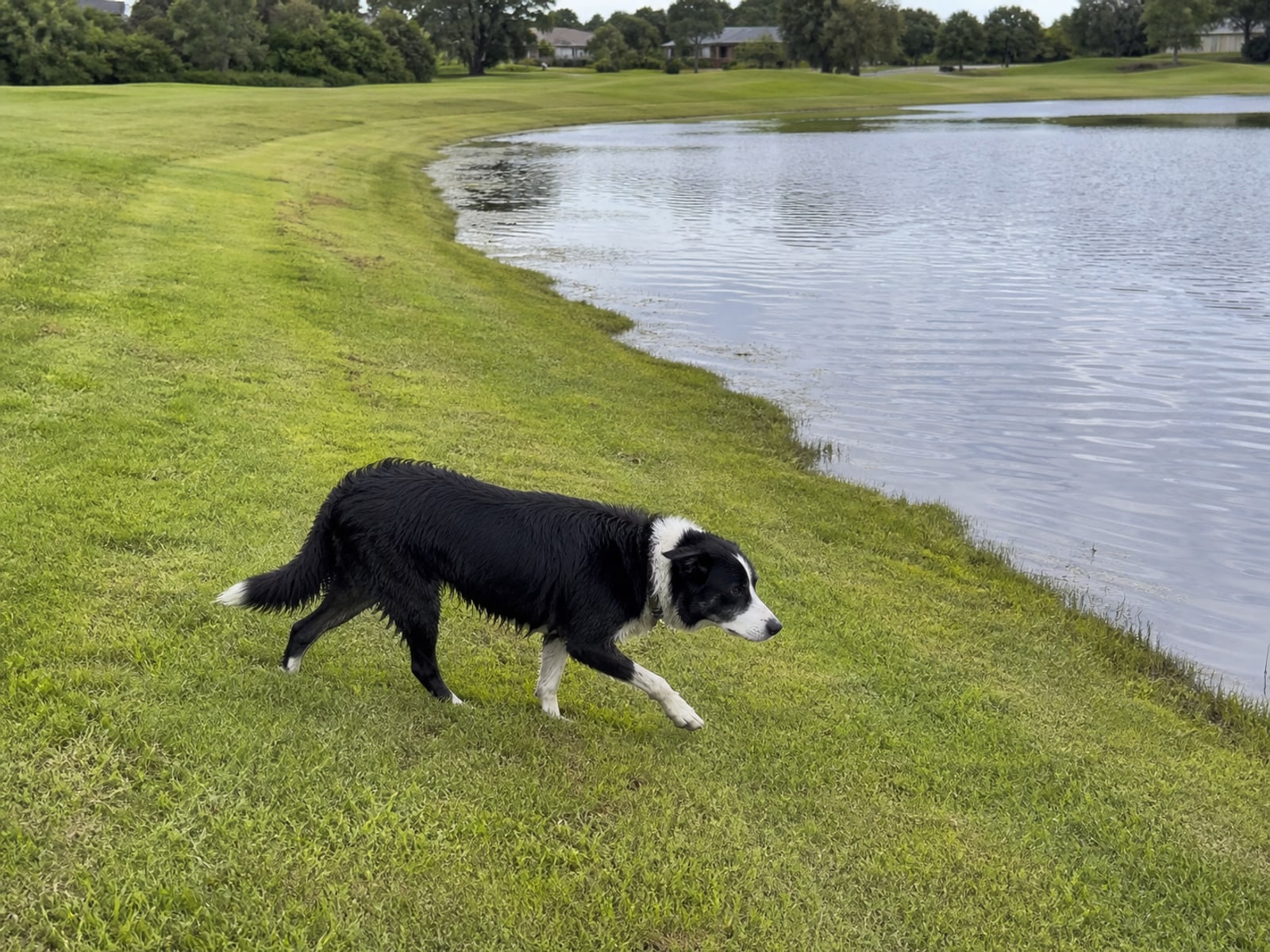
A Border Collie working a flock of Canada geese off maintained ground in Newington, CT
  1. 01

    We ask where you are in the year

    This is the first question in Newington rather than the last. A site with no nest yet has every option open. A site with an established nest has a much narrower set, and pretending otherwise would be selling you something we cannot deliver.

  2. 02

    We ask what you are seeing, and what has been tried

    How many birds, on which surfaces, at what times, and how close the water is. What a flock has already learned to ignore changes what is worth doing next.

  3. 03

    We walk the ground and map the way up from the water

    Geese travel between water and turf on foot, so the useful map is where they come up, which grass they graze and where they loaf. On a site as busy as Mill Pond Park, it also matters where the people are.

  4. 04

    We settle permission and rules before scheduling

    Written site permission with the applicable park rules confirmed, and a look at the wetland delineation map for anything physical within that 100 foot review area.

  5. 05

    The dogs work at times the flock cannot anticipate

    A handler works the ground with a trained Border Collie in a stalking posture. A goose responds to that as it would to a predator, by leaving, with no contact and no capture. On a park hosting camps and community events, that work is planned around the public rather than dropped into the middle of it.

  6. 06

    We say what should change about the ground, and we measure

    Where mowing stops, whether an unmown strip or a barrier can sit between water and turf, and whether feeding is happening. Then counts, locations, complaints and the gap between a visit and the birds returning, which is the first honest evidence a program produces.

What we handle, and who handles the rest

We do not touch nests or eggs. That is regulated activity, the landowner registers with the US Fish and Wildlife Service before anything happens, Connecticut accepts that federal registration and adds a further requirement where a commercial control firm is involved, and the authorization belongs to the landowner or the town rather than to a contractor. It is worth being especially clear about that in Newington, because prevention of nesting and treatment of an existing nest sound similar and are legally miles apart. We do the first. We do not do the second.

We do not apply turf repellents. They are registered pesticides, applying one to commercial turf in Connecticut is licensed work, and we hold no such certification. A licensed applicator is the right call if a repellent suits a defined surface.

Newington has publicly said it wants non-lethal methods for its goose problem, which is exactly the work described on this page.

This is a maintained program rather than a one-time fix. Connecticut DEEP says non-lethal methods other than habitat work tend to be transitory when used alone, which is why prevention plus a change to the ground beats either on its own.

Newington goose control questions

Maintained ground in Newington, CT holding clear of Canada geese after repeat visits
Is the town actually dealing with geese?

By its own account, yes. The Parks and Grounds operations highlights for fiscal 2024 to 2025 describe taking on the challenge of finding non-lethal ways to stop Canada geese establishing nests at Mill Pond Park, and the town's seasonal gallery separately associates a Canada goose family with Mill.

What is the difference between preventing a nest and dealing with one?

Legally, everything. Discouraging birds from settling before they nest is non-injurious work needing no permit, provided no bird is harmed. Once a nest exists it is regulated, the authorization belongs to the landowner rather than a contractor, and the options narrow sharply. That is why the calendar matters more here than the method.

When should we start?

Before territorial behavior begins, which Connecticut DEEP puts as early as March, with nesting by early April and hatching through to June. A program that starts in late winter is doing prevention. The same program starting in May is working around something it cannot touch.

Can a trained dog work on Newington town property?

With written site permission and the park rules confirmed. The town's dog licensing guidance says dogs must be under proper control and on a leash, without giving a code section or stating any working-dog exemption, so we do not treat a general dog page as authorization for a program.

Is feeding geese against the rules here?

Newington has no ordinance prohibiting the feeding of waterfowl or wildlife. Absence of a citation is not a ban and it is not permission either, so check the current code and any posted park rules before relying on it. On private ground you can simply set the rule.

How much does goose control cost in Newington?

It is quoted per site, on ground worked, bird numbers, water edge, visit frequency and what the surface is used for. There is no credible published range for this region. For town work, purchases over 30,000 dollars require formal bids through the Town Manager's Office, which shapes how a recurring program is scoped.

Does being near Hartford-Brainard Airport matter?

It is closer here than in many Connecticut towns, reported at roughly 4.7 straight-line miles. That brings aviation wildlife risk into the regional conversation without meaning that any particular Newington property sits in an airport hazard zone. If your site is genuinely airfield-adjacent, the airport operator belongs in the discussion.

Local detail

Canada geese in Newington, Hartford County

Newington is a Hartford County town of about 30,500 residents and is roughly 93 percent developed or committed across its 8,383 acres, so the water here is concentrated rather than scattered.

It is also one of the few towns actively looking for an answer. The Parks and Grounds operations highlights for fiscal 2024 to 2025 describe taking on the challenge of finding non-lethal ways to stop Canada geese establishing nests at Mill Pond Park. That park on Garfield Street carries the pond, Mill Pond Falls, fishing, a walking path, a soccer field, a pool and much of the town's public programming in one place. The town also owns the in-town golf course at Indian Hill while the club manages it.

Neighborhoods we cover in Newington

Parts of Newington where we work. Each one opens in Google Maps.

Bordering towns: Hartford, Wethersfield, Rocky Hill, Berlin, New Britain, Farmington, West Hartford. A flock does not recognize a town line, so a program sometimes has to be scoped wider than one parcel.

Getting there: Berlin Turnpike, Route 175, Cedar Street, Main Street, Willard Avenue, Garfield Street, Interstate 84.

We cover all of Newington and the ground around it. If your neighborhood is not listed, or you are not sure which one you are in, it is very likely we work there. Ask and we will confirm.

Talk to us about your Newington property

Tell us what you are dealing with: roughly how many birds, which surfaces they are fouling, how close the water is, and whether you have seen a pair holding ground anywhere.

Tri-State Geese Patrol runs humane Canada goose abatement with trained Border Collies across Connecticut, Massachusetts and New York, and we are reachable 24 hours. Call (203) 856-4889 and it goes to Bill.

And if the honest answer for your site is an unmown strip and a no-feeding rule rather than a contract, we will say so.