Tri-State Geese Patrol

Goose Control in Wethersfield, CT

Humane Canada goose abatement for Wethersfield properties, using trained Border Collies that move birds without touching them. This town has already tried lights, decoys and sprays at one pond, and wrote down that it did.

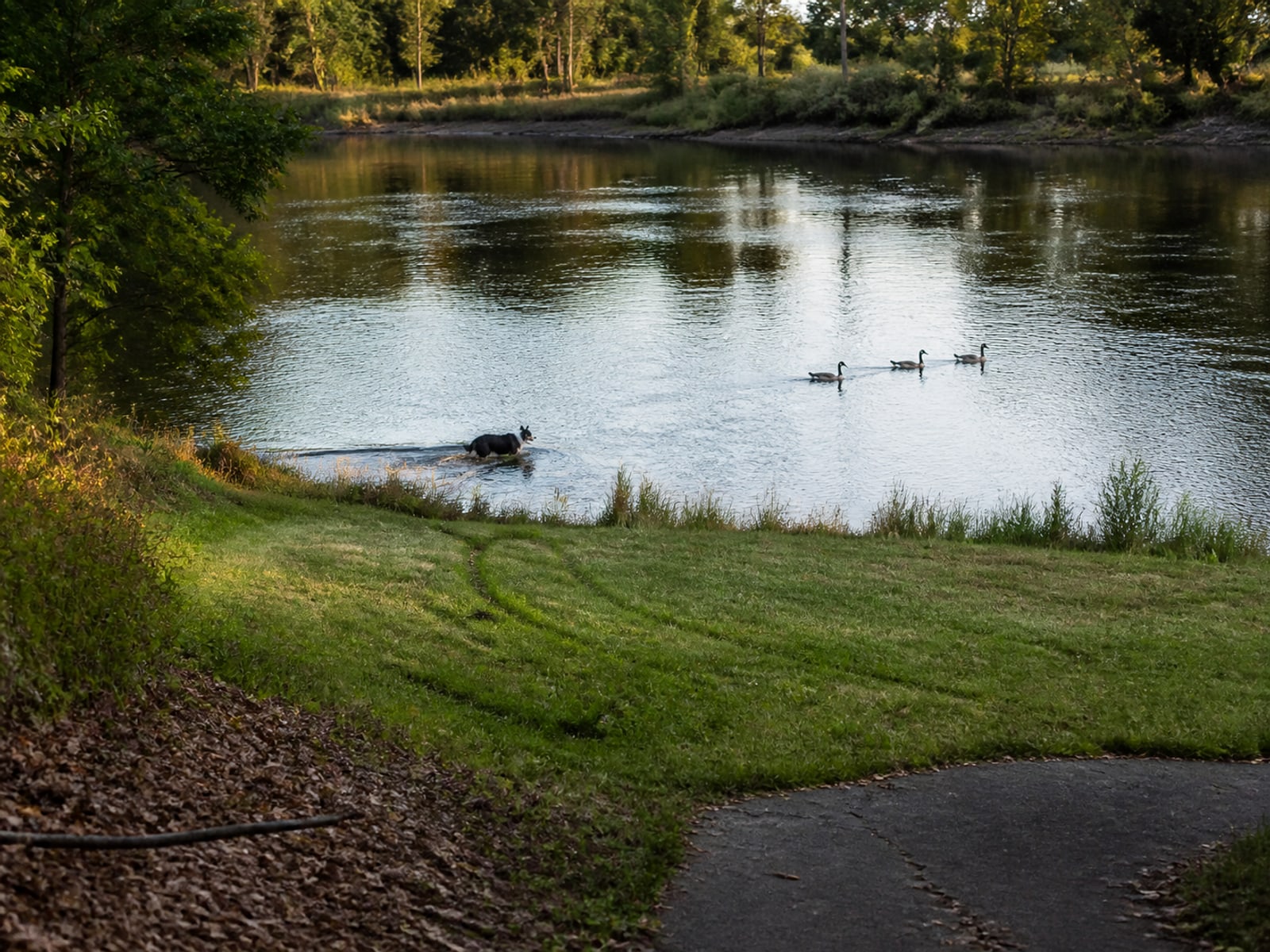
Open mown grass beside water of the kind Canada geese settle on in Wethersfield, CT

At a glance

Town

Wethersfield, Connecticut, including Old Wethersfield

Method

Non-lethal herding by trained Border Collies, no contact with any bird

Permit needed to move geese this way

None, provided no bird is harmed

On the record locally

The town names four sites where waterfowl congregate in its own reporting

Wethersfield publishes its own goose map, and its own list of what it tried

Very few towns will tell you where their geese are. Wethersfield does, in its 2025 stormwater annual report, and it names four places: Wethersfield Cove, Mill Woods Park, Spring Street Pond and Cloverdale Pond.

The same report is unusually candid about method. It records that the town had previously used light therapy, installed decoys, and applied all-natural grass sprays to keep geese away from the Mill Woods swimming pond. It then describes what the town is doing now: no-feeding signs at Spring Street Pond and additional do-not-feed waterfowl signs at the places where birds congregate. The stated aim is reducing the waste and bacteria that come with congregating waterfowl, which puts this on the public-health and stormwater side rather than the tidiness side.

Three device or product approaches at one pond, followed by a move to signage. That sequence is the single most useful thing a Wethersfield property owner can know, and it is written by the town rather than by a vendor.

It is not evidence that those measures failed outright, and we are not going to claim it is. What it does show is a town that worked through the catalog at a named site and did not stop needing to manage the problem afterwards. Connecticut DEEP explains why that pattern is so common: geese become accustomed to visual deterrents, and non-lethal methods other than habitat work tend to be transitory when used on their own.

So if somebody is quoting you for lights, decoys or a spray on a Wethersfield property, you have local precedent for how that story tends to run. The honest alternative is pairing something the birds cannot habituate to, which is a predator response rather than a device, with a change to the ground itself.

Where does lawn meet water in Wethersfield?

The town's own stormwater inventory names the water, and it also names where the birds are, which is rarer.

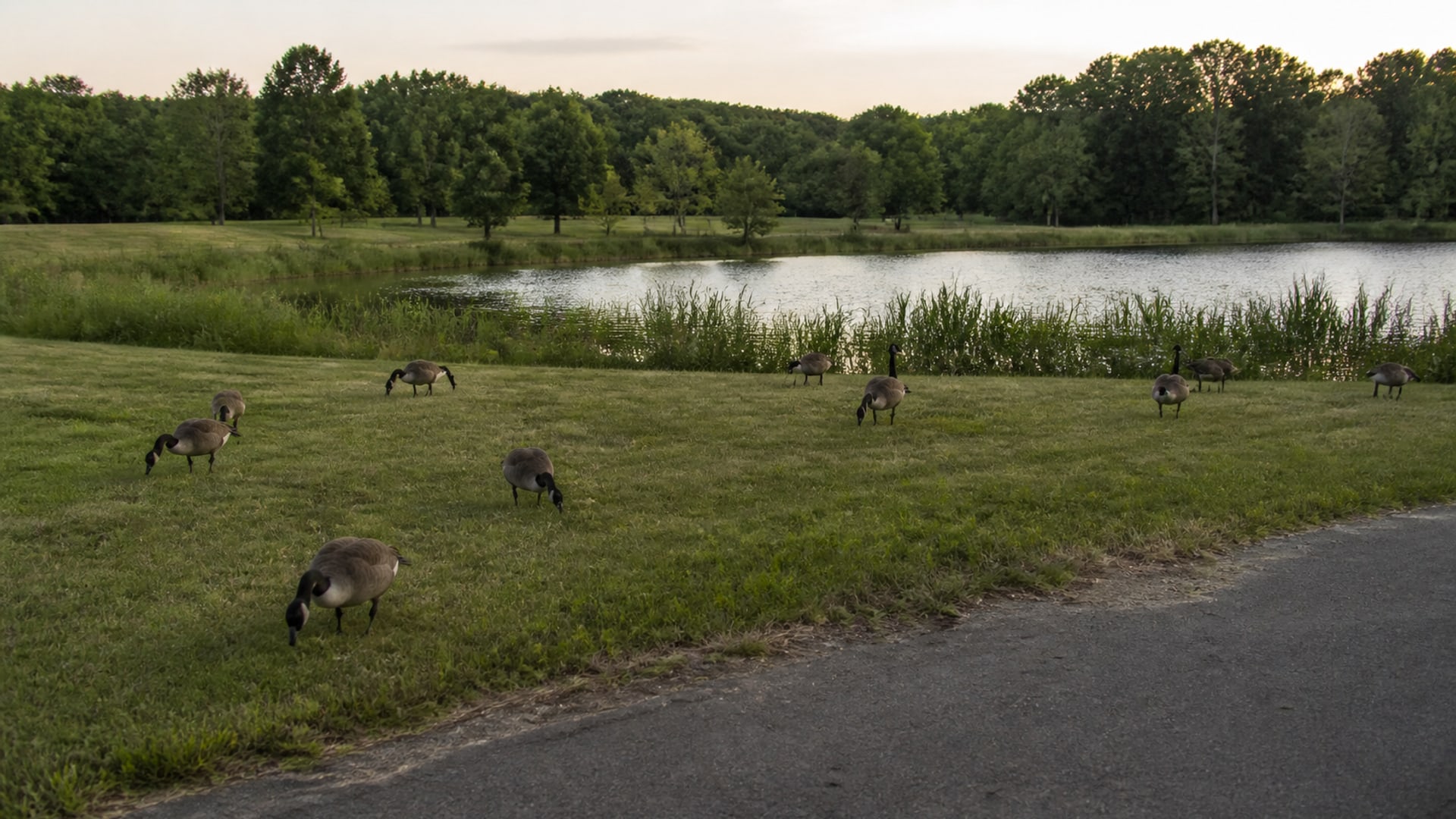
Canada goose droppings and grazed turf on maintained ground in Wethersfield, CT

Wethersfield Cove and Cove Park

An oxbow of the Connecticut River on the east side of town, with Cove Park on Main Street beside it, and one of the four sites the town names for waterfowl congregation. Open water, public open space and historic Old Wethersfield all meet here, which makes it as visible a site as the town has. Anything done there is done in front of people.

Mill Woods Park, where people swim

154 Prospect Street, with a swimming pond and athletic fields, and the site where the town's own deterrent history played out. A pond people swim in changes the stakes: it is the same water a resident flock would use, and it moves the conversation toward the waste and bacteria framing the town's report already uses. It also sets the working windows around the swimming season rather than around the birds.

The smaller named waters

Spring Street Pond and Cloverdale Pond are both on the town's congregation list, and the no-feeding signage went in at Spring Street first. Bell Pond, Griswold Pond, Murphy Pond, Two Stone Brook and the 1860 Reservoir off Thornbush Road fill out the inventory. Exact ownership and boundaries for several of the smaller ponds were not established in the public sources, so those are a parcel check rather than an assumption.

What the record does not show

No Wethersfield corporate campus, office park, hospital or institutional pond is reliably documented. The former Cedarcrest hospital property straddles Wethersfield and Newington, but a landscaped pond there is not established either. Goodwin Park golf, which does extend into the town, is a City of Hartford facility rather than a Wethersfield one.

What the dog rule allows here, and what it does not

Wethersfield's provisions are short and they leave very little room, which is worth knowing before anyone quotes you for municipal work.

Town Code chapter 70, section 70-41 requires dogs to be under restraint except at town-designated dog parks, and prohibits running at large on streets, public ways or another person's property. The public-nuisance definition separately treats a dog in a park or open space where animals are not permitted, or where permitted but not leashed or otherwise controlled, as a nuisance in itself.

The only exception named is a town-designated dog park. No exception for a working, commercial or goose-control dog appears in the cited provisions.

So on town land in Wethersfield a program needs written permission plus a location-specific check of the rules for that particular site, agreed before anybody schedules a visit. We would rather establish that at the quoting stage than have a program stopped after a complaint, and any provider telling you their commercial purpose covers it has not read chapter 70.

On private ground, an association's common area, a company lawn, a school under its own governance, the owner authorizes the work and the conversation is much shorter.

Who to ask, and why it is two offices rather than one

Wethersfield splits this in a way that catches people out on the first phone call.

Parks and Recreation oversees the development and use of town parks, recreation facilities and athletic fields. The current plan of conservation and development says the Parks group within Public Works maintains the outdoor spaces and athletic fields. So programming and physical grounds maintenance are not necessarily held by the same office, and a goose problem is arguably both.

In practice that means the useful first question is not who owns the park, it is who owns the decision. Whether a program can happen at all tends to sit with the facility and programming side, while what can change about the mowing line or the shoreline sits with grounds.

One more thing that shapes the work here more than it does in a newer town. Old Wethersfield is one of the largest historic districts in the state, and Cove Park sits at the edge of it. Work in and around a district like that is visible, it is watched, and the way a program looks to a passer-by is part of whether it survives its first season. That is an argument for a quiet, scheduled, obviously controlled operation rather than anything that draws a crowd, and it is one reason we plan the timing with the site instead of turning up.

For anything physical near water the wetlands process applies as it does everywhere. Moving birds off maintained turf with a dog is not a regulated activity. Planting a buffer, setting a barrier at a pond edge or changing drainage can be, and that is decided locally rather than by a contractor.

There is one more Wethersfield-specific caution about the water itself. Several of the smaller ponds in the town's inventory do not have their ownership and boundaries established in the public record, so a proposal that assumes they are all town-owned is guessing. That is a parcel-level question and it belongs at the start.


What happens after you call about a Wethersfield property?

The fieldwork is the same at a cove-side park, a swimming pond and a company lawn. The front end here is about what has already been tried and who signs.

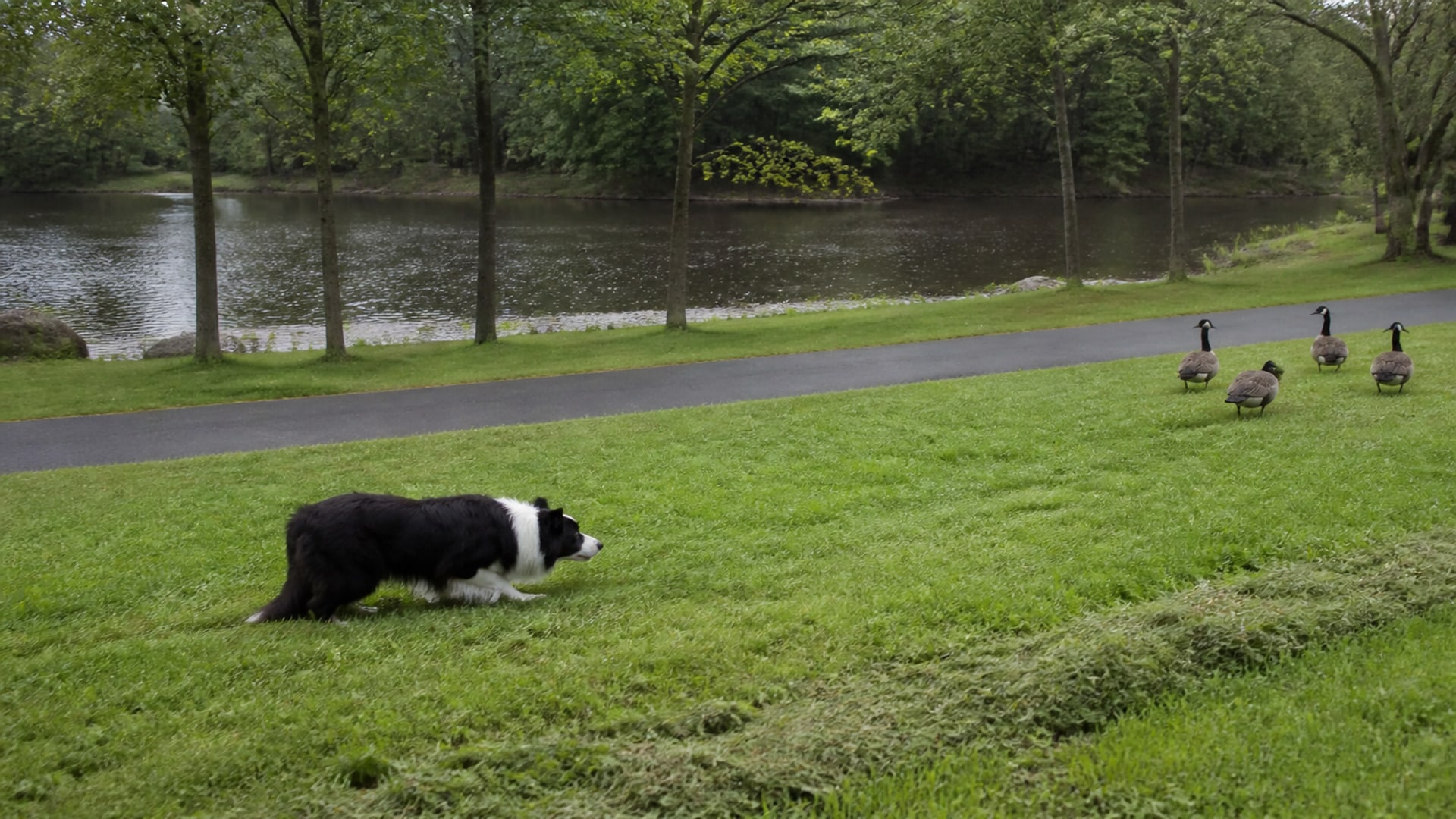
A Border Collie working a flock of Canada geese off maintained ground in Wethersfield, CT
  1. 01

    We ask what has already been put out there

    In this town that question is unusually productive, because the municipal record shows lights, decoys and sprays all tried at one pond. What a flock has already learned to ignore genuinely changes what is worth doing next, and it changes what we would even suggest.

  2. 02

    We ask what you are seeing

    How many birds, on which surfaces, at what times, and how close the water is. If your site is one of the four the town already names, that is useful to know rather than a surprise.

  3. 03

    We establish who holds the ground and who holds the decision

    Town park, school ground, City of Hartford parkland extending into the town, association common land or private property. And on town ground, whether the answer runs through Parks and Recreation, through the Parks group in Public Works, or through both.

  4. 04

    We settle permission before scheduling

    Written permission with a location-specific rule check, because chapter 70 names only a designated dog park as its exception and the nuisance definition reaches parks and open space directly.

  5. 05

    The dogs work at times the flock cannot anticipate

    A handler works the ground with a trained Border Collie in a stalking posture. A goose responds to that as it would to a predator, by leaving, with no contact and no capture. Around a swimming pond that timing is planned with the site rather than improvised.

  6. 06

    We say what should change about the ground, and we measure

    Where mowing stops, whether an unmown strip or a barrier can sit between water and turf, and whether anyone is still feeding them. Then counts, locations, complaints and the gap between a visit and the birds coming back, which is the first honest evidence a program produces.

What we handle, and who handles the rest

We do not apply turf repellents or sprays. They are registered pesticides, applying one to commercial turf in Connecticut is licensed work, and we hold no such certification. Given that the town's own history at Mill Woods includes a grass spray, it is worth being precise: if a product is right for a defined surface on your property, a licensed applicator is the person to call, not us.

We do not addle eggs or work on nests. The landowner registers with the US Fish and Wildlife Service before anything happens, Connecticut accepts that federal registration and adds a further requirement where a commercial control firm is involved, and the authorization belongs to the landowner or the town rather than to a contractor.

We do not sell devices. If lights or decoys were the answer at a site like Mill Woods, the town would not have moved on to signage.

And we do not promise the geese will be gone permanently. The local record is the argument against anybody who does.

When does acting in Wethersfield cost the least?

Before nesting narrows the options, and before the swimming season sets the calendar at Mill Woods.

Connecticut DEEP puts territorial defense as early as March and nesting by early April, with incubation about 28 days and hatching through to June. Up to that point a pond edge is just a pond edge. Once a pair is holding ground it becomes a protected-nest problem, and beside a public path or a swimming area that is a safety question as well as a legal one.

Then public use takes over. On a pond people swim in, the months when a program most wants access are the months the public is there, so work that would have been straightforward in March becomes a scheduling negotiation in July.

The autumn side follows the statewide pattern: migrants arriving in early October, movement through November with another arrival peak in mid-December, and most birds gone by mid-January, although mild winters hold them. DEEP also says migrant and resident birds overlap in those months and cannot be told apart by appearance, so a flock at the Cove in November says very little about where those birds nested.

Nobody publishes freeze or thaw dates for any Wethersfield water, so we watch the water rather than the calendar.

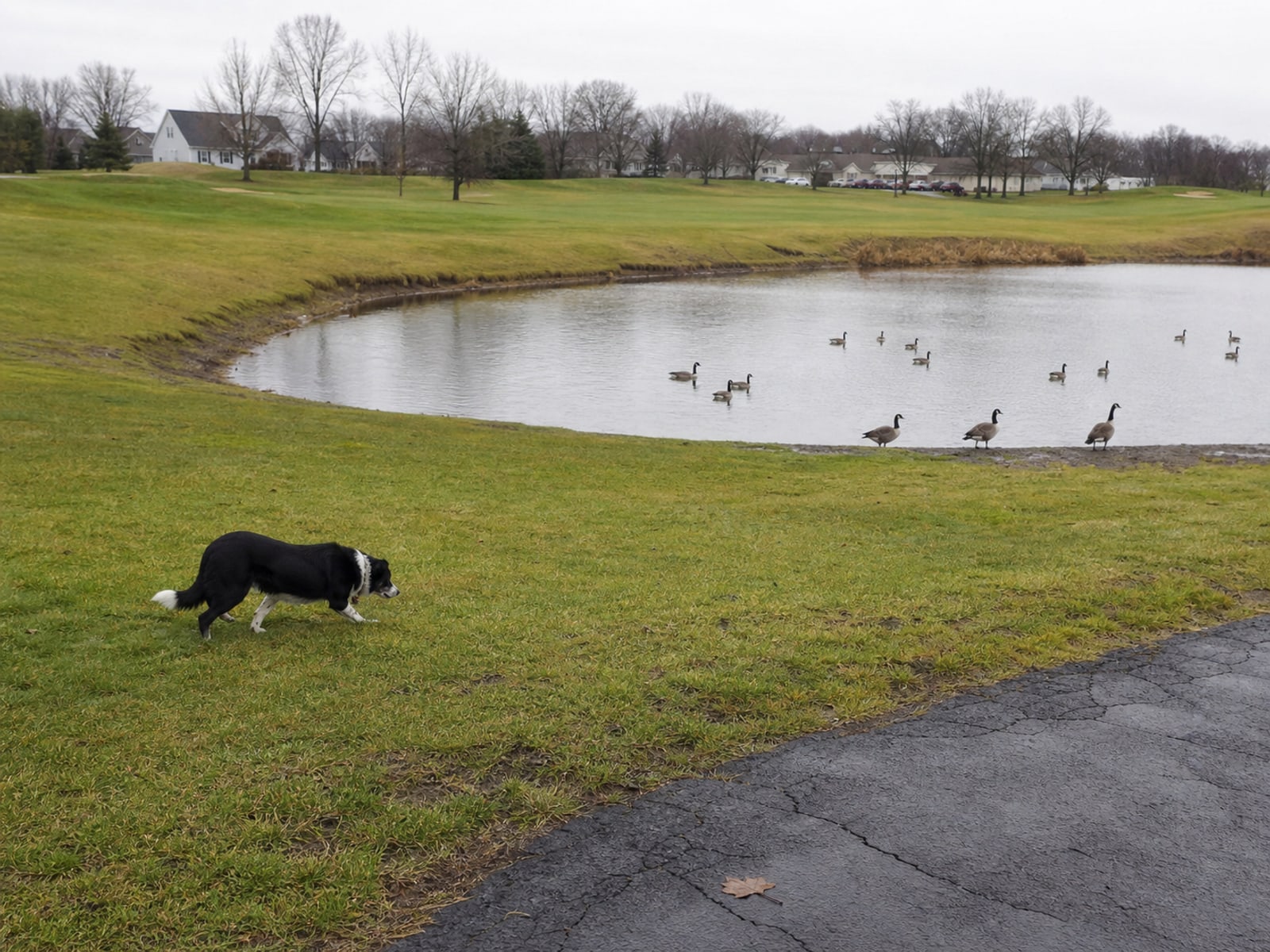
Maintained ground in Wethersfield, CT holding clear of Canada geese after repeat visits

Wethersfield goose control questions

Where does the town say the geese actually are?

Its 2025 stormwater annual report names four congregation sites: Wethersfield Cove, Mill Woods Park, Spring Street Pond and Cloverdale Pond. That is the town's own list, not ours, and it is more than most municipalities publish.

The town already tried lights and decoys. Why would this be different?

Because of the failure mode. The 2025 report records light therapy, decoys and all-natural grass sprays used at the Mill Woods swimming pond, and the town has since moved to no-feeding signage. Connecticut DEEP says geese become accustomed to visual deterrents and that non-lethal methods other than habitat work are transitory alone. A predator response is instinctive rather than learned, and an unpredictable schedule cannot be waited out.

Can a trained dog work on Wethersfield town land?

Only with written permission and a check of the rules for that specific site. Section 70-41 requires dogs to be under restraint with a town-designated dog park as the only stated exception, and the nuisance definition separately reaches dogs in parks and open space. No working-dog or commercial exception appears in the cited provisions.

Is feeding geese against the rules here?

Wethersfield has no ordinance prohibiting the feeding of waterfowl. The town has put up no-feeding signs at Spring Street Pond and do-not-feed signs at the other congregation sites, which is signage rather than an enforceable ban. On your own ground you can set and enforce the rule directly, and it is usually the highest-value item on the list.

How much does goose control cost in Wethersfield?

It is quoted per site, on ground worked, bird numbers, water edge, visit frequency and what the surface is used for. There is no credible published range for this region, and a number given before somebody has walked your property is a guess.

Is Goodwin Park a Wethersfield job?

Not really. The golf course extends into Wethersfield but it is a City of Hartford municipal facility, so ownership and procurement are a Hartford question. It is a useful test of whether a provider is reading parcels or reading a map.

Our pond is small and unnamed. Does that change anything?

Mostly it changes who to ask. Several of the smaller ponds in the town's inventory do not have ownership or boundaries established in the public record, so establishing that is part of the assessment rather than something we would assume. The birds do not care how small the water is, only that it is beside grass.

Local detail

Canada geese in Wethersfield, Hartford County

Wethersfield is a Hartford County town of roughly 27,300 residents immediately south of Hartford, and one of the oldest settlements in the state, with Old Wethersfield as its historic core.

Wethersfield Cove, an oxbow of the Connecticut River, is the town's signature water and the point where public open space, boating and a resident flock most obviously meet. Inland there is a set of smaller named waters including the Mill Woods swimming pond, Spring Street Pond, Cloverdale Pond, Bell Pond and Griswold Pond, plus the 1860 reservoir. Goodwin Park golf, which is a City of Hartford facility, extends into the town.

Neighborhoods we cover in Wethersfield

Parts of Wethersfield where we work. Each one opens in Google Maps.

Bordering towns: Hartford, Newington, Rocky Hill, Glastonbury. A flock does not recognize a town line, so a program sometimes has to be scoped wider than one parcel.

Getting there: Interstate 91, Silas Deane Highway, Main Street, Prospect Street, Country Club Road, Ridge Road, Route 3.

We cover all of Wethersfield and the ground around it. If your neighborhood is not listed, or you are not sure which one you are in, it is very likely we work there. Ask and we will confirm.

Talk to us about your Wethersfield property

Tell us what you are dealing with: roughly how many birds, which surfaces they are fouling, how close the water is, and what has already been installed or applied there.

Tri-State Geese Patrol runs humane Canada goose abatement with trained Border Collies across Connecticut, Massachusetts and New York, and we are reachable 24 hours. Call (203) 856-4889 and it goes to Bill.

And if the honest answer for your site is an unmown strip and a no-feeding rule rather than a contract, we will say so.