Tri-State Geese Patrol

Why Hire Tri-State Geese Patrol

This page is a set of tests any goose control provider should be able to pass, drawn from what the wildlife agencies actually say about this work, along with our answer to each one. Use them on us, and on anyone else bidding. Tri-State Geese Patrol works across Connecticut, Massachusetts and New York from a base in West Hartford. Call (203) 856-4889.

At a glance

Crews

More than one

Reachable

24 hours

Before any quote

We walk the property

Outcome guarantee

None, and none is honest

How do you tell one goose control bid from another?

Every provider will tell you they are professional, humane and results-driven. None of those words can be checked, which is why they are the ones everybody uses.

What can be checked is whether a provider's answers line up with what state and federal wildlife agencies say about this species. Connecticut DEEP, MassWildlife, New York DEC, USDA and the FAA have all published on Canada goose management, and their guidance is specific enough to test a bid against. A provider whose pitch contradicts it is either not informed or is telling you what you want to hear.

There is a second reason the pitches converge. Most of what a goose program does is invisible to the buyer: it happens on a schedule, on ground the client is not standing on, and its result is a bird not being somewhere. That makes it unusually easy to sell confidently and unusually hard to verify afterwards, which is exactly the combination that rewards vague language.

So the tests below are not our marketing. They come from published agency guidance, and they are the ones we would use if we were buying this service rather than selling it. Our answer sits under each.

The tests worth applying to any bid

Seven questions. If a provider cannot answer one of them in a sentence, that is information.

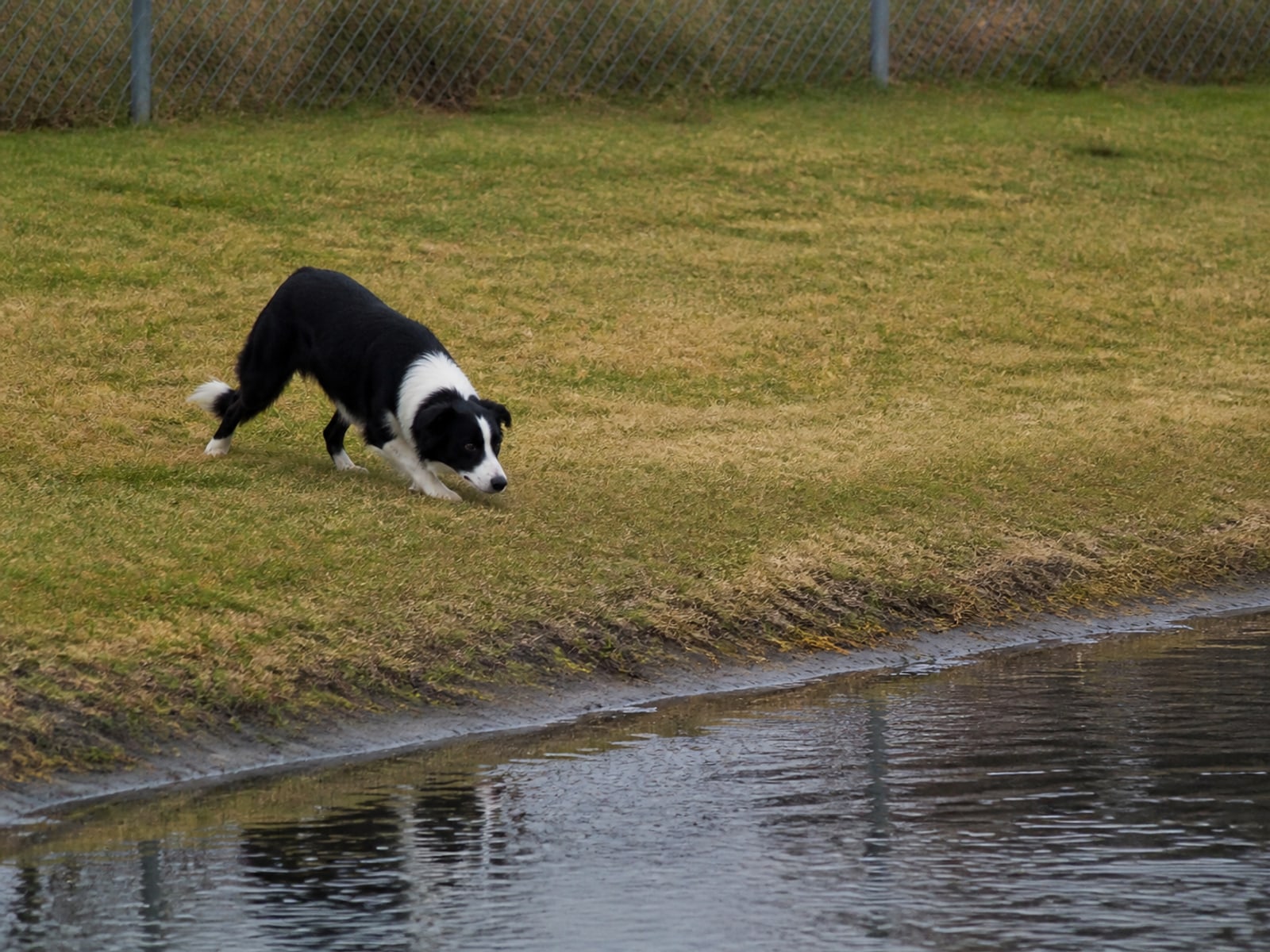
The grass and water edge of a property being read before a program is proposed

Ask whether they have actually seen the property

Connecticut DEEP lists what a management strategy has to weigh: the problem locations, the time of year, the options the site actually allows, effectiveness, acceptability, cost and community support. None of that is knowable over the phone. Our answer: we walk the site before quoting anything, so the number you get has been measured rather than estimated.

Ask them to tell resident birds from migrants

USDA defines resident Canada geese as birds that nest in the lower 48 states during March through June or reside there April through August. A pair that has nested beside your green for four years and a flock that arrives in November are different problems with different answers. Our answer: working out which one you have is part of the first assessment, because promising the same outcome for both would be dishonest.

Ask why one visit is not the program

USDA research on hazing found geese left more often when hazed but returned more quickly than on unhazed days, and did not avoid a site for longer than 48 hours. Connecticut DEEP notes geese adapt fast to deterrents that carry no consequence. Our answer: repetition on a schedule the flock cannot predict is the entire mechanism, and we say so before you sign rather than after the third week.

Ask where the law stops them

Canada geese are protected under the Migratory Bird Treaty Act. Nest and egg work is separately regulated and registered, relocation is generally not permitted in New York, and airport work sits inside the airport's own wildlife hazard plan. Our answer: we tell you which of those apply, who administers them, and that they are not ours to perform.

Ask for a limit, without prompting them

Agencies are consistent that no single technique is universally effective and that combinations used at the right time do better. A provider selling one tool as the whole answer is contradicting the guidance. Our answer: the limits are written into the scope, including the ones that cost us the sale.

Ask what happens when one person is unavailable

This is the question a municipality or a multi-site manager should ask and often does not. A single-handler operation stops the week that handler is out, mid-season, on a program whose whole mechanism is consistency. Our answer: we run more than one crew.

Ask them to separate the dogs from the ground

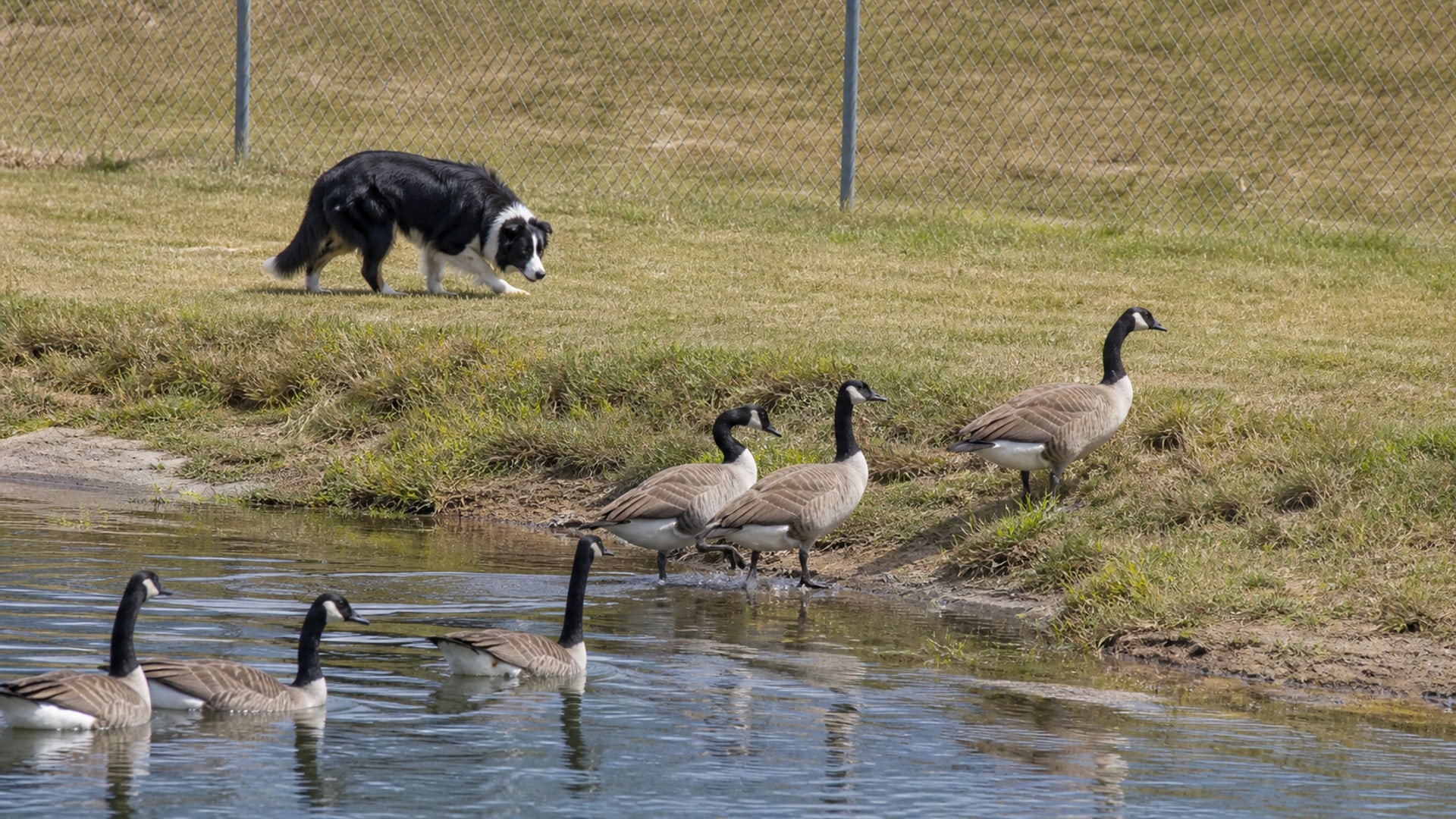
Connecticut DEEP describes both halves and rates them differently. Trained Border Collies can haze geese, but the birds can return once the dog leaves. Habitat change it calls the most effective non-lethal way to reduce conflicts, while being equally clear that many of the useful changes are not feasible on a working public site. A provider who collapses those into one pitch is selling the easy half and quietly hoping the hard half does not come up. Our answer: the assessment says which lever is doing the work on your site, which one is realistic given what the ground has to keep doing, and what each will and will not achieve on its own.

Where we are genuinely different

Four things that are true of us and are not true of every provider in this region. Each is a fact rather than a claim about our character.

A working dog on maintained ground during a scheduled goose abatement visit

More than one crew, so distance is scheduling

If a job is far, that crew takes no second job that day, or another crew covers the other location. A property ninety minutes out gets the same recurring program as one fifteen minutes away, not a reduced version of it. That also means the program does not pause when somebody is unavailable.

One service, done properly

This is not a general wildlife business with geese as a line item. It is one method, on one species, run as a season-long program. That narrows what we can sell you and it is the reason the answers on this site are specific. It also means we are the wrong call for a raccoon in a roof, and we will say so in the first minute rather than send somebody.

A written scope, then a written record

The scope says which areas are worked, roughly how often, how visits fall through the season, and what we will and will not do. The record says what actually happened: dates, where the birds were, how they responded and how quickly they came back. Both exist so the program can be judged rather than believed, including judged against us. The record is what makes a lengthening gap between visits visible as progress, which is the measure that actually tracks a flock changing its mind about your ground.

Reachable around the clock

Open 24 hours. That matters least to a homeowner and most to airfield and municipal staff, whose problems arrive on their own schedule.

Four things we are straight about

We do not sell a guarantee, because the research does not support one. Resident birds return to ground they know, migrating flocks arrive with no knowledge of your program, and the research does not support the promise. A guarantee here is a sales tactic rather than a finding.

The visit cadence is set from the ground, not from a phone call. Cadence is the mechanism, and setting it from a description rather than from the ground is how a program ends up either wasteful or ineffective. A USDA case study recorded sites needing several visits a day, several days a week; yours may need a small fraction of that. Nobody can tell you which without looking.

The price comes after the site walk. What drives the cost is per site: how much ground is worked, how many birds, how much water, how often we come and what the property is used for.

Every number on this site is sourced. There is no years-in-business figure, no crew count and no star rating anywhere on this site, because those have not been confirmed in a form worth printing. When there is a verified one, it will appear with its source.


What that adds up to on your property

A program built from what your site actually shows, run by more than one crew so it does not stall, with the reasoning and the limits written down at the start and the results written down as they happen.

If that sounds less exciting than a guarantee, it is. It is also the version that holds up in month four, which is when a goose program is actually judged.

It is also the version that survives a change of staff on your side. A scope and a visit record mean whoever holds your role in two years can see what was agreed, what has happened since, and whether it is working, without having to take anybody's word for it.

The services page covers what each method does and when it is the right lever. If you would rather start with the property than with the menu, consultation and program design is the step that answers it.

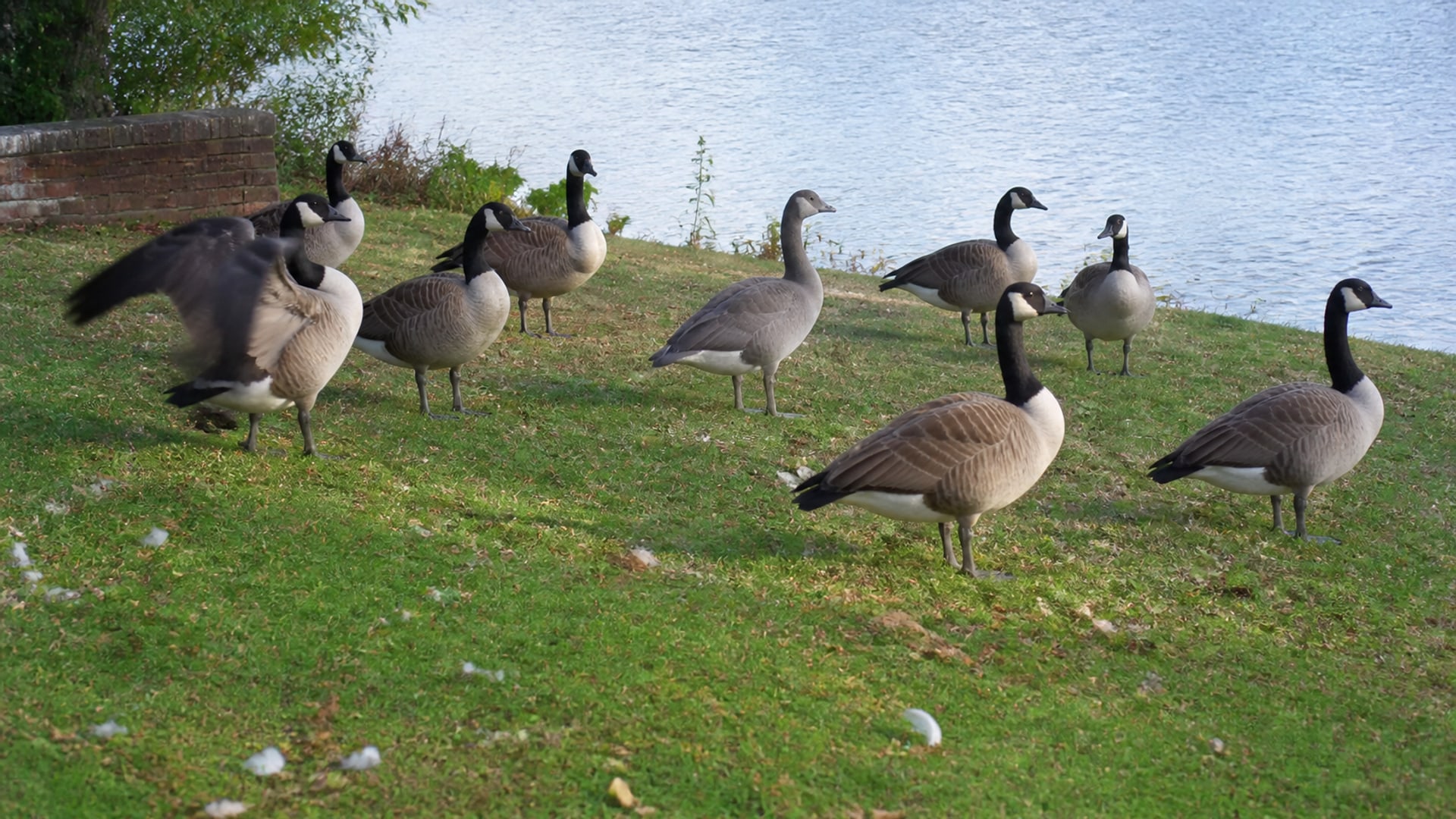
Clean, usable mown grounds beside open water

Put these questions to us

Ask us the six tests above and hold us to the answers. Tell us what the property is dealing with, what the ground is used for and what has already been tried, and we will tell you what a program would look like or that it is the wrong fit.

Call Tri-State Geese Patrol on (203) 856-4889, or send a message and it goes straight to Bill.

Tell us what your property is dealing with.

Call Tri-State Geese Patrol on (203) 856-4889 and we will talk through the site, the flock and what a program would look like.