Tri-State Geese Patrol

Goose Control in South Windsor, CT

Humane Canada goose abatement for South Windsor properties, using trained Border Collies that move birds without touching them. The town put coyote decoys on two of its fields this year, and it maintains forty-one of them.

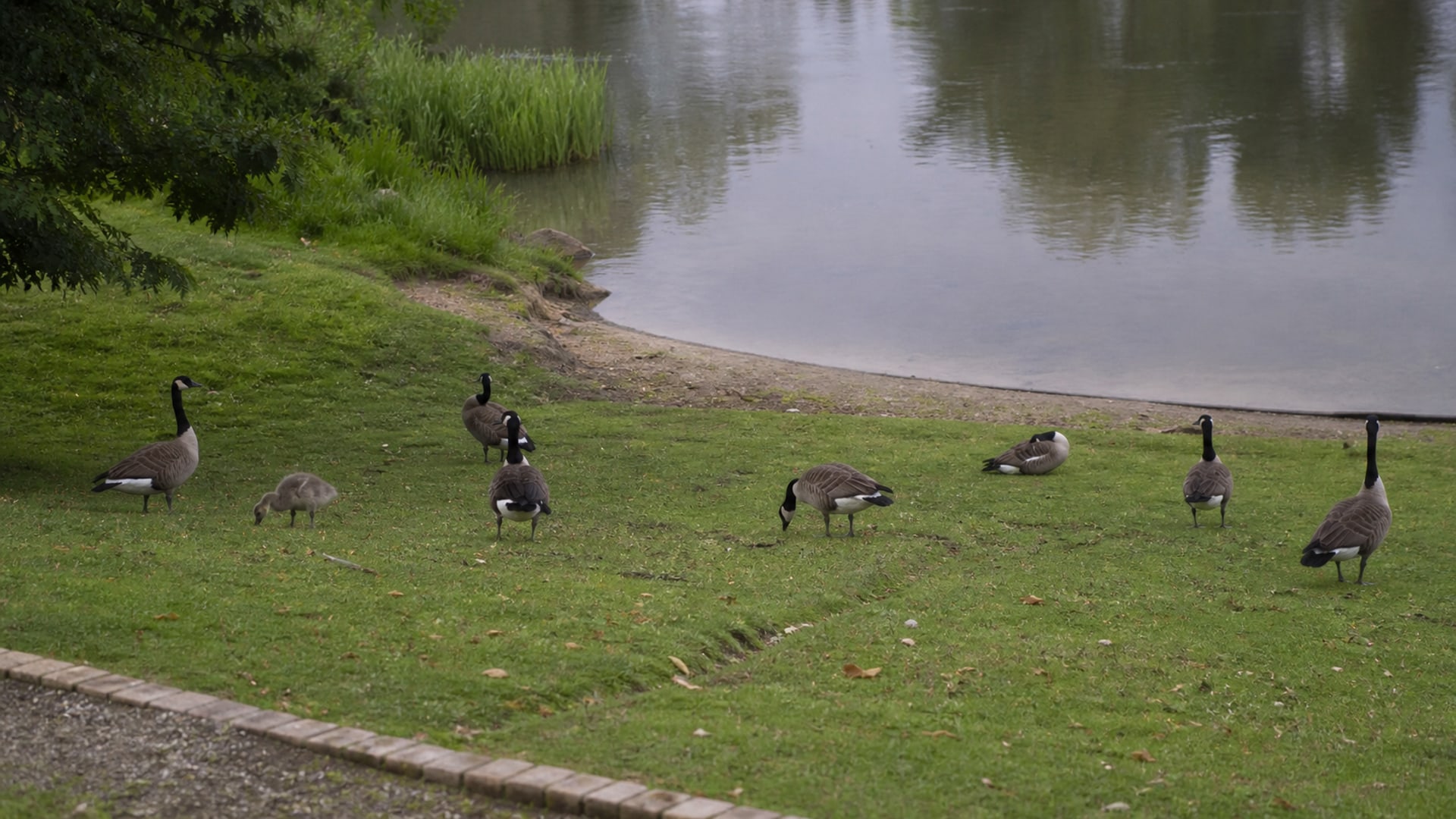
Open mown grass beside water of the kind Canada geese settle on in South Windsor, CT

At a glance

Town

South Windsor, Connecticut, including Wapping and East Windsor Hill

Method

Non-lethal herding by trained Border Collies, no contact with any bird

Permit needed to move geese this way

None, provided no bird is harmed

On the record locally

A February 2026 town report describes coyote decoys placed to deter Canada geese

The town tried decoys in February, at two named fields

The Town Manager's report of February 2, 2026 records that coyote decoys were placed at Rye Street Field and the All-Purpose Field to deter Canada geese during the off-season.

That is about as current and as specific as municipal evidence gets: a date, two named surfaces, a stated purpose and an actual measure taken. It tells a South Windsor property owner two useful things at once. Geese on playing fields are a live, recurring issue here rather than a sales premise. And the first response reached for was a visual deterrent.

We are not going to tell you that failed, because the record does not say so and it was placed during the off-season, which is a sensible time to try something. What we can tell you is what Connecticut DEEP says about that whole family of measures: geese become accustomed to visual deterrents, and non-lethal methods other than habitat work tend to be transitory when used on their own. A decoy that never moves and never turns out to be a real threat becomes scenery.

The difference with a dog is not effort, it is category. A goose does not habituate to a predator, because the response is instinctive rather than learned, and a handler does not arrive on a pattern the flock can memorize. That is the gap a decoy cannot close on its own, and it is why the two are usually better together than either is alone.

The town has a formal obligation behind all of this too. Its stormwater planning record treats waterfowl as a source, and commits the town to identifying congregation and feeding sites, discouraging congregation, prohibiting feeding on town land and managing populations. That is a management commitment rather than a complaint.

Forty-one fields is the real story here

Most towns in this service area have water as their defining feature. South Windsor has turf.

The Parks and Grounds operation reports 15 baseball and softball fields and 26 fields used for soccer, lacrosse, field hockey and football. Forty-one in total, plus athletic field irrigation and dams on Avery Street, Dart Hill Road and Beelzebub Road. That is a very large maintained inventory for a town of roughly 26,900 residents.

Irrigated, fertilized, closely mown grass is better forage than anything in a hedgerow, and open playing surfaces give a goose the clear sightlines it wants. Add the water: the Connecticut River on the western edge, the Scantic entering from the north to join it here, the Podunk through the east and south, and a set of brooks connecting fields, floodplain and wetland rather than isolating any one lawn.

So the goose question in South Windsor is less about a single pond and more about a network. Birds move between water and grass, and this town supplies an unusual amount of both, connected by corridors.

That is also why a program scoped to one field can disappoint. Move a flock off Rye Street and it has forty other town surfaces to consider, before you even count the school grounds and the corporate lawns. The useful question at the assessment stage is not only where the birds are standing, but which of the connected pieces you actually control.


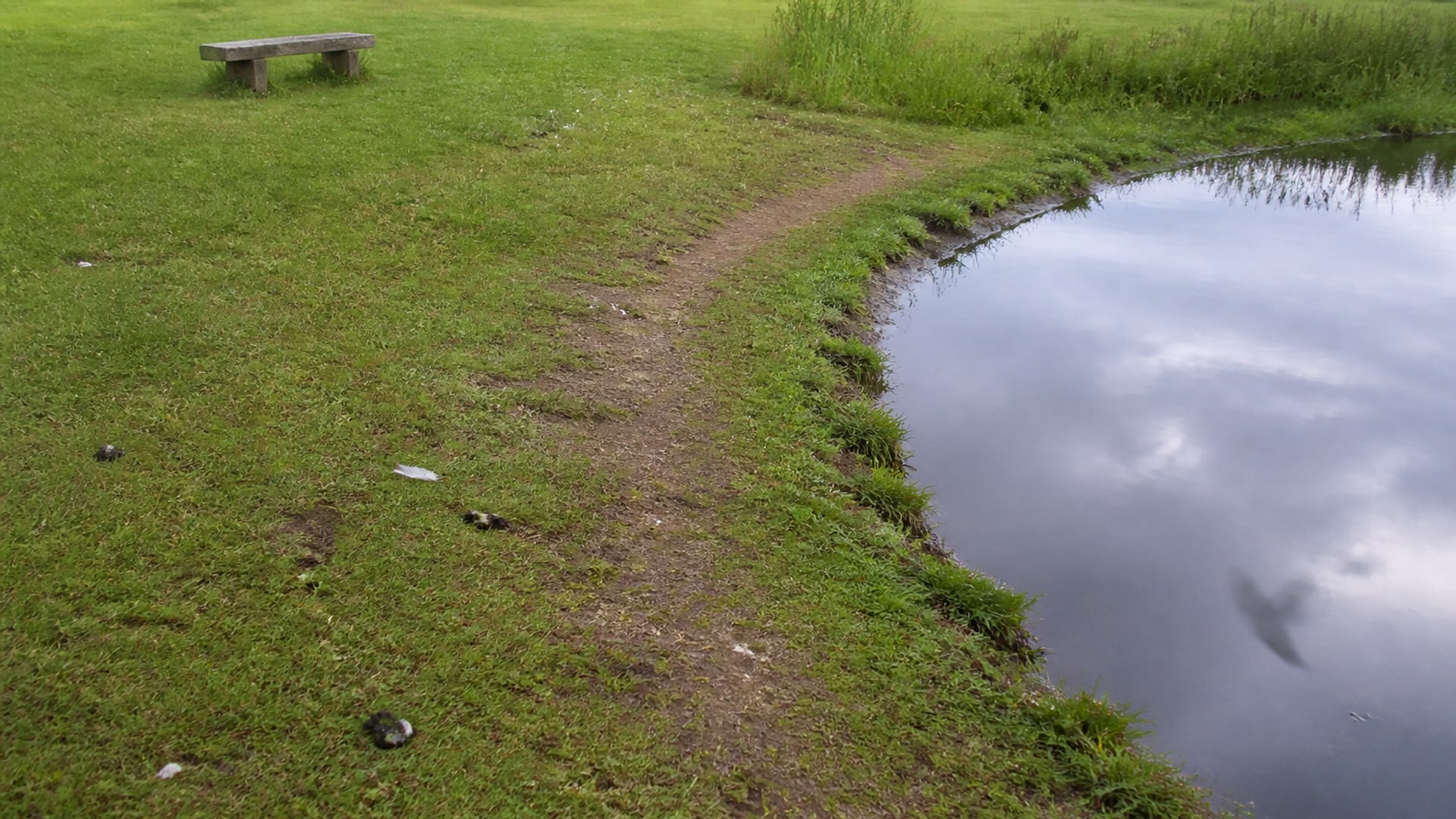
Canada goose droppings and grazed turf on maintained ground in South Windsor, CT

Where does lawn meet water in South Windsor?

The clearest pairing is documented, and several other sites have water without the intensively mown turf beside it.

Rye Street Park and its pond

The clearest municipal turf-and-water site in town. The town identifies soccer, lacrosse, football and softball use, town minutes identify Rye Street Pond and record that mowing along its edge was completed, and the pond is used for skating in winter. It is also one of the two fields named in the February 2026 decoy note, which makes it the reference point for any conversation about a South Windsor property.

The Town Green, Wapping Park and Dzen

Duck Pond sits on the Town Green at 1315 Pierce Road, Wapping Park follows Mill Pond with trail and open-space land, and Dzen Tree Farm on Barber Hill Road has a pond used for an annual fishing derby. All three have verified water. What the reviewed sources do not show is the same close adjacency of intensively mown athletic turf and water that Rye Street has, so they are worth a look rather than an assumption. Veterans Memorial Park has a municipal pool, not a natural pond.

Evergreen Walk and the numbered basins

The strongest verified corporate and institutional stormwater complex, at 501 Evergreen Way. Town engineering material identifies retail, office buildings, a medical facility, several numbered detention basins, a wet meadow, wetland mitigation areas and a boardwalk. That is a concrete inspection list for a facilities team rather than a claim: whether those basins hold permanent water, how they are vegetated and whether birds use them all needs checking in the field.

The golf, and one course that is not one

Topstone Golf Course at 516 Griffin Road is the verified course in town, public, 18 holes and par 72. A course directory reports water hazards there, but no primary course or government source names or maps a specific pond, so we will not. Willow Brook at 124 Brookfield Street is an operating driving range whose own site says the golf course, pro shop and restaurant are closed, so it is not a second active South Windsor course.

The rules here are park rules rather than an ordinance

This distinction matters if you are the one trying to enforce something, and it is worth stating precisely.

We could not find a generally applicable South Windsor code section prohibiting the feeding of waterfowl or wildlife. What exists instead is an administrative rule: the 2026 Park Rules and Regulations state that the feeding, petting, releasing or trapping of wildlife is strictly prohibited. The stormwater record separately directs the town to prohibit feeding geese or waterfowl on town-owned or operated land.

So those are park rules and stormwater commitments, not a townwide ordinance with a citation behind it, and anybody telling you otherwise has not checked. On your own property none of that reaches you anyway, and you can set and enforce a no-feeding rule directly, which is usually the single most effective item available.

On dogs, section 12-2 defines an animal at large as one off its keeper's premises and not on a leash or otherwise under immediate control, and treats an animal in a public recreation area as a potential public nuisance unless controlled or physically restrained. Section 12-5 makes it unlawful to fail to restrain a dog or to allow it at large on public ways or another person's property.

There is no working-dog or commercial exemption in any of that. So a program on town ground here needs written, location-specific authorization that addresses control and restraint directly, and given that the 2026 park rules also speak to wildlife, the non-lethal, no-contact nature of the work should be set out in that authorization rather than assumed to be understood.

What happens after you call about a South Windsor property?

The fieldwork is the same on a playing field, a retail campus basin and a farm pond. Here the front end is about the network rather than a single site.

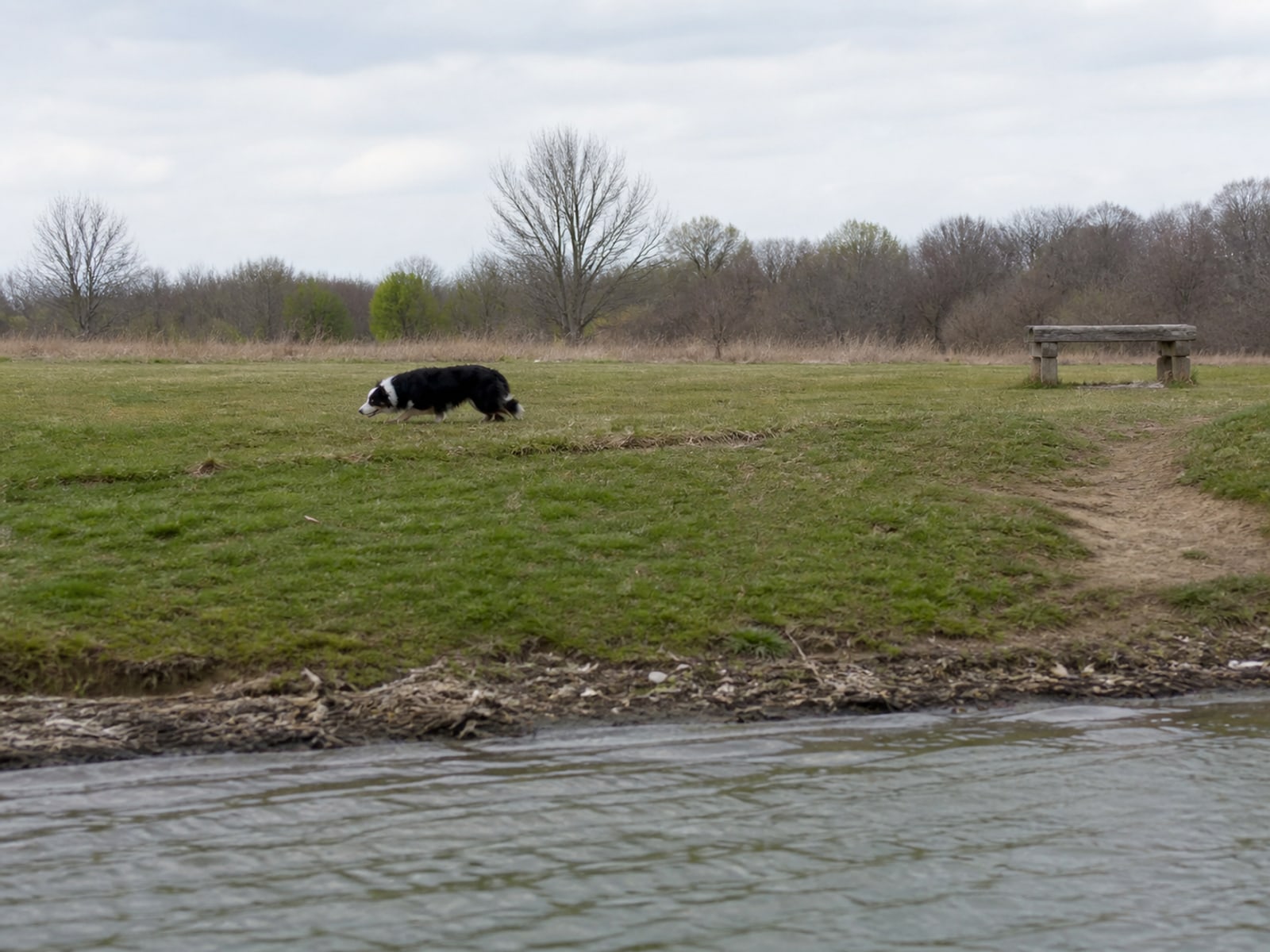
A Border Collie working a flock of Canada geese off maintained ground in South Windsor, CT
  1. 01

    We ask what you are seeing, and what has been tried

    How many birds, on which surfaces, at what times, and how close the water is. In this town the second half of that question often has an answer already, and what a flock has learned to ignore changes what is worth doing next.

  2. 02

    We ask what else is nearby that you do not control

    Forty-one town fields, school grounds, a retail and office complex with several basins, farmland along Main Street and three river corridors. A flock moved off one surface has somewhere else to be, so knowing the neighbors is part of scoping the work rather than an afterthought.

  3. 03

    We walk the ground and map the way up from the water

    Geese travel between water and turf on foot, so the useful map is where they come up, which grass they graze and where they loaf. With brooks connecting fields, floodplain and wetland, that route is often longer than it looks.

  4. 04

    We settle authorization before scheduling

    On town ground that means written, location-specific approval addressing restraint and control under sections 12-2 and 12-5, and setting out the non-lethal, no-contact nature of the work against the 2026 park rules.

  5. 05

    The dogs work at times the flock cannot anticipate

    A handler works the ground with a trained Border Collie in a stalking posture. A goose responds to that as it would to a predator, by leaving, with no contact and no capture. The visits then repeat unpredictably, which is precisely the property a stationary decoy cannot have.

  6. 06

    We say what should change about the ground, and we measure

    Where mowing stops, whether an unmown strip or a barrier can sit between water and turf, and whether feeding is happening. Then counts, locations, complaints and the gap between a visit and the birds returning. Given the town's own reporting commitments, that record has an audience.

What we handle, and who handles the rest

We do not apply turf repellents. They are registered pesticides, applying one to commercial turf in Connecticut is licensed work, and we hold no such certification. A licensed applicator is the right call if a repellent suits a defined surface.

We do not addle eggs or work on nests. The landowner registers with the US Fish and Wildlife Service before anything happens, Connecticut accepts that federal registration and adds a further requirement where a commercial control firm is involved, and the authorization belongs to the landowner or the town rather than to a contractor.

We do not sell decoys, and we would not tell you the town's were a mistake. They are a reasonable off-season measure. We would tell you what the state guidance says about how visual deterrents perform over time, and let you decide what to pair with them.

When does acting in South Windsor cost the least?

Before nesting narrows the options, which on a town with this many playing fields also means before the sports calendar takes the ground back.

Connecticut DEEP puts territorial defense as early as March and nesting by early April, with incubation about 28 days and hatching through to June. The town's own decoys went out in the off-season, which is the right instinct: the quiet months are when a property can actually change something before the birds and the users both arrive.

Once fields are in use the working windows narrow sharply, and a program that could have run freely in February becomes a scheduling negotiation against 41 fields' worth of bookings.

The autumn and winter side runs on the rivers. DEEP records migrants arriving in early October, movement continuing through November with another arrival peak in mid-December, and most birds leaving the state by mid-January, though mild winters hold them. DEEP also says migrant and resident birds overlap in those months and cannot be told apart by appearance, so a flock on a South Windsor field in November tells you little about where those birds nested.

Nobody publishes freeze or thaw dates for Rye Street Pond or any other water here, so we watch the water rather than the calendar.

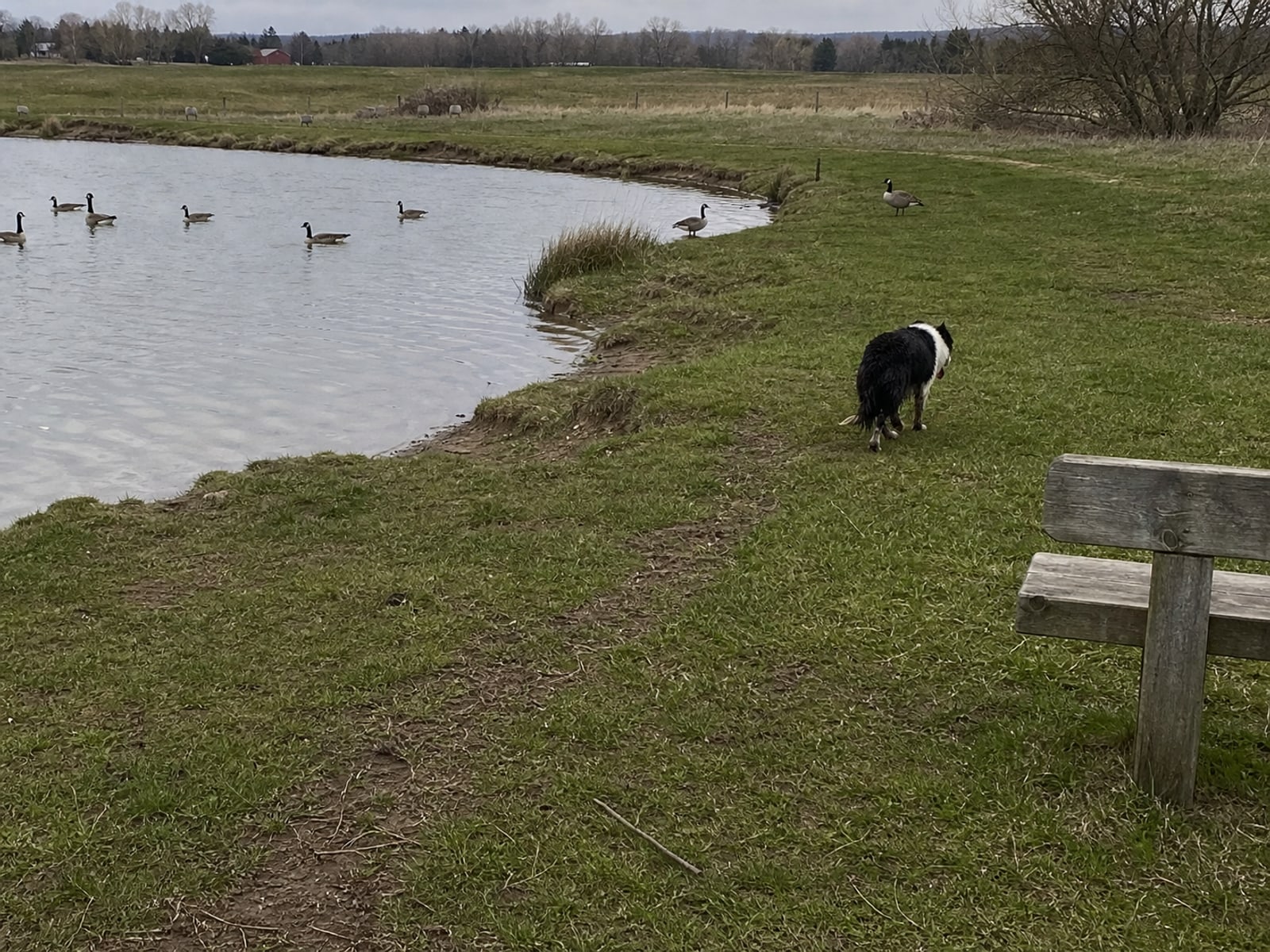
Maintained ground in South Windsor, CT holding clear of Canada geese after repeat visits

South Windsor goose control questions

Does the town actually have a goose problem on its fields?

By its own account it has been dealing with one. The Town Manager's February 2, 2026 report records coyote decoys placed at Rye Street Field and the All-Purpose Field to deter Canada geese during the off-season, and the town's stormwater record commits it to identifying congregation and feeding sites and managing waterfowl populations.

Do coyote decoys work?

For a while, and then less well. Connecticut DEEP says geese become accustomed to visual deterrents and that non-lethal methods other than habitat work are transitory when used alone. That is not an argument against the decoys, it is an argument for pairing them with something that cannot be habituated to and with a change to the ground itself.

Is feeding geese against the rules here?

In town parks, yes, as an administrative rule: the 2026 Park Rules and Regulations prohibit feeding, petting, releasing or trapping wildlife. We could not find a generally applicable ordinance section, so that is a park rule rather than a townwide citation. On your own ground you set the rule.

Can a trained dog work on a South Windsor town field?

Only with written, location-specific authorization. Section 12-2 treats an animal in a public recreation area as a potential nuisance unless controlled or physically restrained, section 12-5 makes failing to restrain a dog unlawful, and there is no working-dog or commercial exemption in either.

How much does goose control cost in South Windsor?

It is quoted per site, on ground worked, bird numbers, water edge, visit frequency and what the surface is used for. There is no credible published range for this region, and a number given before somebody has walked your property is a guess.

Our retail or office site has a detention basin. Is that a goose site?

Possibly, and it is worth inspecting rather than assuming. The Evergreen Walk area has several numbered detention basins plus a wet meadow and wetland mitigation areas, but whether any of them holds permanent water, how it is vegetated and whether birds actually use it are field questions, not map questions.

If we clear our field, do the birds just move next door?

They can, and in a town with forty-one municipal fields plus school and corporate ground that is a real consideration. It is an argument for scoping the work around the connected pieces the flock is using rather than around a single surface, and for raising it with neighbors early where the ground is shared.

Local detail

Canada geese in South Windsor, Hartford County

South Windsor is a Hartford County town of roughly 26,900 residents on the east bank of the Connecticut River, where working farmland along Main Street sits directly beside the river meadows.

That farmland edge is part of what makes the goose picture here different from a purely suburban town. Alongside it are Rye Street Park with its pond and all-purpose field, Nevers Park, the Wapping town green with Mill Pond and Duck Pond, and a substantial retail and office corridor around Evergreen Walk and Buckland Road with the detention basins that come with it. The Scantic and Podunk rivers drain the eastern side.

Neighborhoods we cover in South Windsor

Parts of South Windsor where we work. Each one opens in Google Maps.

Bordering towns: East Hartford, Manchester, Vernon, Ellington, East Windsor, Windsor. A flock does not recognize a town line, so a program sometimes has to be scoped wider than one parcel.

Getting there: Interstate 291, Route 5, John Fitch Boulevard, Sullivan Avenue, Buckland Road, Main Street, Governors Highway.

We cover all of South Windsor and the ground around it. If your neighborhood is not listed, or you are not sure which one you are in, it is very likely we work there. Ask and we will confirm.

Talk to us about your South Windsor property

Tell us what you are dealing with: roughly how many birds, which surfaces they are fouling, how close the water is, and what is already out there.

Tri-State Geese Patrol runs humane Canada goose abatement with trained Border Collies across Connecticut, Massachusetts and New York, and we are reachable 24 hours. Call (203) 856-4889 and it goes to Bill.

And if the honest answer for your site is an unmown strip and a no-feeding rule rather than a contract, we will say so.