Tri-State Geese Patrol

Goose Control in Newtown, CT

Humane Canada goose abatement for Newtown properties, using trained Border Collies that move birds without touching them. Eichler's Cove is the best documented goose situation anywhere in our service area.

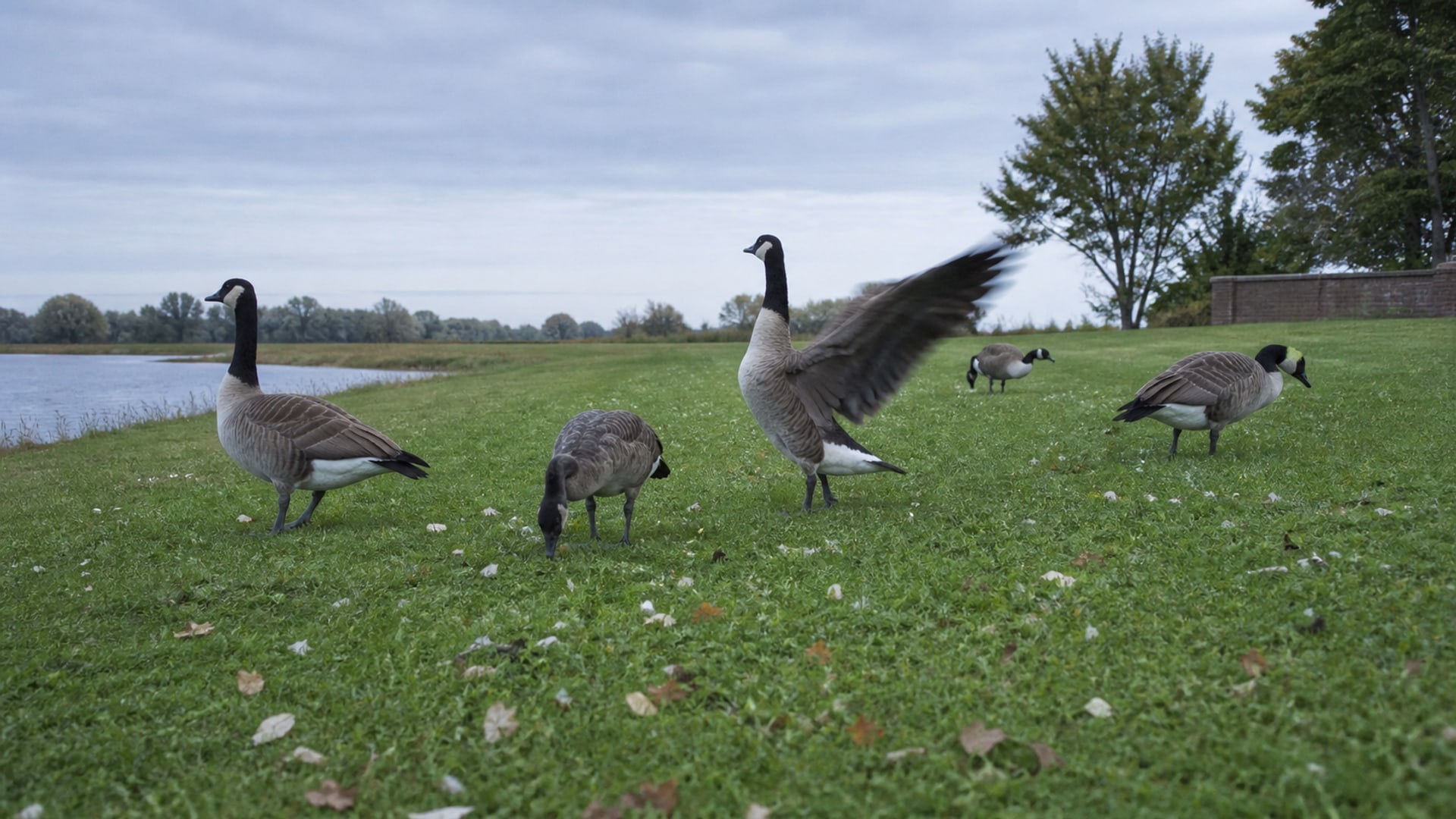
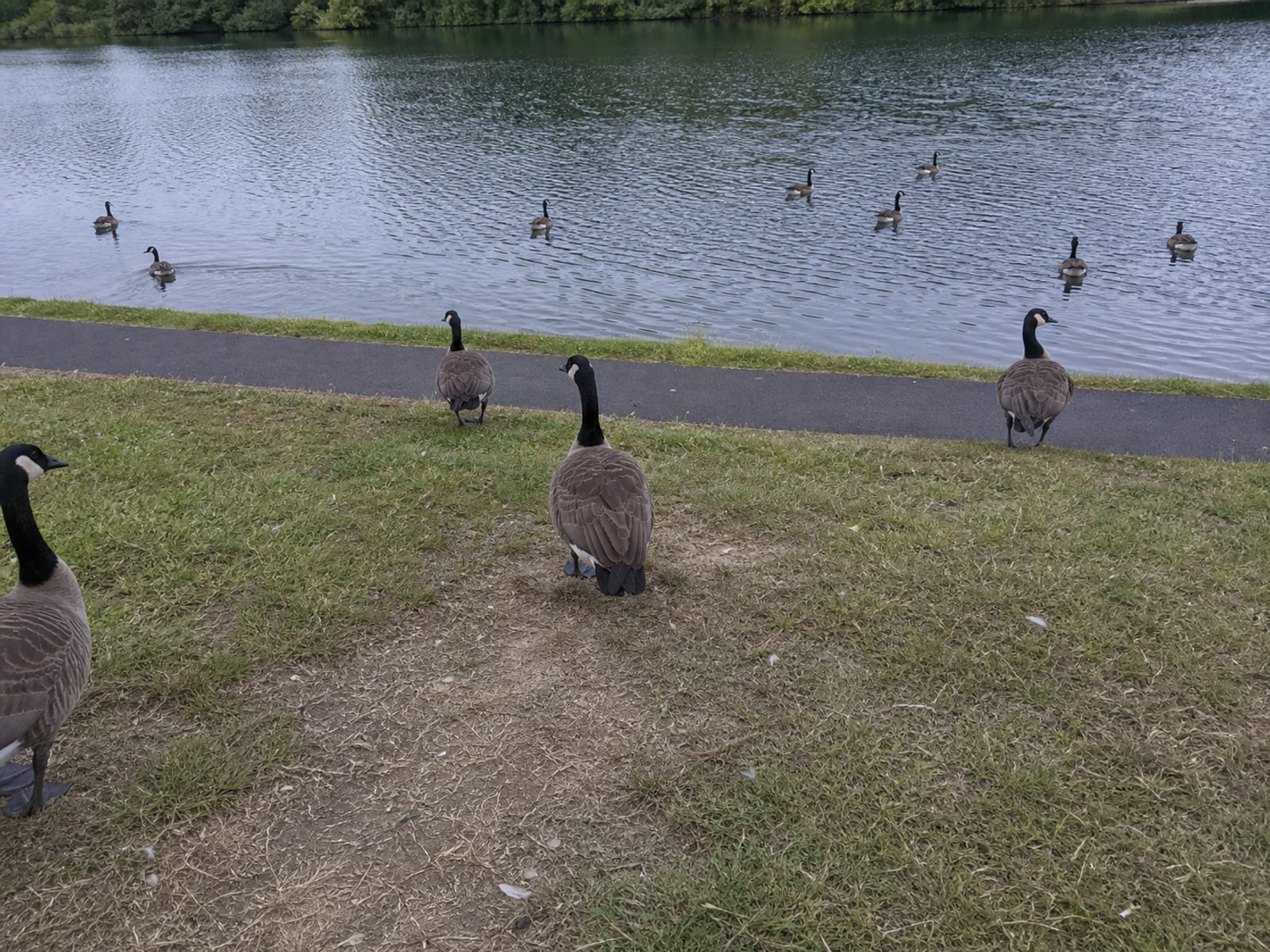
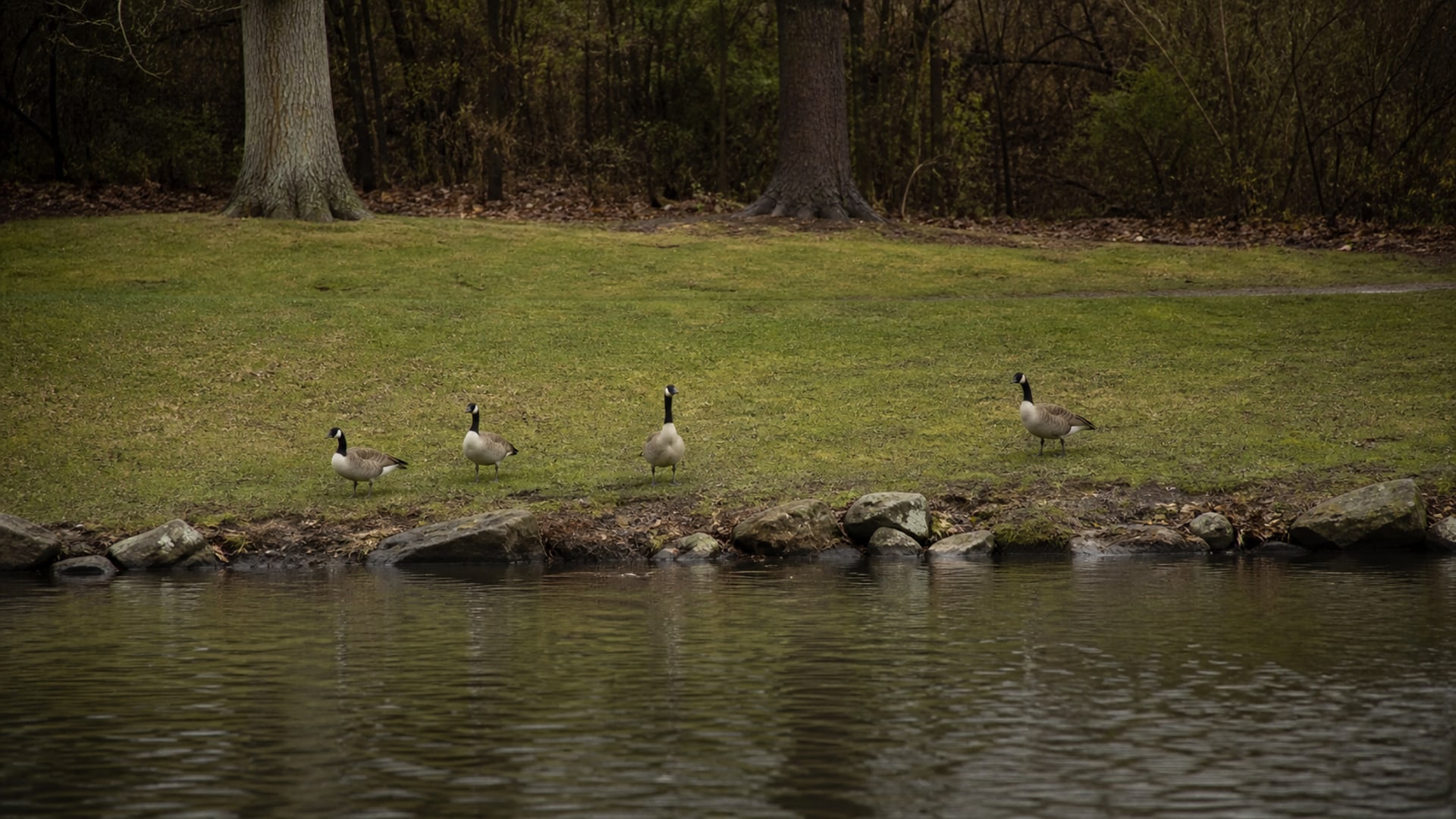
Open mown grass beside water of the kind Canada geese settle on in Newtown, CT

At a glance

Town

Newtown, Connecticut, including Sandy Hook, Hawleyville, Botsford and the Borough

Method

Non-lethal herding by trained Border Collies, no contact with any bird

Permit needed to move geese this way

None, provided no bird is harmed

On the record locally

Weekly beach testing at Eichler's Cove, with results published by the Health District

Newtown has the clearest goose evidence chain we have found anywhere

Most towns give you a policy sentence. Newtown gives you measurements, a named site, an attributed cause and a documented attempt at a fix, across fifteen years.

Start with the current record. The Parks and Recreation Commission minutes of August 12, 2025 carry the Parks Director's report on Eichler's Cove, and it says plainly that issues are caused by the geese. Then it says something more useful than any vendor claim: coyote decoys have helped but need to be moved often. The same report notes there had been fewer closures and none in the prior two weeks.

Then the numbers. The Newtown Health District tests Eichler's Cove weekly through the swimming season against a recreational water threshold of 235 E. coli colonies per 100 milliliters. In 2025, published results exceeded that threshold on at least June 18 and 19, July 2, 9, 10, 23 and 24. Several posted values reached 1,730, and a July 23 sample on the right side of the beach came back at 2,420.

And the history. A 2010 report described an eight-day closure at the cove, the longest on record at that point, a flock that had grown from a handful to several dozen, goose waste on the shoreline and beach, and a sample that hit the instrument's upper reading of 2,419. Coyote cutouts were reported as not working, and Parks was considering other humane methods including a sonic device.

Put together, that is a fifteen year pattern at one municipal beach: birds arrive, the water fails, static deterrents help for a while and then need moving or replacing. It is not our claim. It is the town's own operational record, and it is the single most honest thing a Newtown property owner can read before hiring anybody.


The Health District named the fix in the same sentence as the cause

This is the detail most people skim past, and it is the most important one on this page.

The Health District says periodic unacceptable results at Eichler's Cove are most likely attributable to three things together: heavy rainfall, Canada geese and other waterfowl that prefer nonvegetated shoreline access, and low flow conditions.

Read the middle item carefully. Not simply waterfowl. Waterfowl that prefer nonvegetated shoreline access. A public health authority, describing a specific beach, has identified the bare shoreline itself as part of the mechanism.

That is the habitat argument stated by somebody with no product to sell, and it points straight at what actually changes a site: vegetation at the water's edge, so the walk up from the water stops being easy and the sightlines stop being open. It is the same thing Connecticut's guidance describes with buffers and barriers, applied here to a named cove.

Two honest caveats, because precision matters when public health numbers are involved. The district lists three contributing factors, not one, so nobody should be telling you geese alone closed that beach. And rainfall and low flow are not things a goose program touches. What a program can affect is the goose share of it, and the shoreline condition that makes the goose share worse.

That is also why we would rather talk to a Newtown property about vegetation and mowing lines than sell visits alone. The visits change what the birds do this month. The shoreline changes what the site offers them next year.

Canada goose droppings and grazed turf on maintained ground in Newtown, CT

Why the decoys needed moving, and what that tells you

The 2025 minutes and the 2010 report say the same thing fifteen years apart, in different words. Coyote cutouts were not working then. Coyote decoys help now but need to be moved often.

That is habituation, documented locally rather than described in the abstract. Connecticut DEEP says geese become accustomed to visual deterrents, and that non-lethal methods other than habitat modification tend to be transitory when used on their own. A decoy that stays put stops being a predator and becomes furniture.

The staff at the cove clearly understand this, which is why they move them. That is the correct instinct and it also shows the cost: somebody has to keep doing it, on a schedule, forever, and if a week is missed the birds notice before anyone else does.

A dog is the version of that which does not decay. A goose does not habituate to a predator because the response is instinctive rather than learned, and a handler working the ground does not stand in one place waiting to be figured out. Pair that with the vegetated shoreline the Health District effectively prescribed, and you are working on both halves of what the local record identifies.

None of which means decoys are useless. Moved often, as Newtown moves them, they earn their place. It means they are one part of a program rather than the program.

Where does lawn meet water in Newtown?

This is a big town with big water, and most of it is either a hydroelectric reservoir or a private lake.

Eichler's Cove

11 Old Bridge Road on Lake Zoar, with a beach, marina, boat launch, picnic area and kayak racks, and the town's only public access to that lake. Parks and Recreation manages it while the Health District samples the water weekly through the swimming season. It is the one site in town where turf, public swimming, a documented flock and published bacteria results all sit together, which is why it dominates this page.

The two Housatonic lakes

Lake Zoar along the east and southeast side, created by Stevenson Dam, and Lake Lillinonah on the north, created by Shepaug Dam. Both are hydroelectric reservoirs rather than town ponds, which matters for who controls a shoreline. Lake Lillinonah Town Park at the end of Hanover Road has picnic tables, a boat launch and resident access, with swimming prohibited, and the official description does not quantify how much mown shoreline turf there is.

The inland ponds

Hattertown Pond, also known as Morgan Pond or Maltbie Pond, is a 27 acre manmade pond at Hattertown Pond Preserve near Castle Meadow Road. Curtis Pond is an old millpond by Curtis Corporate Park off Route 34, treated as a fire-water source, sitting in a roughly ten acre open-space parcel. Taunton Lake is a 124 acre private lake in the west of town with documented invasive aquatic plants and zebra mussels. Several ponds on the C.P. Huntington State Park map may not all be inside Newtown, since the park crosses into Bethel and Redding.

Fairfield Hills, and the golf

Fairfield Hills is a 189 acre town-controlled former hospital campus with municipal, education, recreation and development uses, whose long-range plan describes rolling open ground, athletic use, a stormwater system, a watercourse toward Deep Brook and two covered concrete water storage tanks. Those tanks are not landscaped ponds and should not be described as such. On golf, Newtown Country Club and Rock Ridge at 214 Sugar Street are both private nine hole clubs, and neither official source identifies a pond or water feature.

There is a defined route onto town land, and it is not the leash rule

Newtown's code is clearer than most about how a working dog could lawfully operate on municipal ground, and it is worth setting out precisely.

Section 113-3 prohibits bringing or keeping an animal on town property, with exceptions for animals outdoors under leash or similar restraint, horses on established bridle trails, service animals in public buildings, and animals connected with an event authorized by the town agency controlling the property. Section 113-2 then says expressly that the ordinance does not override a Parks and Recreation rule banning pets or horses from a particular park.

There is no blanket working-dog or commercial exemption anywhere in that. But the fourth exception, activity authorized by the agency controlling the property, is a real route: an off-leash Border Collie team on municipal land would proceed as an authorized activity under written authorization from that agency, with the operation itself described in the authorization.

The section 113-2 point is the trap. A town-wide leash rule does not open a park whose own rules ban pets, and Treadwell Park's official page says dogs and horses are not permitted. So authorization has to be site by site, and a general reading of the ordinance is not enough.

Feeding is site-specific here too. We could not find a town-wide ordinance prohibiting the feeding of waterfowl or wildlife, but the current Eichler's Cove rules state that feeding wildlife or other actions that encourage their presence is prohibited. That is a park rule for that site rather than a town-wide ban, and it should be described that way.

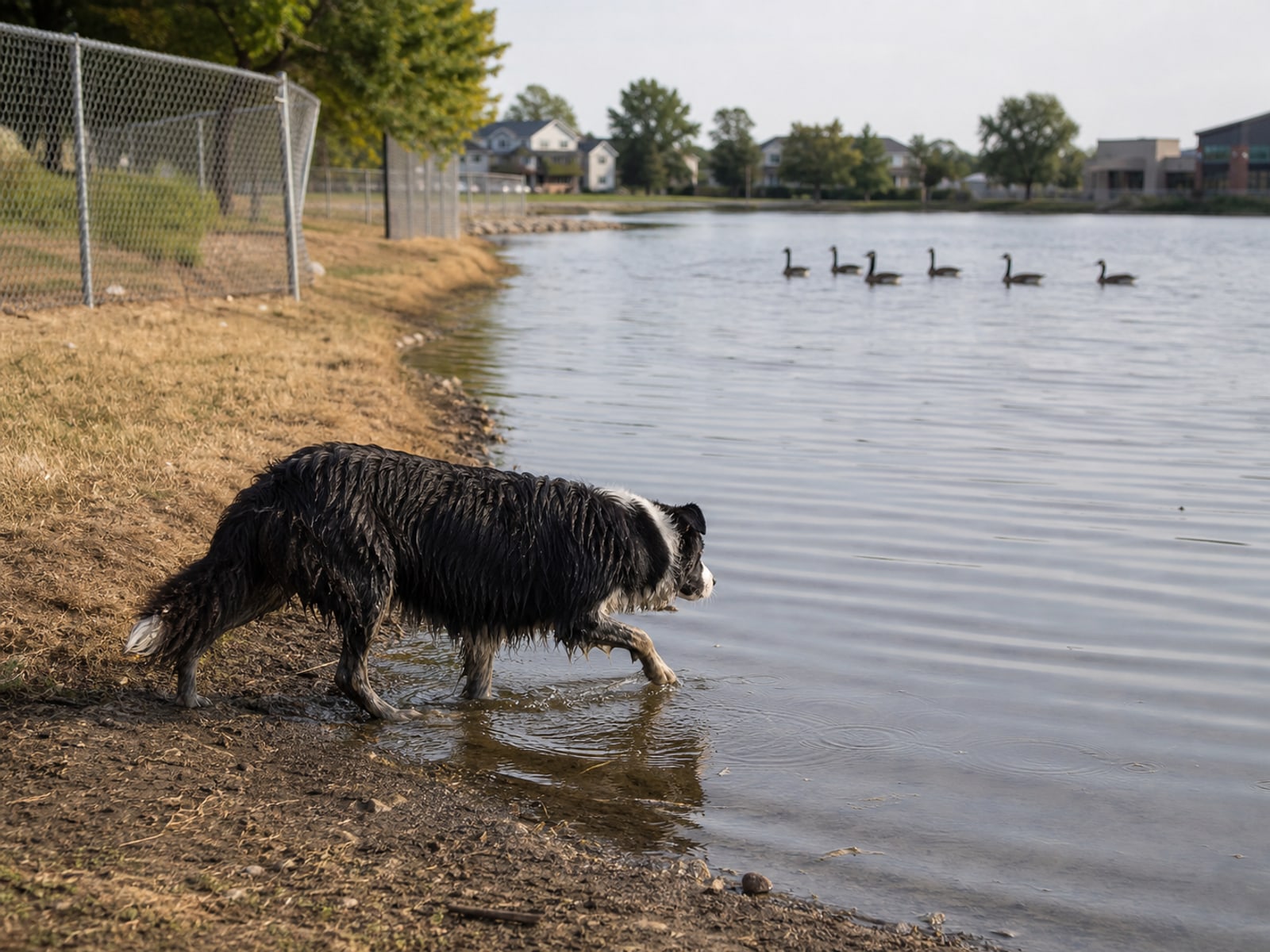
A Border Collie working a flock of Canada geese off maintained ground in Newtown, CT

What happens after you call about a Newtown property?

The fieldwork is the same at a lakeside beach, a corporate pond and a private club. The front end here is unusually well informed, because the local record is unusually good.

  1. 01

    We ask what you are seeing, and what is already deployed

    How many birds, on which surfaces, at what times, and how close the water is. In this town the deployment question often has an answer, and the local record already tells us what happens to a static deterrent left in one place.

  2. 02

    We look at the shoreline before the birds

    The Health District's own attribution points at waterfowl preferring nonvegetated shoreline access. So the first thing worth assessing is what the water's edge actually looks like, because that is the part of the problem that persists when nobody is on site.

  3. 03

    We establish whose ground and whose water

    Town park, a hydroelectric reservoir shoreline, a private lake association, a corporate open-space parcel or a private club. Lake Zoar and Lake Lillinonah are not town ponds, and Taunton Lake is private.

  4. 04

    We settle authorization before scheduling

    On municipal land that means written authorization from the agency controlling the property under section 113-3, treating the operation as an authorized activity, and checking the individual park's own rules because section 113-2 lets those override the general position.

  5. 05

    The dogs work at times the flock cannot anticipate

    A handler works the ground with a trained Border Collie in a stalking posture. A goose responds to that as it would to a predator, by leaving, with no contact and no capture. The visits then repeat unpredictably, which is the property the town's own decoys can only imitate by being moved by hand.

  6. 06

    We measure, and on a tested beach that matters more than usual

    Counts, locations, complaints and the gap between a visit and the birds returning. At a site with published weekly sampling, a program that keeps its own record can be read alongside the water results rather than argued about.

What we handle, and who handles the rest

We do not apply turf repellents. They are registered pesticides, applying one to commercial turf in Connecticut is licensed work, and we hold no such certification. Near a swimming beach the product questions matter more than usual, and a licensed applicator is the person to answer them.

We do not addle eggs or work on nests. The landowner registers with the US Fish and Wildlife Service before anything happens, Connecticut accepts that federal registration and adds a further requirement where a commercial control firm is involved, and the authorization belongs to the landowner or the town rather than to a contractor.

Waterfowl are one of the factors the Health District names in the Eichler's Cove closures, alongside heavy rainfall and low flow. Rainfall and flow are not ours to change, and we will not take credit for a good sampling season that a dry month produced.

Maintained ground in Newtown, CT holding clear of Canada geese after repeat visits

When does acting in Newtown cost the least?

Before the swimming season, and before nesting closes the options. On a tested beach those two deadlines arrive close together.

Connecticut DEEP puts territorial defense as early as March and nesting by early April, with incubation about 28 days and hatching through to June. The 2025 exceedances at Eichler's Cove began in mid-June, which is to say after the birds had already settled and the season was under way. Work done in late winter is prevention. Work done in July is damage limitation on a beach people are trying to use.

Shoreline vegetation is on an even longer clock. Planting takes a season to establish and, near a regulated water, it can involve a filing rather than a decision, so a buffer intended to help next summer is a job for this autumn or next spring rather than for June.

The autumn and winter half follows the statewide pattern: migrants arriving in early October, movement continuing through November with another arrival peak in mid-December, and most birds leaving by mid-January, though mild winters hold them. DEEP also says migrant and resident birds overlap in those months and cannot be told apart by appearance.

Nobody publishes freeze or thaw dates for Lake Zoar or any other water here, so we watch the water rather than the calendar.

Newtown goose control questions

Is the goose problem at Eichler's Cove documented, or is that a sales line?

Thoroughly documented, by the town. The Parks and Recreation Commission minutes of August 12, 2025 record the Parks Director reporting that issues are caused by the geese and that coyote decoys have helped but need to be moved often. The Health District publishes weekly swimming-season results against a 235 colony threshold, and 2025 saw several exceedances in late June and July.

Did geese close the beach?

Not on their own, and we would not say so. The Health District attributes periodic unacceptable results to heavy rainfall, Canada geese and other waterfowl preferring nonvegetated shoreline access, and low flow conditions together. Geese are one named factor of three, and they are the one a program can actually change.

Why do the decoys need moving?

Because geese habituate. Connecticut DEEP says birds become accustomed to visual deterrents and that non-lethal methods other than habitat work are transitory alone. Newtown's own record shows it twice: coyote cutouts reported as not working in 2010, and decoys in 2025 that help but must be repositioned often.

Can a trained dog work on Newtown town property?

Through the route the code names. Section 113-3 allows animals connected with an event authorized by the agency controlling the property, so an off-leash team would operate under written authorization from that agency as an authorized activity. There is no blanket commercial exemption, and section 113-2 lets an individual park's own rules override the general position, as Treadwell Park's do.

Is feeding geese against the rules?

At Eichler's Cove, yes: the current park rules prohibit feeding wildlife or other actions that encourage their presence. We could not find a town-wide ordinance banning waterfowl feeding, so elsewhere it is a matter for the property owner, and on your own ground you can set the rule directly.

How much does goose control cost in Newtown?

It is quoted per site, on ground worked, bird numbers, water edge, visit frequency and what the surface is used for. There is no credible published range for this region, and a number given before somebody has walked your property is a guess.

Our shoreline is on Lake Zoar or Lake Lillinonah. Anything different?

Yes. Both are hydroelectric reservoirs behind dams rather than town ponds, so shoreline authority is not simply the town's, and anything physical at the water's edge needs that established first. Work on your own lawn above the shoreline is a much simpler conversation.

Local detail

Canada geese in Newtown, Fairfield County

Newtown is a Fairfield County town of about 27,200 residents and the largest by area in the county, with its population spread across a borough and several named villages rather than concentrated in one center.

The water here is the defining feature and it is mostly big: Lake Zoar and Lake Lillinonah on the Housatonic, Taunton Lake and Hattertown Pond inland, and the Pootatuck River through the middle of town. Eichler's Cove on Lake Zoar is the site where water quality, public swimming and waterfowl meet most directly, and the Fairfield Hills campus adds a large institutional landscape with municipal athletic ground on it.

Neighborhoods we cover in Newtown

Parts of Newtown where we work. Each one opens in Google Maps.

Around Newtown

Local ground where turf and water sit close together.

Bordering towns: Bethel, Brookfield, Bridgewater, Easton, Monroe, Oxford, Redding, Southbury. A flock does not recognize a town line, so a program sometimes has to be scoped wider than one parcel.

Getting there: Interstate 84, Route 25, Route 34, U.S. Route 6, Route 302, Wasserman Way, Church Hill Road.

We cover all of Newtown and the ground around it. If your neighborhood is not listed, or you are not sure which one you are in, it is very likely we work there. Ask and we will confirm.

Talk to us about your Newtown property

Tell us what you are dealing with: roughly how many birds, which surfaces they are fouling, what the water's edge looks like, and whether anybody swims in it.

Tri-State Geese Patrol runs humane Canada goose abatement with trained Border Collies across Connecticut, Massachusetts and New York, and we are reachable 24 hours. Call (203) 856-4889 and it goes to Bill.

And if the honest answer for your site is planting the shoreline and enforcing a no-feeding rule rather than a contract, we will say so. In this town the local record already points that way.