Tri-State Geese Patrol

Goose Control in New Britain, CT

Humane Canada goose abatement for New Britain properties, using trained Border Collies that move birds without touching them. Three city parks here have fishing ponds, and the municipal golf course has five.

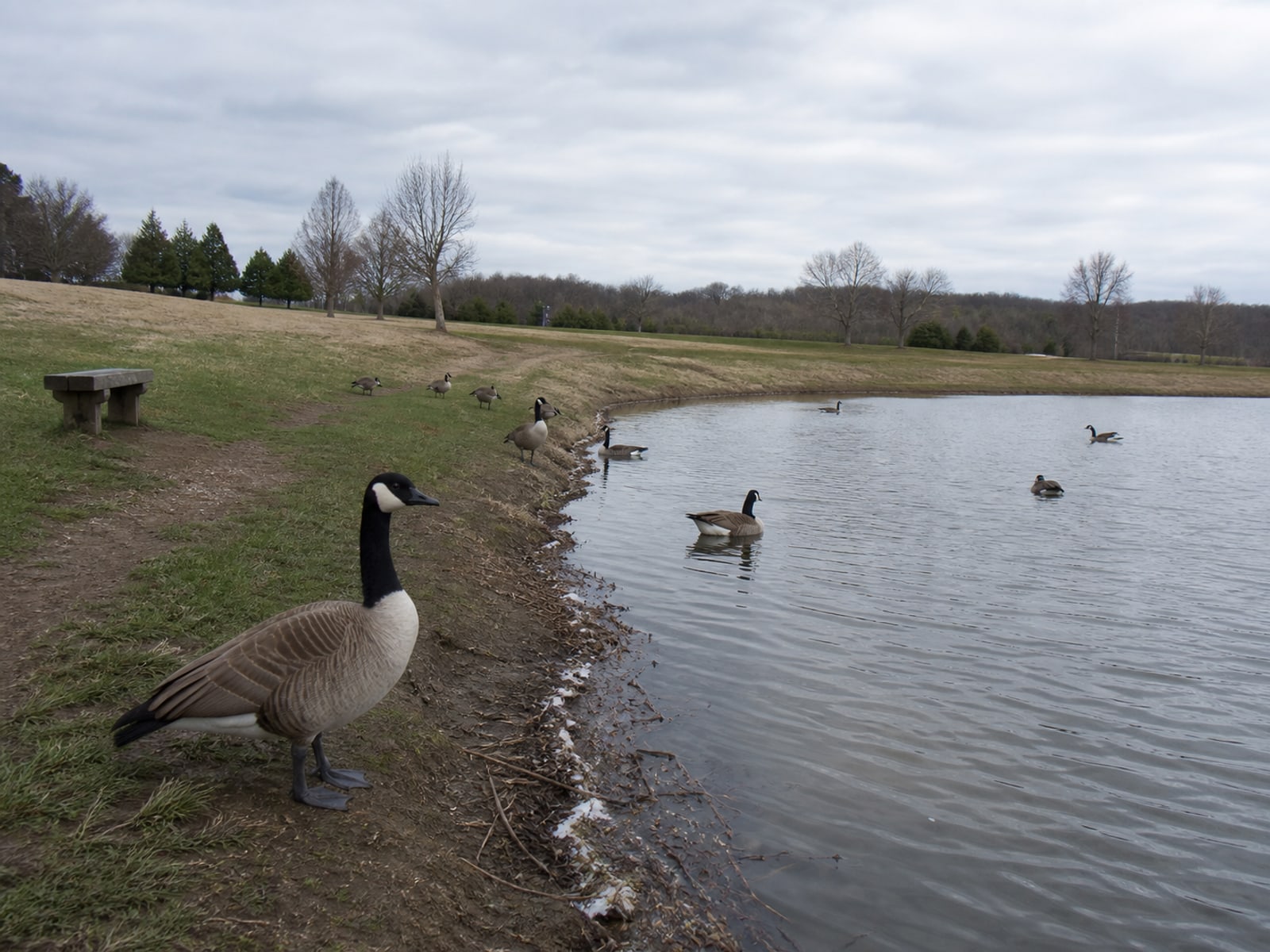
Open mown grass beside water of the kind Canada geese settle on in New Britain, CT

At a glance

City

New Britain, Connecticut

Method

Non-lethal herding by trained Border Collies, no contact with any bird

Permit needed to move geese this way

None, provided no bird is harmed

The local approval route

City ground can require Parks and Recreation Commission and Common Council approval

New Britain has more open water than its reputation suggests

The Hardware City is not where most people expect a waterfowl problem, and the city's own inventory says otherwise.

Three municipal parks carry city-listed fishing ponds: A. W. Stanley Park, Martha Hart Park and Stanley Quarter Park. Each also carries maintained recreation turf or ball fields, and Stanley Quarter adds two soccer fields, ball fields and a walking path. That is the exact pairing a resident flock is looking for, in three separate places, on public ground.

Then there is the golf. Stanley Golf Course at 245 Hartford Road is a city owned 27 hole public municipal course, and the state's water diversion register identifies its ponds A through E. Five registered ponds on one municipal course is a specific, checkable fact rather than an assumption that a course probably has water somewhere.

Around all of that sits a water department larger than most people realize, and the Willow Brook corridor running from the reservoir edge through the city toward the Mattabasset.

One thing we are not going to do is convert that geography into a claim. Targeted searches of city records and local reporting produced no documented New Britain goose complaint, management project, meeting item or news story we could quote. Ponds plus turf is a reason to look, not evidence of a problem, and we would rather say that than borrow a regional story and attach this city's name to it.

Where does lawn meet water in New Britain?

The verified sites here are municipal, which shapes both the opportunity and the approval path.

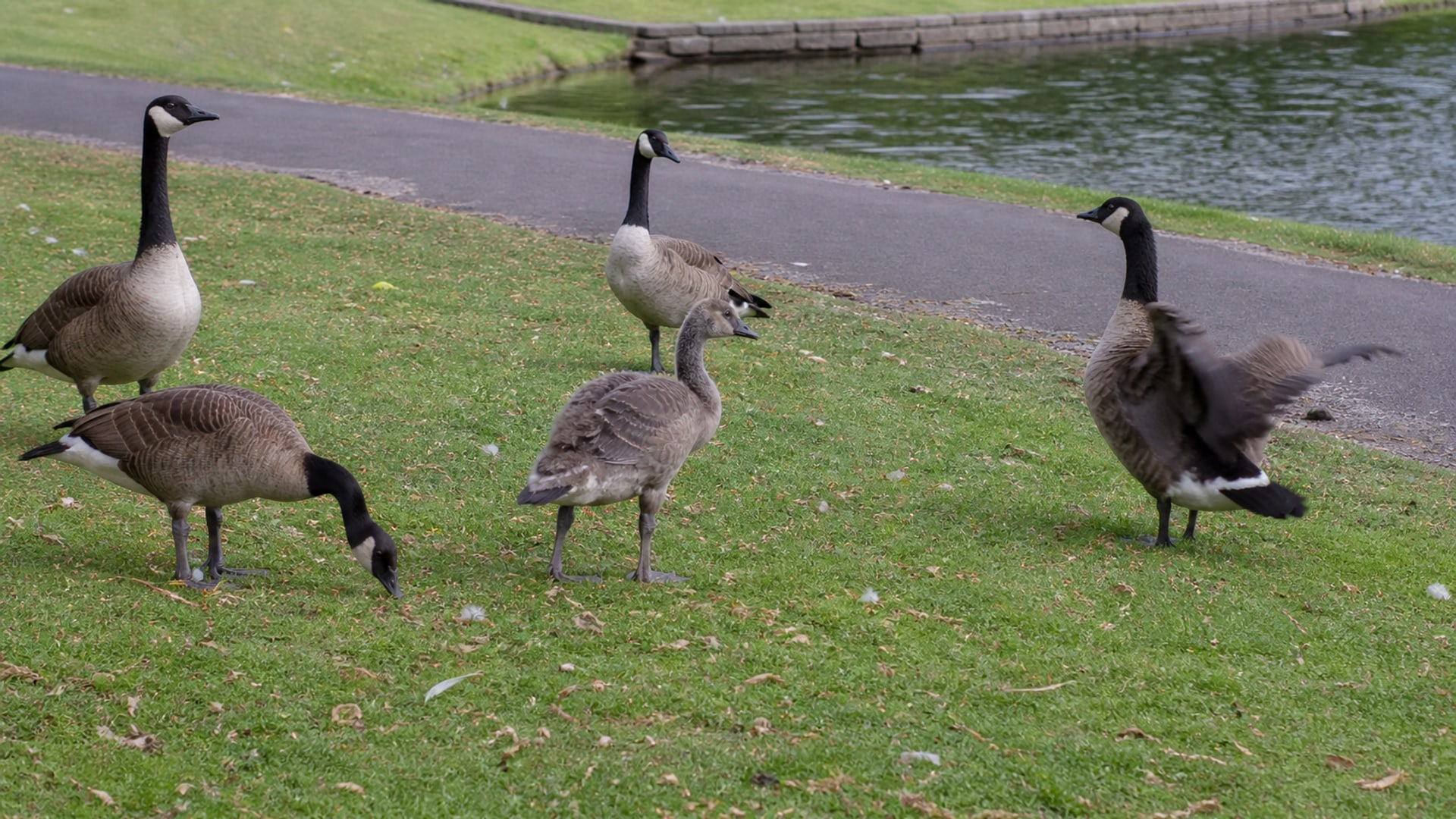
Canada goose droppings and grazed turf on maintained ground in New Britain, CT

Stanley Golf Course and its lettered ponds

245 Hartford Road, city owned, 27 holes, public. The state diversion registration list names Stanley Golf Course ponds A through E, which is unusual clarity about a course's water inventory and a useful starting point for a walk. Fairway turf beside irrigation water is the goose problem in its purest form, and municipal ownership means the decision and the budget do not sit in the same office as they would at a private club.

Three parks with fishing ponds

A. W. Stanley Park, Martha Hart Park and Stanley Quarter Park all carry a city-listed fishing pond alongside maintained recreation ground. Fishing access matters operationally as well as ecologically: it means people are regularly at the water's edge, which sets the working windows and makes the visible conduct of any program part of the job rather than an afterthought.

Willow Brook Park, and what it does and does not have

The complex at 653 South Main Street holds four soccer fields, Veterans Stadium, Beehive Field, a pool and tennis courts, and New Britain High School schedules soccer at the Willow Brook fields and football at Veterans Stadium. Its name and the state water-quality record place it along the Willow Brook corridor, but we could not verify a specific open-water feature inside the park from the city's own facility inventory. Large maintained turf near a watercourse is worth walking; it is not the same as a pond, and we are not going to give it one.

Walnut Hill Park, the campuses, and the cemetery

Walnut Hill Park at 184 West Main Street has extensive mown ground, a cricket field, ball diamonds, gardens, scenic overlooks and a mile walking loop, and its site began as an 1858 reservoir, though the city's park list does not show a current pond there. Central Connecticut State University, the Hospital of Central Connecticut, the Hospital for Special Care and the city's large manufacturers are all real institutional ground, but no landscaped pond or basin at any of them is documented, so that is a parcel check. Fairview Cemetery sits under City Recreation and Community Services, which is a municipal detail worth knowing before anyone goes looking for a private owner.

New Britain's approval route needs two bodies, not one

This is the local rule that most changes how a dog-based proposal has to be put together here.

City code section 6-18 prohibits an owner or keeper from allowing a dog on a street, in a park, in another public place or on an unenclosed lot unless it is on a secure leash continuously held by a responsible person, or otherwise securely leashed or confined. The exceptions listed are a bench show or exhibition, a dog park, and a use approved by the Parks and Recreation Commission and the Common Council.

That last exception is the important one, and it is genuinely different from what neighboring towns publish. Most codes around here either say nothing about working dogs or leave you negotiating from silence. New Britain names a route, and the route runs through two bodies rather than one: a commission and the Common Council.

So a municipal program in this city is not something a department head can simply authorize over the phone, and any provider suggesting otherwise has not read section 6-18. It is not an obstacle so much as a lead time, and it is much better identified in the first conversation than discovered after a season has been lost.

There is no blanket working-dog or commercial-dog exemption anywhere in that section, and we would not claim one.

On private ground, a hospital campus, a manufacturer's lawn, an association's common area, none of this applies in the same way and the owner decides.

The city's water department is a landowner in its own right

New Britain runs a bigger water operation than its size suggests, and that changes who has standing on a lot of ground.

The New Britain Water Department, inside Public Works Utilities, manages six reservoirs, about 6,000 acres of watershed land, three large volume storage tanks and six pumping stations. Shuttle Meadow Reservoir at the south and southwestern edge, near Shuttle Meadow Avenue and Ragged Mountain, is the principal named reservoir directly associated with the city, and the state identifies the department as the owner of its dam.

The department's portfolio in the state diversion notice also takes in Hart Ponds, White Bridge Pond and the Whigville, Wasel and Wolcott reservoirs. Worth being careful with that list: appearing in the department's system does not establish that every one of those waters sits inside the city limits, and a provider quoting them as New Britain ponds would be overreading the source.

Six thousand acres of watershed is not open-space work. It is a landowner with statutory responsibilities, and anything proposed on or near that land involves the department alongside whoever else is in the conversation.

For regulated activity there is a second distinctive arrangement here. The New Britain Conservation Commission serves as both the city's Inland Wetlands Agency and its Aquifer Protection Agency, with seven mayor-appointed members. One body, two hats, which is worth knowing so you ask the right one for the right thing. As always, moving birds off maintained turf with a dog is not a regulated activity; planting a buffer or building at a water's edge can be.


What happens after you call about a New Britain property?

The fieldwork is the same on a fairway, a fishing pond edge and a hospital lawn. Here the front end is dominated by which city body has to say yes.

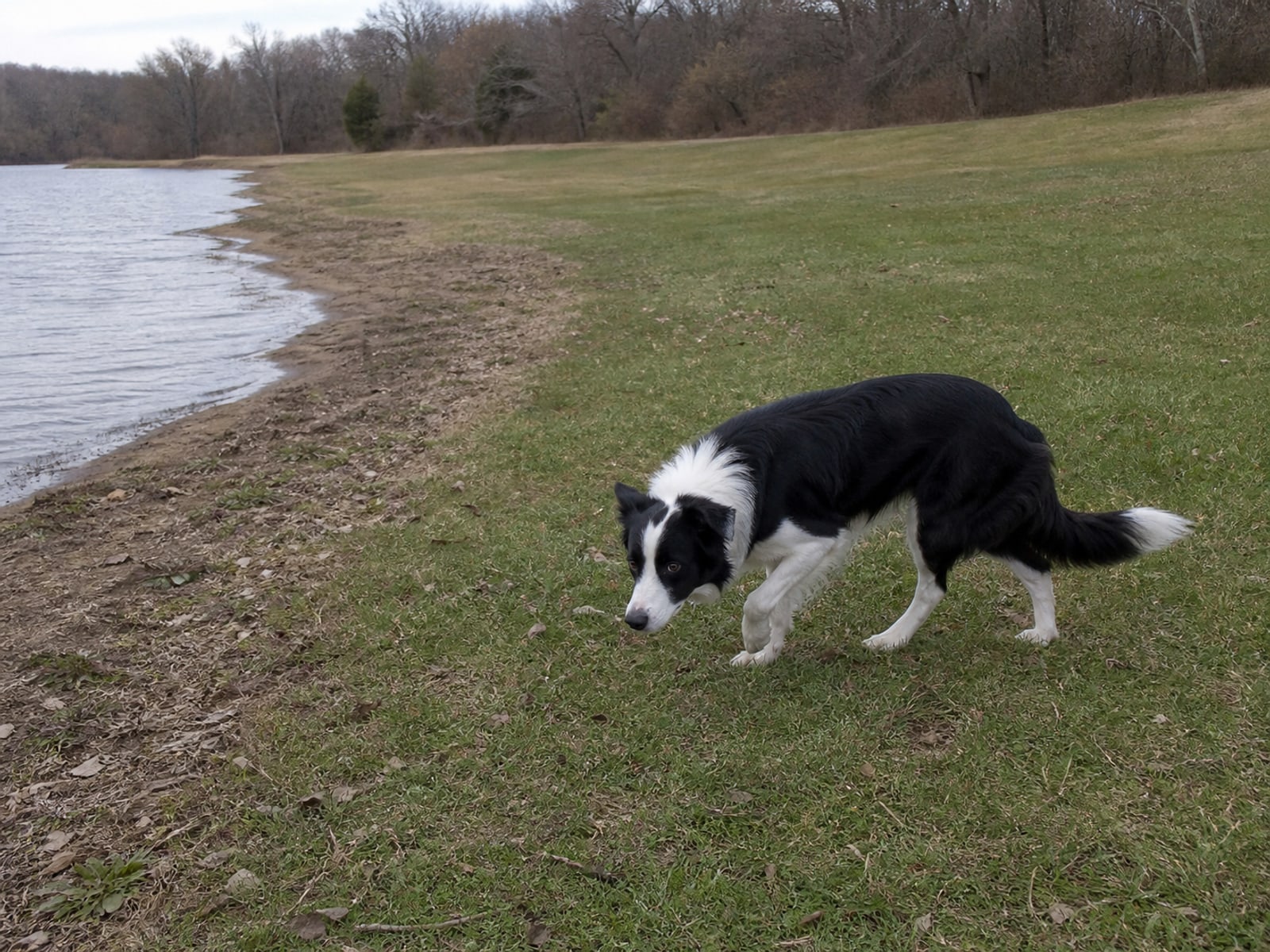
A Border Collie working a flock of Canada geese off maintained ground in New Britain, CT
  1. 01

    We establish who holds the ground

    City park, the municipal golf course, water department watershed land, school athletic ground, a cemetery under Recreation and Community Services, or private property. In this city those genuinely different answers lead to genuinely different approval paths.

  2. 02

    We ask what you are seeing, and what has been tried

    How many birds, on which surfaces, at what times, and how close the water is. What a flock has already learned to ignore changes what is worth doing next.

  3. 03

    We walk the ground and map the way up from the water

    Geese travel between water and turf on foot. On a course with five registered ponds, the useful question is which of them the birds are actually walking up from, not which one is nearest the clubhouse.

  4. 04

    We start the approval early, because it needs two bodies

    Where the site is city ground, section 6-18 points at approval by the Parks and Recreation Commission and the Common Council. That is a calendar item, and it belongs at the start of a project rather than in the middle.

  5. 05

    The dogs work at times the flock cannot anticipate

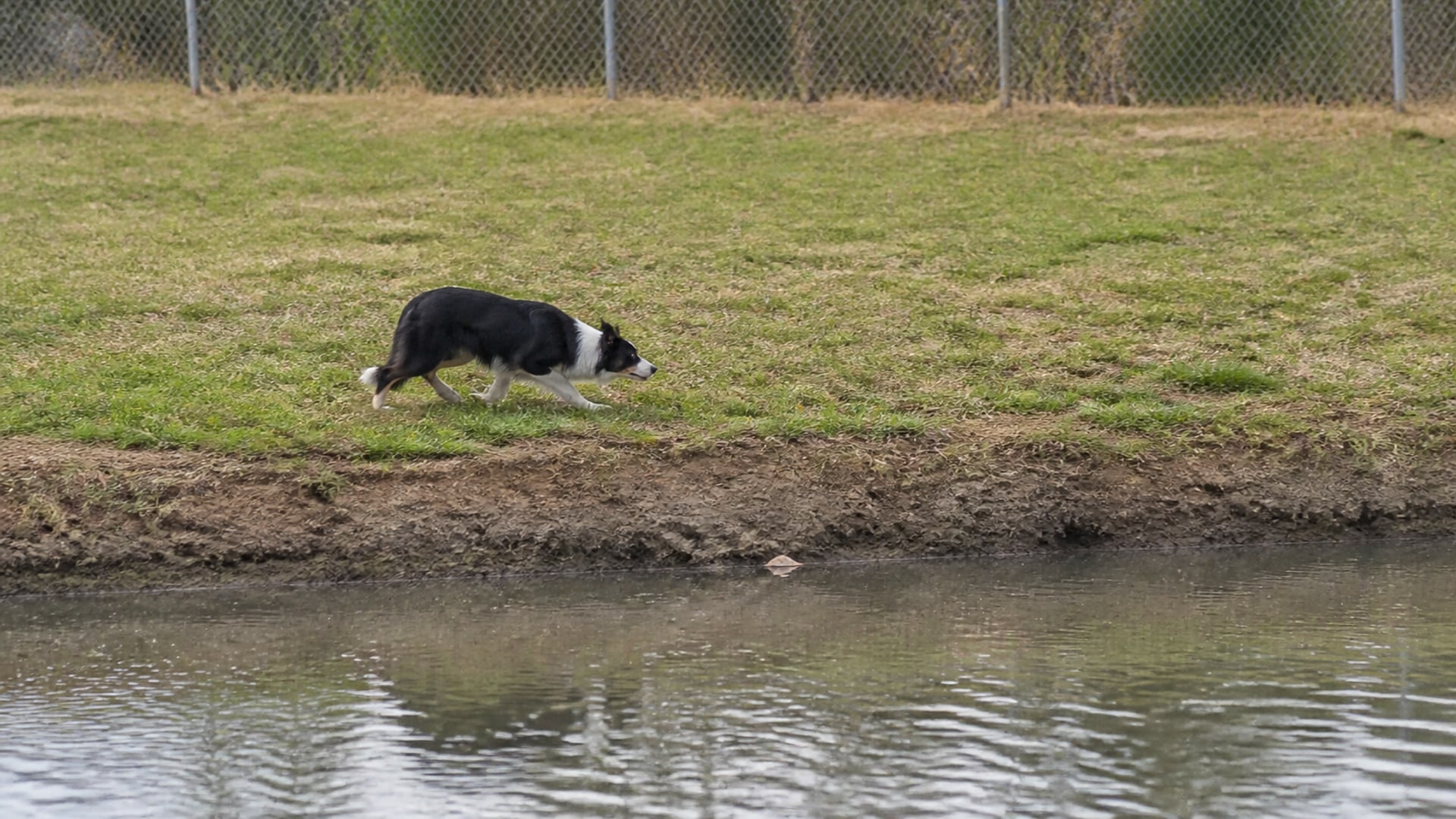
    A handler works the ground with a trained Border Collie in a stalking posture. A goose responds to that as it would to a predator, by leaving, with no contact and no capture. On a pond where people fish, the conduct of the work is visible and is planned with the site rather than sprung on it.

  6. 06

    We say what should change about the ground, and we measure

    Where mowing stops, whether an unmown strip or a barrier can sit between water and turf, and whether feeding is happening. Then counts, locations, complaints and the gap between a visit and the birds returning, which is the first honest evidence a program gives you.

What we handle, and who handles the rest

We do not apply turf repellents. They are registered pesticides, applying one to commercial turf in Connecticut is licensed work, and we hold no such certification. A licensed applicator is the right call if a repellent suits a defined surface.

We do not addle eggs or work on nests. That is regulated activity, the landowner registers with the US Fish and Wildlife Service before anything happens, Connecticut accepts that federal registration and adds a further requirement where a commercial control firm is involved, and the authorization belongs to the landowner or the city rather than to a contractor.

This is a maintained program rather than a one-time fix. Connecticut DEEP says non-lethal methods other than habitat work tend to be transitory when used alone, which is why this is a maintained program rather than a repair.

When does acting in New Britain cost the least?

Early in the year, and earlier still if the site is city ground, because the approval route adds time before anybody sets foot on the grass.

Connecticut DEEP puts territorial defense as early as March and nesting by early April, with incubation about 28 days and hatching running through to June. Before a pair settles, a pond edge is just a pond edge. Once a nest exists, the situation becomes a protected-nest problem and the lawful choices narrow.

Put that alongside a process that may need a commission and the Common Council and the arithmetic is obvious. A project started in February can be working before the nesting window closes. The same project started in April is negotiating a calendar while the birds settle in.

The autumn side follows the statewide pattern. DEEP records migrants arriving in early October, movement continuing through November with another arrival peak in mid-December, and most birds leaving by mid-January, although mild winters hold numbers longer. DEEP also says migrant and resident birds overlap in those months and cannot be told apart by appearance, so a big flock on a New Britain field in November tells you very little about where those birds nested.

Nobody publishes freeze or thaw dates for any water in this city, so we watch the water rather than the calendar.

Maintained ground in New Britain, CT holding clear of Canada geese after repeat visits

New Britain goose control questions

Can a trained dog work on New Britain city ground?

Through the route the code names, yes. Section 6-18 requires dogs in parks and public places to be securely leashed, with exceptions for a bench show or exhibition, a dog park, and a use approved by the Parks and Recreation Commission and the Common Council. There is no blanket working-dog exemption, so that approval is the path.

Is feeding geese against the rules here?

New Britain has no ordinance prohibiting the feeding of waterfowl or wildlife. State law addresses intentional feeding of potentially dangerous animals and preserves stricter local rules, but that is not evidence this city has adopted one. On your own ground you can set and enforce the rule yourself.

Which ponds on the golf course actually matter?

That is a walk rather than a guess. The state diversion register names Stanley Golf Course ponds A through E, which tells you what exists but not which of them the birds are using to reach the turf. The route in is what a site assessment is for.

Our site is near a reservoir or watershed land. Does that change things?

It adds a landowner. The New Britain Water Department manages six reservoirs and around 6,000 acres of watershed, and it owns the Shuttle Meadow dam. Anything on or near that land involves the department directly, and that is a different conversation from ordinary open-space work.

How much does goose control cost in New Britain?

It is quoted per site, on ground worked, bird numbers, water edge, visit frequency and what the surface is used for. There is no credible published range for this region, and any number given before somebody has walked the property is a guess.

Is there a documented goose problem in the city?

Not one we can point to. Searches of city records and local reporting produced no complaint, project, meeting item or news report we could quote. The ponds and the turf are documented; a problem at any specific site is not, and we are not going to fill that gap with a regional story.

Who handles a wetlands question?

The Conservation Commission, which serves as both the city's Inland Wetlands Agency and its Aquifer Protection Agency with seven mayor-appointed members. Physical work near water goes there. A dog crossing maintained turf does not.

Local detail

Canada geese in New Britain, Hartford County

New Britain is a Hartford County city of roughly 74,100 residents that runs a larger water operation than its size suggests: six reservoirs, about 6,000 acres of watershed land, three storage tanks and six pumping stations, with Shuttle Meadow Reservoir at its southern edge.

The city has more open water than its manufacturing reputation implies. Three municipal parks carry city-listed fishing ponds, and the state's water diversion register identifies ponds A through E at Stanley Golf Course, the city's 27 hole public municipal course on Hartford Road. Approval for work on city ground runs an unusual route: section 6-18 points at a use approved by both the Parks and Recreation Commission and the Common Council.

Neighborhoods we cover in New Britain

Parts of New Britain where we work. Each one opens in Google Maps.

Bordering towns: Berlin, Newington, Farmington, Plainville, Southington, Kensington. A flock does not recognize a town line, so a program sometimes has to be scoped wider than one parcel.

Getting there: Route 9, Route 72, Route 175, Hartford Road, South Main Street, West Main Street, Corbin Avenue.

We cover all of New Britain and the ground around it. If your neighborhood is not listed, or you are not sure which one you are in, it is very likely we work there. Ask and we will confirm.

Talk to us about your New Britain property

Tell us what you are dealing with: roughly how many birds, which surfaces they are fouling, how close the water is, and whether the ground is city, school, water department or private.

Tri-State Geese Patrol runs humane Canada goose abatement with trained Border Collies across Connecticut, Massachusetts and New York, and we are reachable 24 hours. Call (203) 856-4889 and it goes to Bill.

And if the honest answer for your site is an unmown strip and a no-feeding rule rather than a contract, we will say so.