Tri-State Geese Patrol

Goose Control in Middletown, CT

Humane Canada goose abatement for Middletown properties, using trained Border Collies that move birds without touching them. The city already treats waterfowl as a bacteria question in its own stormwater program.

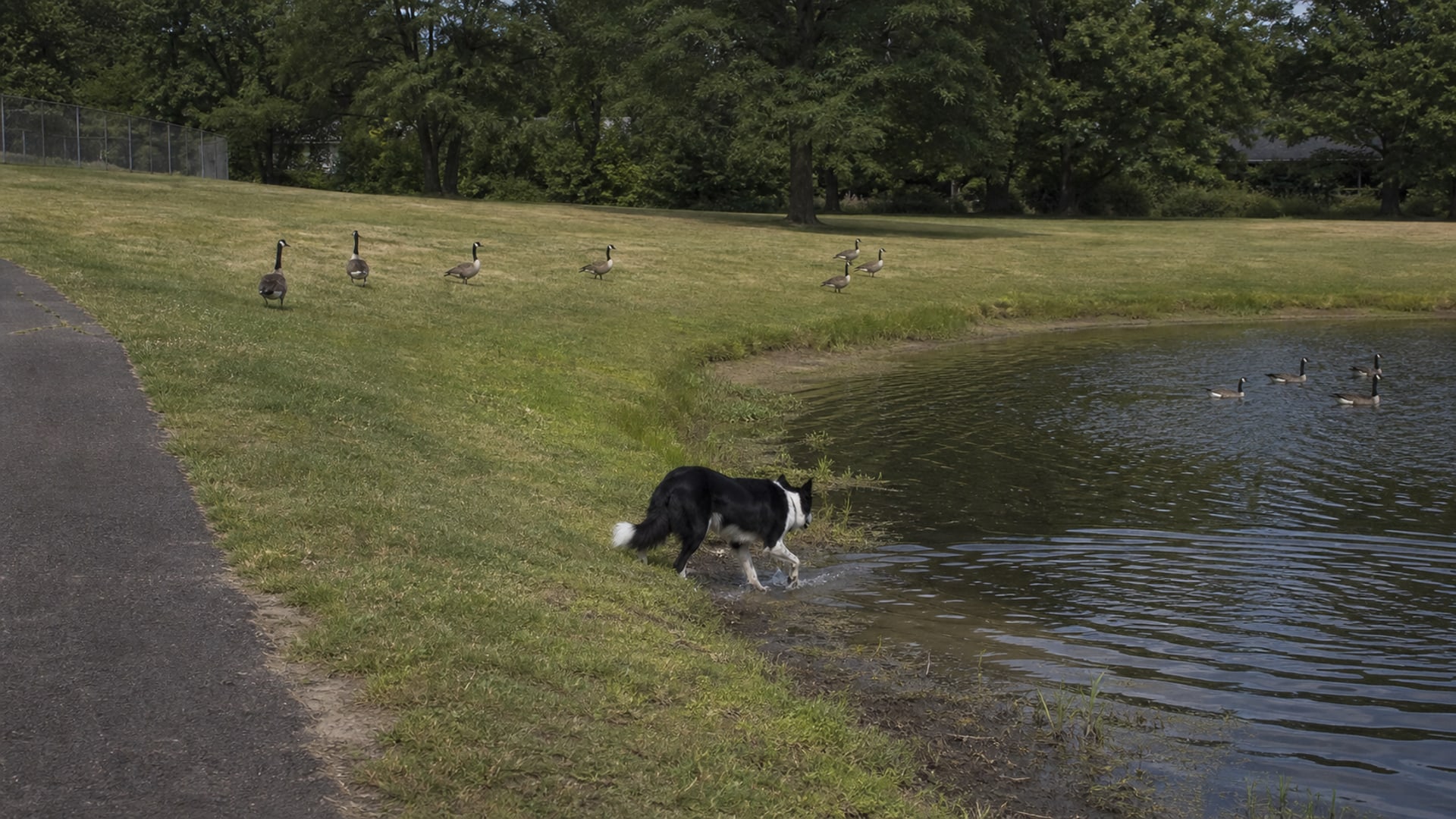
Open mown grass beside water of the kind Canada geese settle on in Middletown, CT

At a glance

City

Middletown, Connecticut

Method

Non-lethal herding by trained Border Collies, no contact with any bird

Permit needed to move geese this way

None, provided no bird is harmed

The local constraint

City park rules keep dogs off ball fields, the lake beach and pools

Middletown files this under bacteria, not aesthetics

Most municipal documents that mention geese do it in passing. Middletown's stormwater plan gives the subject an actual action, and the city's staff training gives it a name.

The plan directs the city to identify lands where waterfowl congregate and where public feeding occurs. It then commits to using signage or other targeted methods to explain the water-quality effects of feeding waterfowl, to put in place practices that discourage undesirable congregation, and to isolate direct drainage from those areas away from storm systems and water bodies.

The training material for city staff is blunter still. It labels the topic waterfowl management and bacteria, and calls for discouraging congregation and feeding in sensitive areas while controlling drainage away from storm systems and waters.

That framing is worth borrowing whoever you are. It moves the argument off how the lawn looks and onto something measurable, which is a much stronger footing for a budget conversation with a board or a facilities committee.

Two honest limits. Nothing in that material identifies a particular Middletown property with a goose problem, and we could not verify a site-specific complaint, meeting item, contract or local news report naming this city. And no Middletown ordinance prohibiting the feeding of waterfowl turned up either, although the city's stormwater page carries a do-not-feed resource and the plan directs public education on it. Policy and education are not the same thing as a code section.

The Middletown park rules exclude dogs from the surfaces geese use

This is the tension a Middletown buyer needs to understand early, because it is more restrictive here than in most of the towns around it.

City code section 214-10 permits dogs and other pets in city parks and recreation areas only on leash and under their owner's or keeper's control, and prohibits them at city beaches and city pools outright. The Parks Division repeats the leash requirement, adds that dogs are not allowed on ball fields or on the beach at the lake, and requires cleanup. On a multi-use trail, section 214-16 sets a leash no longer than six feet. Nothing in the code we reviewed carries an exemption for a working or commercial dog.

Now put that beside the geography. Ball fields and a lake beach are exactly the two surfaces a resident flock will choose, and they are the two the rules name. So on municipal ground in Middletown, a dog-based program is not something anyone can simply schedule.

What that means in practice is that written permission has to come first, from the department that holds the site, and it has to address the specific rules rather than talk around them. We would rather set that out at the quoting stage than have a program stopped in week two, and we would treat any provider claiming a commercial exemption here as not having read section 214-10.

On private ground it works completely differently. Wesleyan's landscape, a residential community's common land, a commercial property's own lawn: the owner authorizes it and the path is short.

Canada goose droppings and grazed turf on maintained ground in Middletown, CT

Where does lawn meet water in Middletown?

This city has both river frontage and contained ponds, which are different problems.

The riverfront, which is not a pond

The Connecticut River makes the eastern edge, with the Mattabesset on the north side and the Coginchaug joining it about eight tenths of a mile upstream of the Connecticut. Harbor Park sits between Route 9 and the river, Wilcox Island is a 16.5 acre city park on the river, and Columbus Point at Harbor Drive is a city facility with fishing. Broad river corridors and adjacent lowland behave differently from a contained ornamental pond, and a plan written for one will not fit the other.

The named ponds, with a caution

Pameacha Pond on South Main Street, Crystal Lake in the south of the city, Swales Pond on Wadsworth Street, Zoar Pond on Randolph Road and Butternut Hollow on Butternut Street. A 2023 city commission discussion identified Crystal Lake, Smith Park and Veterans Park as the parks with the most facility reservations and called Crystal Lake a major rental location. What that record does not do is put geese at any specific one of those waters, so nobody should be listing them all as goose sites, ourselves included.

Wesleyan, and the drainage that comes with athletic fields

A 2024 city wetlands proceeding records a Wesleyan project at 170 Long Lane involving two practice fields with a proposed detention pond and outlet structure inside the 100 foot upland review area, and the university's Facilities Operations group works from the same address. That is a documented case of athletic turf, engineered drainage, an institutional owner and local review all in one place. It is not a claim that Wesleyan has a goose problem.

Wesleyan Hills, and the golf course that is not here

Wesleyan Hills is a 288 acre residential community in Middletown describing open space with ponds, bridges, fields and wooded areas, which is a genuine pond-and-lawn landscape with a community structure behind it. On golf, be careful: TPC River Highlands is private and in Cromwell, not Middletown, and Lyman Orchards is in Middlefield. Miner Hills is listed at 80 Miner Hills Drive in Middletown, though the public record does not establish its ownership category or any water features.

Where the city's water comes from, and why it matters here

Middletown runs its own water department, and its sources sit in an unusual place for this region.

The department's 2024 reporting says the public supply comes from four reservoirs and one groundwater aquifer, and that more than 70 percent of the water it produces comes from the aquifer along the Connecticut River. The city's own material identifies Mount Higby Reservoir and the River Road Well Field as the two active sources.

Land ownership around those sources is unusually concentrated. The city has reported owning 98 percent of the land around the Mount Higby and Adder reservoirs, with Middletown or Middlefield holding about 31 percent around Laurel Brook Reservoir, and the city amended its zoning to bring in watershed lands and aquifer protection areas.

The relevance for a property owner is about which door to knock on. Work that touches supply land or a mapped aquifer protection area involves the Water Department and the zoning provisions as well as whoever owns the turf, and an aquifer along a river is a wider footprint than a fenced reservoir would be.

The usual line still holds. Moving birds off maintained turf with a dog is not regulated activity. Planting a buffer, setting a barrier at a water edge or changing drainage can be, and near the river corridor or a mapped protection area that question deserves an answer before anyone orders materials.

It is also worth separating two things people run together in this city. The Parks Division manages the parks and the Recreation Services side manages programming, and on a heavily booked site those are different conversations with different calendars. Getting the grounds owner and the programming owner into the same discussion early is the difference between a program that can actually be delivered on the days it needs to be delivered, and a schedule that keeps getting moved.


What happens after you call about a Middletown property?

The fieldwork is the same on a campus lawn, a residential common area and a riverside park. Here the front end is dominated by park rules and by which kind of water you have.

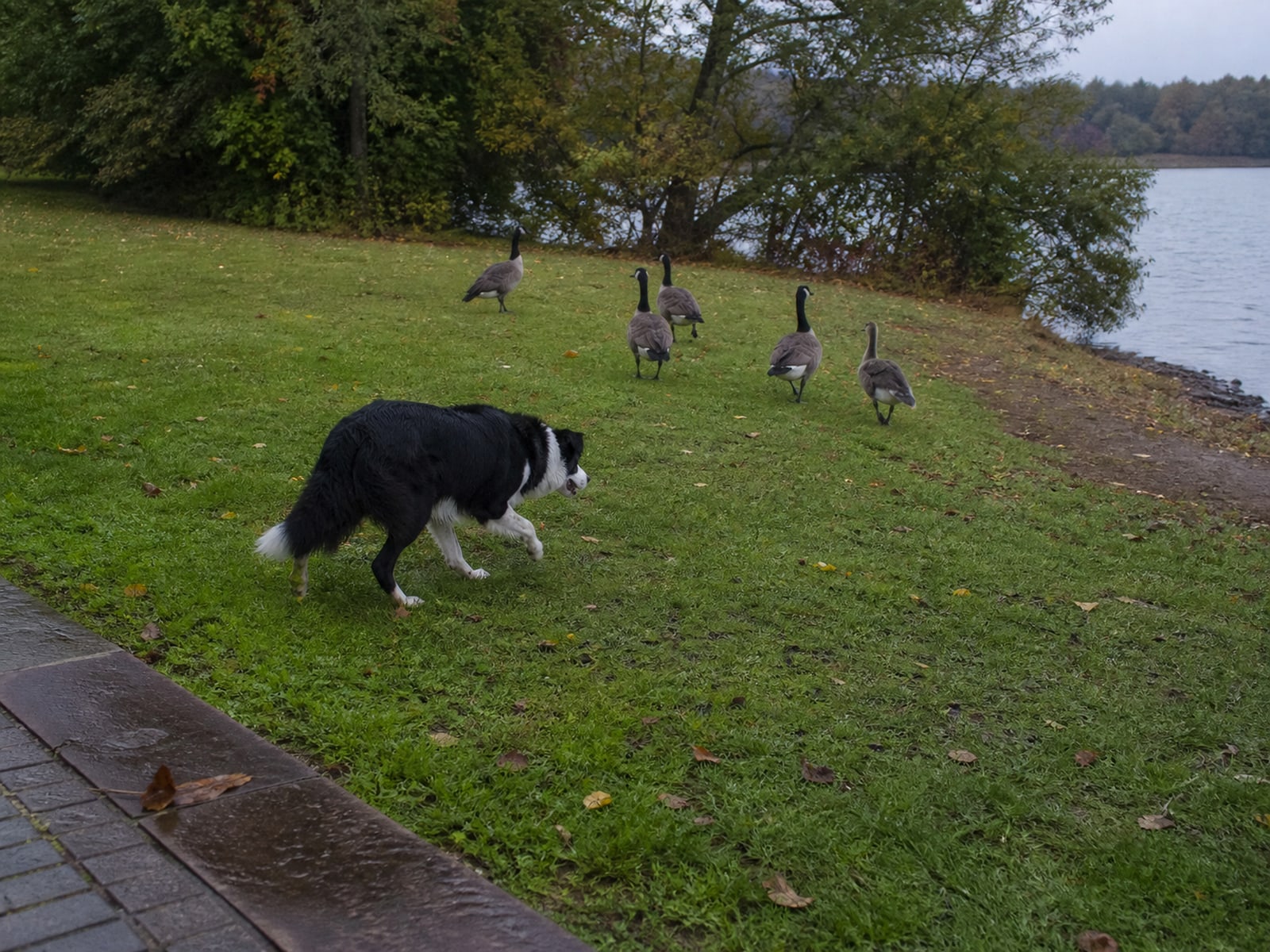
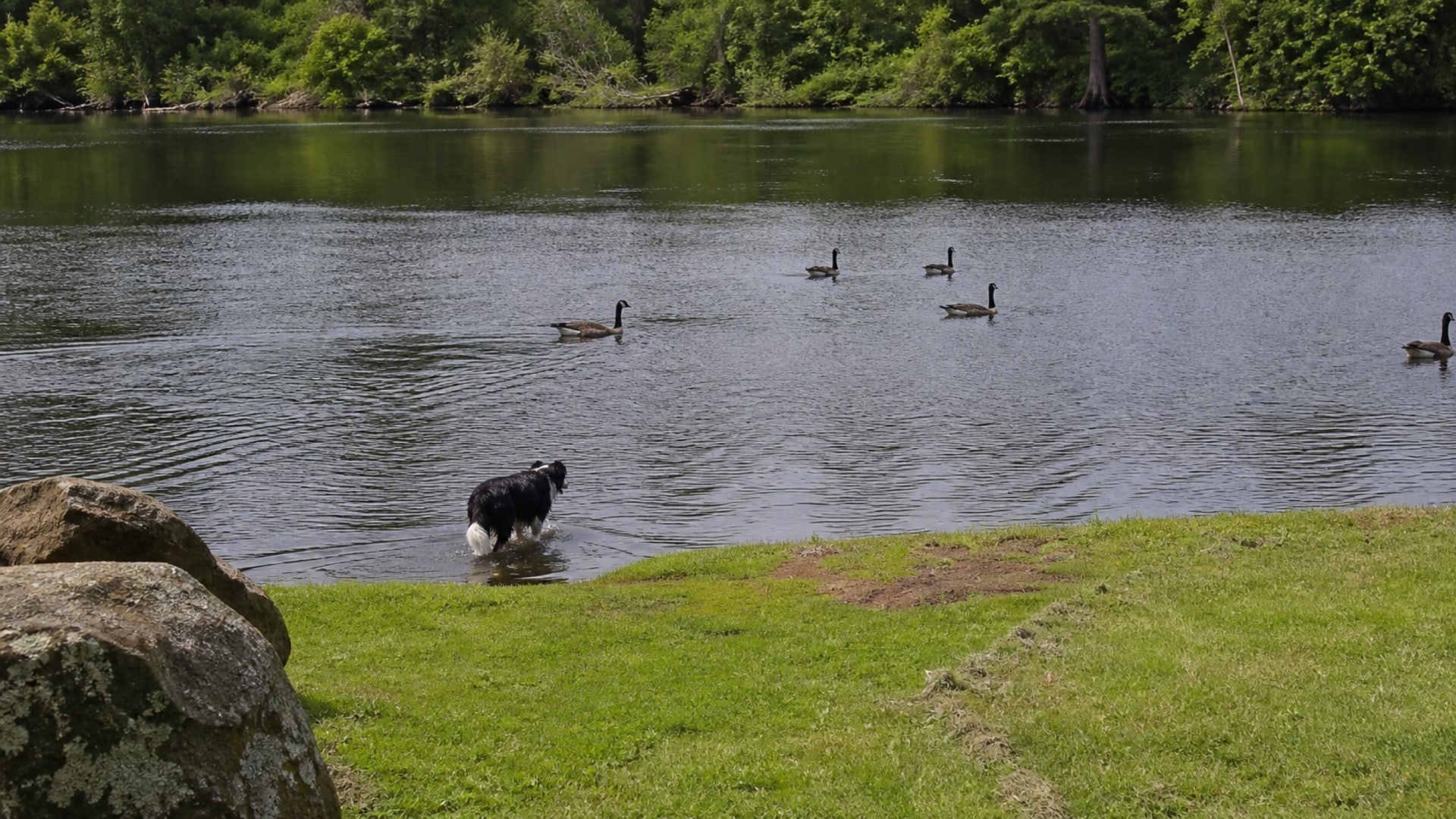
A Border Collie working a flock of Canada geese off maintained ground in Middletown, CT
  1. 01

    We establish what kind of water you actually have

    River frontage and a contained pond are different problems with different answers. A broad corridor with lowland beside it behaves nothing like a six acre pond with a mown edge, and the plan has to start from which one you are dealing with.

  2. 02

    We ask what you are seeing, and what has been tried

    How many birds, on which surfaces, at what times, and how close the water is. What a flock has already learned to ignore genuinely changes what is worth doing next.

  3. 03

    We check whose rules apply, and say so plainly

    On city ground that means section 214-10 and the Parks Division rules about ball fields, the lake beach and pools, addressed directly rather than assumed away. On private ground it means the owner's own policy.

  4. 04

    We walk the ground and map the way up from the water

    Geese travel between water and turf on foot, so the useful map is where they come up, which grass they graze, where they loaf, and which of that you control.

  5. 05

    The dogs work at times the flock cannot anticipate

    A handler works the ground with a trained Border Collie in a stalking posture. A goose responds to that as it would to a predator, by leaving, with no contact and no capture. The visits then repeat unpredictably, because a schedule the birds can learn is one they will sit out.

  6. 06

    We say what should change about the ground, and we measure

    Where mowing stops, whether an unmown strip or a barrier can sit between water and turf, and whether feeding is happening. Then counts, locations, complaints and the gap between a visit and the birds returning. In a city that frames this as bacteria, that record is the language your stormwater people already speak.

What we handle, and who handles the rest

We do not apply turf repellents. They are registered pesticides, applying one to commercial turf in Connecticut is licensed work, and we hold no such certification. A licensed applicator is the right call if a repellent suits a defined surface.

We do not addle eggs or work on nests. That is regulated activity, the landowner registers with the US Fish and Wildlife Service before anything happens, Connecticut accepts that federal registration and adds a further requirement where a commercial control firm is involved, and the authorization belongs to the landowner or the city rather than to a contractor.

This is a maintained program rather than a one-time fix. Connecticut DEEP says non-lethal methods other than habitat work tend to be transitory when used alone, which is the reason a program is maintained rather than completed.

When does acting in Middletown cost the least?

Before nesting closes the options, and before the rental season fills the parks.

Connecticut DEEP puts territorial defense as early as March and nesting by early April, with incubation around 28 days and hatching through to June. Before a pair settles, a shoreline is just a shoreline. Once a nest exists the situation becomes a protected-nest problem and the lawful choices narrow considerably.

The public-use calendar matters more here than in some towns, because the city's own record identifies Crystal Lake as a major rental location and names it among the parks with the most facility reservations. Ground that is booked out is ground where the work has to fit around other people, and that is a scheduling conversation better had in March than in July.

On the autumn side, DEEP's statewide timing has migrants arriving in early October, movement continuing through November with another peak in mid-December, and most birds leaving by mid-January, although mild winters hold them. DEEP is also clear that migrant and resident birds overlap in those months and cannot be told apart by appearance, so a large flock on a Middletown lawn in November says very little about where those birds nested.

Nobody publishes freeze or thaw dates for Crystal Lake or any other water here, so we watch the water rather than the calendar.

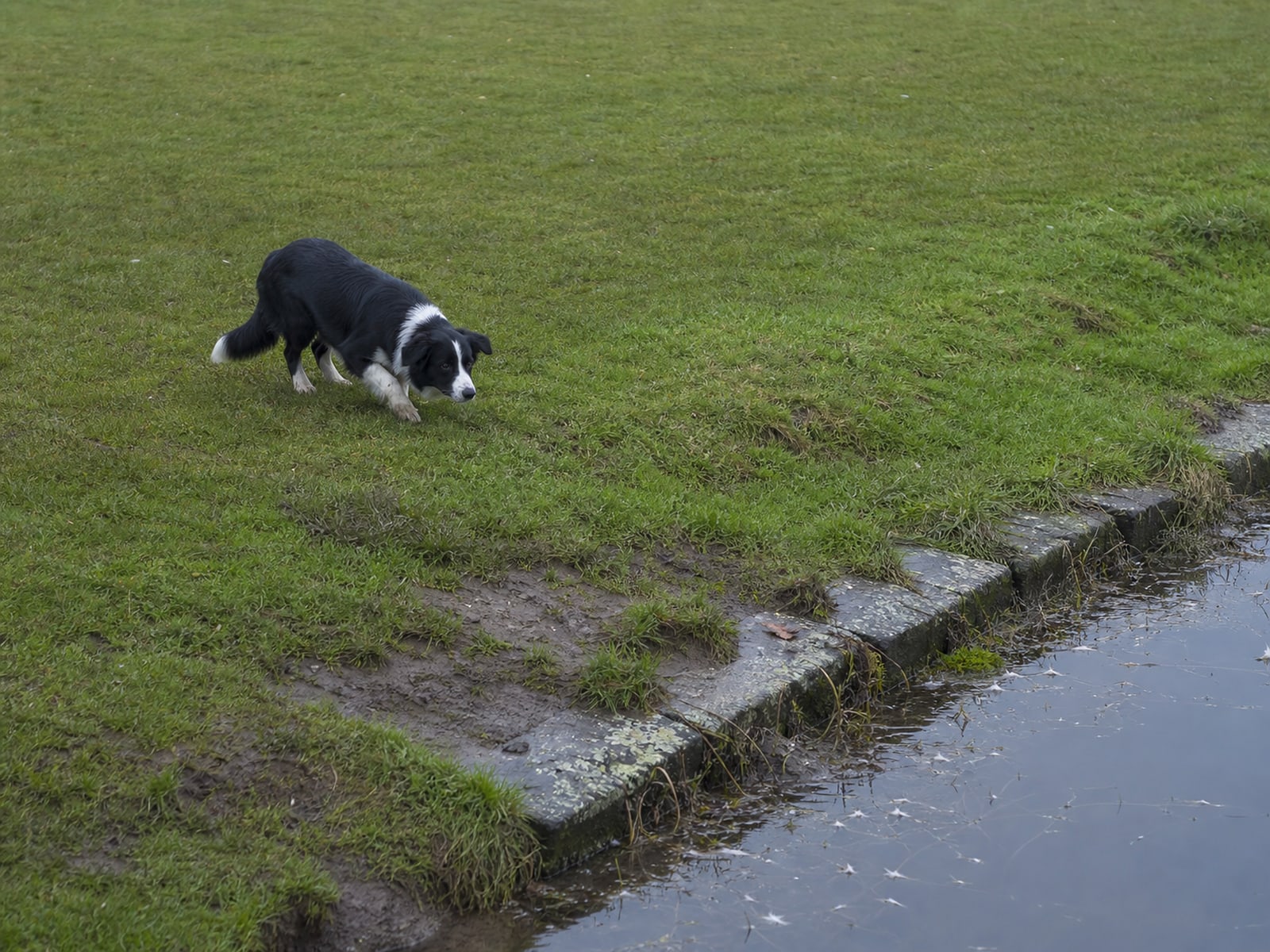
Maintained ground in Middletown, CT holding clear of Canada geese after repeat visits

Middletown goose control questions

Can a trained dog work on a Middletown ball field or at the lake?

Not without written permission that addresses the rules directly. Code section 214-10 allows dogs in city parks only on leash and prohibits them at city beaches and pools, and the Parks Division adds that they are not allowed on ball fields or on the beach at the lake. There is no working-dog exemption in the code we reviewed.

Is feeding geese against the rules in Middletown?

Not as an ordinance we could find. The city's stormwater plan directs public education discouraging waterfowl feeding and its stormwater page carries a do-not-feed resource, which is policy rather than an enforceable code section. On your own property you can set the rule yourself, and it is usually the single most effective thing available.

Does the city treat this as a water-quality issue?

Yes, explicitly. Its stormwater plan commits to identifying where waterfowl congregate and where public feeding happens, educating residents about it, discouraging congregation and isolating direct drainage from those areas. The staff training material files the topic under waterfowl management and bacteria.

Our property is on the river rather than a pond. Same approach?

Same method, different plan. A broad river corridor with lowland beside it does not respond to the same shoreline treatment as a contained pond with a mown edge, and the birds' route onto your turf is usually longer and less obvious. That is what the site walk is for.

How much does goose control cost in Middletown?

It is quoted per site, on ground worked, bird numbers, water edge, visit frequency and what the surface is used for. No credible published range exists for this region, and any figure offered before somebody has walked the property is a guess.

Is TPC River Highlands a Middletown course?

No. It is private and in Cromwell, immediately north of the city, and Lyman Orchards is in Middlefield. It is a small thing, but a provider who places either one in Middletown is telling you how carefully they read a map.

We are near a reservoir or the well field. Does that change anything?

It can. Middletown runs its own water department, its two active sources are Mount Higby Reservoir and the River Road Well Field, and the city brought watershed land and aquifer protection areas into its zoning. Anything physical near those areas needs the Water Department in the conversation as well as the property owner.

Local detail

Canada geese in Middletown, Middlesex County

Middletown is a Middlesex County city of about 47,700 residents on the Connecticut River, with the Mattabesset on its northern side and the Coginchaug joining it less than a mile upstream of the Connecticut.

The city treats waterfowl as a water-quality matter rather than an aesthetic one. Its stormwater plan commits to identifying where waterfowl congregate and where public feeding occurs, to educating residents about it, and to isolating direct drainage from those areas, and the staff training material files the subject under waterfowl management and bacteria. On the ground, the city has both river frontage at Harbor Park and Wilcox Island and a set of contained ponds including Pameacha Pond and Crystal Lake.

Neighborhoods we cover in Middletown

Parts of Middletown where we work. Each one opens in Google Maps.

Bordering towns: Cromwell, Portland, East Hampton, Haddam, Durham, Middlefield, Berlin, Meriden. A flock does not recognize a town line, so a program sometimes has to be scoped wider than one parcel.

Getting there: Route 9, Route 66, Route 17, South Main Street, Washington Street, Randolph Road, Long Lane.

We cover all of Middletown and the ground around it. If your neighborhood is not listed, or you are not sure which one you are in, it is very likely we work there. Ask and we will confirm.

Talk to us about your Middletown property

Tell us what you are dealing with: roughly how many birds, which surfaces they are fouling, whether the water is river or pond, and who owns the ground.

Tri-State Geese Patrol runs humane Canada goose abatement with trained Border Collies across Connecticut, Massachusetts and New York, and we are reachable 24 hours. Call (203) 856-4889 and it goes to Bill.

And if the honest answer for your site is an unmown strip and a no-feeding rule rather than a contract, we will say so.