Tri-State Geese Patrol

Goose Control in Manchester, CT

Humane Canada goose abatement for Manchester properties, using trained Border Collies that move birds without touching them. Manchester has already been through the governance of a goose problem, on the record.

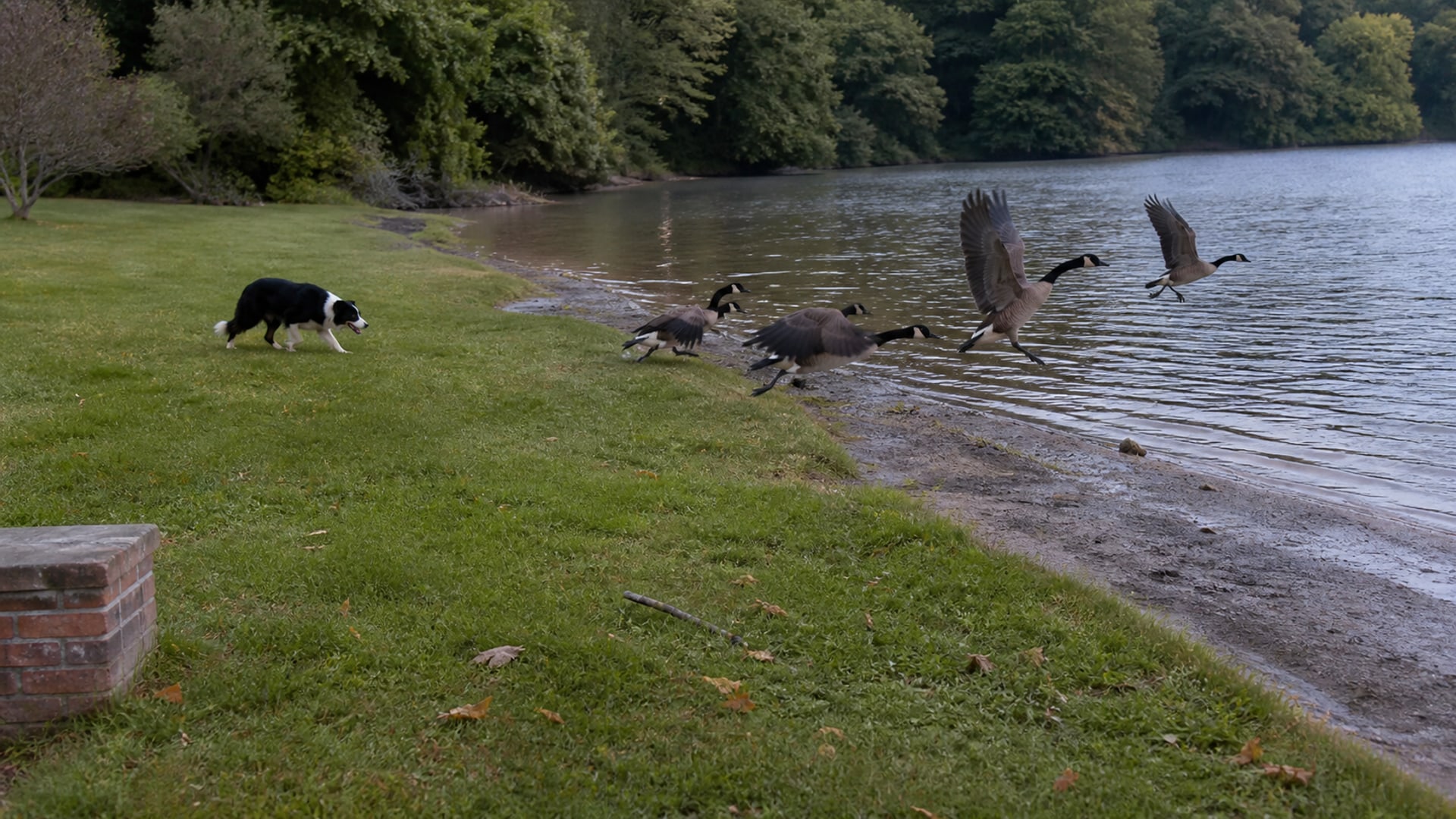
Open mown grass beside water of the kind Canada geese settle on in Manchester, CT

At a glance

Town

Manchester, Connecticut

Method

Non-lethal herding by trained Border Collies, no contact with any bird

Permit needed to move geese this way

None, provided no bird is harmed

Local rule worth knowing

The 2021 wildlife feeding ordinance names geese, and it reaches private property too

Manchester has already dealt with this in public

Three separate town records establish that geese are a real, recurring Manchester matter rather than a marketing premise. It is unusual to find even one.

The first is the town's own description of Union Pond. Manchester's Hockanum River Linear Park Committee page says the pond hosts a large number of water birds including Canada geese year round. Year round is the operative phrase. That is a resident flock at a named site, written by the town.

The second is a governance record. On February 9, 2016, Manchester's Golf Course Lease Oversight Committee considered the goose situation at the golf course and voted unanimously not to object to the club's proposed actions to address it, carried out under the direction of the Connecticut Department of Energy and Environmental Protection. Set aside what those actions were: what the record shows is that a goose problem at a Manchester property was serious enough to reach a town oversight committee, and that the state agency's direction was part of the answer.

The third is the ordinance. In February 2021 the town adopted wildlife feeding rules whose definition expressly includes geese. Towns do not usually write geese into a code section unless somebody has been arguing about them.

What we cannot show you is a completed job of our own in this town. No such public record exists.

Manchester's feeding ordinance reaches further than most

If you own or manage ground here, this is the most useful local rule in the whole file, and most people do not know it exists.

Chapter 113, Article IV, adopted February 2, 2021, regulates wildlife feeding. Section 113-7 defines wildlife to include geese. Section 113-8 then prohibits any person from intentionally feeding wildlife on a regular or continuous basis on private property, in any public park, or on other property owned or operated by the town.

Read that boundary again, because it is wider than the equivalent rule almost anywhere else in our service area. It is not only town parks. It reaches private property as well. There are limited exceptions, covering authorized rehabilitation or relocation, environmental education centers, certain licensed control activity, and public officers or employees carrying out their duties. Section 113-9 gives enforcement to the Animal Control Officer and sets a hundred dollar penalty.

That matters because feeding is the single thing most likely to hold a flock in place against everything else a property does. On a condominium common area or an office lawn where one well-meaning resident is the reason the birds stay, Manchester gives you an actual rule to point at rather than a polite request.

What the ordinance does not do is authorize anybody to enter a site or alter a shoreline. It is a prevention tool, and a good one, but it is not permission for the rest of the work.

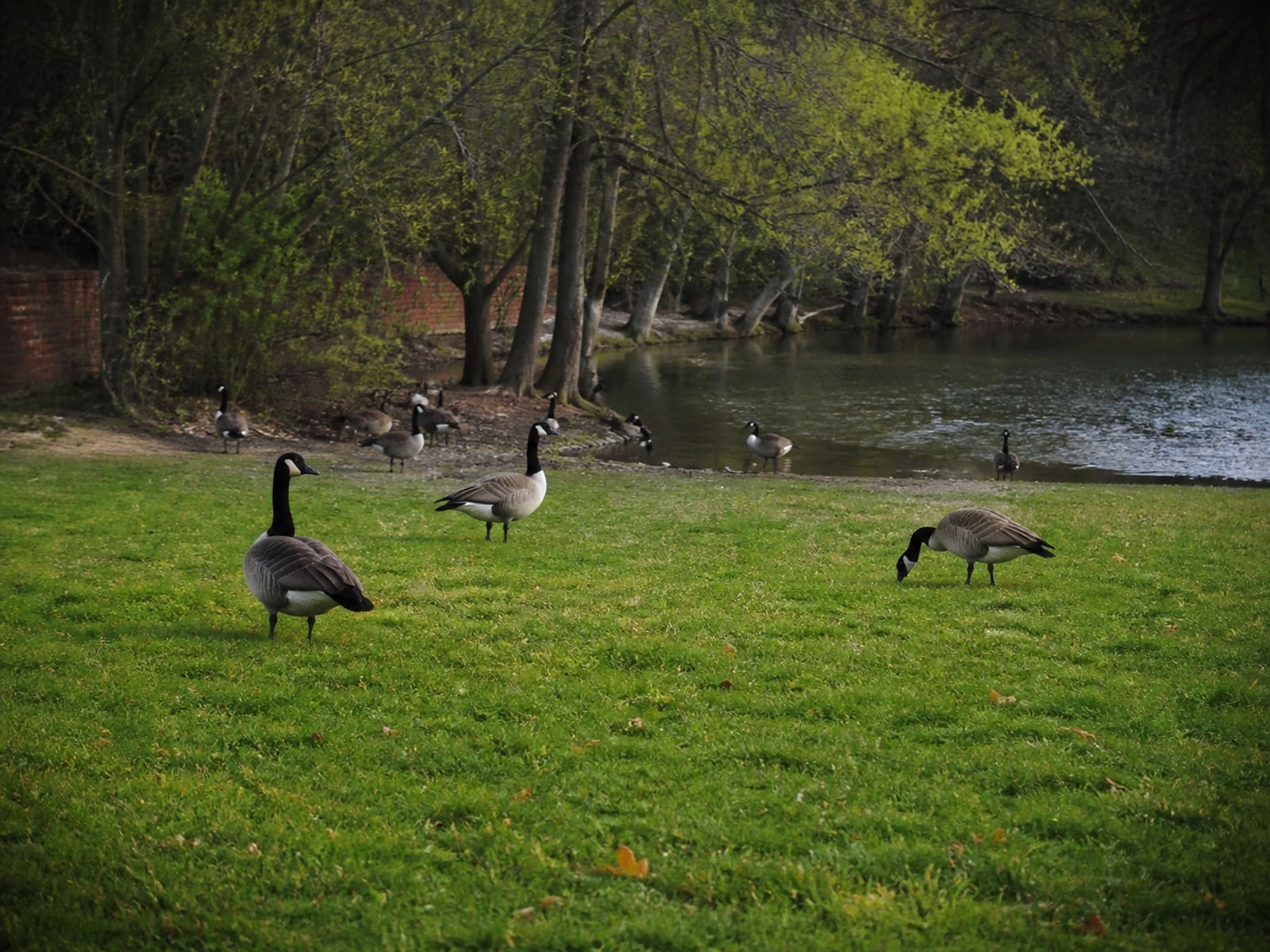
Canada goose droppings and grazed turf on maintained ground in Manchester, CT

Where does lawn meet water in Manchester?

Manchester's own mapping names more surface water than any town in our area.

Union Pond and the parks around it

The town's named year-round goose site. Union Pond Park at 228 North School Street has pond frontage, fishing and boating access, a fitness trail, picnic space and winter skating. Northwest Park at 448 Tolland Turnpike holds the north shore with baseball fields, a fishing pier and trails, and town material records high school baseball use there. Robertson School and Robertson Park sit on North School Street nearby. That is a lot of maintained turf around one pond that the town says holds geese all year.

Center Springs Park and its pond

39 Lodge Drive, a 57 acre park around a roughly six acre pond fed by Bigelow Brook, with lawns, trails and athletic uses. The pond has a real management history: restoration work aimed at water quality and its recreational role, weekly litter pickup, sediment controls and periodic forebay dredging in the archival record, and a later town discussion of aeration and fountains for summer algae after dredging. Worth being precise here: none of that record proves geese caused the algae or the sediment, and we are not going to say it did.

The golf course the town actually owns

Manchester Country Club at 305 South Main Street sits on municipally owned land, operated by Manchester Country Club, Inc. under a town lease and oversight structure, with public tee times as well as memberships. Its own handbook identifies a creek and water hazard at the eleventh. The lease and oversight arrangement is exactly why a goose issue there reached a town committee in 2016, and it is why the decision path is not the same as at a private club.

Two things people get wrong

Wickham Park straddles Manchester and East Hartford and has ponds, gardens, broad lawns and picnic ground, but it is a private nonprofit park rather than town land, so the buyer is not the town. And Globe Hollow Swimming Area is an outdoor pool, not a beach on the reservoir. Manchester's park locator does not advertise a municipal beach on natural water at all.

The town owns its own water, and that adds a step

Unlike most of our service area, Manchester is not on a regional water utility. The Manchester Water and Sewer Department runs the town's drinking water and wastewater directly, and that changes who has to be consulted.

The supply is a mix of surface water and wells. The town's water quality material identifies Globe Hollow, Porter, Lydall 1, Lydall 2 and Howard reservoirs inside Manchester, plus Risley Reservoir in Vernon and Buckingham Reservoir in Glastonbury, with water conveyed to the Spring Street treatment plant. Case and Taylor reservoirs appear in the town's own surface water inventory as well.

The town also requires special notification for land-use applications in mapped public water aquifers and watersheds, naming the Globe Hollow, Lydall Reservoir No. 2, New Bolton Road, Porter Reservoir and Howard Reservoir watershed areas, along with the New State Road, Love Lane and Charter Oak aquifer areas.

The practical consequence is simple. A shoreline deterrent or habitat proposal near supply land in Manchester needs Water and Sewer Department review on top of ordinary owner consent and any wetlands review. That is one more door than most towns, and it is better opened at the start.

As always, this concerns changing ground rather than moving birds. Working a dog across maintained turf is not a regulated activity. Planting a buffer or setting a barrier at a pond edge can be, and near a supply reservoir it involves more than one authority.

One more Manchester specific worth having in mind when you scope a site. The town's park and pond record shows real, funded attention to these waters over time, including restoration work and later aeration at Center Springs, and a golf course whose goose situation reached a public committee. That is a municipality that already understands the ground it is standing on, which usually makes a well-evidenced proposal easier to have accepted rather than harder.


What are the rules about working dogs in Manchester?

Less prescriptive than some neighbors, which is not the same as permissive.

We could not find a Manchester code section imposing a universal leash rule in every municipal park. What the code does establish is section 113-2, requiring whoever controls a dog to remove waste from private property belonging to another, condominium common elements, parks, school grounds and other public property before leaving.

State law then sits underneath. Connecticut General Statutes section 22-364 prohibits allowing a dog to roam on another person's land or a public highway while unattended or not under control. Its express exception concerns hunting dogs in season, which has nothing to do with this work, and there is no general commercial working-dog exemption anywhere in it.

Site rules add a further layer. Mt. Nebo carries the town's designated dog park with its own posted rules, and pool rules require dogs in the pool area to be leashed and out of the water. Those are site rules rather than a townwide standard, and they are a reminder that the posted sign at a given facility can be the operative rule.

So the working position here is the one we take everywhere: written property authorization, scheduling coordination, direct handler control, cleanup compliance, and confirmation of any posted rule at that specific site. No Manchester exemption for commercial goose-control dogs exists that we could find, and we would not proceed as though one did.

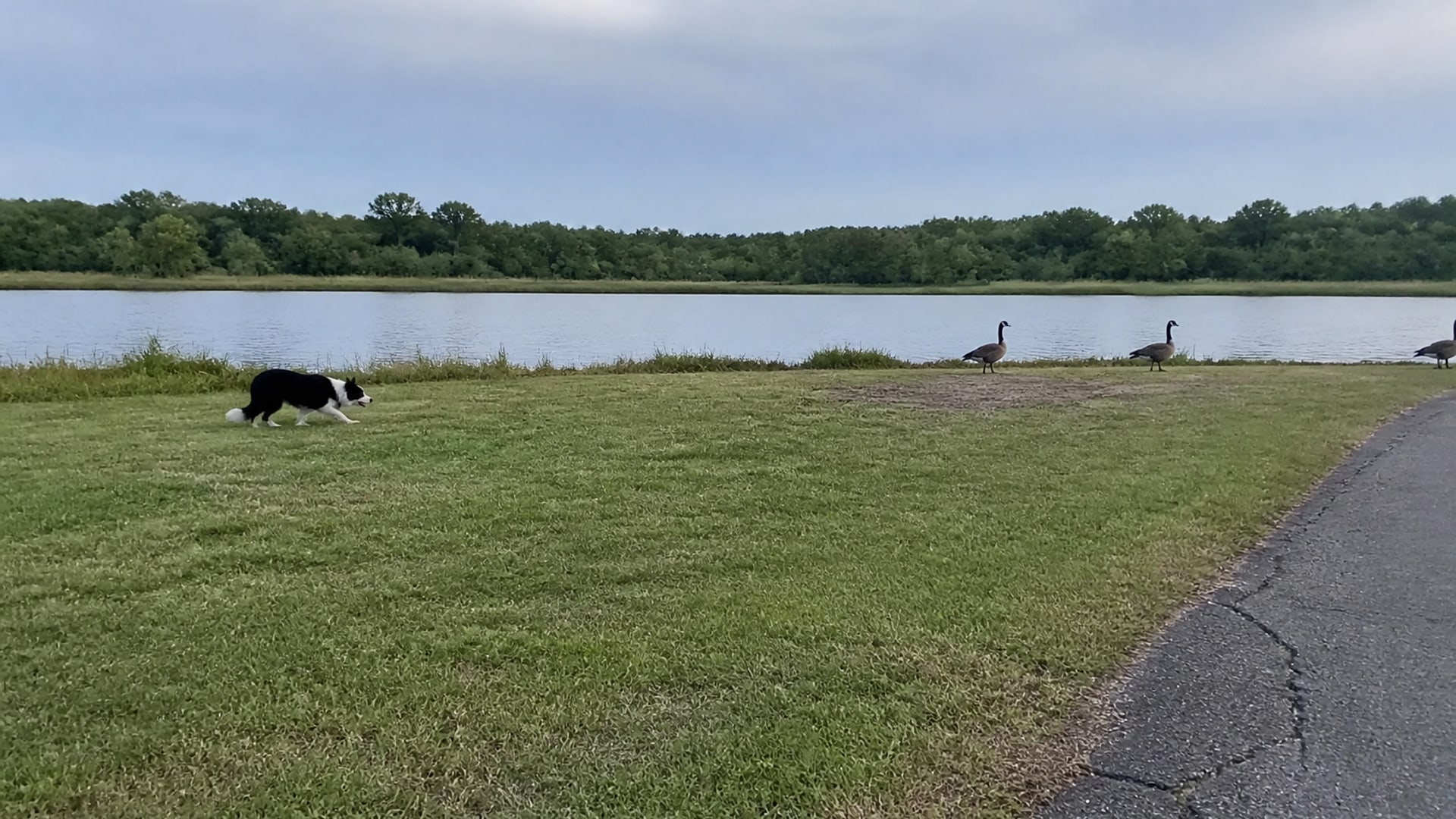
A Border Collie working a flock of Canada geese off maintained ground in Manchester, CT

What happens after you call about a Manchester property?

The fieldwork is the same on a fairway, a pond-side ball field and a condominium lawn. The front end here is about which of several town bodies holds the ground and the water.

  1. 01

    We ask what you are seeing, and what has been tried

    How many birds, on which surfaces, at what times, and how close the water is. Given how much named water this town has, the nearest pond is often not the one the flock is actually using.

  2. 02

    We establish ownership, and whether supply land is involved

    Town park, school ground, the leased golf course, a private nonprofit park, association common land or private property, and whether the site sits in one of the mapped watershed or aquifer areas that trigger Water and Sewer review.

  3. 03

    We walk the ground and map the way up from the water

    Geese travel between water and turf on foot. The useful map is where they come up, which grass they graze, where they loaf, and which of that you control.

  4. 04

    We settle authorization and site rules before scheduling

    Written property authorization, handler control and cleanup set out, any posted site rule confirmed, and Water and Sewer review where supply land is involved.

  5. 05

    The dogs work at times the flock cannot anticipate

    A handler works the ground with a trained Border Collie in a stalking posture. A goose responds to that as it would to a predator, by leaving, with no contact and no capture. The visits repeat unpredictably, because a schedule the birds can learn is one they will sit out.

  6. 06

    We deal with the feeding, and we measure

    In Manchester that includes pointing at chapter 113 where feeding is part of the problem, on private ground as well as public. Then counts, locations, complaints and the gap between a visit and the birds returning, which is the first honest evidence you get.

What we handle, and who handles the rest

We do not apply turf repellents. They are registered pesticides, applying one to commercial turf in Connecticut is licensed work, and we hold no such certification. A licensed applicator is the right call if a repellent suits a defined surface.

We do not addle eggs or work on nests. That is regulated activity, the landowner registers with the US Fish and Wildlife Service before anything happens, Connecticut accepts that federal registration and adds a further requirement where a commercial control firm is involved, and the authorization belongs to the landowner rather than to a contractor. The 2016 golf course record is a useful illustration of the principle: the actions there proceeded under the state agency's direction, not on a vendor's say-so.

This is a maintained program rather than a one-time fix. The town's own description of Union Pond, birds there year round, is the honest starting point for what a program on that kind of site is up against.

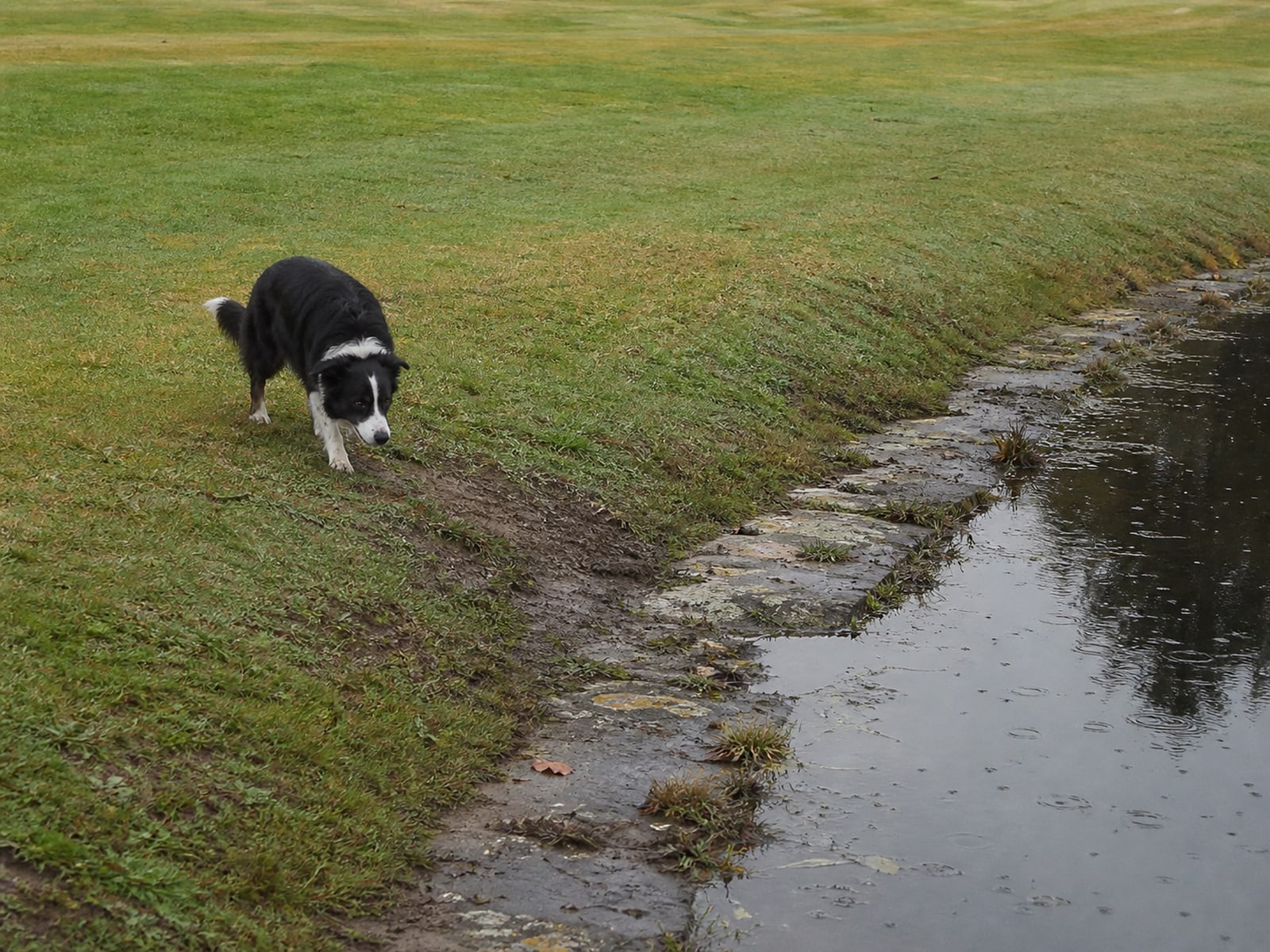
Maintained ground in Manchester, CT holding clear of Canada geese after repeat visits

Manchester goose control questions

Is there really a documented goose issue in Manchester?

Yes, in three places. The town describes Union Pond as hosting a large number of water birds including Canada geese year round, a town oversight committee addressed a goose problem at the golf course in February 2016 under state agency direction, and the town's 2021 wildlife feeding ordinance names geese explicitly.

Can we stop people feeding the geese on our own property?

In Manchester, yes, with a rule behind you. Section 113-8 prohibits intentional feeding of wildlife on a regular or continuous basis on private property as well as in public parks and on town property, with geese inside the definition, enforcement by the Animal Control Officer and a hundred dollar penalty.

Can a trained dog work on a Manchester town field?

Only with written property authorization. We could not find a universal park leash rule in the code, but state law still requires a dog to be attended and under control, waste removal is required on public and shared property, and individual sites carry their own posted rules. There is no commercial working-dog exemption here.

Our site is near a reservoir. Does that change things?

It adds a review. Manchester runs its own water utility, and the town requires special notification for land-use applications in the mapped watershed and aquifer areas it names. Anything physical near supply land needs Water and Sewer Department input as well as the owner's consent.

How much does goose control cost in Manchester?

It is quoted per site, on ground worked, bird numbers, water edge, visit frequency and what the surface is used for. No credible published range exists for this region, and a figure offered before somebody has walked your property is a guess.

Is the golf course handled like a private club?

Not quite. The land is municipally owned and operated under a town lease with an oversight structure, and public tee times sit alongside memberships. That is why a goose question there once reached a town committee, and it means the approval path involves more than the club alone.

Did the geese cause the algae at Center Springs Pond?

We do not know, and neither does the public record. The pond has a documented history of dredging, sediment control and later aeration for summer algae, but nothing in that record attributes the problem to geese. Birds on a pond are a reason to test rather than a test result.

Local detail

Canada geese in Manchester, Hartford County

Manchester is a Hartford County town of roughly 59,700 residents, and its own mapping names more surface water than any municipality in this service area: more than a dozen ponds, seven reservoirs and ten named brooks and rivers.

It is also the town with the clearest public goose record. The Hockanum River Linear Park Committee describes Union Pond as holding a large number of water birds including Canada geese year round, a town oversight committee addressed a goose problem at the municipal golf course in 2016 under state agency direction, and the 2021 wildlife feeding ordinance names geese and reaches private property as well as town land. Manchester also runs its own water utility rather than sitting on a regional system.

Neighborhoods we cover in Manchester

Parts of Manchester where we work. Each one opens in Google Maps.

Bordering towns: East Hartford, Glastonbury, Vernon, Bolton, South Windsor. A flock does not recognize a town line, so a program sometimes has to be scoped wider than one parcel.

Getting there: Interstate 84, Interstate 384, Main Street, Tolland Turnpike, North School Street, South Main Street, Middle Turnpike.

We cover all of Manchester and the ground around it. If your neighborhood is not listed, or you are not sure which one you are in, it is very likely we work there. Ask and we will confirm.

Talk to us about your Manchester property

Tell us what you are dealing with: roughly how many birds, which surfaces they are fouling, how close the water is, and whether anybody is feeding them.

Tri-State Geese Patrol runs humane Canada goose abatement with trained Border Collies across Connecticut, Massachusetts and New York, and we are reachable 24 hours. Call (203) 856-4889 and it goes to Bill.

And if the honest answer for your site is an unmown strip and enforcing the feeding rule rather than a contract, we will say so.