Tri-State Geese Patrol

Goose Control in Cheshire, CT

Humane Canada goose abatement for Cheshire properties, using trained Border Collies that move birds without touching them. Cheshire is one of the few towns where this method already has a written local track record.

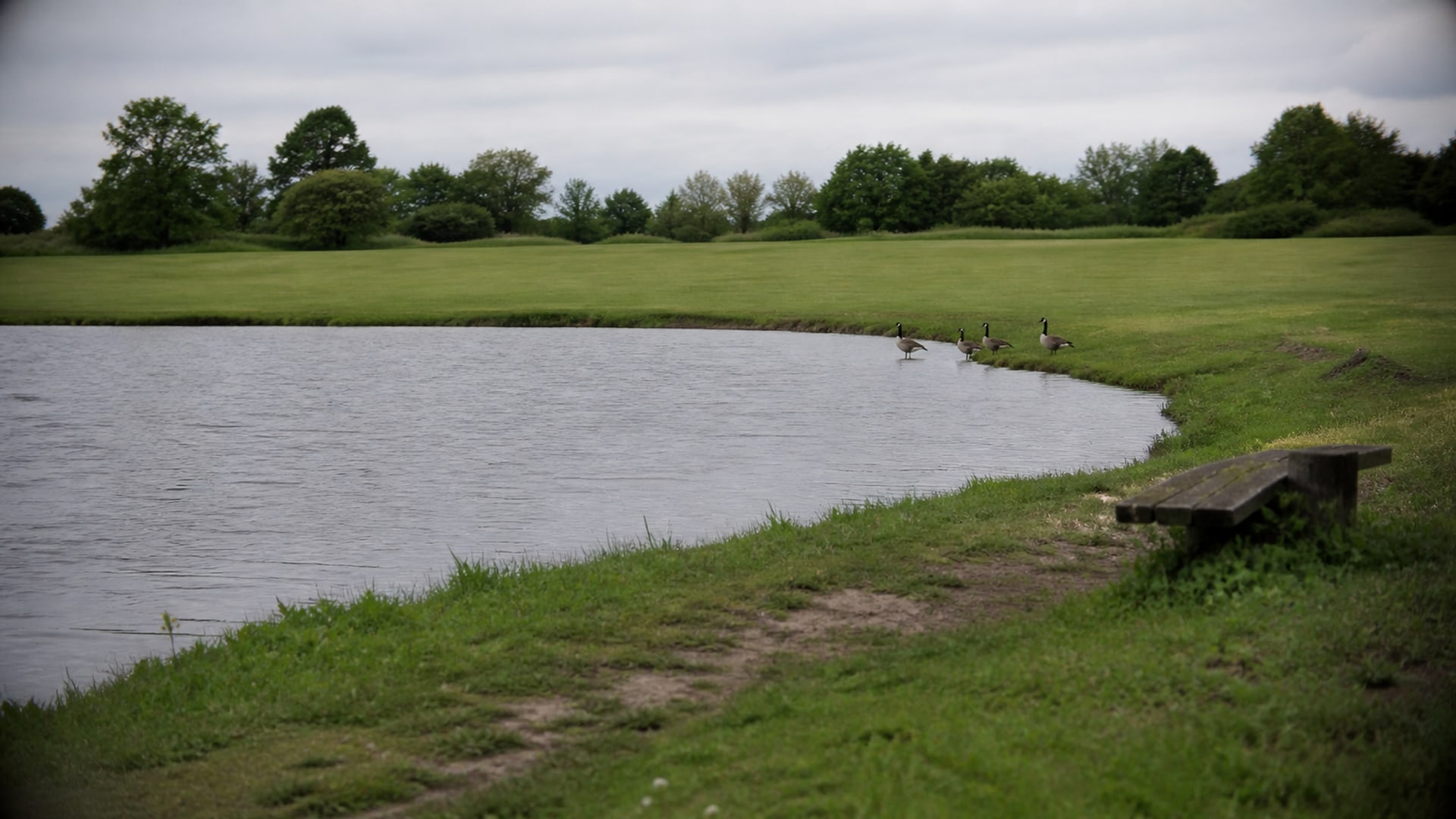
Open mown grass beside water of the kind Canada geese settle on in Cheshire, CT

At a glance

Town

Cheshire, Connecticut

Method

Non-lethal herding by trained Border Collies, no contact with any bird

Permit needed to move geese this way

None, provided no bird is harmed

On the record locally

The town's own stormwater plan describes years of dog-based goose work at Mixville

Cheshire has already run a dog program, and put it in writing

Most towns have nothing on paper about geese. Cheshire has something better than a testimonial, and it comes from the town rather than from a vendor.

Cheshire's 2017 stormwater management plan states that the town had already put practices in place to discourage waterfowl from gathering at Mixville Ponds. It then says something more specific: that a contractor had been engaged at that location for close to ten years to discourage geese using trained dogs.

Read that sentence carefully, because it carries two facts that pull in opposite directions and both are useful to you.

The first is that the method works well enough for a Connecticut town to keep paying for it at the same site for the better part of a decade. Municipal spending does not survive that long on hope, and it does not survive an annual budget review at all if the pond looks the same as it did before.

The second is that it ran for a decade. Nobody declared the problem solved and stopped. That is not a failure of the approach, it is the approach: goose work at a site that keeps offering food and water is a maintenance line, in the same category as mowing, and any company that sells it to you as a one-time cure is describing something Cheshire's own record contradicts.

The same passage notes that Parks and Recreation held permits to addle eggs and treat nests. That detail matters for a different reason, and we come back to it below, because it shows exactly where that authority sits.

Where does lawn meet water in Cheshire?

Cheshire's water is more scattered than in the towns to its north, and a couple of the obvious assumptions do not hold. Where the record does not confirm something, this says so instead of guessing.

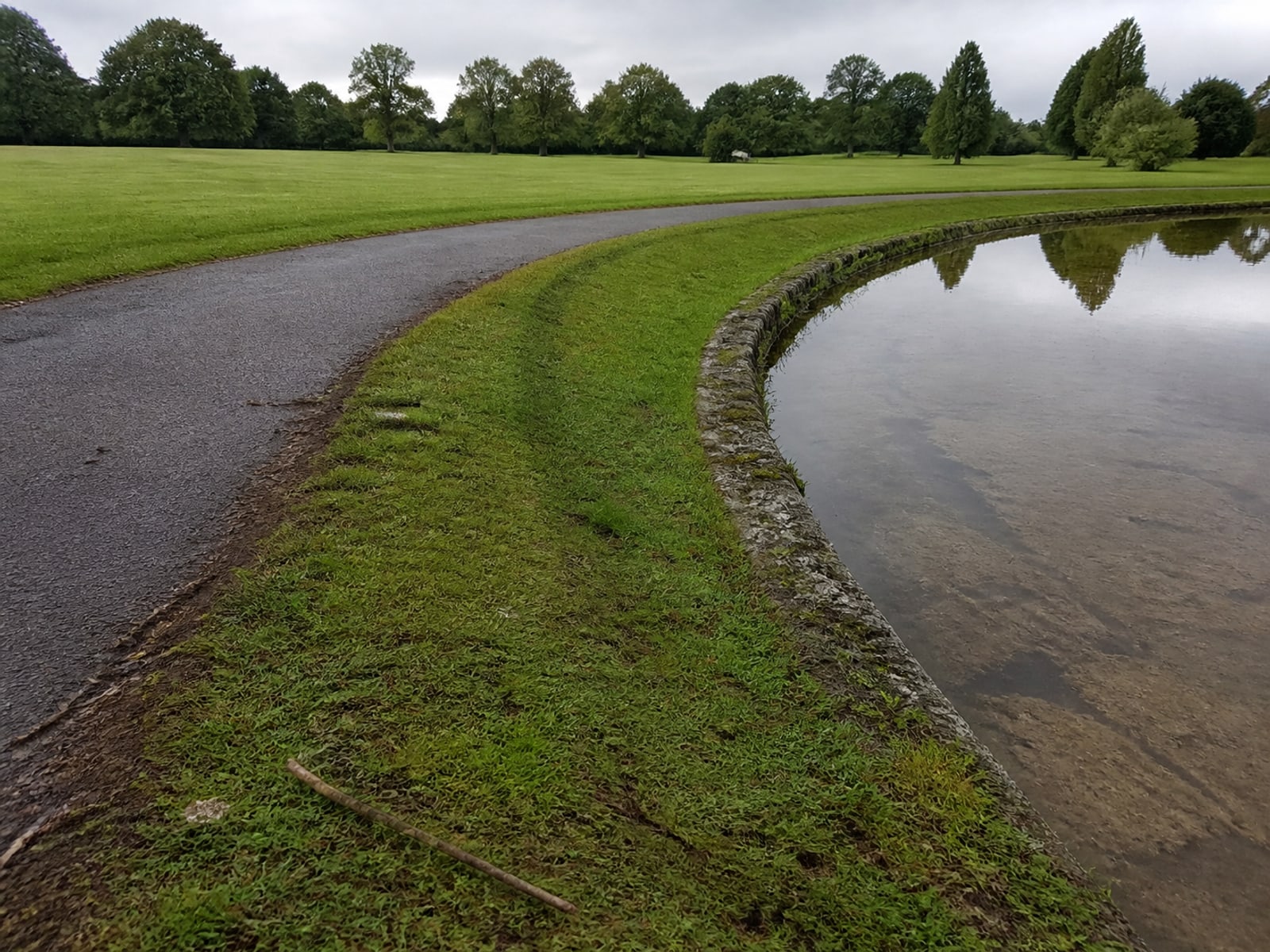
Canada goose droppings and grazed turf on maintained ground in Cheshire, CT

Mixville Recreation Area

At 1300 Notch Road near the Prospect line, with Mixville Pond and an upper pond, picnic areas, pavilions, a beach, swimming and fishing. The town's own stormwater plan refers to Mixville Ponds in the plural. It is the confirmed open-turf-and-water site in town and it is the one the town itself has managed for geese, which makes it the reference point for any conversation about a Cheshire property.

Broad Brook Reservoir, which is not Cheshire's water

Off Reservoir Road, and part of the City of Meriden's public water supply. Cheshire's open space material records 1,307 acres held by the Meriden water utility and 146 acres held by the Regional Water Authority among roughly 4,700 acres of protected open space in town. Water inside the town line is not automatically the town's to manage, and on public water supply land that distinction is not a technicality.

The Quinnipiac corridor and the historic ponds

Quinnipiac Park River Walk is water-adjacent open space, though the record does not describe broad mown turf there. Upper and Lower Case Ponds are historic mill ponds on Birch Mountain Brook near Spring Street in the Highland Park area. Town plan mapping also labels Lake Brook, Broad Swamp and Clear Brook. Plenty of water, not all of it beside the kind of grass geese want.

The distribution campuses, and the golf question

Cheshire has a substantial industrial base along Industrial Avenue, Knotter Drive and West Johnson Avenue, with the town's draft 2025 plan naming Bozzuto's, Whole Foods Northeast distribution, Macy's Logistics, Collins Aerospace, Hanwha Aerospace and IAT Insurance among major employers. Large campuses often carry detention basins, but no specific pond or basin at any of them is documented, so that is a parcel check rather than a claim. On golf: no operating course in Cheshire itself was confirmed. The Farms Country Club sits just southeast at a Cheshire Road address in Wallingford, which is a different town.

Who has to be asked in Cheshire, and what is the seven-day rule?

Cheshire has one procedural wrinkle that most neighboring towns do not, and it catches people out.

The Inland Wetlands and Watercourses Commission is the local body, described in the town budget as seven appointed members regulating activity in or near designated wetlands and watercourses, with Planning and Development staff supporting it. The town publishes the regulations, applications, the required notification list and the bylaws.

Here is the wrinkle. Because so much of Cheshire sits in public water supply watershed and aquifer protection area, the town's checklist calls for a Regional Water Authority project notification alongside the local application, plus Natural Diversity Data Base and Department of Public Health notifications where they apply. The RWA notification has to go out within seven days of filing with the Planning Office. That is a real deadline attached to a form people forget exists.

As everywhere, this applies to changing ground rather than to moving birds. Planting a shoreline buffer, putting a barrier at a pond edge or regrading near a watercourse is the sort of thing that goes through this process. Working a dog across maintained turf is a different activity, and it would be wrong to tell you that every goose visit in Cheshire triggers a filing.

On timing, staff describe applications being accepted at a first meeting with future consideration dates set from there, and the town publishes no typical total review duration. So nobody, us included, should be giving you a date.


What are the rules about working dogs on Cheshire town land?

Unsettled in the published record, which means written permission rather than assumption.

We could not locate the Cheshire code section covering dogs in parks, leash requirements or any working-dog or commercial-dog exemption in the online code. That absence is not permission. State recreation guidance says to keep dogs leashed unless otherwise allowed, but that is state guidance about state land and it does not establish a Cheshire municipal rule either way.

The practical position, and the one we take, is that a municipal deployment needs written site permission from Cheshire Parks and Recreation or Public Properties, with the current park rules confirmed at the time. Any provider claiming a working-dog exemption in Cheshire is claiming something we cannot find written down.

Working hours are in the same position. Cheshire's current outdoor-work noise provisions and permitted hours are not clear from the published code, so we will not quote you any. We agree the working window with the property and keep the approval in writing, which is the right way round in any case, because goose work is most useful near the birds' feeding periods at either end of the day and that is exactly when hours matter.

On private ground, a distribution campus, an association's common land, a company lawn, the owner decides and the path is much shorter.

What happens after you call about a Cheshire property?

The fieldwork is the same at Mixville as it is on a corporate lawn off Knotter Drive. What changes is who signs and what sits under the water.

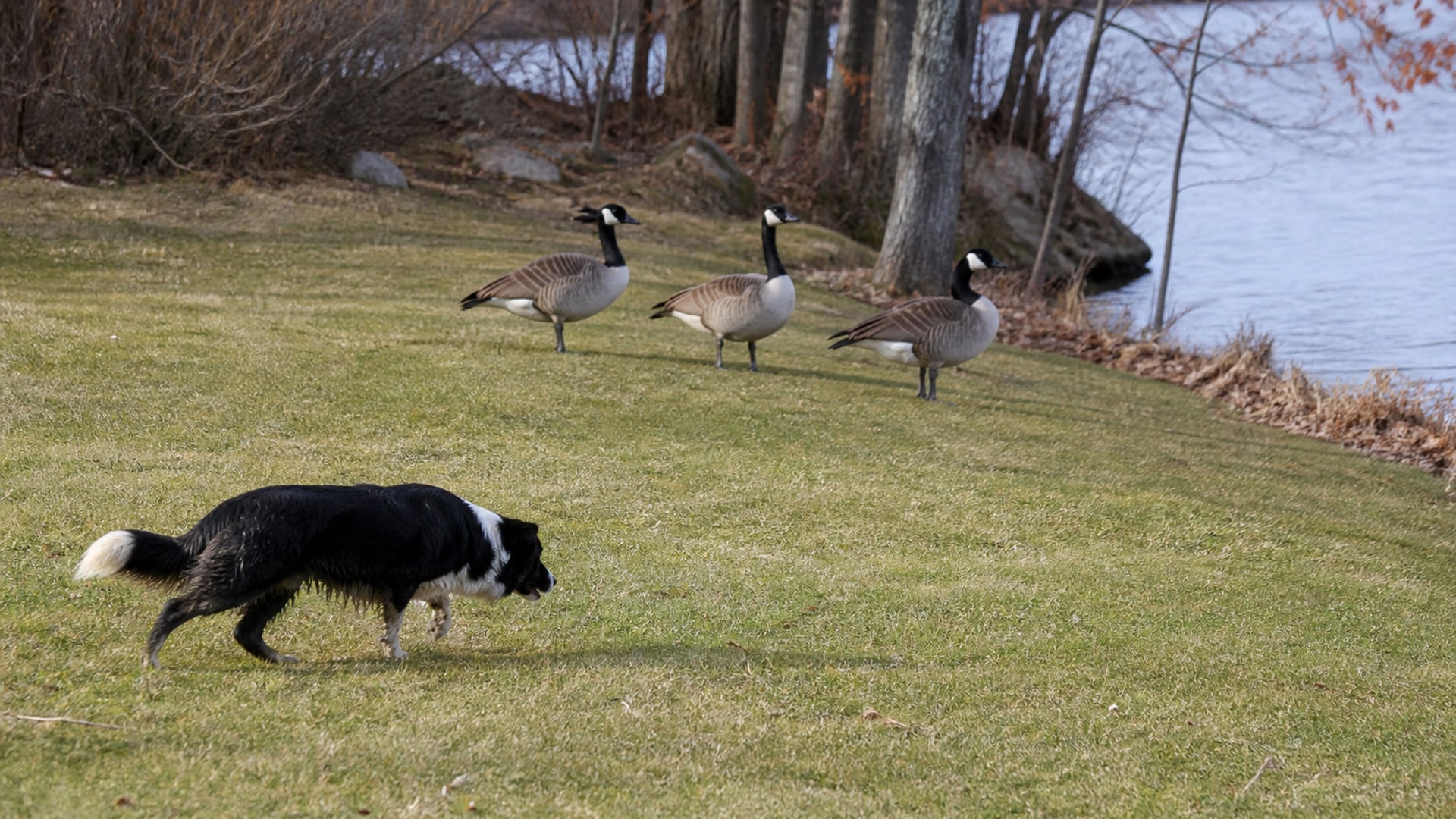
A Border Collie working a flock of Canada geese off maintained ground in Cheshire, CT
  1. 01

    We ask what you are seeing, and what has been tried

    How many birds, on which surfaces, at what times, and how close the water is. In Cheshire it is worth asking what a neighboring site does too, because a flock that gets moved off one pond has to go somewhere.

  2. 02

    We establish the ownership underneath

    Town park, school ground, private campus, association land, or public water supply watershed. That last category is larger in Cheshire than people expect, given the Meriden utility and Regional Water Authority holdings in town, and it changes who has authority before anything else is discussed.

  3. 03

    We walk the ground and map the way up from the water

    Geese move between water and turf on foot. The useful map is where they come up, which grass they graze, where they loaf, and which of that you control.

  4. 04

    We settle permissions before scheduling

    Written site permission on town land with the park rules confirmed, and, for any physical change near a wetland or watercourse, the wetlands application plus the Regional Water Authority notification inside its seven-day window.

  5. 05

    The dogs work at times the flock cannot anticipate

    A handler works the ground with a trained Border Collie holding a stalking posture. A goose reads that as a predator and leaves under its own power, with no contact and no capture. The visits then repeat unpredictably, which is the part a fixed schedule or a static device can never reproduce.

  6. 06

    We say what should change about the ground, and we keep score

    Where mowing stops, whether an unmown strip or a barrier is possible between water and turf, and whether feeding is still happening. Then counts, locations, complaints and the gap between a visit and the birds coming back. Cheshire's stormwater plan already commits the town to educating people about the harm of feeding waterfowl, so that part of the argument is already made locally.

What we do not do, and what the Mixville record shows about it

The Cheshire record makes one of these points better than we could.

The town's stormwater passage notes that Cheshire Parks and Recreation held the permits to addle eggs and treat nests. Not the contractor. The town. That is how this is meant to work: nest and egg activity is regulated, the landowner registers with the US Fish and Wildlife Service before anything happens, Connecticut accepts that federal registration and adds a further requirement where a commercial control firm is involved, and the authorization belongs to the landowner or the municipality. We do not perform it, and when somebody offers to handle a nest for you, the question to ask is who holds the authorization for that site.

We do not apply turf repellents either. They are registered pesticides, applying one to commercial turf in Connecticut is licensed work, and we hold no such certification. A licensed applicator is the right call if a repellent suits a defined surface on your property.

This is a maintained program rather than a one-time fix. Cheshire's own file describes a decade of work at one pond. That is what honest goose control looks like on a site that keeps offering birds what they came for.

When does acting in Cheshire cost the least?

Earlier in the year, almost always, and the reason is legal as much as practical.

Connecticut DEEP puts territorial defense as early as March and nesting by early April, with young hatching from April through June. Before a pair settles, a shoreline is just a shoreline and the options are wide open. Once a nest exists, the situation changes from a grounds problem into a protected-nest problem, and what anybody may lawfully do near it narrows sharply.

That timing is also why DEEP describes non-lethal techniques as effective when several are used together at the right time of year rather than as a set of interchangeable products. The same method applied in February and in May is not the same intervention.

The migration side adds a second rhythm on top of the resident flock. DEEP's statewide timing has migrants arriving in early October, movement continuing through November with another arrival peak in mid-December, and most birds leaving the state by mid-January, although mild winters hold numbers longer.

Nobody publishes freeze or thaw dates for Mixville or the other local waters, so we watch the water rather than the calendar. It matters most in winter, because a flock that settles in over the cold months is the flock you meet again in March with an established opinion about your ground.

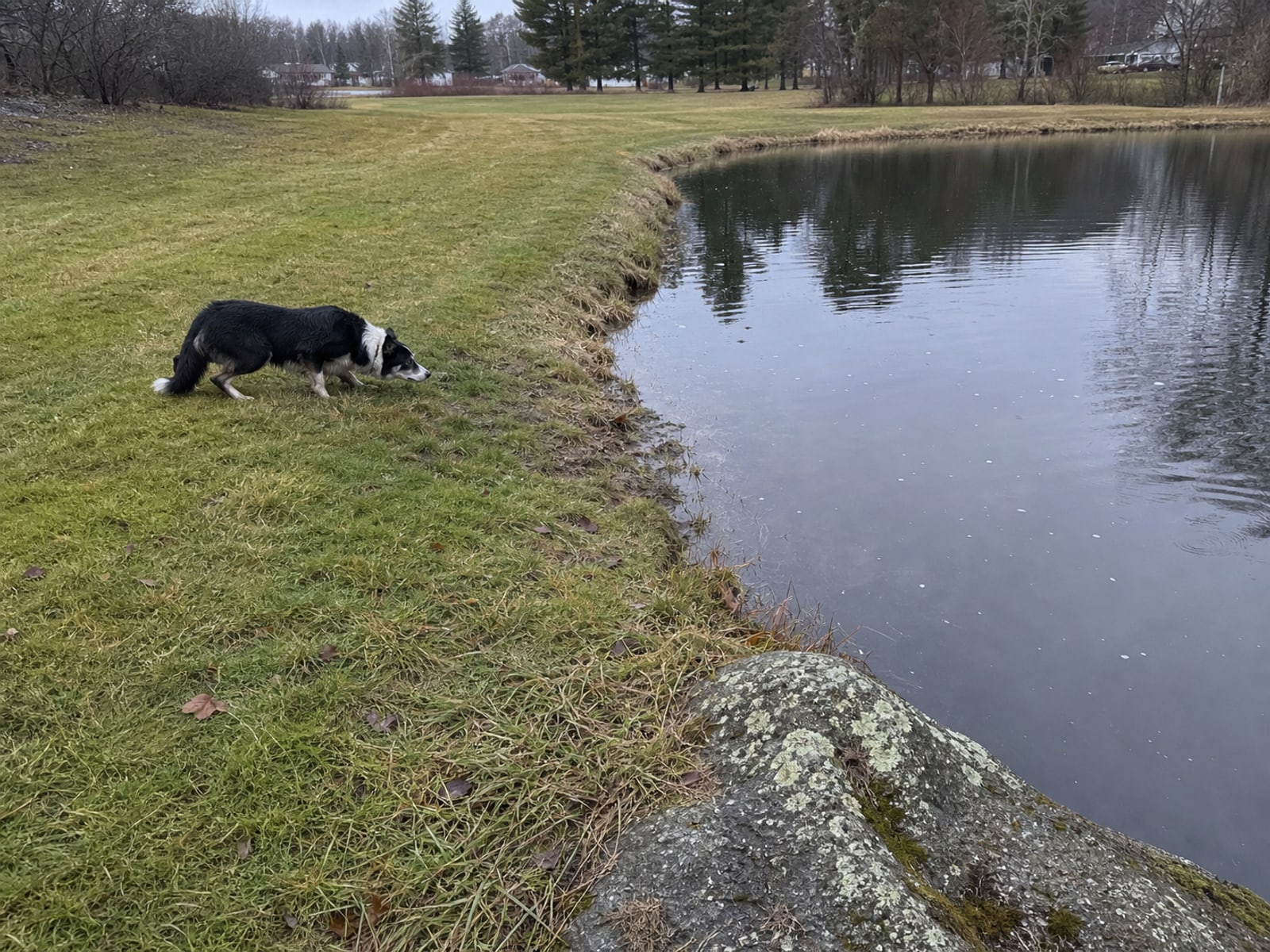
Maintained ground in Cheshire, CT holding clear of Canada geese after repeat visits

Cheshire goose control questions

Has this method actually been used in Cheshire?

Yes, by the town, at Mixville. Cheshire's 2017 stormwater management plan describes practices in place to discourage waterfowl gathering at Mixville Ponds and records that a contractor had been engaged there for close to ten years to discourage geese using trained dogs. That is a municipal document rather than a marketing claim.

If it worked, why did it run for ten years?

Because the pond kept being a pond. A site that offers open water beside grass will keep attracting birds, so the work is maintenance rather than a cure. What changes is how the birds use your ground while the program runs, which is why the honest comparison is with mowing rather than with a repair.

Do we need a wetlands permit for goose work in Cheshire?

Not for moving birds off turf with a dog. For physical work near a wetland or watercourse, the Inland Wetlands and Watercourses Commission is the body, and Cheshire adds a Regional Water Authority project notification that must be sent within seven days of filing with the Planning Office, plus other notifications where they apply.

Can a trained dog work on a Cheshire town park?

Only with written site permission. We could not find the town code section covering dogs in parks or any working-dog exemption, and an absence in the record is not authorization. We ask Parks and Recreation or Public Properties in writing and confirm the current park rules at the time.

How much does goose control cost in Cheshire?

It is quoted per site, on ground worked, bird numbers, water edge, visit frequency and what the surface is used for. There is no credible published range for this region. For town work, Cheshire's own recurring-service bid threshold was not something we could verify, so bids and RFPs run through the town's business page with questions to the Town Manager's Office.

Is there a Cheshire ordinance against feeding geese?

Not that we could find in the published code. The town's stormwater plan commits Cheshire to educating the public about the harm of feeding waterfowl and discouraging it, which is a policy position rather than an enforceable ordinance. On private ground you can simply post it and mean it.

Our site drains toward the reservoir. Does that matter?

It can. Broad Brook Reservoir is part of Meriden's public water supply, and large areas of Cheshire open space are held by the Meriden utility and the Regional Water Authority. That does not stop a program on your own ground; it changes who should know about it and which notifications apply if anything physical is planned.

Local detail

Canada geese in Cheshire, New Haven County

Cheshire is a New Haven County town of roughly 28,700 residents, and it is the one place in this service area where dog-based goose work already has a written municipal track record. The town's 2017 stormwater management plan records that a contractor had been engaged at Mixville Ponds for close to ten years to discourage geese using trained dogs.

The water here is scattered rather than concentrated, and a good deal of it is not the town's. Broad Brook Reservoir off Reservoir Road belongs to Meriden's public supply, and Cheshire's open-space record puts 1,307 acres in the hands of the Meriden water utility and 146 with the Regional Water Authority. Alongside that sits a substantial industrial and distribution base along Industrial Avenue and Knotter Drive.

Neighborhoods we cover in Cheshire

Parts of Cheshire where we work. Each one opens in Google Maps.

Bordering towns: Southington, Meriden, Wallingford, Hamden, Bethany, Prospect, Waterbury, Wolcott. A flock does not recognize a town line, so a program sometimes has to be scoped wider than one parcel.

Getting there: Route 10, Route 68, Route 70, Notch Road, Industrial Avenue, Knotter Drive, West Johnson Avenue, Interstate 691.

We cover all of Cheshire and the ground around it. If your neighborhood is not listed, or you are not sure which one you are in, it is very likely we work there. Ask and we will confirm.

Talk to us about your Cheshire property

Tell us what you are dealing with: roughly how many birds, which surfaces they are fouling, how close the water is, and whether the parcel is town, private or inside a water supply watershed.

Tri-State Geese Patrol runs humane Canada goose abatement with trained Border Collies across Connecticut, Massachusetts and New York, and we are reachable 24 hours. Call (203) 856-4889 and it goes to Bill.

And if the honest answer for your site is an unmown strip and a no-feeding sign rather than a contract, we will say so.