Tri-State Geese Patrol

Goose Control in Bristol, CT

Humane Canada goose abatement for Bristol properties, using trained Border Collies that move birds without touching them. In a city with its own reservoirs, the goose question is usually a water question too.

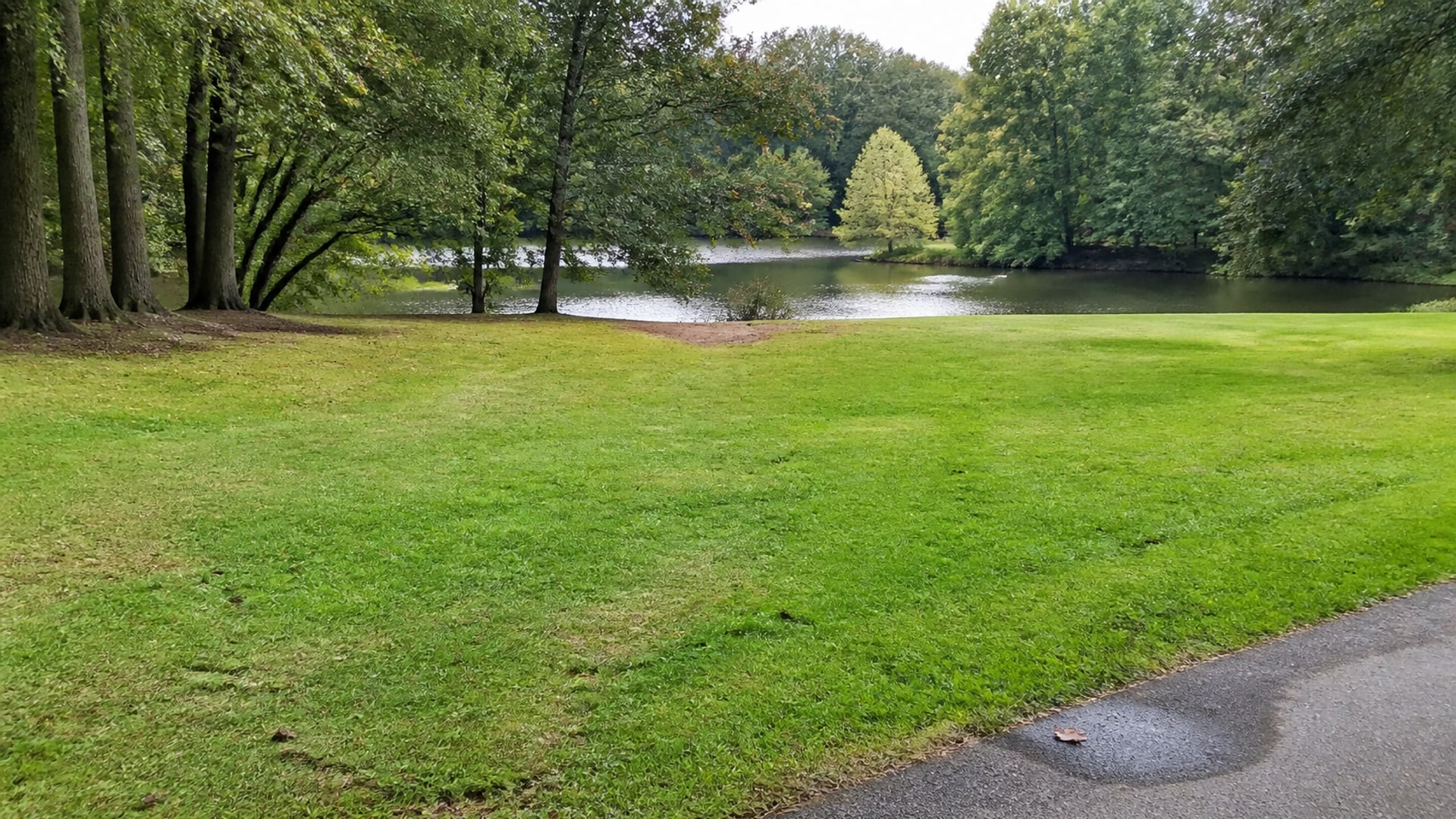
Open mown grass beside water of the kind Canada geese settle on in Bristol, CT

At a glance

City

Bristol, Connecticut

Method

Non-lethal herding by trained Border Collies, no contact with any bird

Permit needed to move geese this way

None, provided no bird is harmed

The local angle

Bristol names waterfowl management in its own stormwater work

Why does Bristol treat geese as a water-quality matter?

Because the city runs its own water system, and because its stormwater paperwork already says so.

Bristol updated its Stormwater Management Plan in 2017 to satisfy Connecticut's general permit for small municipal storm sewer systems, with the stated goal of reducing pollutants reaching surface waters. That plan's source inventory identifies waterfowl as a bacteria source. The city's 2024 annual report goes a step further and records, under its pollution-prevention measure, that Bristol coordinates with Public Works on waterfowl management as continuing work.

That is not a dramatic document, and it is worth reading precisely for what it is. It does not say Bristol has a goose crisis, and it does not describe a contract. It says the city already understands birds on turf beside water as something that shows up in bacteria numbers rather than only in complaints about the grass.

The scale behind that is genuinely a city-sized thing. The Water and Sewer Department reports a watershed of roughly 5,000 acres with seven reservoirs and three well fields, patrolled and maintained by a watershed crew and an outside forester, with surface reservoirs sitting in Bristol, Burlington, Harwinton and Plymouth. One city document counts six rather than seven, and neither publishes a full list of reservoir names, so anyone quoting a number should say where they got it.

For a property owner, the useful consequence is simple. If your turf drains toward water that eventually matters to somebody else, the goose conversation may involve more people than you expected, and getting them in the room early is faster than being surprised later.

One honest note, since we would rather you heard it from us. We could not find a documented Bristol goose complaint, project, meeting item or news report. The stormwater material is a programmatic reference, not a local incident, and we are not going to dress it up as one.

Where does lawn meet water in Bristol?

These are the named Bristol sites the city's own facility inventory documents. Where the record does not confirm a pond or a turf-to-water edge, this says so rather than filling in the gap, and none of them are named as customers.

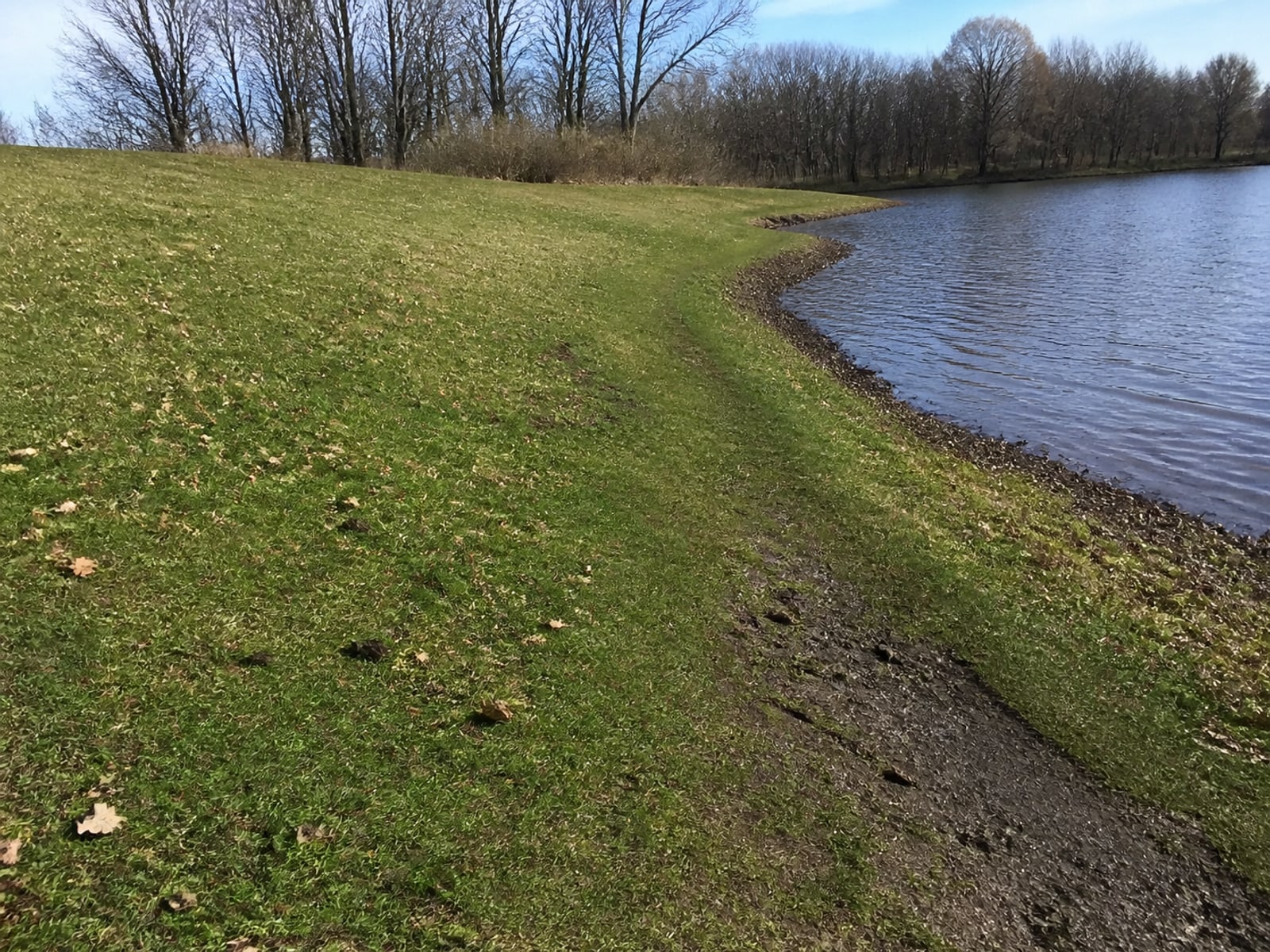
Canada goose droppings and grazed turf on maintained ground in Bristol, CT

Rockwell Park and its pond

A city facility at 63 Dutton Avenue west of downtown, with a named pond, open field, pool, sports facilities and trails. DEEP records the Pequabuck River as running through Rockwell Municipal Park before continuing on toward Plainville, so this is one of the few Bristol sites where a pond, a river and maintained recreation turf all sit on the same parcel. That combination is the goose problem in miniature.

Page Park and the lagoon

An 86 acre complex at 649 King Street with entrances from King, Moody, Page and Woodland, carrying a named lagoon alongside an outdoor pool, ball fields, tennis, disc golf and open park grounds. Heavy public use matters here, because it decides when anyone can work and how visible the work is.

Hoppers Birge Pond, which is not a lawn

A 270 acre preserve at 54 Ambler Road and Beech Street, described by the city as offering non-motorized boating, fishing, hiking trails and glacial kettles. It has plenty of water and very little mown turf, which changes what is worth doing there. Treating a nature preserve like a manicured park is a mistake that shows immediately, and it is one reason we ask what a site actually is before quoting.

Private courses and the school complexes

Chippanee Country Club is a private 18 hole club in the Chippens Hill section, though the reviewed record does not confirm ponds there. Bristol Central on Wolcott Street and Bristol Eastern on King Street both carry large athletic inventories, three baseball or softball fields, a football field, three soccer fields, tennis and a track apiece. What the record does not establish is which of those fields sit next to water, so that is a site walk question rather than a claim.

Who owns the water you are standing next to?

In a city this size the answer changes by a few hundred yards, and getting it wrong wastes a month.

Parks, Recreation, Youth and Community Services is the first stop for city ball fields and parks, and it has a Board of Park Commissioners alongside it. A problem at Rockwell Park, Page Park, Hoppers Birge Pond or a ball field starts there.

Public Works is a separate structure with its own divisions, and its Engineering function carries stormwater. That is the door a drainage or water-quality question goes through, and given that the city's own stormwater work names waterfowl management, it is also the door that already has this subject on its desk.

The Water and Sewer Department protects the municipal watershed lands, which are a different category again from a park with a pond in it. Reservoir and protected watershed land is not something a contractor walks onto because a flock happens to be there.

For anything that would change ground rather than move birds, Bristol's Conservation Commission serves as the city's Inland Wetlands and Watercourses Agency. It adopts and administers the wetlands regulations, decides regulated-activity applications, changes mapped boundaries, enforces permits and determines exemptions. Its application requirements are detailed, including owner consent where needed, a description of the affected wetland or watercourse, proposed disturbance, soils and vegetation, alternatives, a site plan, abutter names and a stormwater certification for a 50 year storm.

Two things follow from that. Shoreline planting or a barrier at a pond edge is a filing, not a favor, and moving birds off maintained turf with a dog is a different activity that should not be confused with it. Bristol publishes meeting and filing deadlines but no single universal processing time, so treat any promised approval date as invented.


The Lake Compounce question, and why we raise it

Here is a small test worth applying to anybody quoting you in this city.

Lake Compounce operates from a Bristol address at 185 Enterprise Drive, and it is one of the first names anyone thinks of. The named lake itself, though, is reported to sit in Southington. A page or a proposal that casually lists it among Bristol's water bodies has taken a shortcut a local reader will catch immediately.

The same discipline applies to the other easy assumptions. ESPN's headquarters campus is in Bristol, and city planning material places ESPN North at 383 Middle Street, but nothing we can find documents a landscaped pond or retention basin there, so we will not put one on the map. Bristol has a long list of cemeteries by name, and none of them is documented as having a pond. No Bristol homeowners association or waterfront subdivision built around a pond was verified either, which means anybody offering you a list of them assembled it from aerial imagery.

None of this is pedantry. A provider who invents a pond at the quoting stage will invent a result later, and in a city where the water is genuinely complicated, the difference between what is documented and what is assumed is most of the value of a site assessment.

What are the rules about working dogs on Bristol city ground?

Assume written permission is required, because nothing in the published material says otherwise.

Bristol's parks chapter is enforceable by citation officers and defines park and recreational property broadly, taking in athletic fields, parks, pools, playgrounds, walking paths and dog parks. What we could not verify from the available material is the exact section and wording of the ordinary leash requirement, as distinct from dog park use, and we found no working-dog or commercial-dog exemption at all.

That combination means one thing in practice. A trained Border Collie should not be presumed to be allowed to work off leash on Bristol municipal property, and any company that tells you otherwise has not checked. We ask for written park authorization and we set out how the dog stays under handler control.

Scheduling is less settled than in some neighboring towns. The noise provision we could verify covers peddlers and solicitors rather than grounds work, and no general outdoor-work hours rule turned up in the reviewed code. So rather than quote you hours we cannot support, we agree the working window with the site and confirm it against the live code.

On private ground, a course, an association's common land, a company campus, the path is much shorter and the site owner decides.

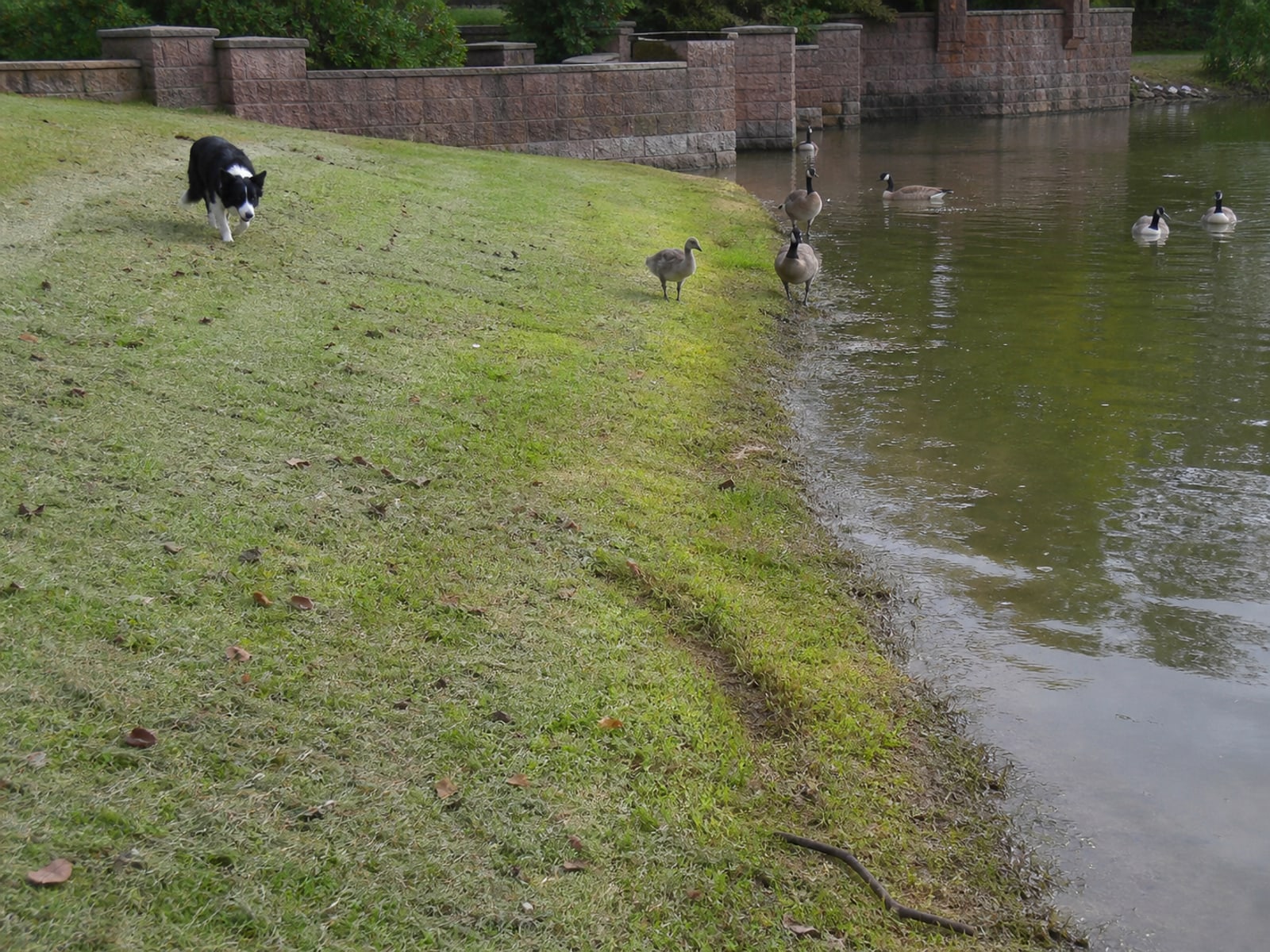
A Border Collie working a flock of Canada geese off maintained ground in Bristol, CT

What happens after you call about a Bristol property?

The fieldwork is the same on a park lawn and on a private campus. The front end in Bristol is mostly about establishing which municipal structure you are inside.

  1. 01

    We ask what the site actually is

    A mown park with a pond, a nature preserve, an athletic complex, watershed land or a private campus. Bristol has all of those and they are not interchangeable, as the difference between Rockwell Park and Hoppers Birge Pond shows.

  2. 02

    We ask what you are seeing, and what has been tried

    How many birds, on which surfaces, at what times, how close the water is, and what anybody has already put out there. A flock that has learned to ignore something changes what is worth doing next.

  3. 03

    We walk the ground and map the way up from the water

    Geese travel between water and turf on foot, so the useful map is where they come up, which grass they graze, where they loaf and which of that you control. On a park with a river running through it, that last question has more than one answer.

  4. 04

    We settle permissions before scheduling

    Written park authorization on city ground, with handler control set out, and a conversation with the Conservation Commission before anything that would count as a regulated activity near a wetland or watercourse.

  5. 05

    The dogs work at times the flock cannot anticipate

    A handler works the ground with a trained Border Collie in a stalking posture. A goose reads that as a predator and leaves under its own power, with no contact and no capture. The visits then repeat unpredictably, because a schedule the birds can learn is a schedule they will sit out.

  6. 06

    We say what should change about the ground, and we measure

    Where mowing stops, whether an unmown strip or a barrier can go between water and turf, and whether anyone is still feeding them. Then counts, locations, complaints and the gap between a visit and the birds returning. In a city already tracking bacteria numbers, that record is worth having for more than one reason.

What we handle, and who handles the rest

We do not apply turf repellents. They are registered pesticides, applying one to commercial turf in Connecticut is licensed work, and we hold no such certification. A licensed applicator is the right call if a repellent suits a defined surface on your property.

We do not addle eggs or work on nests. That is regulated activity, the landowner registers with the US Fish and Wildlife Service before anything happens, Connecticut accepts that federal registration and adds a further requirement where a commercial control firm is involved, and the authorization belongs to the landowner or the city rather than to a vendor. Worth knowing too: DEEP's agricultural damage program, which sometimes gets waved around, applies to qualifying commercial agricultural producers and is not authority for a park, a campus, a school or a homeowner.

We do not promise the geese will be gone and stay gone. Connecticut DEEP describes non-lethal techniques as potentially effective when several are used together at the right time of year, which is a careful sentence and worth reading as written. It is not a description of a single measure solving a site.

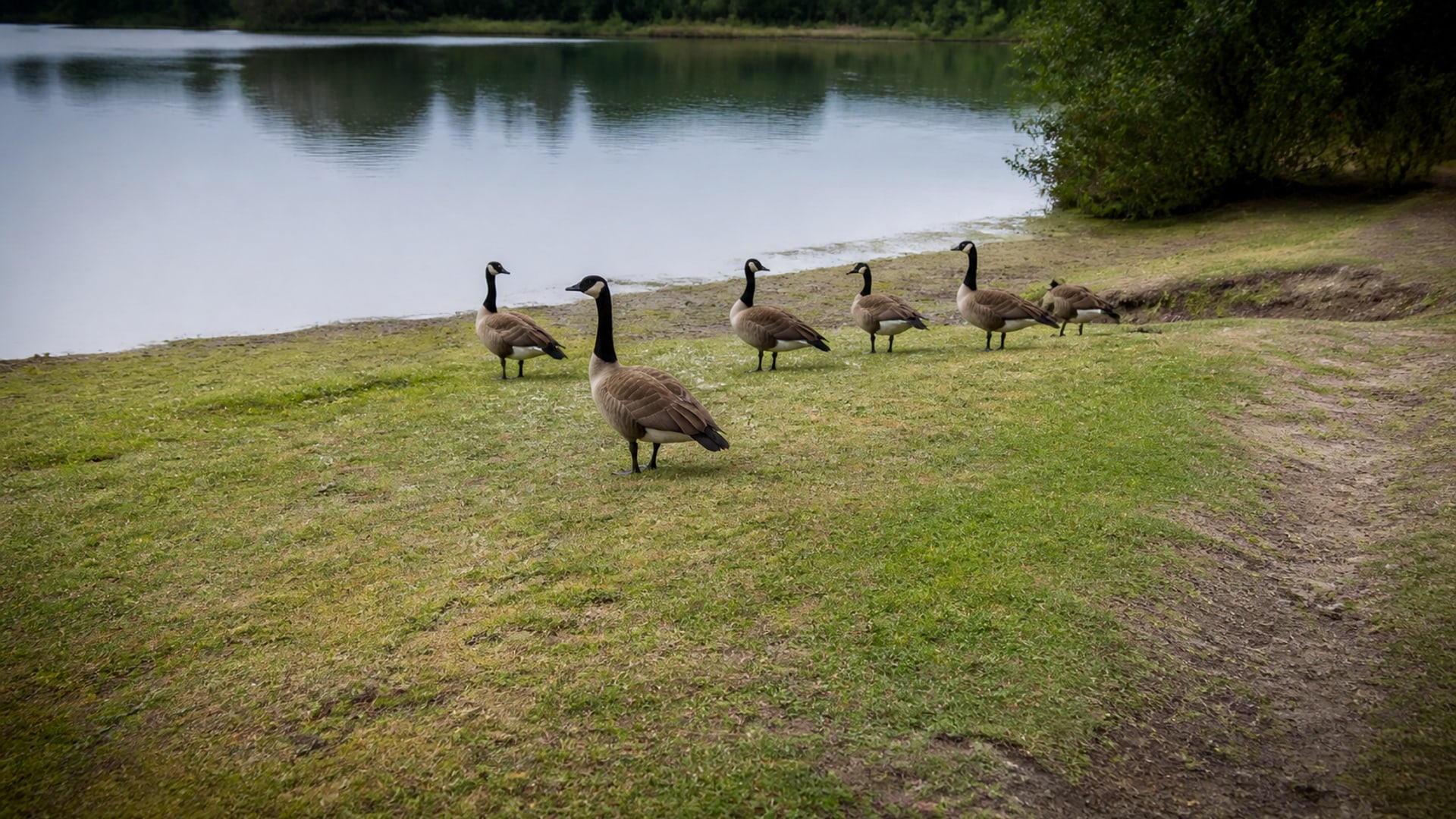
Maintained ground in Bristol, CT holding clear of Canada geese after repeat visits

Bristol goose control questions

Does Bristol have a goose management program we can join?

Not one we can point to. The city's stormwater material names waterfowl management as ongoing pollution-prevention coordination with Public Works, which is a programmatic reference rather than a specific project. We could not find a documented Bristol goose complaint, contract or meeting item, and we would rather tell you that than imply a program exists.

Is Lake Compounce a Bristol water body?

It operates from a Bristol address at 185 Enterprise Drive, but the named lake is reported to be in Southington. It is a good example of why parcel-level detail matters in this city, and why we check rather than assume.

Can a trained dog work on a Bristol park or ball field?

Only with written authorization. Bristol's parks chapter covers athletic fields, parks, pools, playgrounds and paths and is enforceable by citation officers, and we found no working-dog or commercial-dog exemption. We ask in writing and state how the dog remains under handler control.

Do we need a wetlands filing for work near a pond?

If you are changing something physical, probably. Bristol's Conservation Commission acts as the Inland Wetlands and Watercourses Agency and decides regulated-activity applications, with detailed requirements including a site plan and a stormwater certification for a 50 year storm. Moving birds off turf with a dog is a different activity from planting or building at the water's edge.

How much does goose control cost in Bristol?

It is quoted per site, on ground worked, bird numbers, water edge, visit frequency and what the surface is used for. There is no credible published range for this region. For city work, Bristol's current purchasing thresholds were not something we could verify from published material, so the sensible route is to ask Purchasing whether an existing annual contract can carry it or whether a new solicitation is needed.

How fast do we see a difference?

Behavior on the site starts changing from the first visits, because the birds respond to a predator rather than learning to. Whether it holds depends on what changes about the ground. Connecticut DEEP puts territorial defense as early as March, nesting by early April and hatching from April through June, so a site addressed in late winter is a much easier job than the same site in May.

Our property drains toward a city reservoir. Does that change anything?

It can. Watershed and reservoir land sits with the Water and Sewer Department rather than with Parks, and protected watershed property has its own access rules. It does not stop a program on your own ground, it changes who else should know about it.

Local detail

Canada geese in Bristol, Hartford County

Bristol is a Hartford County city of about 60,800 residents that runs its own water system, with a watershed of roughly 5,000 acres, seven reservoirs and three well fields patrolled by a watershed crew and an outside forester.

That is why the goose question here tends to arrive as a water-quality question. The city's stormwater plan identifies waterfowl as a bacteria source, and its 2024 annual report records ongoing coordination with Public Works on waterfowl management. On the ground, the named water sits mostly in city parks: a pond at Rockwell Park with the Pequabuck River running through it, a lagoon at Page Park, and a 270 acre nature preserve at Hoppers Birge Pond.

Bordering towns: Burlington, Plymouth, Plainville, Southington, Farmington. A flock does not recognize a town line, so a program sometimes has to be scoped wider than one parcel.

Getting there: Route 6, Route 72, Route 229, Middle Street, King Street, Dutton Avenue.

We cover all of Bristol and the ground around it. If your neighborhood is not listed, or you are not sure which one you are in, it is very likely we work there. Ask and we will confirm.

Talk to us about your Bristol property

Tell us what you are dealing with: roughly how many birds, which surfaces they are fouling, how close the water is, and whether the parcel is city, school, private or watershed land.

Tri-State Geese Patrol runs humane Canada goose abatement with trained Border Collies across Connecticut, Massachusetts and New York, and we are reachable 24 hours. Call (203) 856-4889 and it goes to Bill.

And if the honest answer for your site is an unmown strip and a no-feeding sign rather than a contract, we will say so.